
We are reader supported. When you purchase through links on our site, we may earn an affiliate commission. Also, as an Amazon affiliate, we earn from qualifying purchases.
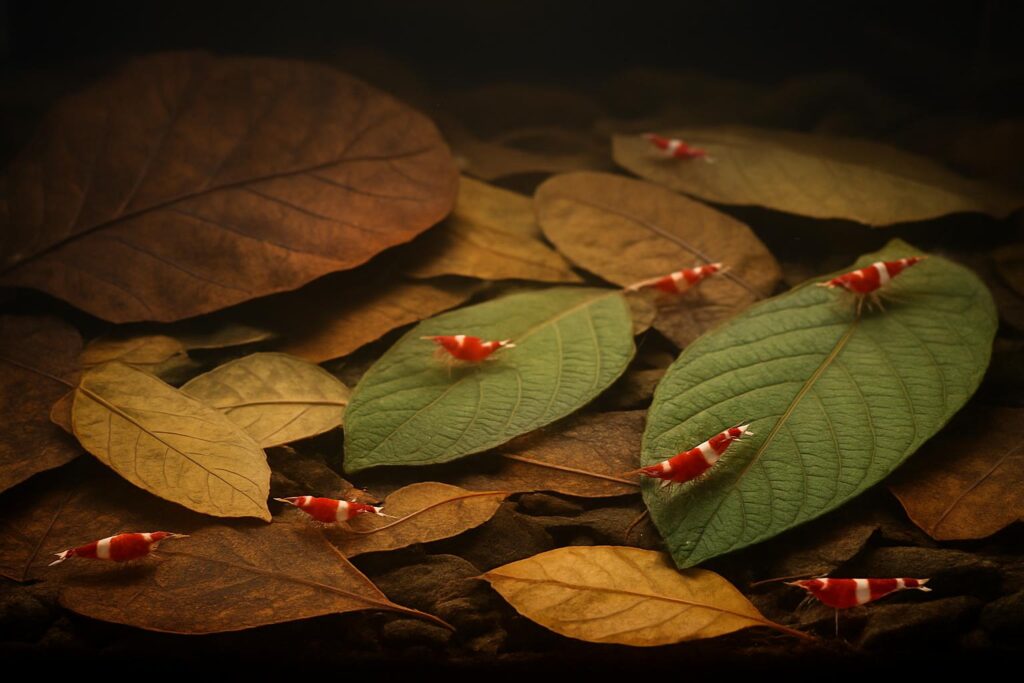
Shrimp thrive in tanks that feel like streams and forest pools. Leaf litter recreates that world. It softens water, releases tannins and humic substances, fuels biofilm for constant grazing, and adds safe cover so shrimp feel bold and breed well. If you only change one thing in your shrimp tank this year, make it a steady, predictable leaf litter routine. This guide walks you through four dependable leaf litter packs for 2026, how to use them, and how to pick the right one for your shrimp and water.
What Leaf Litter Does For Shrimp
Biofilm and microfauna
Leaves grow a living buffet. As leaves break down, bacteria and microfauna colonize the surfaces. Baby shrimp graze on this biofilm all day. A stable biofilm supply translates to higher survival rates and bolder behavior.
Tannins and humic substances
Leaves release organics that tint the water and buffer pH downward. In moderate amounts this helps create stable, slightly acidic water many dwarf shrimp prefer. Tannins also bind some metals and can reduce stress.
Structure and safety
Leaf piles add three-dimensional habitat. Shrimp hide between layers, molt safely, and forage without constant exposure. With good cover, shrimp spend more time in the open.
Algae balance
As leaves decompose, they compete with nuisance algae for nutrients. Combined with routine maintenance, leaf litter helps nudge the tank toward a balanced state.
How To Choose Leaf Litter
Match leaf type to your goal
Decide the main job you want the leaves to do. For stronger tannins and mild pH shift, choose catappa or jackfruit. For nutrient-rich grazing with minimal staining, choose mulberry. For steady, moderate tannins and long-lasting structure, choose guava.
Tank size and stocking
Smaller tanks magnify the effect of tannins and organics. Start with fewer leaves and add slowly. Heavy shrimp loads need more biofilm, but too many leaves at once can depress oxygen. Build up over weeks.
Source quality and safety
Look for packs that are clean, pesticide-free, and naturally air-dried. Whole, intact leaves rot more predictably than shredded pieces. Avoid scented or dyed botanicals.
Format and consistency
Uniform leaves help you dose consistently. Mixed sizes require more observation. If you are new, start with a pack known for uniform sizing and steady breakdown.
The 4 Best Shrimp Leaf Litter Packs for 2026
Each pick below is proven in shrimp tanks, beginner friendly, and easy to dose. The short profiles explain how they behave, what they are best for, and what to watch.
1) SunGrow Indian Almond Leaves Catappa Pack
Indian almond leaves remain the most popular shrimp botanical. They deliver a clear, repeatable tannin load, sink easily after a quick pre-soak, and shred slowly into a biofilm-rich bed that shrimp love to graze.
What stands out
Catappa leaves create predictable brown tint and a mild pH push downward. They are large enough to anchor under wood and can serve as micro-shelters for shrimplets.
Leaf profile and effects
- Strong tannin release that typically increases within 24–72 hours
- Breaks down over 2–4 weeks depending on temperature and bioload
- Encourages steady biofilm growth on both leaf surfaces
Why it helps: Catappa offers the most consistent humic release and coverage per leaf, making it simple to dose in beginner tanks.
Best for: Caridina and Neocaridina tanks needing stable biofilm and noticeable but controlled tannin presence. Great first leaf for new shrimp keepers.
Potential downsides: Can darken water more than expected if you add several at once. In very soft water, multiple leaves can nudge pH lower than planned. Introduce gradually.
How to use
- Rinse and either soak overnight or boil 1–3 minutes to help sinking
- Start with 1 large leaf per 10 gallons, then observe shrimp, pH, and water clarity
- Replace when skeletonized or after 3–4 weeks; always overlap new leaves to avoid sudden swings
2) Aquatic Arts Guava Leaves for Shrimp
Guava leaves provide durable structure with a moderate tannin footprint. They last longer per piece than catappa and are excellent for building layered hideouts that resist crumbling.
What stands out
Guava leaves keep their shape and edges for weeks, giving shrimplets safe grazing lanes beneath and between layers. They cloud less and tint less than catappa under the same dosage.
Leaf profile and effects
- Moderate tannins and humics that release steadily
- Slow decomposition with a leathery feel that holds form
- Reliable, long-lived biofilm surfaces
Why it helps: Guava is a set-and-forget botanical that stabilizes habitats without dramatic water color changes. The stable platforms are ideal for constant grazing.
Best for: Community shrimp tanks where you want cover and biofilm but minimal staining. Good for aquascapes where you want leaves visible but not messy.
Potential downsides: Because it breaks down slowly, the biofilm peak may arrive later than with softer leaves. If you want quick biofilm for new shrimplets, combine with a small piece of catappa.
How to use
- Rinse and soak 12–24 hours for a gentle start; boiling is optional
- Begin with 1–2 medium leaves per 10 gallons and observe tannin levels
- Stack under driftwood to build shaded corridors shrimp repeatedly visit
3) Crayfish Empire Mulberry Leaves for Shrimp
Mulberry leaves are a nutrient-forward choice. Shrimp often consume them faster than other leaves, which turns them into a direct dietary supplement and a short-cycle biofilm platform.
What stands out
Mulberry offers protein and minerals, including calcium, that support molting and growth. They stain water far less than catappa while still fueling microbial life.
Leaf profile and effects
- Low to moderate tannin release with light coloration
- Softens quickly and can be eaten to veins within days in active tanks
- Stimulates foraging and can boost feeding activity
Why it helps: When you need a gentle leaf that doubles as food, mulberry fits. It supports gut health, growth, and biofilm without heavy tinting.
Best for: Growing colonies, juvenile-heavy tanks, and keepers who want nutrition and botanicals in one step.
Potential downsides: Overfeeding risk if you add many at once. In small tanks, a sudden mulberry feast can elevate organics quickly. Add one leaf, watch response, then scale.
How to use
- Rinse; a quick 30–60 second boil helps them sink and soften evenly
- Start with a half leaf per 10 gallons; increase only after shrimp finish it within 24–48 hours
- Rotate with catappa or guava for both nutrition and longer-term structure
4) SunGrow Jackfruit Leaves for Shrimp
Jackfruit leaves sit between catappa and guava in tannin strength and durability. They hold shape, release steady humics, and create tidy leaf piles that resist falling apart too fast.
What stands out
Jackfruit leaves are usually smaller than catappa and easier to place with precision. This matters in nano tanks where one big leaf can dominate the floor.
Leaf profile and effects
- Moderate tannin output with controlled water tint
- Sturdy mid-speed breakdown for consistent biofilm production
- Edges curl slightly to form micro-caves that shrimplets use
Why it helps: A balanced choice that delivers both habitat and humics without overpowering small systems. Easy to stack into low mounds where shrimp feel secure.
Best for: Nano tanks, soft-water setups, and scapes where you want leaf litter to stay neat while still nourishing biofilm.
Potential downsides: Less impactful than catappa on pH and color if your tap water is very hard. Combine with a single catappa leaf if you want a stronger tea effect.
How to use
- Rinse and soak until the leaf sinks; boiling optional for faster sinking
- Use 1–3 smaller leaves per 10 gallons, spaced a few days apart at first
- Refresh a portion every 2–3 weeks to keep biofilm consistent
Quick Comparison and Picking Strategy
Choose by water goals
- Stronger tannins and mild pH lowering: Catappa
- Moderate tannins and long-lasting structure: Guava
- Nutrition-forward, minimal staining: Mulberry
- Balanced tannins with tidy placement in nanos: Jackfruit
Choose by tank size
- Nano 5–10 gallons: Jackfruit or small pieces of catappa
- Standard 10–20 gallons: Catappa or guava with a mulberry accent
- Larger 20+ gallons: Catappa base, guava for structure, mulberry as periodic feed
Mixing leaves safely
Blend one structural leaf with one nutritional leaf. For example, pair guava for shelter with half a mulberry leaf once or twice a week. If you need more color and humics, add a single catappa and reassess after 72 hours.
How To Add Leaf Litter Without Surprises
Preparation
- Rinse well to remove dust
- Boil 1–3 minutes if you want faster sinking and a mild sterilization
- Alternatively soak in dechlorinated water for 12–24 hours for a gentler start
Starting dose
- Baseline: 1 large catappa or 1–2 medium guava or jackfruit leaves per 10 gallons
- Mulberry: 0.5–1 leaf per 10 gallons, only replace when shrimp finish it
Observe and adjust
- Watch tannin tint in the first 3 days after adding
- Check shrimp behavior: active grazing and normal molting are good signs
- Track pH weekly; add leaves in small steps to avoid big swings
Maintenance rhythm
- Replace a portion every 2–4 weeks as leaves skeletonize
- Keep some old leaf matter to preserve biofilm continuity
- Siphon trapped debris during water changes, not the leaf piles themselves
Troubleshooting Common Issues
Water too dark
Remove one leaf and add activated carbon temporarily. Next time, pre-soak leaves longer and add fewer at once.
Bacterial bloom or cloudy water
Reduce new leaves, increase aeration, and perform a small water change. Resume with half the previous dose.
Mold on fresh leaves
White biofilm on new botanicals is common and shrimp usually eat it. If it turns fuzzy and spreads aggressively, remove the leaf, boil the next one briefly, and add less at a time.
pH dropping faster than expected
Slow your additions, pre-soak leaves, and increase water change frequency. In very soft water, use fewer catappa pieces and lean on guava for structure.
Beginner-Friendly Leaf Litter Routine
Week 1
- Add 1 catappa leaf per 10 gallons or 1–2 guava leaves
- Note water tint and pH after 72 hours
Week 2
- Add a half mulberry leaf for targeted feeding
- Increase aeration slightly if the water clouds
Week 3–4
- Refresh one leaf as older ones skeletonize, do not replace all at once
- Stabilize at a steady coverage you like, then maintain
Why These Four Picks Work
They cover all key jobs without surprises. Catappa sets the baseline for tannins and humics. Guava builds dependable structure that lasts. Mulberry feeds and fuels biofilm with minimal stain. Jackfruit gives control in nanos and balanced output. You can run any one alone, or combine two to match your tank and taste.
Conclusion
Healthy shrimp tanks run on stability, cover, and constant microfood. Leaf litter does all three. Start small, add slowly, and watch your colony. Keep a mix of new and old leaves so biofilm never crashes. If you want strong humics and quick results, begin with catappa. If you want low-fuss structure, use guava. If you want nutrition and minimal tea color, add mulberry. If you want precision in small tanks, lean on jackfruit. Build a rhythm that keeps the scape clean and the shrimp busy. Your tank will look more natural, your shrimp will graze more, and maintenance gets easier over time.
FAQ
Q: Which leaf type releases the most tannins and lowers pH the most?
A: Catappa generally gives the strongest tannin release and the most noticeable mild pH push downward.
Q: How many leaves should I start with in a 10 gallon tank?
A: Start with 1 large catappa or 1–2 medium guava or jackfruit leaves per 10 gallons, and 0.5–1 mulberry leaf if you want nutrition without heavy staining.
Q: How do I prepare leaves before adding them?
A: Rinse well, then either boil 1–3 minutes for faster sinking and mild sterilization or soak in dechlorinated water for 12–24 hours for a gentler start.
Q: How often should I replace leaf litter?
A: Replace a portion every 2–4 weeks as leaves skeletonize, and keep some old leaf matter to preserve biofilm continuity.
Q: Can adding too many leaves at once harm shrimp?
A: Yes. Too many leaves at once can darken water, cause bacterial blooms, depress oxygen, or push pH lower than planned. Add slowly and observe.