
We are reader supported. When you purchase through links on our site, we may earn an affiliate commission. Also, as an Amazon affiliate, we earn from qualifying purchases.
Power outages happen without warning. Your fish and invertebrates still breathe, your bacteria still need oxygen, and your tank temperature still drifts. With a clear plan, you can bridge the gap safely. This guide shows exactly what to do in the first minutes, what to prioritize hour by hour, and how to restart your aquarium without losses. Keep it simple, act quickly, and protect oxygen, temperature, and filtration in that order.
Why power outages are risky for aquariums
Oxygen drops fast
Fish, shrimp, snails, corals, and beneficial bacteria all consume oxygen. When the filter and air pump stop, surface agitation stops. Oxygen levels begin to fall, and carbon dioxide rises. Heavy stocking, warm water, and night time make oxygen drop faster. The goal is to restore gas exchange at the surface as soon as possible.
Temperature swings stress fish
Heaters and chillers shut down. In cool rooms, tropical tanks lose heat. In hot rooms, oxygen declines even quicker. Rapid shifts stress fish, weaken immunity, and can trigger disease. Slowing the change matters more than hitting a perfect number.
Filter bacteria stall
Nitrifying bacteria in filters need constant water flow and oxygen. Without flow, they starve and begin to die back. Ammonia and nitrite can rise once power returns if the bacteria population was damaged. Keeping media wet and oxygenated reduces this risk.
Flow dependent animals struggle
Marine animals, shrimp, and some freshwater species depend on circulation. In reef tanks, flow keeps corals clean and oxygenated. In goldfish and large cichlid tanks, high waste loads mean oxygen and filtration are critical. Flow is not a luxury during an outage.
The first 10 minutes: immediate actions
Stay calm and act in a set order. Stop feeding right away to reduce waste and oxygen demand. Check the temperature with a reliable thermometer and note the starting point. Close lids to retain heat but leave a small gap or open the feeding flap to allow gas exchange.
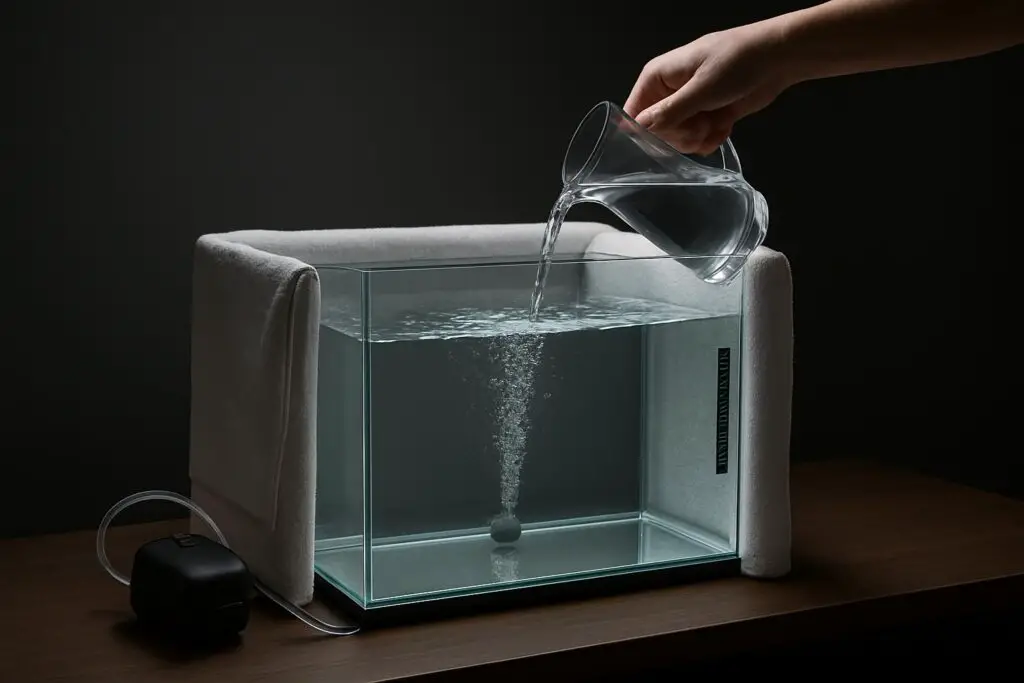
Start a battery powered air pump if you have one. Place the airstone near the surface to break the surface tension and move water. If you do not have a pump, agitate the surface manually every few minutes by scooping water and pouring it back from a height. Wrap the tank on three sides with blankets or towels to slow heat loss. Keep the front partially open so you can observe livestock and allow some air exchange.
Unplug high draw devices until you are ready for power to return. Heaters are safe in water but do not let them run dry. When power comes back, plug devices in one by one while you watch the tank.
Hour by hour game plan
0 to 2 hours: maintain oxygen and heat
Run a battery air pump, USB air pump on a power bank, or manually stir the surface every 10 to 15 minutes. Keep lids mostly closed and the room doors and windows shut to trap heat. Do not feed. Observe fish behavior. Gasping at the surface, clamped fins, or frantic swimming are early warning signs of low oxygen.
2 to 6 hours: protect bacteria and watch ammonia
Filters with stagnant water lose oxygen. For hang on back filters, ladle tank water into the filter box every 30 to 60 minutes to keep media wet and oxygenated. For canister filters, consider removing the baskets and suspending media in the aquarium in a mesh bag near an airstone so oxygenated water can reach it. For sponge filters, swap the airline to a battery pump to keep them running.
Test ammonia if you have a kit. If ammonia rises above zero, increase aeration and prepare for a small water change when safe and temperature matched.
6 to 24 hours: controlled water changes and temperature management
If ammonia or nitrite rises, do a 20 to 30 percent water change with dechlorinated water that matches temperature closely. Prewarm or precool replacement water to avoid shock. In cold rooms, refresh insulation around the tank and consider adding heat safely using warm water bottles in sealed containers or commercial heat packs taped to the outside glass. In hot rooms, float sealed bags of ice to nudge temperature down. Aim for slow, steady adjustments.
Multi day outages: stable routines
Schedule aeration checks and manual agitation every 30 to 60 minutes if you lack powered options. Limit feeding to very light portions every other day for healthy adult fish, or skip feeding entirely for up to two to three days for most community fish. Perform small, frequent water changes if tests show ammonia or nitrite. Rotate batteries and recharge power banks if you have access to a car or external charger. Keep the room dark to reduce stress and oxygen demand.
Emergency aeration methods that work
Battery air pumps are reliable and affordable. Keep extra D cells on hand. Many models switch on automatically when power fails. USB air pumps run on common power banks and provide steady bubbles for long periods.
If you have no pump, agitate. Use a clean cup or pitcher to scoop water from the tank and pour it back from 20 to 30 centimeters above the surface. Stirring near the surface with a clean spatula or board also helps. Do this for one to two minutes every 10 to 15 minutes until you get a pump running.
Do not add chemicals or quick fix tablets that claim to increase oxygen. Focus on surface agitation and moving water. That is safe, repeatable, and effective.
Temperature control without power
Retain heat first. Insulate the tank on three sides with blankets, towels, or foam panels. Cover the top loosely to trap warmth while still allowing air exchange. Close the room, block drafts, and keep lights off to reduce heat loss.
To add heat safely, use hot water bottles or sealed containers of warm water floated in the tank. Replace them as they cool. Never pour hot water directly into the aquarium. Commercial heat packs taped to the outside glass also help. Monitor temperature often and avoid large, fast jumps.
To cool in hot weather, float sealed bags or bottles of ice and add a fan for room level ventilation if available. Aim for small reductions over time. Rapid cooling can shock fish as much as rapid heating.
Caring for different tank types
Freshwater community and betta tanks
These tanks are usually lightly to moderately stocked. Focus on aeration and temperature stability. Bettas breathe air but still benefit from gentle surface movement and stable warmth. Skip feeding. Most fish handle 24 to 48 hours without food.
Goldfish and high bio load tanks
Goldfish produce heavy waste and need strong oxygenation. Prioritize aeration with battery pumps and perform small water changes if tests show rising ammonia. Insulation helps because goldfish handle cooler water better than heat swings, but avoid rapid shifts.
Planted tanks
Plants use oxygen at night. During an outage, maintain aeration continuously. Turn off pressurized CO2 systems if they can run independently to prevent CO2 buildup without circulation. Keep the photoperiod short once power returns to prevent oxygen dips while bacteria recover.
Saltwater and reef tanks
Flow is critical. Prioritize a battery powered wavemaker or multiple air stones placed near corals and rockwork to prevent dead spots. Temperature stability matters. Most corals tolerate short periods of darkness. Do not feed. When power returns, restart the protein skimmer at a low setting to prevent overflow caused by changes in water chemistry.
Protecting and preserving your filter bacteria
Keep media wet and oxygenated. Media should never dry out. In hang on back filters, scoop tank water into the filter box regularly. In canisters, open the filter, keep media submerged in tank water, and place it in the aquarium near an airstone to restore oxygen exposure. In sponge filters, connect to a battery pump so they keep running as normal.
Avoid rinsing media in tap water during the outage. Chlorine and chloramine harm bacteria. If sludge builds up, gently swish media in a bucket of tank water during a planned water change, then return it to the tank or filter when power is back.
Once electricity returns, reassemble filters, prime them fully, and discard the first dirty water from canisters before reconnecting to the tank. This reduces the release of stagnant water and debris.
Safe generator and backup power use
Uninterruptible power supplies can run air pumps or small powerheads for a short time. Portable power stations can run a heater or wavemaker for longer. Gas generators run essentials for extended outages.
Prioritize devices that protect life first. Run air pumps, a powerhead or wavemaker, and a heater or cooling method as needed. Lights can wait. Start with the smallest devices that move water and air efficiently.
Operate generators outdoors only and use heavy duty outdoor rated extension cords with drip loops. Keep power bricks and connections off the floor and away from splashes. When restoring power, plug devices back in one at a time while you watch livestock and water levels.
Restarting the aquarium after power returns
Do not rush. Verify the water level and temperature. Plug in the heater and confirm it is submerged. Prime and restart filters. For canisters, empty stagnant water, refill with fresh dechlorinated water, and restart. For hang on back filters, fill the box to help them catch prime. For sponge filters, switch the airline back to mains power.
Check circulation and surface agitation. Adjust outflows to ripple the surface. Test ammonia and nitrite within a few hours and again the next day. If either shows above zero, perform a 25 to 50 percent water change with temperature matched, dechlorinated water and maintain strong aeration. Restart the protein skimmer on saltwater tanks at a low setting and raise it gradually to normal.
Resume feeding lightly once the fish behave normally and tests are clear. Increase feeding over several days. Watch for delayed stress signs such as lethargy, fin clamping, labored breathing, or flashing, and respond with extra aeration and water changes as needed.
Build a simple outage kit and plan
Prepare now so the next outage is routine. Store a battery air pump with spare batteries, a USB air pump with a charged power bank, two airstones, extra airline tubing, blankets or foam panels for insulation, a reliable thermometer, a siphon, dechlorinator, and freshwater or premixed saltwater. Keep a written outage checklist near the tank with phone numbers and steps. Show family members how to start the battery pump and insulate the tank.
Test your kit twice a year. Replace batteries, recharge power banks, and confirm all parts are clean and ready. Preparation is the difference between panic and a predictable response.
Common mistakes to avoid
Do not feed normally during an outage. Extra waste and oxygen demand make things worse. Do not open the lid repeatedly and dump heat. Check quickly, then close. Do not chase perfect temperature with big swings. Slow and steady is safer. Do not ignore filter media. Keep it wet and oxygenated or move it into the tank near an airstone. Do not restart a canister without discarding stale water. Do not use indoor generators or unsafe wiring. Safety comes first.
Conclusion
Protect oxygen, stabilize temperature, and preserve your bacteria. That simple order turns a power outage from a crisis into a manageable routine. Act in the first 10 minutes, follow the hour by hour plan, and restart carefully. With a small outage kit and a practiced checklist, you can keep your aquarium safe through short blackouts and extended cuts alike.
FAQ
Q: What should I do in the first 10 minutes of a power outage for my aquarium?
A: Stop feeding, check temperature, close lids to retain heat with a small gap for air, start a battery air pump or agitate the surface manually, insulate the tank on three sides, and unplug high draw devices until you are ready for power to return.
Q: How can I keep oxygen levels up without power?
A: Use a battery air pump or a USB air pump on a power bank, place the airstone near the surface, or manually agitate by scooping and pouring water back from a height every 10 to 15 minutes, and avoid quick fix chemicals.
Q: How do I keep my tank warm during an outage?
A: Insulate the tank on three sides, keep the room closed, cover the top loosely, and if needed float sealed hot water bottles or use commercial heat packs on the outside glass while monitoring temperature to avoid rapid swings.
Q: Should I feed my fish during a power outage?
A: No, stop feeding; most healthy fish handle one to three days without food, and skipping meals reduces waste and oxygen demand.
Q: How do I handle filters and bacteria during a long outage?
A: Keep media wet and oxygenated by ladling water into hang on back filters, moving canister media into the tank near an airstone, running sponge filters on a battery pump, and when power returns discard stale canister water, prime, restart, and test ammonia and nitrite.