
We are reader supported. When you purchase through links on our site, we may earn an affiliate commission. Also, as an Amazon affiliate, we earn from qualifying purchases.
Axolotls are unique amphibians that thrive in cool, clean, and calm water. Set up the right tank once, and daily care becomes simple. This guide walks you through every step, from tank size and cycling to feeding, maintenance, and troubleshooting. Follow it in order and you will avoid the common mistakes that stress axolotls and lead to health problems.
Introduction
An axolotl tank is different from a tropical fish tank. Axolotls need low temperatures, low flow, and secure hiding spots. Water quality must be stable and ammonia free. With a clear plan and a simple routine, even beginners can keep axolotls healthy for years. Start with the environment, then add your animal only when the system is mature and stable.
Understand the Axolotl
Axolotls are fully aquatic salamanders that prefer dim light and slow water. They have delicate skin and external gills that react quickly to poor water or excessive flow. They are predators that swallow food whole, so substrate safety and feeding technique matter. They are also solitary by nature; mixing them with fish or crustaceans leads to bites, stress, or injuries.
Plan the Tank
Tank size and footprint
One adult axolotl needs at least a 20 gallon long tank with a footprint around 30 inches in length. The long footprint gives floor space to walk and turn. For each additional adult, add 10 to 20 gallons and provide extra hides so individuals can avoid each other. House juveniles alone until they reach about 6 to 7 inches, since small axolotls nip at moving tankmates.
Location, stand, and lid
Place the tank on a level, sturdy stand away from sun, heaters, and windows. Direct sunlight and warm rooms raise water temperature fast. Use a secure lid to reduce evaporation and prevent escapes, while allowing good airflow. A mesh or vented lid works well if you use a fan for evaporative cooling.
Equipment checklist
You will need a gentle filter, air pump if using sponge filtration, a reliable thermometer, a liquid test kit for ammonia, nitrite, nitrate, and pH, dechlorinator for tap water, a siphon and buckets for water changes, and a cooling plan such as a fan or a chiller if your climate runs warm. Avoid heaters.
Cycle the Aquarium
Fishless cycle basics
Cycling grows beneficial bacteria that convert toxic ammonia to nitrite and then to nitrate. Do this before you add your axolotl. Feed the bacteria with a pure ammonia source or a pinch of fish food. Keep the filter running and the temperature stable during the cycle.
Testing and readiness
Test daily or every other day. The tank is cycled when ammonia and nitrite both read zero within 24 hours of adding a small ammonia dose, and nitrate is present. Perform a large water change to reduce nitrate before adding the axolotl. Rushing this step is the fastest way to harm a new axolotl.
Water Parameters
Temperature targets
Axolotls thrive at 16 to 18 C. A safe range is 14 to 20 C. Avoid temperatures above 20 C. Prolonged exposure to 23 C or higher is dangerous. Use a digital thermometer and track temperature at different times of day. Keep the tank away from heat sources and use a fan or chiller if needed.
pH, GH, and KH
Axolotls prefer stable water. A pH between 6.8 and 8.0 is generally fine if it does not swing. Aim for moderate hardness with GH around 7 to 14 dGH and KH around 3 to 8 dKH to buffer pH. If your tap water is very soft, consider remineralizing with an appropriate aquarium mineral product. Avoid sudden changes.
Ammonia, nitrite, nitrate
Keep ammonia at 0 ppm and nitrite at 0 ppm at all times. Keep nitrate under 40 ppm, and preferably under 20 ppm with regular water changes and plants. If ammonia or nitrite rise above zero, do an immediate partial water change and reduce feeding until the filter recovers.
Filtration and Flow
Filter types that work
Axolotls need excellent biofiltration but dislike strong currents. A large sponge filter driven by an air pump is simple, quiet, and gentle. A canister filter also works if you diffuse the output with a spray bar aimed at the glass and add a prefilter sponge on the intake to protect gills and to increase bio surface area.
Managing flow
Provide calm water with an area of near stillness. Baffle strong outputs, split the return, or point the flow at a wall. Watch your axolotl. If gills are always swept backward, or the animal hides from current, reduce flow further. Water must circulate through the filter but the swimming area should remain placid.
Media care
Rinse filter sponges and media only in tank water removed during a water change, not under the tap. Chlorinated tap water kills beneficial bacteria. Clean a little at a time so you do not disrupt the biofilter.
Substrate and Aquascape
Safe substrate choices
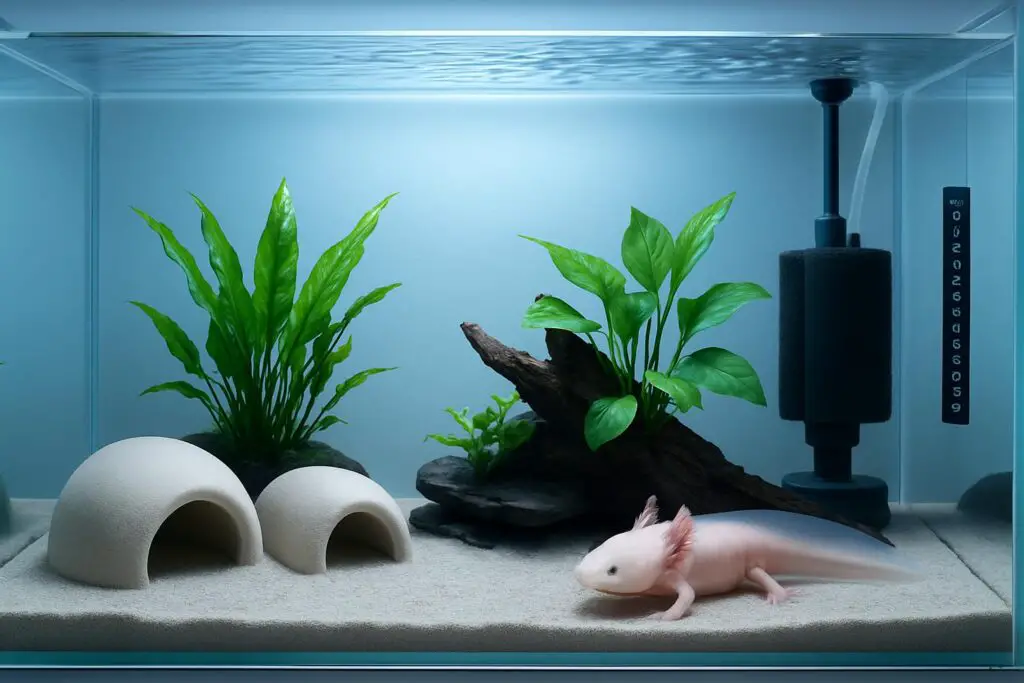
Use bare-bottom or fine sand. Avoid gravel or small pebbles, which axolotls ingest and can cause impaction. If you choose sand, keep grains fine and smooth, ideally under 1 millimeter. Use a thin layer around 0.5 to 1 inch for easy cleaning. Bare-bottom tanks are simple to maintain; add textured mats or slate tiles if you want extra grip.
Hides and decor
Give at least two secure hides per axolotl. PVC elbows, ceramic caves, stone tunnels, and driftwood all work if edges are smooth. Avoid sharp lava rock and metal. Place hides in low flow areas so the axolotl can rest without current. Scatter flat rocks to break line of sight and reduce stress if you keep more than one animal.
Live plants that tolerate cool water
Choose hardy, low light plants such as Java fern, Anubias, hornwort, Elodea, or water sprite. Attach rhizome plants to wood or rocks rather than burying them. Use small pots with sand or smooth gravel if you want rooted plants, since axolotls uproot easily. Floating plants help dim the light and provide cover.
Lighting and Photoperiod
Axolotls prefer dim lighting. Use a low intensity light and provide shaded zones with plants and caves. A 6 to 8 hour photoperiod supports plants without stressing the axolotl. Turn lights off at night to match natural day and night rhythm.
Water Source and Treatment
Condition all new water to remove chlorine and chloramine before it enters the tank. If your tap water contains chloramine, use a conditioner that neutralizes both chlorine and chloramine. Match temperature when you add new water to avoid shock. If you use reverse osmosis water, remineralize to reach the GH and KH targets listed above.
Acclimation and Quarantine
Quarantine any new axolotl in a separate, fully cycled tank for at least 30 days. Use dedicated tools for the quarantine system to avoid cross contamination. For acclimation, float the transport container to match temperature, then add small amounts of tank water to the container over 20 to 30 minutes before transfer. Move the animal with a container rather than a net to protect gills and skin.
Feeding and Nutrition
Staple foods and schedule
Earthworms are an ideal staple. High quality soft sinking carnivore pellets formulated for amphibians also work well. Offer frozen bloodworms or blackworms to juveniles. Feed juveniles daily. Feed adults two to three times per week. Adjust portions so the belly is about the same width as the head. Remove uneaten food within 10 to 15 minutes to protect water quality.
Feeding technique and hygiene
Use feeding tongs or a dish to reduce mess. Thaw frozen foods in a cup of tank water before feeding. Avoid feeder fish and insects with hard shells. Wash hands and tools before and after handling tank items to protect the axolotl and yourself.
Routine Maintenance
Weekly tasks
Test ammonia, nitrite, nitrate, and pH. Change 20 to 30 percent of the water. Vacuum debris off the surface of the sand or bottom. Rinse prefilter sponges in old tank water. Wipe the inside glass and clean the lid to maintain good gas exchange. Check the thermometer and confirm temperature remains stable.
Monthly tasks
Inspect the impeller and hoses if you use a canister filter. Deep clean one part of the filter at a time to preserve bacteria. Trim plants and reset uprooted pieces. Review your nitrate trend and increase water change volume if levels push above 20 to 40 ppm.
Seasonal heat management
In warm months, run a fan across the water surface for evaporative cooling. Top off with conditioned water to replace evaporation, but still perform regular water changes. If your room stays hot, invest in an aquarium chiller. Frozen water bottles can help in a pinch, but rotate them to avoid rapid swings and never let the temperature yo-yo.
Health and Behavior
Normal vs stress signs
A relaxed axolotl explores slowly, rests with a level posture, and eats with interest. Mild activity at dusk and dawn is normal. Stress signs include gill tips curled forward, persistent floating, frantic swimming against currents, refusal to eat, or skin that looks irritated. Heat stress often shows as lethargy and loss of appetite.
Common mistakes
Do not skip the cycle. Do not use gravel. Do not keep axolotls with fish or in tropical temperatures. Do not blast them with filter flow or bright light. Do not overfeed. These errors cause most beginner problems and shorten lifespans.
When to seek help
If your axolotl stops eating for several days, shows cottony growths on skin or gills, has persistent buoyancy problems, or curls the tail tip and gills forward for more than a day, check water parameters first and correct them. If signs persist, consult an experienced aquatic veterinarian or axolotl specialist.
Troubleshooting Quick Guide
If ammonia or nitrite appear, perform a 50 percent water change, add extra aeration, reduce feeding, and check that the filter is running and not clogged. Recheck daily until readings are back to zero.
During a heat spike, turn off room heat sources, close curtains, run a fan across the surface, and float sealed ice packs to drop the temperature gradually. Aim to return to 16 to 18 C and avoid sudden swings greater than 1 to 2 C per hour.
If you see white fuzzy patches suggestive of fungus, verify that temperature is within range and water quality is at target. Improve cleanliness, remove decaying food, and ensure low stress. Seek guidance for specific treatments if the condition does not improve after environmental correction.
Conclusion
Axolotls do best in cool, clean, calm water with secure hides and a simple feeding plan. Start with a 20 gallon long tank for one adult, cycle it fully, and keep ammonia and nitrite at zero with steady temperatures around 16 to 18 C. Choose safe substrate and gentle filtration, and follow a steady maintenance routine. When you give the axolotl a stable environment, daily care becomes easy and the animal rewards you with healthy growth and natural behavior.
FAQ
Q: What tank size does an adult axolotl need
A: One adult axolotl needs at least a 20 gallon long tank with a footprint around 30 inches in length, and juveniles should be housed alone until they reach about 6 to 7 inches.
Q: What temperature range is best for axolotls
A: Axolotls thrive at 16 to 18 C, a safe range is 14 to 20 C, avoid temperatures above 20 C, and prolonged exposure to 23 C or higher is dangerous.
Q: Which substrate is safe for axolotls
A: Use bare-bottom or fine sand with grains ideally under 1 millimeter, avoid gravel or small pebbles, and keep the sand layer around 0.5 to 1 inch.
Q: What water parameters should I keep
A: Keep ammonia at 0 ppm, nitrite at 0 ppm, nitrate under 40 ppm and preferably under 20 ppm, pH between 6.8 and 8.0, GH around 7 to 14 dGH, and KH around 3 to 8 dKH.
Q: How often should I feed and change water
A: Feed juveniles daily and adults two to three times per week, and change 20 to 30 percent of the water weekly, increasing volume if nitrates rise above 20 to 40 ppm.