
We are reader supported. When you purchase through links on our site, we may earn an affiliate commission. Also, as an Amazon affiliate, we earn from qualifying purchases.
Reef tanks thrive on stability. Corals use up key elements every day, and water changes alone often cannot keep up. A dosing system adds back what your reef consumes, in the right amount and at the right time. This guide walks you through the why, what, and how, so you can set up dosing with confidence, avoid common mistakes, and grow healthy, colorful corals without guesswork.
What Dosing Means in a Reef Tank
Dosing is the controlled addition of elements and additives to keep water chemistry stable. In a reef tank, corals and coralline algae consume alkalinity, calcium, and magnesium to build skeletons. Bacteria and macroalgae affect nutrients like nitrate and phosphate. Over time, levels drop. Dosing replaces what is used.
Why Water Changes Are Not Enough
Regular water changes are helpful, but they are often not enough once you keep stony corals or a growing mixed reef. Consumption rises with coral growth. Dosing fills the gap between consumption and water change replenishment, so levels stay stable between changes.
Core Elements You Need to Know
Alkalinity buffers acids and supports skeleton growth. Calcium forms the structure of coral skeletons. Magnesium stabilizes alkalinity and calcium balance and helps prevent precipitation. Nutrients like nitrate and phosphate support coral metabolism and coloration, but must be kept in a safe range. Trace elements are used in small amounts and can be replaced with water changes or targeted dosing once you master the basics.
When You Should Start Dosing
You can skip dosing if your tank is very new, lightly stocked, and you run consistent water changes. Start dosing when testing shows stable daily consumption or when stony corals begin to lose color or slow growth.
SPS corals use the most alkalinity and calcium. LPS corals use less but still benefit from stable levels. Soft corals use less, yet they prefer steady chemistry. If your daily testing shows a drop in alkalinity of 0.2 dKH or more, dosing is recommended. The same logic applies to calcium and magnesium, though they move more slowly.
Targets You Should Aim For
Pick realistic targets and keep them steady. Do not chase perfect numbers. Stability beats perfection.
Suggested ranges:
Alkalinity: 7.5 to 9.0 dKH
Calcium: 400 to 450 ppm
Magnesium: 1300 to 1400 ppm
Nitrate: 2 to 15 ppm
Phosphate: 0.03 to 0.10 ppm
pH: 7.8 to 8.4 with minimal daily swing
Pick a target in the middle of each range, confirm your salt mix baseline, and hold it steady.
Testing Comes Before Dosing
Reliable test kits are your foundation. You cannot dose safely without knowing consumption. Start with alkalinity and calcium tests. Add magnesium, nitrate, and phosphate as your reef matures. Optional ICP tests can confirm trace elements every few months.
Find your daily consumption. Test at the same time for three to five days. Do not change anything during the test period. If alkalinity drops from 8.5 dKH to 7.9 dKH in 24 hours, your tank consumed 0.6 dKH that day. Repeat for calcium, though changes often take longer to show clearly. Use this data to set your initial dosing rate.
Dosing Methods Overview
Manual Dosing
Manual dosing is simple. You measure additives and pour them into high flow water daily. It works for small tanks or early stages, but it is easy to forget and swings can build up. Move to automated dosing once consumption is steady.
Two Part Dosing
Two part dosing adds alkalinity and calcium in separate solutions, often with a magnesium supplement. It is easy to set up and adjust. It fits most beginner to intermediate tanks. Dose alkalinity and calcium at different times to prevent precipitation.
Kalkwasser
Kalkwasser is calcium hydroxide mixed with freshwater. It adds calcium and alkalinity together and raises pH. It is cost effective and can be used through an ATO or a dedicated dosing pump. It is powerful. Start low and monitor pH. It is best for tanks that need a moderate to high boost in both alkalinity and calcium with a pH lift.
Calcium Reactor
A calcium reactor dissolves media with CO2 to add alkalinity and calcium continuously. It offers stable output and can handle high demand, but setup is complex and upfront cost is higher. It suits advanced hobbyists or high demand SPS systems.
Trace Elements and Amino Acids
Trace dosing can support color and growth once your basics are stable. Start with water changes only. Add traces after you can hold alkalinity, calcium, and magnesium steady for several weeks. Dose amino acids lightly and observe coral response. Overdosing can fuel algae or bacterial blooms.
Nitrate and Phosphate Dosing
Ultra low nutrient systems can starve corals. If nitrate or phosphate hits zero, dose a balanced source to restore measurable levels. Adjust export methods like skimming, refugium lighting, and feeding first, then dose if needed.
Equipment You Will Need
Dosing Pumps
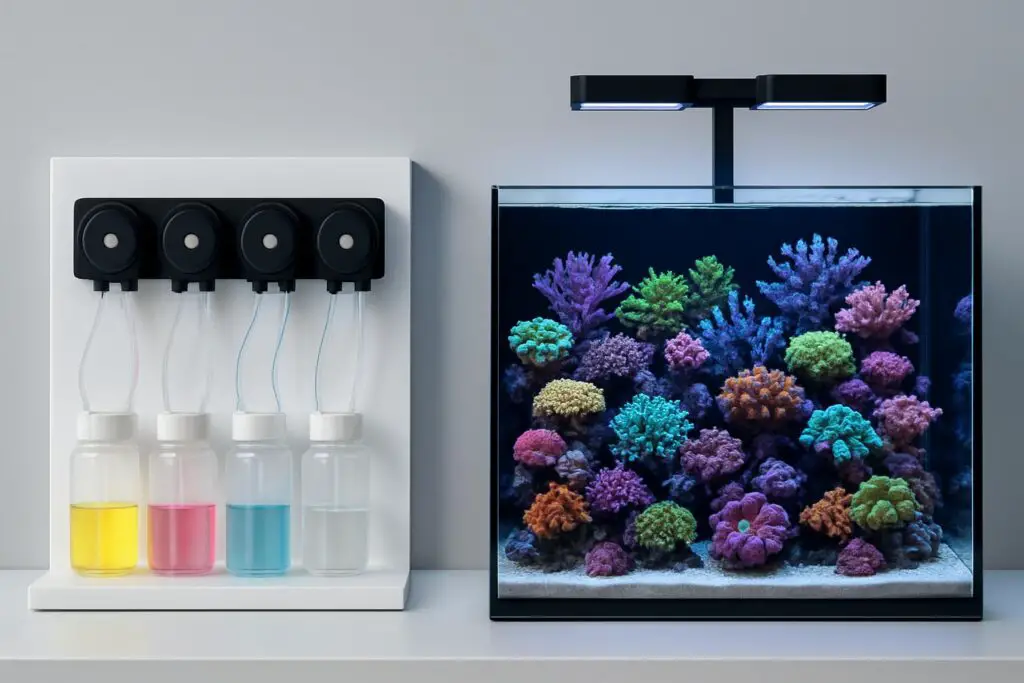
Peristaltic dosing pumps move precise volumes by squeezing tubing. Look for adjustable dosing speed, multiple heads, easy programming, and a way to limit daily maximums. More heads allow you to dose alkalinity, calcium, magnesium, and traces separately. Entry level pumps can be accurate enough if you calibrate them well.
Containers and Tubing
Use food safe containers with snug lids. Label each container and line. Use color coded tubing if you can. Keep alk and calcium lines separate all the way to the water to avoid mixing in the tubing. Keep ends out of the water to prevent back siphon.
Check Valves and Line Holders
Check valves prevent backflow and siphons. Line holders keep tips in place near high flow in your sump. Keep tips clean and above the waterline if your pump cannot stop siphons.
Stirring and Mixing
Some solutions need occasional stirring. Follow the product instructions for concentration and mixing. Let fresh solutions clear before dosing to avoid microbubbles in lines. Replace solutions every few months to prevent precipitation in storage.
Controller Integration and Failsafes
Controllers can schedule dosing, pause during feed mode, and set daily limits. Add failsafes like pH high stop for kalkwasser, or cut power if alkalinity rises too fast. Redundancy prevents accidents.
How to Set Up Your First Dosing System
Step 1. Test your tank daily for one week. Track alkalinity, calcium, and magnesium. Do not adjust with big manual doses during this period.
Step 2. Pick targets within the ranges above. Aim for the middle. Confirm your salt mix aligns with your targets.
Step 3. Calculate daily consumption. Alkalinity is the priority because it changes quickest.
Step 4. Choose your method. Two part is the easiest start. If you already have an ATO and want a pH boost, consider kalkwasser at a low strength.
Step 5. Program your pump for small, frequent doses. Split the daily total into 12 to 24 doses. Dose alkalinity and calcium at least 30 minutes apart and in different areas of high flow.
Step 6. Start at 50 to 70 percent of your calculated need for the first three days. Test daily. Increase slowly until levels hold steady.
Step 7. Log your test results, doses, and any coral changes. A simple log helps you spot trends and prevent swings.
Example Alkalinity Calculation
Tank volume: 200 liters of actual water after rock and sand displacement. Daily alkalinity drop: 0.5 dKH. Your alk solution raises 1 dKH per 18 ml per 100 liters. To replace 0.5 dKH in 200 liters, you need 18 ml times 0.5 times 2 equals 18 ml. Split 18 ml into 12 doses of 1.5 ml each over 24 hours. Test daily and adjust by 10 to 20 percent at a time based on results.
Where to Dose in the System
Dose into high flow in your sump, such as near the return pump section. Avoid dosing into the display where corals can receive concentrated bursts. Do not dose into the skimmer body or neck. Keep alkalinity and calcium outlets far apart. If using kalkwasser, keep the line away from heaters to reduce precipitation, and dose into strong flow.
Schedules That Work
Consistency lowers swings. Spread dosing across the day. Many reefers dose alkalinity at night to support pH when it tends to drop, and calcium during the day. This is helpful but not required. The key is small, frequent additions.
Example schedules:
Small tank with low demand: 6 doses per day, every 4 hours.
Medium tank with moderate demand: 12 doses per day, every 2 hours.
Large SPS tank: 24 doses per day, every hour, with alkalinity at night and calcium in the day.
Keep a daily maximum limit set in your controller or pump if available. This prevents runaway dosing after a failed test or accidental reprogramming.
Calibration and Verification
Calibrate each pump head before first use and every 1 to 2 months. Pump a fixed time into a graduated cylinder or measuring cup and record the volume. Adjust the calibration value until it matches.
Verify dosing by watching container levels over a week. If you expect to dose 140 ml per week and you only used 120 ml, your pump is underdosing. Recalibrate and recheck.
Check lines for air bubbles and salt creep. Bubbles reduce volume and can stall pumps. Salt creep near the tip can block flow and cause inconsistent dosing.
Troubleshooting Guide
Alkalinity Drifts Up and Down
Check pump calibration, dosing schedule, and test timing. Dose smaller amounts more often. Confirm your test kit is not expired. Make one change at a time and retest for several days.
White Snow or Crust Appears
This is precipitation of calcium carbonate. Reduce the size of each dose, increase spacing between alk and calcium, and move outlets farther apart. Check magnesium and aim for at least 1300 ppm. Avoid dosing near heaters.
pH Spikes With Kalkwasser
Lower kalk strength, reduce dose size, and spread dosing over the night period. Add a pH high cutoff on your controller. Improve room air exchange or run outside air to the skimmer to stabilize pH.
Clogged Lines or Sludge
Use fresh solutions. Flush lines monthly with RO water if the product allows it. Replace pump tubing every 6 to 12 months. Keep dosing tips clean and secure.
Corals Pale or Brown
Pale can indicate low nutrients or too much light. Brown can indicate high nutrients or low light. Confirm nitrate and phosphate, not just alk and calcium. Adjust feeding and export. Dose nutrients only after you try simple fixes.
Sudden Drop After a Large Correction
Big swings shock corals. Limit alkalinity corrections to 0.5 dKH per day. For calcium, limit to 20 to 30 ppm per day. Patience prevents losses.
Maintenance Routine
Weekly: test alkalinity 2 to 4 times, calcium once, magnesium once if you see drift, nitrate and phosphate once. Inspect dosing tips and tubing. Top off dosing containers. Update your log.
Monthly: calibrate pumps, clean line holders and tips, check check valves. Confirm schedules and daily limits in your controller. Review coral growth and adjust targets if needed.
Quarterly: deep clean pump rollers as recommended, replace peristaltic tubing if stiff or cracked, review trace element plan with an ICP test if you use traces.
Safety Rules You Should Not Skip
Never mix alkalinity and calcium solutions in the same container or line. Dose them into separate high flow areas and at different times.
Label every container and line. Keep additives locked away from children and pets. Wear gloves and eye protection when mixing powders like kalkwasser.
Do not trust a single device. Use daily limits, pH cutoffs for kalk, and return pump interlocks that pause dosing if flow stops.
Store chemicals in a cool, dry place. Follow product mixing ratios and do not exceed maximum solubility. Discard cloudy or separated solutions.
Budget and Product Tips
Entry level: a two head doser for alkalinity and calcium, basic containers, and simple line holders. Add magnesium later if needed. This setup works for most mixed reefs.
Mid range: three to four heads, better app or controller integration, daily limits, and reminders. Good choice if you plan to grow into SPS.
Advanced: multi head systems, optical level sensors in containers, controller automation, kalk stirrer or calcium reactor. Use this when demand and coral value justify the cost.
What to look for in a pump: accuracy after calibration, stable firmware, easy scheduling, clear flow rate specs, replaceable tubing, and support. A quiet unit matters if your tank is in a living space.
Common Mistakes to Avoid
Dosing without testing. Guessing leads to swings.
Big corrections in one day. Slow and steady wins.
Chasing numbers. Pick targets and hold them.
Mixing incompatible additives in the same line. Always separate alk and calcium.
Ignoring magnesium. Low magnesium destabilizes alk and calcium.
Overusing trace elements. Master the basics first. Add traces only when you can keep core parameters stable.
Neglecting calibration. Pumps drift over time. Verify output monthly.
Dosing into low flow zones. Additives can precipitate before mixing.
Frequently Asked Questions for Beginners
Do I need a dosing pump on day one
No. Start with water changes. Add a pump when daily consumption appears and you cannot hold targets steady.
Which should I dose first, alkalinity or calcium
Prioritize alkalinity because it changes fastest. Dose calcium too if it trends down. Keep them separate in time and space.
Should I use kalkwasser or two part
Two part is simpler to control. Kalkwasser is powerful, raises pH, and is cost effective. Use kalk at low strength or combine with two part if demand is high.
How often should I test
Test alkalinity several times per week, calcium weekly, magnesium every 2 to 4 weeks once stable. Increase testing after changes or if corals look stressed.
Can I automate everything
You can automate dosing and set alarms, but you still need manual checks. Test kits, visual inspection, and logs keep automation honest.
What if nitrate and phosphate hit zero
Reduce export, feed a bit more, and consider dosing nutrients to maintain a small measurable level. Zero nutrients can harm coloration and growth.
A Simple Path to Long Term Success
Start With the Basics
Stabilize salinity, temperature, and pH through good equipment and routine. Keep reasonable light and flow. Then tune alkalinity and calcium. This foundation supports every coral in your tank.
Build a Stable Routine
Automate small, frequent doses. Calibrate monthly. Test on a schedule. Adjust in small steps. Keep a log. These habits prevent most problems.
Grow With Your Reef
As corals grow, demand rises. Recheck consumption every few months and raise doses gradually. Add more pump heads or integrate kalkwasser or a reactor when needed. Avoid sudden changes.
Conclusion
A dosing system is not about chasing a perfect chart. It is about replacing what your reef uses so the water stays consistent day after day. Start with testing, choose simple targets, pick a dosing method you can manage, and automate small, frequent additions. Calibrate, verify, and adjust slowly. If you follow these steps, your corals will reward you with steady growth, strong color, and a reef that runs smoothly with less stress and fewer surprises.