
We are reader supported. When you purchase through links on our site, we may earn an affiliate commission. Also, as an Amazon affiliate, we earn from qualifying purchases.
Starting a home pond is rewarding, calming, and not as hard as it looks. With a clear plan, the right gear, and simple routines, you can build a healthy pond that looks great and runs smoothly. This guide walks you through every step so you avoid common mistakes and enjoy your pond from day one.
Introduction
A good pond begins on paper. Think about your goals, your space, and your climate. The right location, size, and equipment set you up for clear water, healthy plants, and thriving fish. As you read, picture your yard and make notes. A few smart choices now save time and money later.
Plan First
Define your goal
Decide what you want most. A quiet water feature, a plant oasis, or a fish pond. Your goal drives size, depth, filtration, and budget. If you want koi, plan a larger, deeper pond. If you want low care and native wildlife, plan a plant focused pond with light stocking.
Choose the right location
Pick a spot with 4 to 6 hours of sun daily. Full shade slows plant growth. Full sun all day can fuel algae. Avoid placing the pond under large trees to reduce leaves in fall. Ensure you can reach a safe power source and a hose. Keep it away from underground utilities and septic systems. Choose a spot you can see from indoors so you enjoy it daily.
Size and depth that work
Bigger is easier to keep stable. For beginners, a pond of 500 to 1500 gallons is a practical range. Aim for at least 24 inches deep to buffer temperature swings. In hot or cold climates, 30 to 36 inches is better. Include shelves at 8 to 12 inches deep for plants, and a deeper zone for fish to retreat during heat or cold.
Budget and permits
Set a budget early. Include liner or shell, pump, filter, rock and edging, plants, fish, test kits, and electrical work. Check local rules before digging. Some areas need permits or call before you dig. Plan for safety if children visit. A fence or shallow design near play areas reduces risk.
Pick Your Pond Type
Preformed shell
Hard plastic shells suit small ponds. They are fast to install and have built in shelves. You are limited to the shape and size in the store. They work well for patio features and first projects under 300 gallons.
Flexible liner
EPDM rubber liner is the most flexible choice. You design the shape, depth, and shelves. Use a quality underlayment to protect it. Liners are ideal for 300 to 5000 gallons and beyond. For most beginners, a liner pond offers the best value and control.
Natural pond
A natural or wildlife pond uses shallow shelves, dense plants, and minimal hardware. It may skip a pump and filter if sized and planted well. This style works best when you accept seasonal changes and some algae. It is not ideal for koi or heavy fish loads.
Core Equipment You Need
Pump sizing
Choose a pump that turns over the full pond volume about once per hour for fish ponds. If your pond is 1000 gallons, target 1000 gallons per hour after lift losses. If you plan a waterfall, add 25 to 50 percent capacity to offset height and hose friction. Pick an energy efficient pump rated for continuous duty.
Filtration that fits your goal
You need both mechanical and biological filtration. Mechanical filtration removes debris like leaves and fish waste. Biological filtration grows bacteria that convert toxic ammonia to safer nitrate. A pressurized filter with a built in backwash is easy for beginners. A waterfall box is simple and adds oxygen. A UV clarifier can help control green water algae in sunny ponds. A planted bog filter is another strong option that uses plants as the main filter.
Aeration and circulation
Good oxygen levels keep fish healthy and support bacteria. A waterfall helps, but add an air pump and diffuser for hot summers or if you have many fish. Position the pump return and air stones to move water across the pond and avoid dead zones.
Electrical and plumbing basics
Use an outdoor outlet with a GFCI. Use outdoor rated cords and a drip loop so water cannot reach plugs. Bury flexible kink resistant tubing or PVC safely and keep runs short to reduce flow loss. If you are unsure about electrical work, hire a professional.
Build Step by Step
Layout and excavation
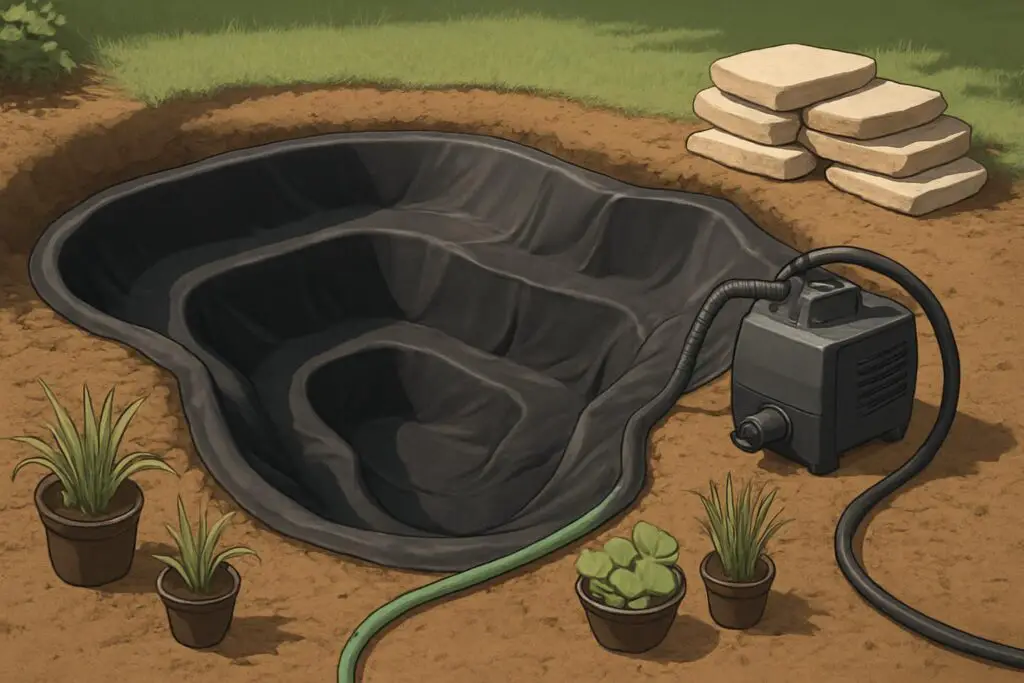
Mark the outline with a rope or garden hose. Add plant shelves at 8 to 12 inches deep around the edges. Plan a deeper zone of 24 to 36 inches. Check that edges are level with a long board and level tool. Dig gradually and check levels often. Remove sharp stones and roots from the hole.
Underlayment and liner install
Place a non woven underlayment over the entire hole. Roll out the liner and center it with extra overlap beyond the edges. Press it gently into shelves and the deep zone. Do not stretch the liner. Leave generous slack for settling. The overlap should extend 12 inches or more beyond the edge for secure anchoring.
Fill and edge finishing
Begin filling with a hose while you pull and fold liner creases neatly. Work from the center outward. As the water rises, smooth wrinkles on shelves and corners. Once full, set the edge with flat stones, cap blocks, or turf. Keep the final water level about one inch below the lowest edge. Hide the liner with edging that wraps slightly down to the water to mask black lines.
Install pump and filter
Place the pump in a pump vault, skimmer box, or on a stable riser above the bottom. Connect hose to the filter and return line. Prime and test for leaks. Keep hose runs smooth with minimal bends. Secure all clamps. Turn on the pump. Confirm strong flow back to the pond and no kinks.
Start up and cycling
Add dechlorinator if you used tap water. Seed the filter with beneficial bacteria. Run the system 24 hours a day. Let the pond cycle for 2 to 4 weeks before adding many fish. During this time, feed lightly and test water so bacteria can build up.
Plants That Keep Water Balanced
Floating plants
Floating plants shade the surface and absorb nutrients. Water lettuce and water hyacinth are common in warm seasons. In many regions they are seasonal. Check local rules and never release plants into natural waterways.
Marginal plants
Marginal plants sit on shelves in shallow water. Good choices include pickerel rush, dwarf cattail, iris, sweet flag, and creeping jenny. They add height and pull nutrients from the water. Place them around edges for a soft, natural look.
Submerged oxygenators
Submerged plants live fully underwater and provide cover for fish. Options include hornwort and anacharis. They help stabilize oxygen and filter the water.
Planting method and media
Use aquatic planting baskets so roots stay contained. Use heavy clay or aquatic soil. Do not use potting soil. Top pots with pea gravel to keep soil in place. Rinse plants before placing them to reduce pests. Aim for 50 to 70 percent surface coverage with plants in summer to limit algae.
Fish for Beginners
Good starter species
Goldfish, comets, and shubunkins are hardy and colorful. Koi need larger, deeper ponds and strong filtration. If you want koi, plan for more space and budget.
Stocking slowly
Start with a light fish load. A simple rule is one inch of fish per 10 gallons at first. Add fish in stages over several weeks. This protects water quality and gives bacteria time to grow. Feed small amounts that fish finish in two minutes. In cold weather below 50 degrees Fahrenheit or 10 degrees Celsius, stop feeding.
Acclimation and quarantine
Float the fish bag for 15 to 20 minutes to match temperature. Add small amounts of pond water to the bag over another 15 minutes. Release fish gently. If possible, quarantine new fish for two to four weeks to avoid introducing disease.
Water Quality Basics
Test schedule and targets
Test weekly for ammonia, nitrite, nitrate, and pH during the first two months. After that, test every two to four weeks or when something seems off. Targets are ammonia zero, nitrite zero, nitrate under 40 parts per million, and a stable pH between 6.8 and 8.2. Keep alkalinity stable to support pH. Stability matters more than chasing a specific number.
Dechlorination and beneficial bacteria
Always add dechlorinator when using tap water. Chlorine and chloramine harm fish and bacteria. Dose for the full pond volume when doing large water changes. Support your biofilter by rinsing filter media in a bucket of pond water, not tap water.
Maintenance Calendar
Daily and weekly tasks
Do a quick look each day. Check that the pump runs, the water looks clear, and fish act normal. Once a week, empty the skimmer basket, remove leaves, and test water. Top up evaporation loss with dechlorinated water.
Monthly tasks
Rinse mechanical filter pads. Vacuum or net out settled debris. Trim plants and thin overgrown areas. Check hose clamps and the pump intake for blockages.
Seasonal care
In spring, inspect liner edges, clean filters, and restart plants. In summer, add aeration and shade if water warms. In fall, net the pond to catch leaves and reduce nutrient load. In winter, keep a small hole in ice with a deicer or air stone so gases can escape. Do not hammer ice. Stop feeding fish below 50 degrees Fahrenheit or 10 degrees Celsius.
Algae Control Without Harsh Chemicals
Balance is the goal. Provide 50 to 70 percent surface plant cover in summer. Avoid overfeeding and overstocking. Clean debris before it decays. Use a UV clarifier if green water persists. Maintain strong biofiltration and good circulation. Expect some algae. It is normal. Aim to manage, not to eliminate it entirely.
Predators and Safety
Give fish hiding places with caves, plant cover, and deeper zones. A net or fishing line grid can deter herons. Avoid steep, slippery edges. Set sturdy edging stones and check they do not wobble. Use a fence or shallow design if children play nearby. Keep electrical work protected with GFCI outlets.
Costs to Expect
Costs vary by size and materials. A small liner pond of 500 to 1000 gallons typically includes liner and underlayment, a reliable pump, a filter with UV, rock and edging, plants, fish, and test kits. Expect ongoing costs for electricity, dechlorinator, fish food, and replacement filter media. Buying quality once reduces long term costs and failures.
Common Mistakes to Avoid
Pond too small or too shallow. Wrong location under heavy trees. No plan for filtration. Pump undersized for the pond and waterfall. Adding many fish too soon. Skipping dechlorinator. Overcleaning filters with tap water and killing bacteria. Overfeeding and fueling algae. Neglecting edge leveling so water line shows. Not testing water until there is a problem.
Troubleshooting Quick Guide
Green water means excess light and nutrients. Add plants, shade, and improve filtration. Consider a UV clarifier. String algae thrives in shallow sunny areas. Remove by hand and reduce nutrients. Cloudy water often follows overfeeding or a new pond cycle. Feed less and allow bacteria to mature. Fish gasping at the surface indicates low oxygen. Increase aeration and reduce feeding. Bad smells point to decaying debris. Clean the bottom and improve flow. If water level drops, turn off the pump and watch the level. If the drop stops, inspect the stream or waterfall for leaks. Patch liner leaks with a proper liner patch kit.
Sustainable Choices
Use native plants suited to your climate. Avoid chemical algaecides. Compost plant trimmings away from storm drains. Consider a small solar fountain for bird baths or side features. If you collect rainwater, filter debris and understand that rain can be very soft, so monitor pH and alkalinity.
Conclusion
A clear plan, the right equipment, balanced planting, and steady maintenance create a pond that thrives. Start with a sensible size, size your pump and filter to the job, plant generously, and add fish slowly. Test water, feed lightly, and keep oxygen high. Follow the steps in this guide and your first home pond will be stable, healthy, and a daily pleasure.
FAQ
Q: What size and depth should a beginner pond be
A: For beginners, a pond of 500 to 1500 gallons with a depth of 24 to 36 inches is a practical and stable choice.
Q: How should I size the pump for my pond
A: Choose a pump that turns over the full pond volume about once per hour, and add 25 to 50 percent capacity if you have a waterfall to offset lift losses.
Q: Do I need both a pump and a filter
A: Yes, you need a pump for circulation and a filter for mechanical and biological cleaning, and a UV clarifier can help if green water persists.
Q: How many fish should I start with
A: Start with a light fish load using one inch of fish per 10 gallons at first, and add fish in stages over several weeks.
Q: What water test targets should I aim for
A: Targets are ammonia zero, nitrite zero, nitrate under 40 parts per million, and a stable pH between 6.8 and 8.2.