
We are reader supported. When you purchase through links on our site, we may earn an affiliate commission. Also, as an Amazon affiliate, we earn from qualifying purchases.
Beneficial bacteria power every stable aquarium. They convert toxic waste into safer compounds and keep fish alive. When you understand how these microbes work in the nitrogen cycle, you make better choices about setup, stocking, and maintenance. This guide explains the role of beneficial bacteria in plain language, with clear steps you can follow from day one. You will learn where bacteria live, how to grow them, how to test water, and how to fix common problems before they harm your fish.
What the nitrogen cycle does in an aquarium
Fish and other animals produce ammonia through waste and breathing. Uneaten food and decaying plants also release ammonia. Ammonia is highly toxic even at low levels. Beneficial bacteria transform ammonia into nitrite, then nitrite into nitrate. Nitrate is far less harmful and can be controlled with water changes, plants, and in some setups by denitrification.
Without the nitrogen cycle, ammonia and nitrite build up fast and cause rapid stress, gill damage, disease, and death. A cycled tank processes all daily ammonia into nitrate before it can harm fish. Your goal is simple. Keep ammonia at zero, nitrite at zero, and nitrate in a safe range that you control through routine maintenance.
The main players beneficial bacteria
Ammonia oxidizers
These bacteria convert ammonia into nitrite. In freshwater tanks, both bacteria and archaea can perform this job. Species such as Nitrosomonas are common in tanks with moderate to high pH. In some systems, ammonia oxidizing archaea dominate at lower nutrient levels. Regardless of the exact species, they need oxygen, a stable surface to live on, and a steady supply of ammonia.
Nitrite oxidizers
These bacteria convert nitrite into nitrate. Species such as Nitrospira and Nitrobacter handle this step. They are slower growing than many other microbes. They also need oxygen and stable surfaces. Because they lag behind ammonia oxidizers, nitrite can linger in new tanks. This is why the cycle is not complete until both ammonia and nitrite read zero every day for at least a full week under normal feeding.
Heterotrophs and denitrifiers
Heterotrophic bacteria break down solid waste and dissolved organics into ammonia. They work faster than nitrifiers but do not replace them. In low oxygen zones, denitrifying bacteria can convert nitrate into nitrogen gas. Classic deep sand beds in marine tanks use this process. In most freshwater tanks, full denitrification is limited, so you still rely on water changes, plants, or specialized media to manage nitrate.
Where bacteria live and why it matters
Surfaces and biofilm
Beneficial bacteria live on surfaces as biofilm. They are not free swimmers in the water column. Glass, substrate, rocks, driftwood, and plant leaves all carry biofilm. The more stable surface area you have, the more room for bacteria to colonize. Smooth bare glass has little area. Porous materials offer more real estate.
Filter media and flow
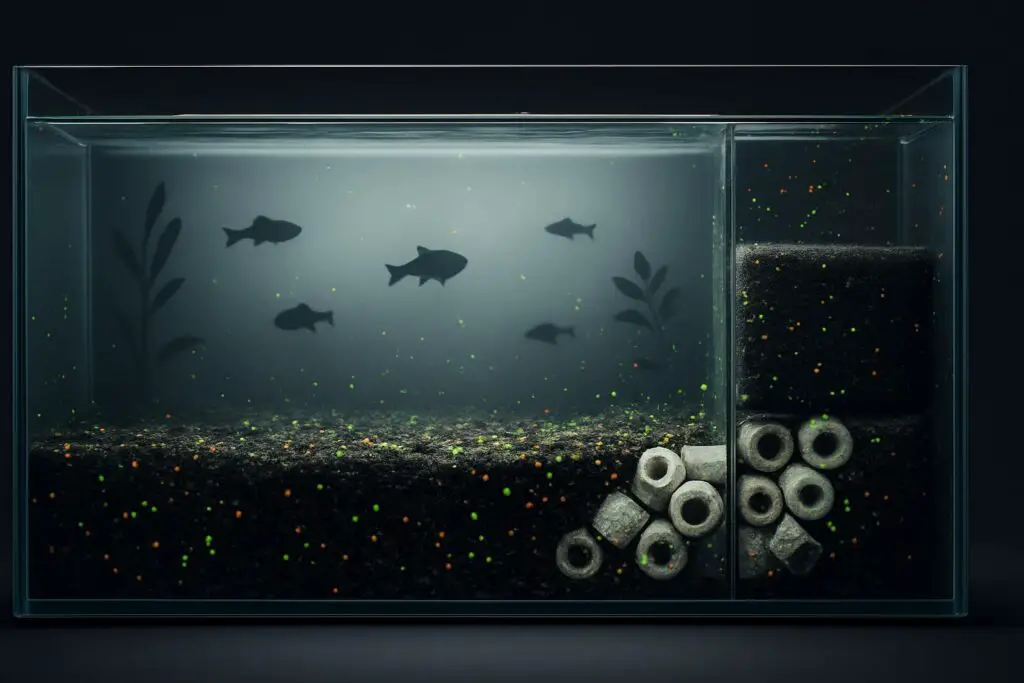
The filter is the main home for nitrifying bacteria because it provides oxygen rich flow across a large surface. Sponges, ceramic rings, sintered glass, lava rock, and biomedia plates all work. Flow must be steady. If flow stalls for hours, oxygen drops and nitrifiers die back. A reliable filter with suitable media is the heart of your biofiltration.
Substrate and decor
Gravel and sand hold bacteria and trap detritus. Vacuuming keeps the balance. Do not overclean and strip all biofilm. Rinse gently and leave some areas undisturbed each maintenance session. Porous rock and wood support biofilm and can help stabilize the cycle by spreading colonies across the tank.
Conditions that control bacterial growth
Oxygen and flow
Nitrifiers are aerobic. They require oxygen to function. Strong aeration and filter turnover keep them efficient. Avoid long power outages and clogged filters. If power fails, open the filter and keep media wet but not submerged in stagnant water. Add aeration as soon as possible when power returns.
Temperature
Most aquarium nitrifiers grow well between 20 and 30 degrees Celsius. Below that range, activity slows. Over 32 degrees, many strains are stressed. Keep temperature stable for your species, and the bacteria will be stable as well. Wild swings lead to mini cycles.
pH and hardness
Nitrification is pH sensitive. It runs faster near neutral to slightly alkaline conditions. In very low pH water below 6.5, nitrification can slow sharply. In soft acidic tanks, rely more on plants, frequent water changes, lighter feeding, and extra surface area. In hard alkaline tanks, nitrification is robust but ammonia is more toxic in its free form, so test often during the cycle.
Salinity differences freshwater vs marine
Freshwater and marine tanks host related but distinct communities. Do not mix media from marine to freshwater or the reverse without understanding the impact. Brackish tanks support their own mix. If you change salinity, expect bacteria to adjust slowly. Plan for gentle transitions and careful testing.
How to cycle a new tank
Fishless cycling step by step
Fishless cycling is humane, predictable, and fast when done right. Start with dechlorinated water, heater, and running filter with biomedia. Dose a known amount of pure ammonia. Aim for about 2 ppm. Test ammonia daily. When ammonia drops and nitrite appears, keep feeding small doses of ammonia to about 1 to 2 ppm each day. When nitrite peaks then begins to drop and nitrate rises, you are close. The cycle is complete when the tank can process a 2 ppm ammonia dose to zero ammonia and zero nitrite within 24 hours while nitrate rises. Then perform a large water change to lower nitrate before adding fish.
Fish in cycling safer approach
If fish are already present, use a conservative feeding plan, strong aeration, and daily testing. Keep ammonia and nitrite at or near zero with partial water changes as needed. Use a water conditioner that temporarily binds ammonia and nitrite. Add seeded media or bottled nitrifiers to speed colonization. Keep stocking low until the tank can hold zero ammonia and zero nitrite for a week with normal feeding.
Using bottled bacteria
Quality bottled nitrifiers can shorten cycling time. Choose products stored cold when possible and check expiry dates. Shake well and add to the filter and tank. Continue to provide an ammonia source. Even with bottled bacteria, testing is required. Do not add a full stock of fish until you see stable zero ammonia and zero nitrite readings under your actual feeding habits.
Testing schedule and goals
During cycling, test ammonia and nitrite every day. Test nitrate twice a week. After cycling, test weekly or whenever you change stock, media, or feeding. Targets are simple. Ammonia zero. Nitrite zero. Nitrate under 20 to 40 ppm for most freshwater fish, lower for sensitive species and planted tanks, and under about 10 to 20 ppm for reef tanks.
Avoid these common mistakes
Starting with fish and no plan leads to stress. If you must start with fish, feed lightly, use a conditioner that detoxifies ammonia and nitrite, and test daily. Never rely on guesswork.
Washing filter media under tap water with chlorine kills biofilm. Always rinse media in a bucket of tank water during water changes.
Replacing all media at once removes most bacteria. Stagger changes or keep old media in the filter with new media for several weeks.
Overcleaning substrate and decor strips biofilm. Clean in sections. Leave some areas untouched each time.
Overfeeding overwhelms the biofilter. Feed small amounts that fish finish in under two minutes. Remove uneaten food.
Ignoring pH, temperature, or oxygen issues leads to slow or stalled cycles. Keep parameters stable and provide strong aeration.
Maintenance that protects bacteria
Water changes
Regular water changes remove nitrate and dissolved organics. They do not remove bacteria from surfaces. Use a dechlorinator for every change. Match temperature to avoid stress. In most tanks, weekly changes of 25 to 50 percent work well. Heavily stocked tanks may need more frequent changes.
Cleaning filters
Clean filters when flow drops, not on a fixed calendar. Squeeze sponges or rinse ceramic media gently in tank water. Clean only part of the media at a time. Avoid hot water, soap, or bleach unless you are resetting the system.
Media replacement rules
Biomedia can last for years. Replace only when it crumbles. Carbon is optional and does not replace biomedia. If you use carbon, do not toss the only mature media during replacement. Keep at least one permanent bio stage in your filter at all times.
Troubleshooting spikes
Ammonia spike
Causes include new tanks, dead livestock, overfeeding, clogged filters, or power loss. Actions are straightforward. Stop feeding. Perform a large water change. Add aeration. Use a conditioner that detoxifies ammonia. Check for dead animals and remove them. Clean the filter gently to restore flow. Resume feeding lightly after ammonia returns to zero.
Nitrite spike
Nitrite rises after ammonia drops in a new cycle or after a disturbance. Water changes help. Add chloride ions with aquarium salt at a low dose if your species tolerate it, as chloride reduces nitrite uptake at the gills. Continue to maintain oxygen and flow. Do not overclean all surfaces at once.
Nitrate creep
Nitrate climbs over time as the final product of nitrification. Control it with weekly water changes, live plants, reduced feeding, and better mechanical removal of detritus. In marine systems, protein skimmers, refugiums with macroalgae, sulfur denitrators, or deep sand beds can help. In freshwater high tech planted tanks, nitrate is often consumed by plants, but balance is still needed.
Plants and the nitrogen cycle
Live plants help stabilize the cycle. They take up ammonium and nitrate, shade algae, and host biofilm. Fast growing stem plants, floating plants, and healthy root systems act as nutrient sinks. They do not replace nitrification in most tanks but they reduce the load and buffer small mistakes. Provide suitable light, keep a consistent photoperiod, and prune regularly to maintain growth.
Advanced topics in denitrification
Deep sand beds and anoxic zones
In marine systems, deep sand beds can create low oxygen layers where denitrifiers convert nitrate into nitrogen gas. This method requires careful grain size, depth, and low disturbance. In freshwater, full denitrification is less predictable in typical home tanks. If you aim for this route, research plenum methods, slow flow zones, and long term stability considerations. Most freshwater keepers rely on water changes and plants instead.
Bio media myths and realities
Surface area matters, but marketing claims can be exaggerated. Sponge, ceramic rings, and sintered glass all work if kept clean and oxygenated. Media that clogs easily becomes a detritus trap and reduces oxygen, which hurts nitrification. Choose media that balances area with flow. More media does not fix an undersized filter or poor maintenance.
UV sterilizers and medications
UV sterilizers kill free floating microbes but have little effect on bacteria attached to surfaces. They do not crash a mature biofilter when used correctly. Broad spectrum antibiotics can harm nitrifying bacteria. Use medications in a hospital tank when possible. If you must medicate the display, monitor ammonia and nitrite daily and be ready for extra water changes and bacteria supplements.
Special cases
S hrimp and nano tanks
Small volumes swing fast. Ammonia spikes hit harder and quicker. Use oversized filters with gentle flow guards, lots of biofilm friendly surfaces, and light feeding. Mineral stability and consistent remineralization are important for shrimp. Cycle fully before adding livestock and add stock slowly.
High bioload cichlid tanks
Large active fish produce heavy waste. Use strong mechanical prefiltration to catch solids before the bio media. Run generous biomedia volume with high oxygen flow. Increase water change frequency. Keep pH and hardness stable. Overfilter rather than underfilter.
Marine and reef tanks
Live rock, protein skimmers, and refugiums complement bacterial processes. Salinity stability, strong aeration, and high quality source water are critical. Cycle with patience and add livestock slowly. Many reef systems develop complex bacterial communities over months, so resist rapid changes.
Feeding the filter and stocking strategy
Nitrifying bacteria grow to match available ammonia. If you add many fish at once, you can overwhelm the existing colonies. Stock in stages. After each addition, feed modestly and watch test results for a week. When ammonia and nitrite stay at zero, you can add the next group. This rolling approach matches bacterial capacity to your bioload.
During the initial cycle, the bacteria need a steady ammonia source. Ghost feeding flakes is imprecise. Pure ammonia or pre measured ammonium chloride is more accurate. If you use food, keep it minimal to avoid foul conditions. Always verify progress with tests rather than guessing.
Practical startup plan
Rinse substrate and decor. Set up the tank, heater, and filter with suitable biomedia. Fill with dechlorinated water and set temperature. Add bottled nitrifiers if you choose. Dose ammonia to about 2 ppm for fishless cycling. Test daily. Maintain strong aeration and stable temperature. Repeat small ammonia doses as levels drop. When the system processes 2 ppm ammonia to zero ammonia and zero nitrite within 24 hours for a week, perform a large water change to reset nitrate. Add a small group of hardy fish. Feed lightly. Test daily for a few days, then weekly. Add the next group only after a week of stable zero readings. Keep nitrate in range with water changes.
Monitoring that keeps you ahead
Use reliable liquid test kits for ammonia, nitrite, nitrate, and pH. Keep a simple log. Record dates, test values, livestock additions, filter cleanings, and water changes. This record helps you catch trends early. If values drift, you can trace the cause and correct it before fish show stress.
Signs your biofilter is healthy
Ammonia stays at zero between feedings. Nitrite is zero. Nitrate rises slowly and predictably. Water is clear with minimal odor. Fish show normal appetite and behavior. Plants grow and hold color. Filter flow is steady, not choking with debris. Your tank maintains stability through routine changes because the microbial community is strong.
When and how to seed bacteria
Seeding jump starts a new tank. Move a piece of mature sponge or ceramic media from a healthy tank to the new filter. Keep it wet and oxygenated during transfer. Avoid seeding from tanks with disease. You can also run an extra sponge filter in an established tank for a few weeks, then move it to the new tank on setup day. This method is simple and very effective.
What to do after a disruption
Power outage, filter failure, deep cleaning, or a medication course can reduce bacteria. After any disruption, test daily. Feed lightly. Add bottled nitrifiers or seeded media if available. Increase aeration. Perform partial water changes if ammonia or nitrite rise. Within a few days to a week, a well managed system recovers.
Myths that waste time and money
Myth that water changes slow cycling. Fact that water changes protect fish and do not remove surface bacteria. Myth that carbon is required for biofiltration. Fact that carbon adsorbs chemicals but offers limited long term bio area. Myth that more exotic media always cycles faster. Fact that stable flow, oxygen, and good maintenance matter more than brand. Myth that you should never clean filters. Fact that gentle cleaning preserves biofilm and prevents anoxic clogs.
Simple habits that build long term stability
Feed modestly. Clean filters when flow drops. Vacuum substrate in sections. Change water weekly. Keep spare dechlorinator and test kits on hand. Quarantine new fish to avoid introducing disease that might force whole tank treatments. Keep power backup or at least a battery air pump for storms. These habits protect the bacteria you rely on.
Conclusion
Beneficial bacteria run the nitrogen cycle that keeps aquariums safe. They convert toxic ammonia into nitrite, then nitrite into nitrate. They live on surfaces, thrive with oxygen and steady flow, and grow to match the bioload you create. When you cycle the tank with a plan, test regularly, avoid harsh cleaning, and stock slowly, the bacteria reward you with a stable system and healthy fish.
Start with a strong filter and real surface area. Provide oxygen and stable temperature. Choose fishless cycling or a careful fish in method and verify progress with tests. Respect the biofilm in your filter and on your surfaces. Make water changes a habit. When problems appear, act early with water changes, aeration, and measured feeding. With these steps, your biofilter becomes reliable, your maintenance becomes routine, and your aquarium becomes a safe and predictable environment for every inhabitant.