
We are reader supported. When you purchase through links on our site, we may earn an affiliate commission. Also, as an Amazon affiliate, we earn from qualifying purchases.
Algae arrives in every aquarium. The fastest way to regain control is to combine good husbandry with a cleanup crew that targets the exact algae you have. This guide shows you how to choose the best algae-eating fish and invertebrates for your tank, how to match them to algae types, and how to keep them healthy and effective. You will learn what works, what does not, and what to avoid so you stop chasing quick fixes and build a balanced tank that stays clear.
Introduction
Algae is a symptom, not the root problem. Extra light, unstable nutrients, and immature biofiltration all invite growth. Algae eaters help limit it, but they only shine when you also manage light, feeding, filtration, and plant health. Start by identifying your algae type. Film and diatoms need different grazers than hair algae or black beard algae. Then match species to your tank’s size, water, and livestock. The right choice saves time and frustration. The wrong one costs money and peace in the tank.
The right mindset for algae eaters
Cleanup crews are partners, not replacements, for maintenance. No single species solves every algae. Plan for the algae you have now and the one that may appear next. Confirm compatibility with your fish. Many predators relish shrimp and snails. Invertebrates are sensitive to copper medications and some treatments. Acclimate slowly, quarantine when possible, and feed them once visible algae declines so they do not starve. No. Algae eaters help, but they do not replace water changes, nutrient balance, light control, and manual removal.
Freshwater all-star algae eaters
Otocinclus catfish
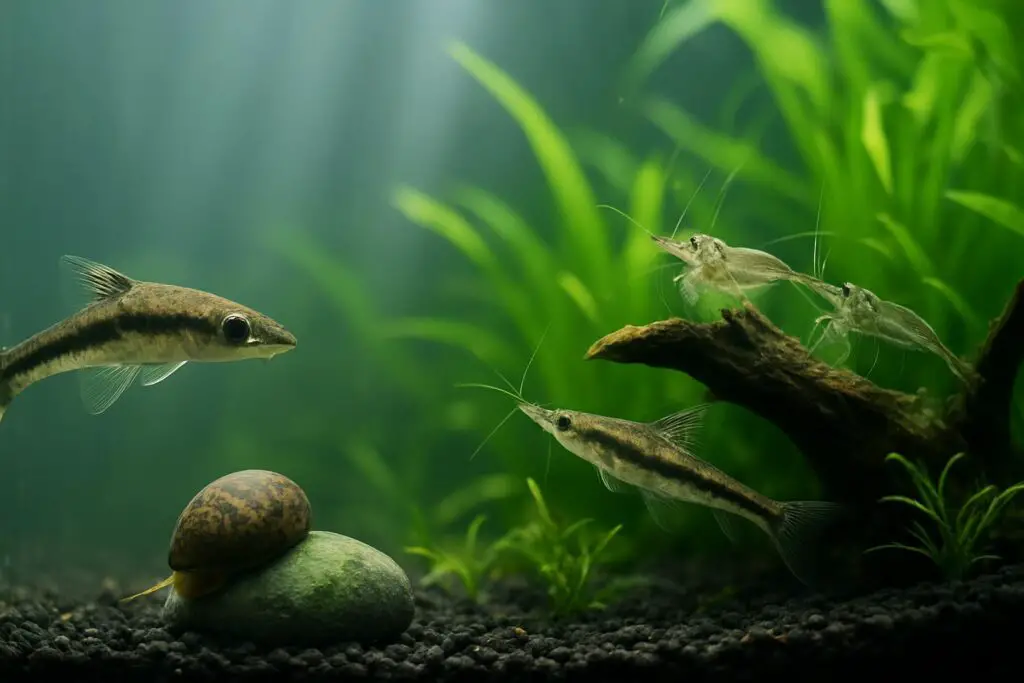
Otocinclus are the kings of soft algae film and diatoms. They stay small, are peaceful, and excel in planted nano tanks. Keep them in groups of at least four to six in a mature tank with stable parameters and good oxygenation. Choose individuals with rounded bellies at the store. Provide driftwood and smooth surfaces. Supplement with blanched vegetables or quality algae wafers when algae thins. Avoid new or unstable tanks because otos are sensitive to swings and poor biofilm availability.
True Siamese algae eater
The true Siamese algae eater is famous for tackling black beard algae and green hair algae. It is active, relentless, and best in a tank with real swimming space. Provide at least a 40 gallon tank for adults. Keep one individual or a small group to spread any sparring. Look for a solid black stripe that continues into the tail and clear fins. Flying fox and false SAE look similar but do not match the same algae appetite. Offer a varied diet with algae wafers and vegetables so they do not pester tankmates.
Bristlenose pleco
Bristlenose plecos are robust, plant safe grazers for medium tanks. They scrape film algae, some green spot algae, and leftover food without demolishing aquascapes like common plecos. A single bristlenose fits a 20 to 30 gallon tank with wood and hiding spots. Expect noticeable waste output, so plan filtration and maintenance accordingly. Feed algae wafers, green vegetables, and provide real driftwood to rasp for fiber.
Amano shrimp
Amano shrimp punch far above their size. They pick at hair algae, diatoms, and leftover fish food, and they clean leaves without damaging plants. Keep them in groups of six or more with lots of cover. They cannot complete their life cycle in full freshwater, so population stays stable. They are sensitive to copper and aggressive fish. Feed small pellets or blanched greens so they do not compete with fish at the surface.
Nerite snails
Nerite snails are the best snail for stubborn green spot algae and film algae on glass and hardscape. They do not reproduce in freshwater, so they will not overrun your tank. Eggs may appear as white dots on hard surfaces. Provide a tight lid because they sometimes explore above the waterline. Ensure adequate calcium and stable alkalinity to maintain shell health.
Cherry shrimp and dwarf shrimp
Cherry shrimp excel at biofilm and light algae cleanup in low predator tanks. They work best as a self-sustaining colony in a well planted nano tank. They will not erase heavy hair algae but will keep surfaces tidy between manual maintenance sessions. Offer powdered foods and botanicals to support grazing.
Hillstream loaches
Hillstream loaches graze diatoms and film in high oxygen setups. They need cool to moderate temperatures, strong flow, and algae covered rocks. They are not for tropical, low flow community tanks. Treat them like stream fish with extra aeration and clean, fast water.
Species to avoid or handle with care
Chinese algae eater grows large, often stops eating algae, and can become aggressive as it matures. Common pleco reaches large sizes, uproots plants, and overloads filtration. Many large cichlids and loaches will eat shrimp and snails. Research before adding any species marketed as a cleaner.
Saltwater standouts
Kole and Tomini tangs
Kole and Tomini belong to the bristletooth group and excel at film, detritus, and fine algae. They are among the smaller tangs yet still need long tanks with plenty of rockwork and flow. Feed nori and algae based pellets daily. They are generally reef safe and useful for controlling film on rocks.
Yellow tang and other herbivorous tangs
Yellow tangs and similar species graze green film and hair algae and need large, stable systems with oxygen rich water and room to cruise. Offer constant access to nori to keep them occupied and healthy. Avoid crowding or mixing with aggressive tangs unless the tank is very large.
Lawnmower and starry blennies
These blennies comb hair algae and film with constant perching and grazing. They need a maturing reef with real algae or consistent supplementation. Some individuals become picky once the tank is spotless. Place nori or spirulina enriched foods to prevent weight loss. Watch for rare nipping at certain corals if underfed.
Turbo, trochus, and astraea snails
Turbo snails move heavy and eat hair algae fast in larger reef tanks. Trochus snails are versatile, can right themselves if flipped, and often breed in home aquaria. Astraea snails are diligent film grazers but cannot flip easily. Drip acclimate all snails and provide stable salinity and alkalinity for shell growth.
Emerald crabs
Emerald crabs target bubble algae and will pick at film and leftover food. Keep them small and well fed to reduce the chance of opportunistic picking. Provide secure rockwork and avoid placing them in tanks with aggressive fish that may harass them.
Urchins such as tuxedo
Urchins remove turf and film with strong scraping power. They can carry small objects and knock loose frags. Glue corals firmly and expect some redecorating. They need stable parameters and steady algae or supplemental nori.
Sea hares for emergencies only
Sea hares are powerful hair algae eaters but are sensitive and short lived. Use them only in large, stable tanks facing severe outbreaks and have a plan to rehome once the algae is gone. Prevent exposure to powerhead intakes and monitor carefully.
A note on Nassarius snails
Nassarius are detritivores, not algae eaters. They clean leftover food and stir sand but will not solve algae.
Match algae eater to algae type
Diatoms and brown dust
Freshwater: Otocinclus, Amano shrimp, and nerite snails excel. Saltwater: Trochus and turbo snails clear film on rock and glass. Diatoms also fade as silicates drop and biofiltration matures.
Green film algae
Freshwater: Bristlenose plecos, otocinclus, and nerites keep film in check. Saltwater: Bristletooth tangs, trochus, and urchins handle rockwork and glass.
Green hair algae
Freshwater: True Siamese algae eater and Amano shrimp are the go to pair, supported by manual pruning. Saltwater: Lawnmower blenny, turbo and trochus snails, and urchins tackle most growth. Keep nutrients stable to prevent regrowth.
Black beard algae
The true Siamese algae eater is the most reliable fish for black beard algae. Pair it with manual pruning for best results. Balance CO2 and flow in planted tanks to prevent it from returning.
Green spot algae
Nerites and bristlenose plecos scrape hard green spot algae on glass and hardscape. Reduce photoperiod and keep phosphate stable to slow it down.
Cyanobacteria and dino warnings
Cyanobacteria and some dinoflagellates are not algae. Cleaners will not solve them. Increase flow, stabilize nutrients, and improve mechanical filtration and microbiome diversity instead.
Stocking guidelines without overdoing it
Start light and scale up. Overloading a cleanup crew leads to starvation, empty wallets, and dead inverts. For freshwater, try one nerite per 5 to 10 gallons, four to six Amano shrimp in a 10 to 20 gallon, and a group of four to six otocinclus in a mature 10 to 20 gallon. Use a single bristlenose pleco for tanks of 20 gallons and up. Keep one true Siamese algae eater unless you have space for a small group and a tank at least 40 gallons.
For saltwater, one trochus per 5 to 10 gallons and one turbo per 10 to 15 gallons is a solid start. Add a single emerald crab per 30 gallons if bubble algae appears. Choose one urchin for 40 gallons and up, after corals are well secured. Add a bristletooth tang only to long tanks with ample grazing area and strong filtration.
Care habits that keep algae eaters effective
Acclimation and quarantine
Invertebrates dislike rapid changes. Drip acclimate snails, shrimp, and urchins to match temperature and salinity. Quarantine when possible to prevent hitchhikers, pests, and disease. Oxygenate shipping water quickly on arrival.
Feed them when algae is low
Supplement with algae wafers, blanched spinach or zucchini, and quality pellets. For marine herbivores, clip nori daily. Provide real wood for plecos to rasp. Starving cleaners become weak, opportunistic, or dead.
Protect them from medications
Copper and some parasite treatments kill invertebrates. Treat fish in a hospital tank. Read labels and remove sensitive organisms before dosing the display tank.
Shell and molt health
Snails and urchins need calcium and stable alkalinity to maintain shells. Shrimp need consistent minerals to molt successfully. Large swings in hardness and temperature cause losses. Top off with pure water to avoid salinity creep in reefs.
Prevent escapes and predation
Use tight lids for nerites and keep waterline below the rim. Avoid housing shrimp and small snails with predators such as puffers, large cichlids, or loaches. In reefs, watch for wrasses or aggressive crabs that may harass cleaners.
Breeding control
Nerite snails will not reproduce in full freshwater, so they control algae without causing population booms. Cherry shrimp may multiply in peaceful, planted tanks and maintain their own numbers. Malaysian trumpet snails can explode with overfeeding, so manage food input.
Buying tips and identification
Spot the true Siamese algae eater
Look for a solid black stripe that continues onto and through the tail with a jagged edge. Fins should be clear. Avoid species with golden highlights on the stripe or solid colored fins. Ask about adult size and behavior to confirm the match.
Choose healthy otocinclus
Pick active fish with rounded bellies and clear eyes. Avoid individuals that cling weakly or look hollow. Ensure the store feeds them vegetable foods and keeps them in stable, mature systems.
Identify amano shrimp
Amano shrimp are larger than most neocaridina and carry a broken dark line of dots along the body. They are fast, bold, and tolerant once established. Do not confuse them with smaller algae grazers if you want heavy lifting.
Pick the right snails
Nerite species include zebra, olive, and horned varieties. All are excellent film and spot algae cleaners. In reefs, trochus are a top choice because they right themselves if flipped. Acclimate slowly and check shells for damage before purchase.
Maintenance still matters
Algae eaters excel when the environment is stable. Keep a consistent photoperiod. Balance nutrients so plants outcompete algae. Prune damaged leaves, vacuum detritus, and maintain strong flow and filtration. Change water regularly. Use your crew to keep surfaces clean between manual sessions, not to avoid them entirely.
Putting it together for different tanks
Nano planted tank
Begin with a group of otocinclus and a few nerites. Add a colony of cherry shrimp if no predators are present. Feed sparingly, keep light moderate, and support plant growth. Otocinclus and Amano shrimp are top picks for small planted tanks because they stay small, focus on soft film and diatom algae, and are peaceful with plants.
Medium community tank
Choose a single bristlenose pleco, a group of Amano shrimp, and nerites. If hair algae appears, add one true Siamese algae eater. Keep feeding controlled and filtration strong.
High energy planted tank with stubborn algae
Use a true Siamese algae eater for black beard algae and Amano shrimp for hair algae maintenance. Stabilize CO2 and improve flow around dense plants. Scrub and spot treat problem areas and let your crew maintain the regrowth.
New reef tank
Start with trochus and a few turbo snails as rockwork matures. Add an urchin later for turf control if the tank is stable. If bubble algae appears, consider a small emerald crab. Delay tangs until the tank is large and stable enough to support them.
Conclusion
The best algae eater is the one that matches your algae, your tank size, and your livestock. Start with correct identification, choose species with a proven track record, and support them with stable parameters and targeted feeding. Use them to maintain what your routine begins. That is how you build a tank that stays clean without constant firefighting.
FAQ
Q: What is the best algae eater for a small planted tank
A: Otocinclus and Amano shrimp are top picks for small planted tanks because they stay small, focus on soft film and diatom algae, and are peaceful with plants.
Q: Can algae eaters replace regular tank maintenance
A: No. Algae eaters help, but they do not replace water changes, nutrient balance, light control, and manual removal.
Q: Which species handle black beard algae best
A: The true Siamese algae eater is the most reliable fish for black beard algae. Pair it with manual pruning for best results.
Q: Are nerite snails safe for tanks that cannot handle snail babies
A: Yes. Nerite snails will not reproduce in full freshwater, so they control algae without causing population booms.
Q: What should I avoid when choosing an algae eater
A: Avoid the Chinese algae eater and common pleco for community tanks because they grow large and can become aggressive or destructive.