
We are reader supported. When you purchase through links on our site, we may earn an affiliate commission. Also, as an Amazon affiliate, we earn from qualifying purchases.
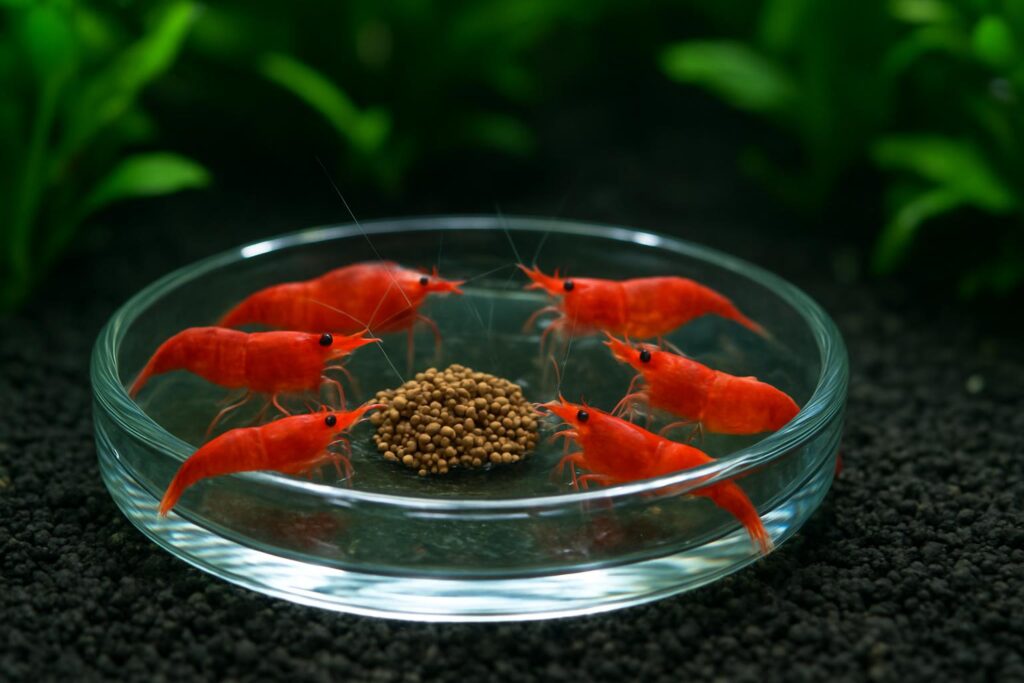
Shrimp are small, precise feeders. When food scatters across gravel or plants, much of it goes uneaten and starts to foul the water. A good feeding tray fixes that by keeping food in one spot, letting shrimp graze safely, and making cleanup fast. If you want clearer water, less waste, and better feeding control, a tray is one of the simplest upgrades you can make. In this guide, you will see what to look for in 2026 and four proven trays that work for beginners and seasoned keepers alike.
Why use a shrimp feeding tray
Cleaner substrate and water
Food stays in the dish instead of sinking into gravel or under hardscape. You remove leftovers in seconds, which helps avoid ammonia and algae swings.
Accurate feeding and less waste
Portion size becomes visible. You learn exactly how much your colony finishes within a set time window, so you feed the right amount.
Better viewing and health checks
Shrimp gather at a predictable spot. You can count juveniles, check coloration, and spot issues early.
What to look for in 2026
Material Glass and acrylic are clear and inert. Stainless steel is tough and heavy but less transparent. For most tanks, clear glass or acrylic looks best and makes inspection easy.
Size For nano tanks and small colonies, 2 to 2.5 inches works well. For 10 to 20 gallons or larger groups, 3 inches is safer. Big colonies can run two small dishes instead of one large plate to reduce crowding.
Rim height and shape A slight lip keeps pellets and powders contained. Too tall and shrimp may hesitate to climb in; too low and food can drift out if flow is high.
Stability Heavier dishes or those with a base are less likely to shift during maintenance.
Feeding tube option A tube lets you deliver food directly to the tray without scattering it in the water. Useful in tanks with fish or stronger flow.
Ease of cleaning A smooth, nonporous surface prevents biofilm from sticking and rinses clean quickly.
4 Best Aquarium Shrimp Feeding Trays for 2026
1. SunGrow Glass Shrimp Feeding Dish
This simple, clear dish has become a standard for shrimp keepers. It is compact, blends into aquascapes, and makes it easy to see exactly how much food remains. The smooth glass surface resists staining and cleans up with a quick rinse and wipe.
Why it helps Keeps pellets, wafers, and powders in one visible spot so you can dial in portions and remove leftovers easily.
Best for Nano tanks and beginner setups that need a no-fuss tray that just works.
Potential downsides Like all glass, it can chip or crack if dropped. Being lightweight, it can shift if you place it on a slope or during heavy gravel vacs.
Setup tips Place the dish on a stable, flat area near the front glass for easy access. Target-feed with a pipette to avoid scattering.
2. UP AQUA Shrimp Feeding Dish UA-028
UP AQUA’s dish is slightly thicker than many budget options, giving it a reassuring weight and stability. The clean, low profile disappears into planted layouts while the beveled rim keeps food centered.
Why it helps Extra weight reduces accidental movement during maintenance. The beveled lip contains fine foods like snowflake or powdered blends.
Best for 10 to 20 gallon tanks or any aquascape where you want a steady dish that stays put.
Potential downsides Heavier glass costs a bit more than ultralight dishes. If you keep very fine sand, press gently to avoid creating a tilt.
Setup tips Rinse before first use. Test placement with a small pinch of food to see how flow affects the tray, then adjust position if needed.
3. COODIA Shrimp Feeder Tube with Tray Set
For tanks with higher flow or with fish that compete for shrimp food, a feeder tube changes the game. This set combines a clear tray with a delivery tube and a funnel, so food drops straight into the dish without drifting.
Why it helps Target feeding reduces waste and prevents food from blowing under rocks or into filter intakes. It also limits fish from intercepting pellets mid-water.
Best for Mixed tanks with shrimp and fish, or any setup with a stronger current that scatters food.
Potential downsides Tubes need periodic cleaning to prevent buildup. Suction cups can wear over time and may need replacement.
Setup tips Mount the tube so the outlet sits just above the tray rim. Use a feeding spoon or the funnel to deliver measured amounts. Feed small, wait 30 to 60 minutes, then remove leftovers.
4. JARDIN Glass Shrimp Feeding Bowl
JARDIN offers a wide, low-profile glass bowl that gives shrimp plenty of room to graze. The generous diameter is useful for larger colonies and for foods that spread, like blanched vegetables or snowflake pellets.
Why it helps Extra surface area reduces crowding and lets more shrimp feed at once, which helps shy juveniles get their share.
Best for Medium to large colonies and tanks where you want a broad, stable feeding platform.
Potential downsides The low rim can allow a bit of drift in strong flow. Place it in a calmer zone or pair it with a feeding tube for precision.
Setup tips If you serve veggies, cut thin slices so they lie flat and do not tip the bowl. Rotate the bowl’s position weekly to avoid creating a single detritus hotspot.
How to choose the right tray for your tank
Match tray size to colony and tank
For 5 gallons and smaller groups, a 2 to 2.5 inch dish is enough. For 10 to 20 gallons or bigger colonies, use a 3 inch dish or run two smaller trays at opposite sides. This reduces crowding and gives timid shrimp room to feed.
Pick the right material
Glass is clear, inert, and looks natural in planted tanks. Acrylic is lightweight and resists shattering. Stainless steel is durable and heavy, but less transparent. For most keepers, clear glass is the easiest to monitor and clean.
Think about flow and tankmates
If you run a stronger filter or keep fish that grab food mid-water, choose a tray with a feeding tube. This keeps food exactly where you want it and helps shrimp get first access.
Plan for easy maintenance
Look for smooth surfaces and a shape that is simple to lift out. The faster you can remove leftovers, the more stable your water will be.
Placement and maintenance tips
Place the tray in a calm, visible zone
Front middle or front corner on level substrate works well. Avoid direct filter outflow that can blow food out.
Feed small, observe, and remove leftovers
Start with a small portion. Give shrimp 30 to 60 minutes. If food remains, remove it and feed less next time. This tight feedback loop keeps water clean.
Clean after each feeding session
Lift the tray with forceps, rinse, and wipe off biofilm. Avoid soaps or detergents. A quick scrub with a soft brush keeps it clear.
Rotate position weekly
Move the tray slightly each week to prevent detritus build-up in one spot and to encourage even grazing across the scape.
Conclusion
A shrimp feeding tray is a small tool with a big impact. It centralizes feeding, reduces waste, keeps water stable, and makes observation easy. SunGrow keeps things simple for nanos. UP AQUA adds weight and stability for mid-size tanks. COODIA’s tube set delivers precision in higher-flow or mixed tanks. JARDIN gives wide grazing space for larger colonies. Pick the size and features that fit your setup, place the tray in a calm zone, and tighten your feeding routine. Your shrimp will be easier to monitor, your substrate will stay cleaner, and your tank will be simpler to maintain.
FAQ
Q: Do shrimp really need a feeding tray
A: No, but a tray keeps food in one spot, reduces waste, helps avoid ammonia swings, and makes cleanup fast. It also lets you see how much the colony actually eats.
Q: What size tray should I choose
A: For 5 gallons and smaller groups, use 2 to 2.5 inches. For 10 to 20 gallons or bigger colonies, use 3 inches or run two small trays.
Q: Where should I place the tray
A: Front middle or a front corner on level substrate, away from direct filter outflow. For higher flow or mixed tanks, use a feeding tube to deliver food straight to the dish.
Q: How do I keep a feeding tray clean
A: After each feeding window, lift it out, rinse, and wipe off biofilm. Avoid soaps. Rotate the tray’s position weekly to prevent detritus hotspots.
Q: Glass, acrylic, or stainless steel
A: Glass is clear and inert, acrylic is light and shatter resistant, and stainless steel is tough and heavy. For most keepers, clear glass is easiest to monitor and clean.