
We are reader supported. When you purchase through links on our site, we may earn an affiliate commission. Also, as an Amazon affiliate, we earn from qualifying purchases.
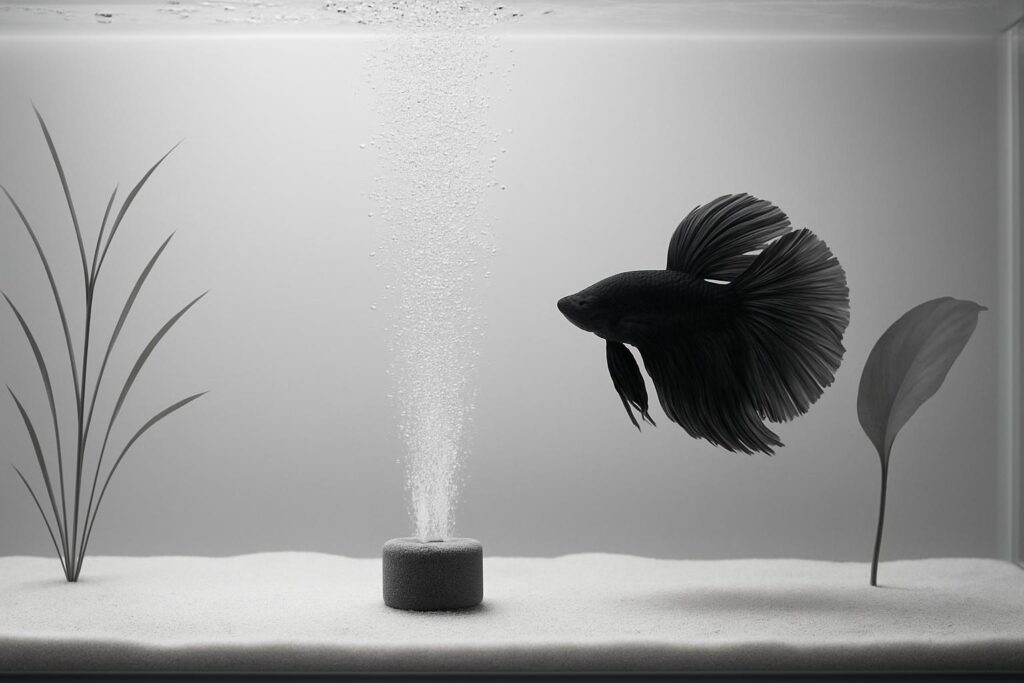
Bettas thrive in calm water, yet they benefit from steady oxygen exchange and a clean surface. The right air stone creates microbubbles that ripple the surface without blasting your fish around. This guide breaks down how air stones help, what to look for, and the 5 best betta air stones for 2026 with clear pros and cons. Keep reading to avoid noisy gear, harsh currents, and wasted money.
How an air stone helps bettas
Gentle surface agitation
Microbubbles break surface tension so fresh oxygen enters and carbon dioxide escapes. You want a light ripple, not a rolling boil. Bettas keep their fins intact and stress low when the surface is calm but active.
Labyrinth organ support
Bettas can gulp air, but that does not replace stable gas exchange across the water surface. A well tuned air stone prevents stagnant layers and keeps oxygen more consistent day and night.
Film control and circulation
Protein film and oily sheens starve the surface of gas exchange. Fine bubbles pull that film toward filtration and reduce dead spots so heat and nutrients spread evenly in the tank.
What to look for in a betta air stone
Bubble fineness and flow control
Choose stones that produce microbubbles and pair them with a control valve to dial flow. Fine bubbles move more water per watt and keep the current gentle.
Size and tank fit
For 2.5 to 10 gallon betta tanks, a compact 0.8 to 1.2 inch stone is ideal. Place it away from the resting spot and near the heater or filter intake for even circulation.
Noise and maintenance
Stones do not make noise, pumps do. Pick a quiet adjustable pump and mount it on a soft pad. Clean stones every 2 to 4 weeks to prevent clogging and pressure spikes.
5 Best Betta Air Stones for 2026
1. Hygger Nano Air Stone 0.8 inch — Best overall for ultra fine bubbles
This stainless and ceramic nano stone focuses on microbubble output in a tiny footprint. It creates a dense, tea kettle like stream of fine bubbles that ripple the surface without rough currents when paired with a gentle pump and valve. The compact profile is easy to hide behind plants or decor in tanks as small as 3 gallons.
Why it helps: Fine bubbles improve gas exchange at low flow, which keeps bettas calm and active. The small size prevents clutter and allows flexible placement.
Best for: 3 to 10 gallon tanks where you want the quietest, smoothest bubble texture and precise control.
Potential downsides: Nano stones often need a bit more pressure. Use a control valve to tune output, and ensure your pump can handle moderate back pressure.
2. Pawfly 0.8 Inch Nano Air Stone — Budget pick with strong value
Pawflys nano series offers reliable ceramic diffusers at a friendly price. The 0.8 inch model fits neatly in small betta setups and makes a steady stream of bubbles fine enough for daily aeration without blasting your fish. It pairs well with compact pumps and is easy to clean and replace.
Why it helps: Delivers balanced microbubbles for a gentle surface ripple, ideal for stress sensitive bettas and shrimp tank mates.
Best for: New keepers who want dependable aeration without paying a premium.
Potential downsides: The housing is basic. Expect performance to taper if you skip regular cleaning, and replace every few months in hard water.
3. NICREW Nano Air Stone Diffuser — Best for fine control in small tanks
NICREWs mini diffuser focuses on even bubble distribution at low flow, which is perfect for 2.5 to 5 gallon betta homes. When paired with a control valve, it creates a thin curtain of microbubbles that clears surface film without pushing the fish. The compact disk is easy to tuck in a back corner and it stays put with a suction base.
Why it helps: Very controllable output means you can keep the bubble rate low and steady for a single betta with long fins.
Best for: Nano tanks where movement must be minimal but oxygenation still matters.
Potential downsides: Like most nano stones, it needs periodic descaling. Flow can drop fast if the tank has heavy mineral buildup.
4. Uniclife 1 Inch Air Stone Cylinder 4 Pack — Best multi pack for backups
Uniclife’s one inch cylinders are simple, consistent, and great to keep on hand. Each stone puts out medium fine bubbles that are easy to throttle down for bettas. Keep one running, one soaking clean, and two dry as backups. Swapping a clogged stone takes seconds and avoids pressure spikes that can stress fish and strain pumps.
Why it helps: Consistent foam free bubbles with easy maintenance and a backup ready the moment performance dips.
Best for: Keepers who value low cost spares and routine rotation to keep bubbles smooth and quiet.
Potential downsides: Not as ultra fine as premium nano discs. If you want the softest bubble texture possible, choose a nano model above.
5. UPETTOOLS Mini Nano Air Stone Disk 1.2 inch — Best for quiet focus flow
This small ceramic disk is designed for microbubbles at a controlled rate. It excels when positioned under a leaf or behind a scape element, where the gentle bubble stream rises to lightly dimple the surface. The build is sturdy and holds up well to repeated cleaning cycles.
Why it helps: Produces a soft, even plume that prevents film in the calmest betta tanks without disrupting feeding or rest.
Best for: Aquascaped betta setups that demand discreet gear and a small footprint.
Potential downsides: Needs regular soaking to maintain output in hard water. If neglected, the micro pores clog and flow falls off quickly.
Setup and tuning tips for calm bettas
Use a control valve and check valve
Install a control valve between pump and stone to fine tune bubbles. Add a check valve so water cannot back siphon into the pump during outages.
Place the stone smartly
Position the stone near the heater or filter intake to improve circulation. Avoid blasting the bettas preferred resting area or nest site. Aim for a gentle ripple across a third of the surface.
Pre soak and clean on schedule
Soak new stones for 10 to 15 minutes before use to purge trapped air. Clean every 2 to 4 weeks. Soak in a 1 to 3 white vinegar to water mix, rinse well, and air dry. Replace stones every 3 to 6 months in hard water or when performance drops even after cleaning.
Keep noise low
Set the pump on a soft pad or foam block to cut vibration. If bubbles are too coarse or loud, lower the flow or step down to a smaller stone.
Conclusion
For bettas, the best air stone is the one that makes fine, quiet bubbles at low flow. Hygger’s nano stone leads for overall smoothness, Pawfly delivers value, NICREW shines in tiny tanks, Uniclife’s four pack ensures you always have a clean spare, and UPETTOOLS offers discreet performance for aquascapes. Choose a compact diffuser, add a control valve, position it thoughtfully, and keep it clean. Your betta gets stable oxygenation, a clear surface, and a calm home.
FAQ
Q: Do bettas need an air stone
A: Bettas can breathe from the surface, but an air stone improves gas exchange and prevents surface film as long as the flow stays gentle.
Q: What size air stone is best for a betta tank
A: For 2.5 to 10 gallon tanks, a compact 0.8 to 1.2 inch nano or ceramic stone with adjustable airflow is ideal.
Q: How strong should the bubbles be for bettas
A: Aim for a light ripple on the surface with slow rising microbubbles that do not push the fish around.
Q: How often should I clean or replace an air stone
A: Clean every 2 to 4 weeks and replace every 3 to 6 months in hard water or when flow drops despite cleaning.