
We are reader supported. When you purchase through links on our site, we may earn an affiliate commission. Also, as an Amazon affiliate, we earn from qualifying purchases.
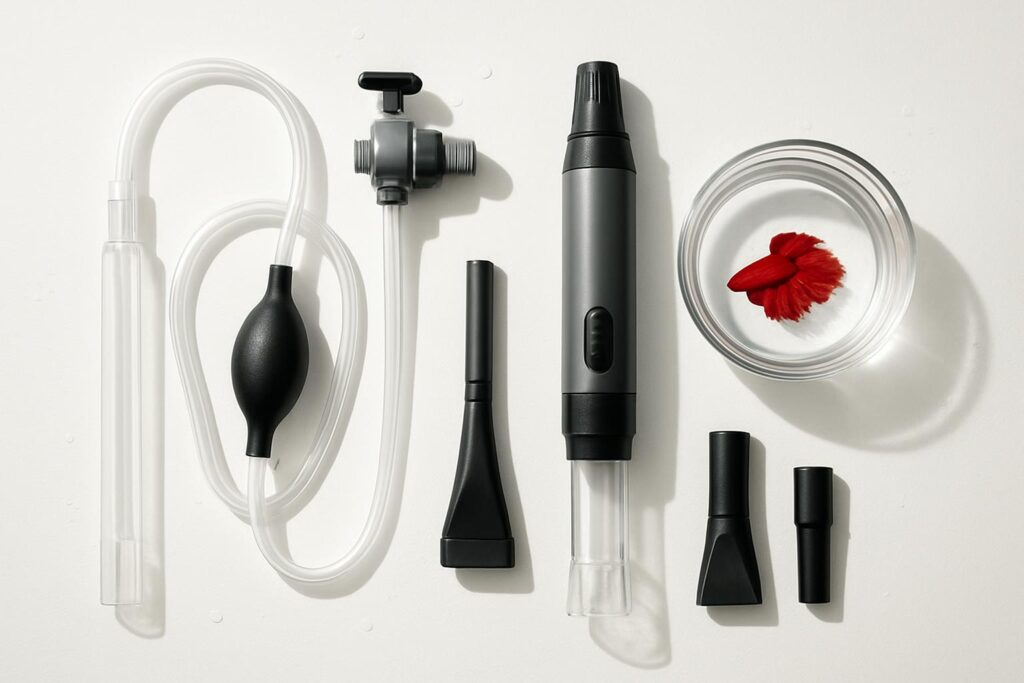
Betta fish stay healthy when their water stays stable. The fastest way to keep ammonia and waste under control is consistent water changes with the right tool. The wrong kit kicks up substrate, creates dangerous temperature swings, or even risks the fish. The right one makes partial changes quick, gentle, and repeatable. Below is a simple guide to choosing well, followed by the 5 best Betta water change kits for 2026 with clear use cases and downsides so you can pick once and use for years.
How to choose a Betta water change kit
Match the kit to your tank size
Small betta setups need small, controllable flow. Large hoses move water fast and can be risky in nano tanks. For 1–3 gallon tanks, pick a mini siphon with a narrow gravel tube. For 5–10 gallons, mini or standard small siphons work. For multiple tanks or 10+ gallons, faucet-powered systems save time and avoid buckets.
Know the four kit styles
– Manual shake-start: Low-cost, reliable, great control for nano tanks.
– Squeeze-bulb priming: Starts flow easy without mouth siphoning.
– Faucet-powered: Connects to a sink to drain and refill without lifting buckets.
– Electric/gravity hybrid: Powered pump for debris removal and partial changes; good if you cannot lift buckets.
Control and safety features that matter
– Narrow gravel tube and flow valve keep bettas safe and reduce substrate disturbance.
– Flexible hose with a clip or hook prevents spills.
– Fine intake guard or sponge stops fins or shrimp from being pulled in.
The 5 best Betta water change kits for 2026
1) Python Pro-Clean Mini Gravel Washer and Siphon Kit
This is a trusted, no-frills mini siphon designed for small tanks. The narrow intake and smooth tubing give precise control, which keeps your betta safe while you lift debris with minimal substrate collapse.
Why it helps: Gentle gravity-driven flow lets you skim waste just above the gravel and stop instantly by lifting the tube or pinching the hose.
Best for: 1–5 gallon betta tanks; beginners who want simple, reliable siphoning.
Key features: Mini gravel tube built for nano tanks; clear tubing so you can see debris; quick-start by shaking the tube.
Potential downsides: No built-in priming bulb; you need a quick shake to start the siphon.
Pro tip: Keep the tube at a slight angle and swirl just above the substrate to lift waste without sucking in sand or fine gravel.
2) Aqueon Siphon Vacuum Aquarium Gravel Cleaner, Mini
Aqueon’s mini version adds an easy squeeze-bulb primer to a narrow tube, so you get the same gentle control with faster starts. It is a handy pick for frequent partial changes in small betta tanks.
Why it helps: The priming bulb starts flow without shaking, which keeps you from spooking a shy betta.
Best for: 0.5–5 gallon tanks; users who want no-fuss starts and better one-handed control.
Key features: Slim intake tube; squeeze-bulb priming; clip to secure the hose in your bucket.
Potential downsides: The bulb adds a small flow boost; throttle with gentle pinches for tiny bowls.
Pro tip: Position the hose end high in the bucket to reduce suction if your tank is very small.
3) Python No Spill Clean and Fill (25-foot)
This faucet-powered workhorse connects to a sink for fast drain-and-refill. It eliminates lifting buckets and lets you match temperature from the tap for stable betta conditions. It is overkill for a 1–3 gallon bowl, but excellent if you keep a 5–10 gallon betta tank or several tanks.
Why it helps: Rapid water changes with a control valve save time, reduce spills, and keep temperature steady.
Best for: 5–10 gallon betta tanks or fish rooms; anyone doing frequent changes who wants zero buckets.
Key features: Faucet adapter, long hose, gravel tube, and an on/off valve to control flow.
Potential downsides: Requires a compatible faucet; flow can be too strong for nano tanks unless you throttle it.
Pro tip: Use the smallest gravel tube and barely open the valve for gentle flow in small tanks; always condition the refill water.
4) Aqueon Aquarium Water Changer (25-foot)
Another faucet-powered option that excels at quick, mess-free partial changes. The integrated control lever is smooth, and the gravel tube works well for small tanks when you use a light touch.
Why it helps: You can drain and refill without moving buckets, which reduces temperature shock and stress for your betta.
Best for: 10–40 gallon setups or multiple tanks; also works on 5–10 gallons with the valve dialed down.
Key features: Sink adapter, long hose, flow control, and a gravel vacuum tube.
Potential downsides: Not ideal for tiny bowls unless carefully throttled; faucet threads may need an extra adapter in some homes.
Pro tip: When refilling, match tank temperature at the tap and always add a conditioner that neutralizes chlorine and chloramine.
5) Hygger 6-in-1 Electric Aquarium Gravel Cleaner
For those who cannot lift buckets or prefer powered assistance, this electric cleaner vacuums debris and performs partial water changes with adjustable flow. The intake guards and attachments help make it safer around delicate fins.
Why it helps: Consistent suction removes mulm from tight corners while you control how much water you take out.
Best for: 5–20 gallon tanks; caretakers who need powered help or live in spaces where carrying water is hard.
Key features: Multiple intake heads, adjustable flow, and a discharge hose for controlled draining.
Potential downsides: The intake head can be bulky for nano tanks; use the smallest attachment and keep distance from the fish.
Pro tip: Add a fine pre-filter sponge over the intake to protect fins and shrimp while you spot-clean.
Water change schedule for bettas
Filtered, cycled 5–10 gallon tanks
Change 20–30% once per week with gentle gravel vacuuming. This keeps nitrates in check without swinging parameters.
Unfiltered or very small tanks
For 1–3 gallon unfiltered setups, increase frequency. Aim for smaller, more frequent partial changes to control waste. Upgrading to a filtered 5+ gallon is kinder and more stable long term.
Step-by-step routine
– Unplug heater and filter.
– Start the siphon and remove 20–30% while hovering the intake above the substrate.
– Treat new water with a conditioner that neutralizes chlorine and chloramine.
– Match temperature before refilling to avoid stress.
– Replug equipment and verify heater and filter restart properly.
Safety musts for bettas during water changes
– Keep the intake away from the fish; watch the betta at all times.
– Use a narrow tube, throttle flow with a valve or gentle pinches, and avoid deep burrowing into fine sand.
– Add a mesh or sponge guard to the intake when using stronger systems.
– Never drain the tank completely; stability matters more than extreme cleaning.
Which kit is right for you
Fast pick by scenario
– 1–3 gallons, beginner-friendly: Aqueon Siphon Vacuum Mini for easy priming.
– 1–5 gallons, maximum precision: Python Pro-Clean Mini for tight flow control.
– 5–10 gallons with weekly maintenance: Python No Spill for no-bucket changes.
– Multiple tanks or frequent refills: Aqueon Water Changer for smooth control and speed.
– Need powered help: Hygger Electric Cleaner with intake guard and low flow.
Conclusion
Water changes are the anchor of betta health. Pick a kit that matches your tank size and your workflow, then stick to a consistent routine. Small siphons keep nano tanks safe and clean. Faucet-powered systems prevent spills and stabilize temperature during refills. Powered cleaners help when lifting is not an option. With the right tool and a steady schedule, your betta enjoys clear water, stable parameters, and less stress year-round.
FAQ
Q: How often should I change water for a single betta in a 5–10 gallon filtered tank?
A: Change 20–30% once per week with gentle gravel vacuuming.
Q: Which kit is best for a 1–3 gallon betta tank?
A: Aqueon Siphon Vacuum Mini or Python Pro-Clean Mini, due to small tube and controlled flow.
Q: Can faucet-powered systems work for small betta tanks?
A: Yes, if you throttle flow with a valve and use the smallest gravel tube, but they shine when used on larger or multiple tanks to avoid buckets.
Q: How do I prevent sucking up my betta or substrate during cleaning?
A: Keep the intake guarded with mesh or a sponge, pinch the hose to slow flow, hold the tube a few inches from the fish, and swirl just above the gravel.
Q: Do I need water conditioner during changes?
A: Always dechlorinate tap water before refilling to protect gills and the biofilter.