
We are reader supported. When you purchase through links on our site, we may earn an affiliate commission. Also, as an Amazon affiliate, we earn from qualifying purchases.
Starting a child’s first aquarium should be calm, clear, and set up for success. The goal is zero confusion, stable water, and peaceful fish that forgive small mistakes while kids learn good habits. This guide walks you step by step, then highlights five beginner friendly fish that thrive in simple, well kept tanks. Keep reading to learn the system that works, the fish that fit, and the small routines that make the hobby fun for kids and stress free for parents.
What Makes a Great First Fish
Hardy and tolerant
Beginner tanks are not perfect. Good first fish handle small swings in water quality, temperature, and feeding. They bounce back if you correct the issue quickly and keep up with weekly care.
Peaceful behavior
A child’s aquarium should be calm. Choose fish that do not bite fins, chase tankmates, or need aggressive territories. The fish below live peacefully when kept in proper groups and conditions.
Small adult size and simple diet
Smaller fish need less space and produce less waste. They also accept easy dry foods and occasional frozen treats, so feeding stays simple and consistent.
Easy to find and budget friendly
Beginners should be able to buy fish, food, and parts at any local store. The five species below are widely available, affordable, and well documented, which makes learning fast.
The Setup Kids Succeed With
Tank size that forgives mistakes
A 10 to 20 gallon tank is best. Extra water volume keeps temperature and water chemistry more stable. Bowls and tiny tanks swing fast and lead to dead fish. Choose a standard rectangular tank, not a vase or a bowl.
Essential gear checklist
Use a filter that runs all day, every day. A small hang on back filter or sponge filter works well for beginner tanks. Add a heater unless you keep a cool water species and your room is reliably cool but stable. Use an aquarium light on a timer, 6 to 8 hours per day. Keep a reliable thermometer, dechlorinator for tap water, a gravel vacuum, a fish net, and a liquid water test kit for ammonia, nitrite, nitrate, and pH.
Safe substrate and decor
Use smooth gravel or sand. Sharp stones and decor tear fins. Add hideouts and plants so fish feel secure. Live or fake plants are both fine. Rinse all substrate and decor in plain water before use.
Cycle First, Then Add Fish
Why cycling matters
Fish release waste that turns into ammonia. Beneficial bacteria convert ammonia to nitrite, then to nitrate. Ammonia and nitrite must be zero. Nitrate should be low and is removed with water changes. Cycling grows these bacteria in your filter and substrate before fish arrive.
Quick cycling checklist
Set up the tank with dechlorinated water, heater, and filter running. Add bottled bacteria as directed. Add a source of ammonia such as fish food or pure household ammonia without additives. Test the water every few days. When you can add a small dose of ammonia and see ammonia go to zero and nitrite go to zero within 24 hours, the tank is cycled. This usually takes 2 to 4 weeks. Be patient. Add fish slowly after the cycle is complete and keep testing.
Top 5 Fish Species Perfect for a Child’s First Aquarium
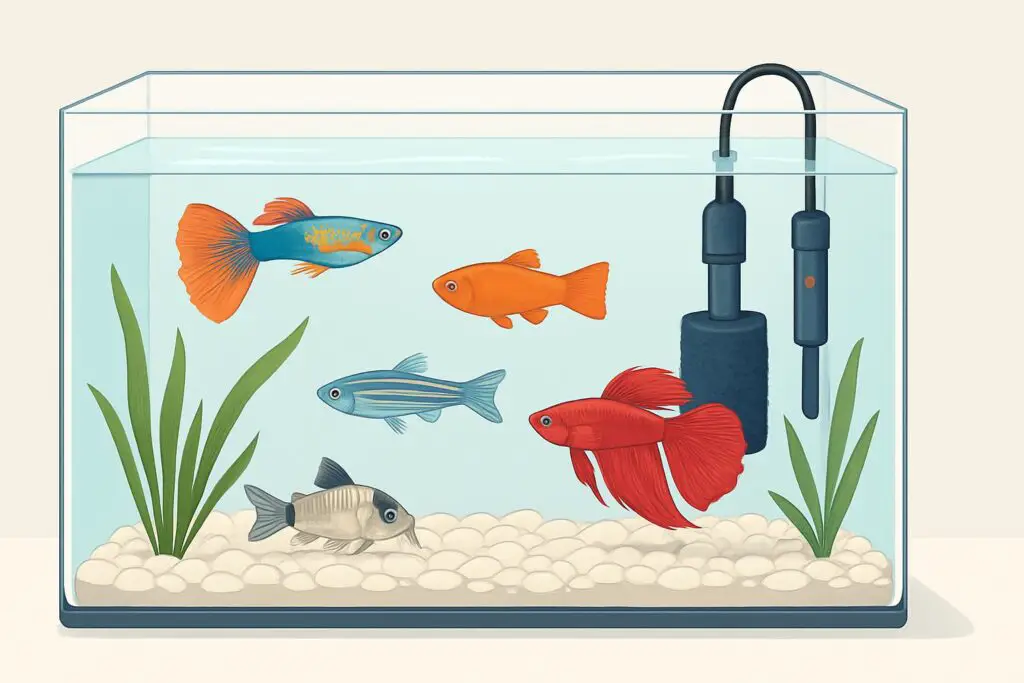
1. Guppy
Why they are great: Guppies are colorful, active, and very hardy. They accept most dry foods and learn to greet you at the glass. They thrive in small groups and are peaceful when kept with similar size fish.
Basics to know: Adult size is about 1.5 to 2 inches. Temperature range is roughly 72 to 80 F. They prefer harder water but adapt well to typical tap water. Keep either all males or all females for beginners. Mixed sexes breed quickly and fry can overwhelm a new tank.
Group size: Keep at least 6 of the same sex. Males show more color and do well together in a planted tank with good maintenance.
Feeding: Offer a small pinch of quality flakes or micro pellets once or twice daily. Add a tiny treat of frozen daphnia or brine shrimp once or twice per week if you like.
Beginner tip: Start with 6 male guppies in a 10 gallon tank. Add floating plants or fine leaf plants to reduce stress and bring out color.
2. Platy
Why they are great: Platys are sturdy, calm, and easy to feed. They come in many colors and patterns. They tolerate a range of water conditions and do well in small community tanks.
Basics to know: Adult size is about 2 to 3 inches. Temperature range is about 72 to 78 F. They like moderate hardness and neutral to slightly alkaline pH. Like guppies, they are livebearers. Keep all males or all females to avoid nonstop breeding in a beginner tank.
Group size: Keep at least 4. They are social but not strict schoolers.
Feeding: Flakes or small pellets daily. Supplement with a veggie wafer piece once a week. They nibble on soft algae which helps keep decor tidy.
Beginner tip: In a 10 gallon tank, keep 4 platys of the same sex. Add more only if your test results are stable for several weeks.
3. Zebra Danio
Why they are great: Zebra danios are fast, playful, and very tough. They handle beginner mistakes better than most fish. They do well in cooler rooms if temperatures are stable.
Basics to know: Adult size is about 2 inches. Temperature range is about 64 to 74 F. They like some current and need swimming space. They are active schoolers and get stressed if kept in small numbers.
Group size: Keep 6 or more. Larger groups spread out activity and reduce chasing.
Feeding: Small floating flakes or micro pellets once or twice daily. They enjoy occasional frozen foods but keep portions tiny.
Beginner tip: In a 10 gallon tank, keep 6 zebra danios. Use a gentle but steady filter flow and give them open space to swim. Avoid keeping them with a male betta since they sometimes nip long fins.
4. Corydoras Catfish Pygmy or Panda
Why they are great: Corydoras are peaceful bottom dwellers that keep kids engaged. They sift the substrate, explore in groups, and encourage careful observation. They do not eat poop and they still need proper feeding, but they help clean missed bits of food.
Basics to know: Pygmy corydoras reach about 1 inch. Panda corydoras reach about 2 inches. Temperature range is about 72 to 78 F. They prefer smooth sand or very fine gravel so their barbels stay healthy. They breathe air sometimes, which is normal behavior.
Group size: Keep 6 or more. They are strongly social and show natural behavior in groups.
Feeding: Use sinking micro wafers or algae wafers. Feed after lights out if top swimmers eat too fast. Offer blanched spinach or zucchini occasionally.
Beginner tip: In a 10 gallon tank with sand, keep 8 pygmy corydoras. For panda corydoras, use a larger tank and plan for more floor space.
5. Betta Splendens Solo Star
Why they are great: Bettas are interactive and easy to bond with. They are striking, low current fish that do very well as the single star of a small tank. They breathe air and handle short oxygen dips if power goes out.
Basics to know: Adult size is about 2.5 to 3 inches. Temperature range is about 76 to 80 F. Males fight other males and may attack similar looking fish. Long fins snag on sharp decor or hard filter flow.
Group size: Keep one male betta alone for beginners. Females and advanced betta setups are possible but not ideal for a first tank.
Feeding: Betta pellets are best. Feed 2 to 4 small pellets once or twice daily. Skip one feeding per week to prevent bloating.
Beginner tip: For beginners, keep one male betta alone in a 5 to 10 gallon tank with gentle filtration and warm water. Add soft plants and smooth decor, and keep current low.
Sample Stocking Plans for a 10 Gallon Starter Tank
Plan A Simple Livebearer
6 male guppies. Add plants and keep current moderate. This plan is colorful, active, and simple to feed.
Plan B Cool and Active
6 zebra danios. Leave open swimming space and use a filter with steady but gentle flow.
Plan C Peaceful Bottom Crew
8 pygmy corydoras on sand. Add floating or mid level plants to provide cover while keeping the bottom open.
Plan D Easy Middleground
4 platys of the same sex. Provide a mix of open space and plants, and keep up with weekly water changes.
Plan E Solo Showpiece
1 male betta. Use a gentle sponge filter, warm water, and soft decor. Keep the lid secure since bettas jump.
Compatibility Notes
Mixing species carefully
Do not mix a male betta with fin nippers such as zebra danios. Avoid large or aggressive fish entirely. If you mix species, pick fish with similar temperature needs and peaceful behavior, and add slowly while testing water.
Schooling and groups
Zebra danios and corydoras need groups of at least 6. Guppies and platys do well in small groups but are less strict about numbers. Keep same sex groups for livebearers to prevent fry explosions.
Daily and Weekly Care That Teaches Responsibility
Daily 2 minutes
Feed a small pinch once or twice per day. All food should be gone in 1 to 2 minutes. Count fish, check temperature, and look for signs of stress such as clamped fins, gasping at the surface, or unusual hiding.
Weekly 30 to 45 minutes
Change 25 to 40 percent of the water each week with dechlorinated water that matches temperature. Vacuum the substrate during the water change. Rinse filter media in a bucket of tank water once per month to remove gunk without killing beneficial bacteria. Test water weekly for ammonia, nitrite, nitrate, and pH. Ammonia and nitrite should be zero. Keep nitrate low with regular changes.
Monthly and as needed
Trim plants, wipe glass, and inspect equipment. Replace filter media only when it falls apart. Do not replace everything at once.
Feeding Basics for Kids
Right amount
Small meals are safer than large ones. If food reaches the bottom uneaten, reduce the portion. Overfeeding is the fastest way to ruin water quality.
Right foods
Use a quality staple food that matches mouth size. Flakes or micro pellets work for most species listed here. Add variety once or twice per week with frozen or freeze dried foods.
Right routine
Feed at the same times each day. Skip one feeding per week to keep digestion healthy. Store food dry and cool, and replace it every few months so vitamins stay potent.
Water Parameters Made Simple
Temperature
Use a heater for tropical fish and aim for a stable range between 76 and 78 F unless noted. Zebra danios can do well in cooler rooms if the temperature is stable and above 68 F.
pH and hardness
Most tap water is fine for the species on this list. Stability is more important than chasing a perfect number. Match your water with fish that tolerate your local range.
Chlorine and chloramine
Always treat tap water with a dechlorinator before it touches the tank. Chlorine and chloramine kill beneficial bacteria and harm fish.
Common Mistakes to Avoid
Skipping the cycle
Adding fish to an uncycled tank spikes ammonia and kills fish. Cycle first and test before buying fish.
Overfeeding and overstocking
Too much food and too many fish overwhelm the filter. Keep stocking light and feed tiny portions.
Adding fish too fast
Add fish in small groups, then test and wait a week or two before adding more. This protects your bacteria colony and reduces stress.
Mixing incompatible species
Do not mix a male betta with fin nippers. Do not mix warm water fish with cool water fish. Keep schooling fish in proper groups.
Using untreated tap water
Always use dechlorinator. Match temperature during water changes to avoid shocks.
Washing the filter under the faucet
Rinse filter media in removed tank water only. Tap water kills the bacteria your tank depends on.
Budget and Time Reality
Cost overview
A 10 to 20 gallon kit with tank, filter, and light is often the best value. Add a heater, thermometer, water conditioner, test kit, siphon, and food. Plan for decor and plants. This setup is cheaper to run than replacing stressed fish and chasing problems.
Time overview
Expect 2 minutes daily and 30 to 45 minutes weekly. This routine keeps water clear, fish healthy, and the hobby fun for kids.
When to Ask for Help
Early warning signs
Watch for gasping at the surface, clamped fins, white spots, red streaks, or listless behavior. Test the water right away. If ammonia or nitrite are above zero, perform an immediate partial water change, reduce feeding, and check the filter.
Where to ask
Bring your test results, photos of the tank, and a list of fish species and numbers to a trusted store or local club. Clear details lead to clear advice.
Conclusion
A child’s first aquarium should be steady, simple, and enjoyable. Start with a 10 to 20 gallon tank, cycle it fully, stock with one of the proven beginner plans, and keep a short weekly routine. Guppies, platys, zebra danios, pygmy or panda corydoras, and a solo male betta all fit a calm, beginner friendly setup. Teach kids to feed lightly, test weekly, and change water on schedule. Small, consistent care creates healthy fish, clear water, and a hobby your family can enjoy for years.
FAQ
Q: What tank size is best for a child’s first aquarium?
A: A 10 to 20 gallon tank is best because the extra water volume keeps the water more stable and forgives small mistakes. Bowls and tiny tanks are not recommended.
Q: How often should we change the water and how much?
A: Change 25 to 40 percent of the water each week with dechlorinated water that matches temperature. Vacuum the substrate during the change, rinse filter media in a bucket of tank water once per month, and test water weekly.
Q: Which fish can live in a 10 gallon for beginners?
A: Good options are 6 male guppies, or 6 zebra danios, or 8 pygmy corydoras, or 4 platys, or 1 male betta.
Q: Can a betta live with other fish in a child’s starter tank?
A: For beginners, keep one male betta alone in a 5 to 10 gallon tank with gentle filtration and warm water. Avoid fin nippers and tankmates until you have more experience.
Q: Do we need a heater?
A: Most setups need a heater to keep water stable around 76 to 78 F. Zebra danios can do fine in cooler rooms if temperatures are stable and above 68 F.