
We are reader supported. When you purchase through links on our site, we may earn an affiliate commission. Also, as an Amazon affiliate, we earn from qualifying purchases.
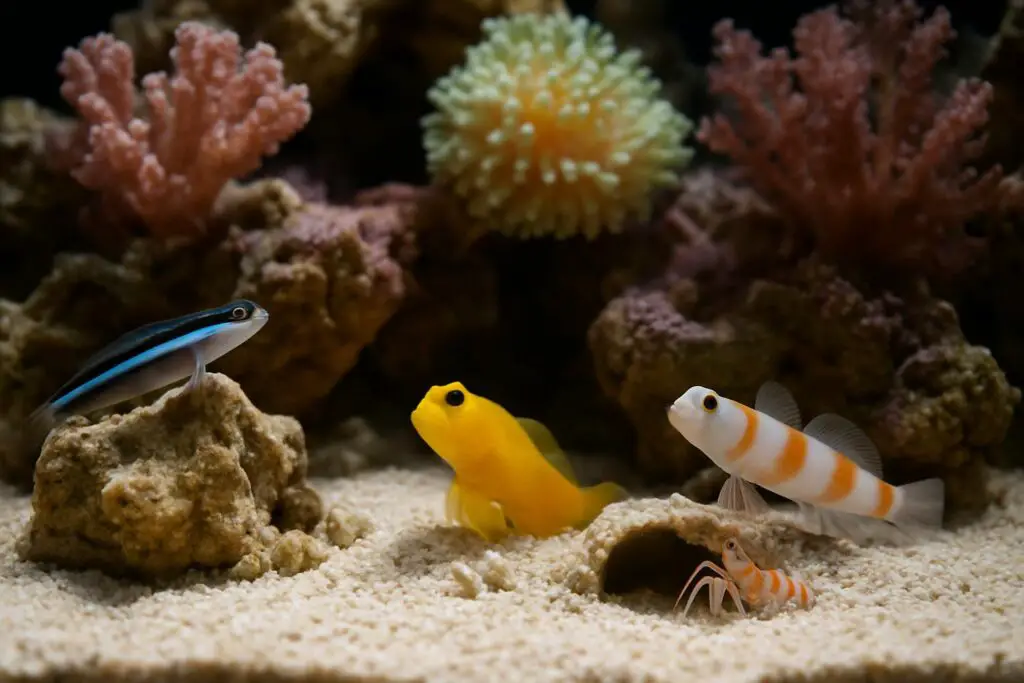
Goby fish bring color, personality, and practical benefits to reef tanks. They stay small, they are generally peaceful, and many help clean sand or even form a symbiotic bond with pistol shrimp. With the right match, a goby can be the most active and useful resident in your aquarium. This guide breaks down the best goby species for reef aquariums, how to choose the right one for your tank, and how to keep them thriving long term.
Why Gobies Fit Reef Aquariums So Well
Gobies fit modern reef setups because they occupy the bottom zone without bullying other fish. Many species are reef safe, show interesting burrow or cleaning behaviors, and accept prepared foods. Some gobies keep sand clean by sifting it all day. Others act as mini cleaners that pick parasites from tankmates. A few form tight shrimp partnerships that create constant interest near the substrate.
They rarely outgrow tanks, and several species do well even in nano systems. This gives you options whether you run a 10 gallon nano reef or a large mixed reef.
How to Choose the Right Goby
Match species to your tank size
Small species like Neon Goby, Clown Goby, Yasha Goby, and Hi Fin Red Banded Goby fit 10 to 15 gallon tanks. Medium species like Yellow Watchman Goby and Wheeler’s Shrimp Goby do well from 20 gallons up. Large sand sifters like Diamond Watchman Goby or Golden Head Sleeper Goby need at least 40 gallons.
Decide on behavior and utility
If you want clean sand, pick a Valenciennea sand sifter. If you want a showy shrimp partnership, choose Amblyeleotris or Stonogobiops with a compatible pistol shrimp. If you want a tiny fish that helps with ectoparasites and eats small meaty foods, pick a Neon Goby.
Consider tank maturity and feeding
Sand sifters and algae grazers rely on established microfauna and biofilm. New tanks are risky for them. Choose species that eat prepared foods easily if your tank is young. Mature systems can support specialists like Rainford’s and Hector’s Goby.
Plan for a secure top
All gobies are jump risks, so use a tight fitting lid or mesh top with no gaps. This one step prevents most losses.
Beginner Friendly Gobies That Just Work
Yellow Watchman Goby
Yellow Watchman Goby is hardy, personable, and easy to feed. It reaches about 3 to 4 inches and does well in 20 gallons or more. It accepts frozen mysis, brine enriched with vitamins, small pellets, and finely chopped seafood. It may form a symbiotic pair with a pistol shrimp, but it also thrives alone. It spends time guarding a burrow and will display bold postures without true aggression toward non bottom fish. Keep only one watchman per small tank to avoid territorial spats.
Neon Goby
Neon Goby stays around 2 inches and fits well in 10 gallon nano tanks. It is famous as a cleaner that picks parasites and dead tissue from other fish. It learns to eat small meaty foods quickly and often comes captive bred, which boosts survival. It is peaceful and reef safe, and a great choice when you want a tiny, active fish with clear utility. Keep singly or as a bonded pair.
Wheeler’s Shrimp Goby
Wheeler’s Shrimp Goby reaches about 2.5 to 3 inches and shines when paired with Randall’s Pistol Shrimp. It is a good beginner choice for a shrimp goby pair because it accepts frozen foods readily and does not wander far. Provide a sandy area and some rubble so the pair can build and maintain their burrow. A 20 gallon tank or larger is a good fit.
Sand Sifting Specialists for Clean Substrate
Diamond Watchman Goby
Diamond Watchman Goby is one of the strongest sand sifters. It grows to 5 to 6 inches and constantly processes sand through its gills, aerating the substrate and removing detritus. It needs at least a 40 gallon tank and a mature sand bed. Because it moves a lot of sand, it can bury low placed corals. Keep sensitive frags off the sand or on raised racks. Feed sinking meaty foods often to back up what it gets from the substrate.
Golden Head Sleeper Goby
Golden Head Sleeper Goby is another powerful sifter with similar care to the Diamond. It also benefits from a larger, established system and frequent small feedings. It is peaceful but can become territorial with very similar sand sifter species in small tanks. Give it a stable rockscape and a wide sand patch to work.
Orange Spotted Sleeper Goby
Orange Spotted Sleeper Goby sifts sand but tends to be a little less vigorous than a Diamond. It still needs a mature sandbed and frequent feedings. It does well in tanks from about 40 gallons up with gentle to moderate flow near the bottom so food lands where it can find it.
Nano Reef Favorites
Clown Gobies
Clown Gobies stay tiny at around 1 to 1.5 inches and sit openly on branches and rock faces. They are excellent for nano tanks of 10 to 15 gallons. They are peaceful and easy to feed. However, clown gobies often perch in and may nip SPS polyps, especially Acropora, so they are safer in soft coral or LPS systems. If you keep SPS, monitor closely and be ready to move the fish if you see polyp recession around perches.
Yasha Goby
Yasha Goby is small, striking, and best when paired with Randall’s Pistol Shrimp. It stays around 2 inches and fits well in 10 to 15 gallon tanks. It is shy at first but settles once the burrow is established. Provide a sandbed of fine to small grain aragonite and small rubble pieces. Feed finely chopped meaty foods near the burrow entrance.
Hi Fin Red Banded Goby
Hi Fin Red Banded Goby is similar in size and care to the Yasha. It also pairs well with Randall’s Pistol Shrimp and prefers a calm substrate zone with scattered rubble. It is peaceful and does not disturb corals.
Algae and Detritus Grazers
Hector’s Goby
Hector’s Goby reaches about 2.5 inches and spends its day grazing filamentous algae, film algae, and detritus. It is peaceful, active, and colorful. It needs a mature tank with natural growth on rock and sand to supplement feeding. Offer small sinking foods and sheets of nori as backup. It is best in 20 gallons or more with moderate flow.
Rainford’s Goby
Rainford’s Goby has similar needs to Hector’s with a strong focus on natural grazing. It is a poor choice for new tanks because it may not accept enough prepared foods at first. In mature tanks with plenty of microalgae and detritus, it does well. Keep it with peaceful tankmates that will not compete at the bottom.
Shrimp Goby Pairs You Will Actually Succeed With
Why pair gobies with pistol shrimp
Pistol shrimp provide digging power and a fortress. The goby provides watch duty. Together they build stable burrows, which reduces stress and gives you daily behavior to watch. The pair also tends to stay in one area, which keeps the scape tidy.
Reliable species combinations
Good pairs are Wheeler’s Shrimp Goby or Yasha Goby with Randall’s Pistol Shrimp, and Yellow Watchman Goby with a Tiger Pistol Shrimp. These combinations are widely available and have strong track records in home aquariums.
Setup and introduction tips
Use fine to small grain sand around 2 to 3 inches deep with a rubble patch at the base of your rockwork. Add both animals at the same time near the chosen area so they find each other quickly. Target feed near the burrow while they settle in. Avoid aggressive wrasses or dottybacks that might harass the pair during the first week.
Compatibility and Stocking Rules
Mixing gobies with other fish
Gobies mix well with peaceful reef fish like clownfish, firefish, small wrasses, and cardinals. Avoid stacking multiple sand sifter Valenciennea species in small tanks because they can compete and fight. In nano tanks, keep one goby or a dedicated pair. In larger systems, choose species that use different niches, for example a Neon Goby in the water column and a watchman on the sand.
Corals and invertebrates
Most gobies are reef safe with corals and invertebrates. Clown gobies may nip SPS polyps. Strong sand sifters can bury low corals. Place sensitive frags on rocks or elevated racks. Pistol shrimp goby pairs do not harm corals but will rearrange small rubble. Secure loose pieces.
Territory and behavior
Watchman and shrimp gobies may defend the immediate burrow entrance with bluff charges. This behavior is normal and short lived. Provide multiple caves and sight breaks to reduce stress. Gobies rarely bother midwater species.
Feeding Gobies the Right Way
Core foods that work
Most gobies accept frozen mysis, enriched brine shrimp, finely chopped shrimp or clam, and small sinking pellets. Neon gobies take very small meaty foods. Sand sifters need frequent small feedings to support their high activity level.
Feeding strategies
Target feed near the burrow so food does not blow away. Use a pipette or baster and turn down flow for a few minutes. Offer several small meals per day for Valenciennea species until you see a stable body weight. Provide natural grazing for Hector’s and Rainford’s gobies by allowing some film algae on rocks and sand and supplement with nori strips.
New tank caution
Avoid adding sand sifting Valenciennea gobies to new tanks because they can starve before microfauna develops. Start with watchman or neon species in young systems and wait until the sandbed is mature before introducing specialist feeders.
Habitat and Setup Checklist
Substrate and rockwork
Use fine to small grain aragonite sand. For burrowing species, aim for 2 to 3 inches in at least part of the tank. Build a stable rock base directly on the glass or egg crate and then add sand to prevent collapses. Add rubble around potential burrow entrances.
Flow and filtration
Moderate flow works best. Keep a calmer zone along the bottom where gobies can feed. Strong mechanical filtration can polish water without stripping all particulates that specialists depend on. Do not over vacuum a sandbed that supports sand sifters.
Lid and escape prevention
Use a tight fitting lid or mesh top with no gaps. Check cable cutouts and overflows for openings. This single step prevents accidents.
Acclimation and quarantine
Drip acclimate slowly to reduce osmotic stress. Quarantine when possible to observe feeding and behavior. Offer a small PVC elbow or a tiny rock cave in the QT so the fish settles and begins eating faster.
Best Species, At a Glance
For first time goby keepers
Yellow Watchman Goby is hardy and interactive. Neon Goby is tiny, active, and helpful. Wheeler’s Shrimp Goby delivers the shrimp symbiosis with simple care.
For sandbed maintenance
Diamond Watchman Goby and Golden Head Sleeper Goby keep sand bright in established tanks. They need room, stable feeding, and protection for low placed corals.
For nano displayed behavior
Yasha Goby and Hi Fin Red Banded Goby with Randall’s Pistol Shrimp bring a constant burrow display to small aquariums. Clown Gobies are colorful and calm but use caution with SPS.
For algae control in mature systems
Hector’s Goby and Rainford’s Goby graze naturally and stay small. They need biofilm and added small foods to thrive.
Common Mistakes to Avoid
Adding specialist gobies to new tanks
Do not add sand sifters or algae grazers to immature systems. Wait until your sandbed and rock support visible microfauna and film algae.
Running an open top
Open tops and large gaps lead to jump losses. Always secure a lid.
Placing frags on the sand with sifters
Sand sifters will bury low corals. Keep frags elevated or on stable rock ledges.
Mixing similar sand sifters in small tanks
Two Valenciennea species in a small tank compete for food and space. Choose one or upgrade tank size.
Underfeeding active sifters
Valenciennea gobies burn calories fast. Provide frequent small feedings to keep body weight healthy.
Conclusion
Gobies can anchor the bottom zone of your reef with color, purpose, and constant interest. Start with hardy species like Yellow Watchman, Neon, or Wheeler’s Shrimp Goby if you are new. Move to Diamond Watchman or Golden Head Sleeper once your sandbed is mature. Choose Yasha or Hi Fin Red Banded for nano shrimp pairs. Consider Hector’s or Rainford’s in established tanks with natural grazing. Secure the top, plan your sandbed, and feed consistently. With thoughtful selection and simple preparation, a goby becomes one of the most rewarding fish in your reef aquarium.
FAQ
Q: What are the best beginner gobies for a reef tank?
A: Yellow Watchman Goby, Neon Goby, and Wheeler’s Shrimp Goby are beginner friendly because they accept prepared foods, stay small, and adapt well.
Q: Do gobies jump and need a lid?
A: All gobies are jump risks, so use a tight fitting lid or mesh top with no gaps.
Q: Which gobies sift sand to keep it clean?
A: Diamond Watchman Goby and Golden Head Sleeper Goby are strong sand sifters that constantly process substrate, but they need established tanks and can bury low corals if placed too close to the sand.
Q: Are clown gobies safe with SPS corals?
A: Clown gobies often perch in and may nip SPS polyps, especially Acropora, so they are safer in soft coral or LPS systems.
Q: Can I pair a goby with a pistol shrimp, and which pairs work?
A: Good pairs are Wheeler’s Shrimp Goby or Yasha Goby with Randall’s Pistol Shrimp, and Yellow Watchman Goby with a Tiger Pistol Shrimp. Add both at the same time and provide a rubble patch at the base of the rock.