
We are reader supported. When you purchase through links on our site, we may earn an affiliate commission. Also, as an Amazon affiliate, we earn from qualifying purchases.
Getting new corals is exciting, but skipping quarantine can bring pests and pathogens into your display. Flatworms, nudibranchs, AEFW, bacterial film, and algae can ride in on plugs and rubble. A simple quarantine setup prevents months of frustration. This guide breaks down the 5 best reef tank coral quarantine kits for 2026, what each does well, who they fit best, and how to use them for clean, stable holding. Keep it simple, keep it stable, and stop problems before they start.
What makes a good coral quarantine kit in 2026
Core goals
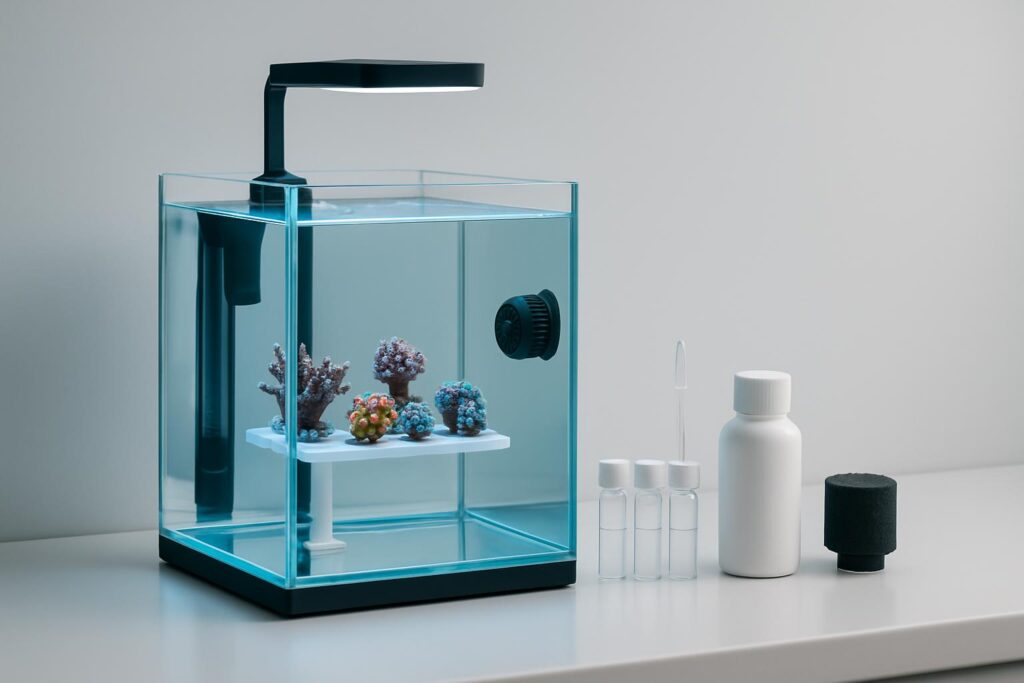
You need controlled isolation, stable water, inspection access, and fast parameter checks. That means a compact tank with basic filtration, consistent heat, adequate but modest lighting, a small flow source, test coverage for ammonia and nutrients, and a reliable dip routine.
Must-haves
Tank or all-in-one kit, heater, small powerhead, adjustable LED, media or sponge filter, test kits for ammonia, nitrite, nitrate, pH or alkalinity, a coral dip, frag rack, and clean tools. Convenience, repeatability, and easy cleaning matter more than fancy gear.
How to use a quarantine kit effectively
Initial setup
Fill with pre-mixed saltwater, match salinity to 1.025 specific gravity, and heat to 25–26 C. Seed the filter media beforehand or use bottled bacteria to handle the initial bioload. Keep flow gentle but consistent so polyps can extend without blasting.
Arrival and observation
Dip new corals per label, rinse in clean saltwater, and place on a frag rack. Run low to moderate light for the first 48 hours. Inspect daily for worms, eggs, film, or tissue loss. Typical quarantine lasts 2–4 weeks. Test ammonia and nitrite daily in week one, then every few days. Perform 20–30 percent water changes weekly or sooner if nutrients spike.
The 5 best reef tank coral quarantine kits for 2026
Fluval Sea Evo V 5 Gallon Saltwater Aquarium Kit
This compact all-in-one tank is a strong foundation for a coral quarantine station. It includes a rear filtration chamber, pump, and a marine-capable LED that is more than enough for short-term holding and observation.
Why it helps: The integrated filtration and covered design keep evaporation and mess down while giving you dependable flow and surface skimming. The LED supports low to moderate light acclimation, which reduces stress during the first critical days.
Best for: Small batches of frags, nano reef keepers, and anyone who wants a tidy, countertop-friendly quarantine with minimal add-ons.
Setup tips: Add a small heater in the rear chamber, a piece of seeded sponge, and a simple frag rack in the display area. Start the light at reduced intensity and ramp up if needed after 3–5 days.
Potential downsides: Limited space for very large colonies. For bigger pieces, consider a 10–16 gallon kit.
Coralife LED BioCube Aquarium Kit 16 Gallon
When you want more headroom, the BioCube steps in. It is a larger all-in-one system with a hooded LED, rear filtration, and a footprint that fits racks, containers, and larger frags without crowding.
Why it helps: Stable temperature, quiet operation, and extra water volume reduce swings in ammonia and temperature. The LED is adjustable enough to acclimate LPS and many SPS frags during quarantine without bleaching.
Best for: Mixed coral loads, larger incoming shipments, and reefers who want quarantine to double as a grow-out space.
Setup tips: Use a heater and a small additional powerhead in the display area for gentle crossflow. Keep the hood fans clean to maintain steady temperature. Run mechanical media and change it often during the first week to capture debris from dips and handling.
Potential downsides: Bigger footprint and higher upfront cost. The hood limits extreme light adjustments, but the stock LED is sufficient for quarantine holding.
Aqueon Aquarium Starter Kit 10 Gallon LED
This simple glass kit is reliable, affordable, and easy to clean. It pairs well with a basic heater and a small wavemaker to become a capable quarantine setup for softies and LPS frags.
Why it helps: Straightforward parts and generous space make layout simple. The included filter with sponge media is easy to seed. The lid reduces evaporation and salt creep.
Best for: Budget-minded reefers who want a dedicated quarantine they can break down and store when not in use. It is also great as a spare hospital or observation tank for inverts and macroalgae.
Setup tips: Replace carbon or floss frequently after dips. Place a frag rack near the front glass for easy inspection. Add a low-cost LED strip with adjustable intensity to keep light conservative during the first week.
Potential downsides: The stock LED is basic; for SPS or higher light needs, add a reef-capable light. Add a small powerhead for better flow.
Red Sea Marine Care Test Kit
Quarantine fails when parameters swing. This kit covers ammonia, nitrite, nitrate, and pH, which are the key early warning signs in a small, newly set system.
Why it helps: Clear color scales and sensible ranges make it easy to catch problems on day one. Accurate ammonia and nitrite tests protect corals during biofilter ramp-up, while nitrate and pH guide water change timing.
Best for: Any quarantine system from nano to mid-size. It is the baseline testing set that prevents surprises.
Setup tips: Test ammonia and nitrite daily for the first week, then every two to three days. Log results so you can see trends. If ammonia shows up, dose bacteria and do a partial water change.
Potential downsides: Does not include alkalinity, calcium, or magnesium. Pair it with a foundation kit if you plan to hold stony corals longer than two weeks.
Red Sea Reef Foundation Pro Test Kit
For longer holds or sensitive stony corals, tracking alkalinity, calcium, and magnesium keeps skeleton-building on track. This pro kit includes precise titration tests and solid documentation.
Why it helps: Alkalinity stability reduces stress lines and recession during quarantine. Calcium and magnesium balance supports polyp extension and normal skeletal repair after fragging and dips.
Best for: SPS and LPS quarantine beyond two weeks, grow-out racks, and anyone who wants display-level control in the holding system.
Setup tips: Test alkalinity every two to three days and dose as needed. Use fresh salt mix known for consistent major elements. Keep changes small and steady rather than big swings.
Potential downsides: Extra time per test compared to strip tests, but the precision is worth it if you are holding stony corals.
Quick build checklist
Hardware
Pick one of the tank kits above, add a reliable heater, a small powerhead, and a frag rack. Use a seeded sponge or media to jumpstart filtration. Keep a spare bucket and turkey baster for detritus removal.
Process
Dip, rinse, place, and observe. Keep lighting conservative for the first 48 hours. Test daily in week one. Water change 20–30 percent weekly. Extend quarantine to four weeks if pests or eggs appear and repeat dips as needed.
Conclusion
Coral quarantine is simple when you choose gear that keeps stability first. A compact all-in-one like the Fluval Evo V handles small batches cleanly. The BioCube 16 offers space and headroom. The Aqueon 10 Gallon kit covers budgets. Red Sea Marine Care stabilizes the first week. Red Sea Reef Foundation Pro supports stony corals during longer holds. Build a repeatable routine, keep parameters steady, and your display stays clean.
FAQ
Q: How long should I quarantine new corals
A: Typical quarantine lasts 2–4 weeks. Extend to four weeks if pests or eggs appear and repeat dips as needed.
Q: Do I need reef-level lighting in a quarantine tank
A: Start with low to moderate light for the first 48 hours, then ramp up as needed. The LEDs in the Fluval Evo V and BioCube 16 are sufficient for short-term holding and acclimation.
Q: Which parameters should I test during coral quarantine
A: Test ammonia and nitrite daily in week one, then every few days. Nitrate and pH guide water change timing. For stony corals in longer holds, test alkalinity, calcium, and magnesium.
Q: What size tank works best for coral quarantine
A: Five to sixteen gallons covers most needs. Small batches of frags fit well in a 5 gallon kit. Larger colonies or mixed loads are more stable in a 10–16 gallon kit.
Q: What is the basic water change schedule during quarantine
A: Perform 20–30 percent water changes weekly, or sooner if nutrients spike or ammonia appears.