
We are reader supported. When you purchase through links on our site, we may earn an affiliate commission. Also, as an Amazon affiliate, we earn from qualifying purchases.
Finding a reef salt that matches your coral goals is the fastest path to a stable, thriving tank. The right mix locks in consistent calcium, alkalinity, and magnesium, dissolves clean, and keeps water changes predictable. Below is a clear guide to what matters, followed by five proven reef salt mixes that stand out in 2026.
What really matters in a reef salt mix
Target parameters at 35 ppt
For most mixed reefs, aim for calcium 400 to 460 ppm, alkalinity 7 to 9 dKH, and magnesium 1300 to 1400 ppm. High alkalinity blends around 10 to 12 dKH can drive faster growth but demand tighter control of nutrients and CO2 to prevent precipitation.
Consistency and cleanliness
Reliable batch-to-batch chemistry and low residue reduce troubleshooting. A clean-dissolving salt helps maintain pumps, heaters, and mixing barrels with less film or crust.
Match the mix to your goals
Pick higher alkalinity for aggressive growth in new or fast-growing mixed reefs. Choose near natural seawater parameters for SPS-dominant or ultra-stable systems where you dose to target levels. Keep salinity steady at 35 ppt and temperature at 24 to 26 C for accurate readings and coral comfort.
The 5 best reef tank salt mixes
Instant Ocean Reef Crystals

Instant Ocean Reef Crystals Reef Salt for Reef Aquariums, 160 Gallons | Formulated For Reef Aquariums, Extra Calcium, Vitamins & Trace Elements, Promotes Growth Of Coral, Anemones & Invertebrate
View on AmazonWhy it helps: Elevated buffers and calcium support fast-growing corals and heavy bioloads, making this a dependable workhorse for mixed reefs and new tanks that need extra stability.
Key specs at 35 ppt: Calcium 420 to 450 ppm, alkalinity 11 to 13 dKH, magnesium 1300 to 1350 ppm. Designed with added trace elements compared to standard Instant Ocean.
Best for: Beginners and value seekers, mixed reefs with LPS and soft corals, and systems that benefit from a bit of extra alkalinity overhead.
Mixing notes: Dissolves quickly with strong circulation. Mix 4 to 24 hours for full clarity. Always add salt to fully measured water, not the other way around, and warm to 24 to 26 C to limit precipitation.
Potential downsides: Higher alkalinity can shock low-alkalinity SPS systems if switched abruptly. Overmixing or cold water can leave a light film or cloudiness due to precipitation.
Red Sea Coral Pro Salt

Red Sea Coral Pro Reef Salt Mix Small Bucket - Makes 55 Gallons Complete Marine Saltwater Aquarium Advanced Formula Optimal Coral Health & Stability
View on AmazonWhy it helps: Built for rapid coral skeleton building with boosted calcium and alkalinity. Ideal when you want to accelerate growth in a developing reef.
Key specs at 35 ppt: Calcium around 450 ppm, alkalinity about 12 dKH, magnesium near 1340 to 1380 ppm. Enriched for growth-focused husbandry.
Best for: New tanks aiming for quick coral establishment, LPS-dominant or mixed reefs that prefer elevated alkalinity and calcium.
Mixing notes: Mix 2 to 4 hours with solid aeration and heat. Avoid extended mixing sessions to reduce the chance of carbonate precipitation.
Potential downsides: Elevated alkalinity is not the best fit for low-nutrient SPS systems that target 7 to 8 dKH. If mixed too long or too cold, precipitation can cause haze or film.
Tropic Marin Pro Reef

Tropic Marin Pro Reef Salt Bucket for Aquariums, 200-Gallon
View on AmazonWhy it helps: Pharmaceutical grade components and near natural seawater parameters deliver excellent consistency, clean dissolution, and stability for sensitive corals.
Key specs at 35 ppt: Calcium about 440 ppm, alkalinity 7 to 8 dKH, magnesium near 1350 ppm. Balanced for long-term stability and precise dosing strategies.
Best for: SPS-dominant and stability-first systems, ultra-low nutrient tanks, reefers who dose two-part or a calcium reactor and want their salt to match target setpoints.
Mixing notes: Typically clears in 1 to 2 hours with minimal residue. Use RODI water, warm to 24 to 26 C, and measure salinity precisely for repeatable results.
Potential downsides: Premium price. If you want the highest possible growth push without dosing, this balanced alkalinity may feel conservative.
Fritz Aquatics Reef Pro Mix RPM
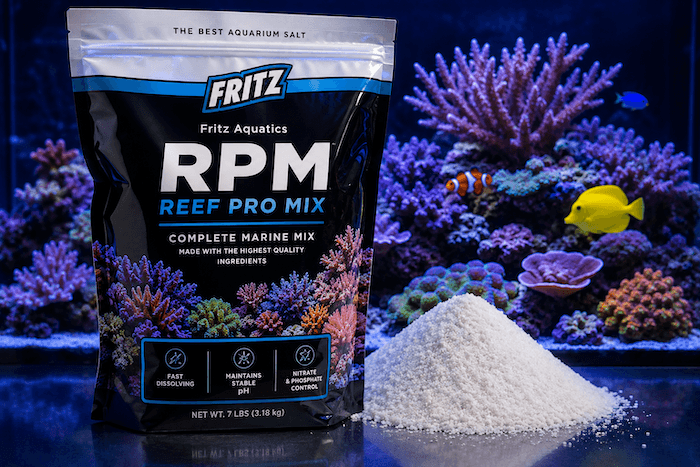
Why it helps: Balanced yet slightly elevated levels with strong magnesium support make RPM a forgiving, all-purpose choice that is easy to keep stable.
Key specs at 35 ppt: Calcium 440 to 460 ppm, alkalinity about 8.5 to 9.5 dKH, magnesium 1400 to 1450 ppm. A good middle ground for mixed reefs.
Best for: Beginners and intermediate reefers, mixed reefs with a blend of softies, LPS, and SPS, and anyone who wants a steady baseline without extreme alkalinity.
Mixing notes: Mix 4 to 24 hours. Expect quick initial clearing and full polish with adequate circulation and heat.
Potential downsides: Can leave light residue in some mixing setups. Magnesium may read on the high side with certain test kits, so verify with a reliable kit and keep salinity stable.
Brightwell Aquatics NeoMarine
Why it helps: Clean, consistent formulation close to natural seawater that dissolves fast and leaves minimal residue. Great for stability over long periods.
Key specs at 35 ppt: Calcium 425 to 435 ppm, alkalinity 7.5 to 8.5 dKH, magnesium 1300 to 1350 ppm. Designed for balanced growth and clear water.
Best for: Reefers who value clean mixing and predictability, SPS and mixed reefs running moderate alkalinity with dosing support.
Mixing notes: Often clears within 2 to 6 hours. Start with strong flow, add salt to fully measured water, and keep temperature stable to avoid micro precipitation.
Potential downsides: Mid to higher price tier. Some users may measure slightly lower alkalinity if salinity is under 35 ppt, so confirm with a calibrated refractometer.
Smart mixing and water change tips
Use clean RODI and stable conditions
Start with RODI water at 0 TDS, heat to 24 to 26 C, and adjust salinity to 35 ppt. Add salt to water with strong circulation and aeration until clear. Test calcium, alkalinity, and magnesium after full dissolution and before use.
Prevent precipitation
Cold water, overmixing elevated alkalinity formulas, or adding water to dry salt can trigger haze or film. Keep temperature steady, avoid extended mixing on high-alk salts, and always add salt to water.
Switching salts
Transition over 2 to 3 water changes while monitoring parameters. Match salinity and temperature exactly and avoid big alkalinity swings to keep corals stress free.
Bottom line
Pick a salt that aligns with how you run your reef. For beginners and mixed reefs that want a head start, Instant Ocean Reef Crystals or Fritz RPM offer forgiving chemistry and strong value. For precision and long-term stability, Tropic Marin Pro Reef or Brightwell NeoMarine keep you close to natural seawater and make dosing easy. If you want a push for rapid growth during early buildout, Red Sea Coral Pro delivers elevated levels that can accelerate results when managed well. Stay consistent with salinity, temperature, and testing, and your corals will tell you you chose well.
FAQ
Q: Which reef salt is best for beginners
A: Instant Ocean Reef Crystals and Fritz RPM are both beginner friendly thanks to forgiving parameters, easy mixing, and strong value.
Q: What parameters should I look for at 35 ppt
A: For most mixed reefs, aim for calcium 400 to 460 ppm, alkalinity 7 to 9 dKH for balanced growth, and magnesium 1300 to 1400 ppm. High alkalinity lines around 10 to 12 dKH can drive faster growth but need tighter control.
Q: How long should I mix new saltwater
A: Most salts clear in 2 to 24 hours depending on brand. Tropic Marin Pro Reef often clears in 1 to 2 hours, while Red Sea Coral Pro is best mixed 2 to 4 hours to avoid precipitation.
Q: Can I switch between salt brands
A: Yes. Transition over 2 to 3 water changes while monitoring parameters, and match salinity and temperature to avoid stress.
Q: Why does my fresh mix look cloudy or leave a film
A: Precipitation from high alkalinity, cold water, or overmixing can cause haze or film. Add salt to fully measured water and keep the mix at 24 to 26 C to minimize it.