
We are reader supported. When you purchase through links on our site, we may earn an affiliate commission. Also, as an Amazon affiliate, we earn from qualifying purchases.
African cichlids are beautiful, active fish that love to dig, sift, and reshape their world. The ground they live on is just as important as the rocks you stack or the filter you choose. Pick the right substrate and your cichlids will show better color, behave naturally, and stay healthier. Pick the wrong one and you may fight cloudy water, damaged mouths, poor pH stability, and frustrated fish that cannot do the things they are built to do. This beginner-friendly guide walks you through the best substrates for African cichlids, why they work, and how to set them up for long-term success.
Why Substrate Matters for African Cichlids
Substrate is more than decoration. For African cichlids from Lakes Malawi, Tanganyika, and Victoria, it affects water chemistry, behavior, and maintenance. Many species are sand sifters that filter fine sand through their gills to find food. Others dig pits or build sand castles during breeding. These natural behaviors depend on the texture and size of the substrate.
Substrate can also help keep your water hard and alkaline. These fish evolved in lakes with high pH and high mineral content. Using a calcium-rich substrate can gently buffer your water and keep the pH stable between water changes. Stable pH means less stress and better health.
Finally, the right grain size prevents injuries. Rough gravel can damage mouths and gill covers. Fine, smooth sand is safer for digging and sifting, which makes it the default choice for most African cichlid tanks.
Water Chemistry Basics You Should Know
Lake Malawi and Lake Victoria cichlids prefer a pH around 7.8 to 8.4, medium to high GH and KH, and mineral-rich water. Lake Tanganyika fish often like even higher pH, around 8.3 to 9.0, with very high carbonate hardness. Substrate can help push your water into these ranges, but it will not fix extremely soft or acidic water on its own. Think of it as part of your toolkit, alongside rocks, buffers, and your source water.
For most mixed Malawi setups, aim for pH 7.8 to 8.2, KH 8 to 12 dKH, and GH 10 to 20 dGH. For Tanganyika, pH 8.3 to 8.8 is common, with very high KH. If your tap water is soft or acidic, pair an inert sand with buffers or mix in calcium-based media. If your tap water is already hard and alkaline, aragonite sand may be enough by itself.
Sand vs. Gravel for African Cichlids
Sand is almost always better than gravel for African cichlids. It is closer to their natural habitats and safer for sand sifters and diggers. Most cichlids will rearrange sand, build nests, and filter it for food. Gravel stops these behaviors and can scratch delicate tissues.
That said, not all sand is equal. Very fine sand is great for sifters but can blow around in high flow. Coarser sand is easier to clean but less comfortable for species that gulp and spit sand all day. Gravel is only recommended for species that do little digging and when you want stronger buffering using crushed coral. Even then, many keepers still prefer sand with crushed coral added to the filter instead of gravel on the bottom.
The Best Substrates for African Cichlids
Aragonite Sand
Aragonite sand is the gold standard for many African cichlid tanks. Aragonite is a form of calcium carbonate that slowly dissolves under aquarium conditions, releasing minerals that raise KH and stabilize pH. It gives you clean, bright, natural-looking sand that supports the health of Malawi, Tanganyika, and Victoria cichlids.
Pros include gentle buffering, smooth grains that are safe for sifters, and long-term stability. Cons include higher cost and some initial cloudiness if not rinsed well. Aragonite works well alone or mixed with small amounts of crushed coral for extra buffering. It is a top choice for beginners who want simple setup and stable parameters.
Oolite Aragonite (Sugar-Sized Sand)
Oolite aragonite has very fine, round grains that move easily and feel soft. Sand sifters love it. Species like Aulonocara peacocks and Tanganyikan Xenotilapia will sift this sand all day without injury. It also buffers well like other aragonite forms.
The downside is that it can blow around in strong currents and get sucked into filters. Use a pre-filter sponge on intakes and aim powerheads at the glass, not the sand. If you love the look of cichlids stirring soft dunes, oolite is hard to beat.
Special-Grade Aragonite Sand
Special-grade aragonite has larger grains than oolite, so it is heavier and less likely to get stirred into the water column. It still buffers, looks natural, and is easier to vacuum. It is a perfect compromise if you want a sand that supports natural behavior but is simple to maintain.
Crushed Coral Gravel
Crushed coral is powerful at raising KH and pH. It is often used in marine tanks and works well for African cichlids that demand strong buffering. Many keepers do not like it as the main substrate because the sharp, irregular pieces can be hard on mouths and gills, and it traps debris easily.
One smart approach is to use a smooth sand on the bottom and place a pound or two of crushed coral in a mesh bag inside the filter. This gives you the chemistry benefits without the downsides of a rough bottom. If you do use crushed coral as the substrate, choose a finer grade and keep the layer thin for easier cleaning.
Crushed Limestone or Dolomite
Limestone and dolomite are also calcium-magnesium carbonates that will buffer your water. These can be more affordable than branded aquarium sands. The key is to choose a smooth, small grain and rinse it very well. As with crushed coral, consider putting it in the filter if the pieces are sharp.
Seachem Onyx Sand and Other Calcite Sands
Onyx sand is a darker calcite-based substrate that gently raises KH and pH. It offers a unique gray to black look that makes fish colors pop without the starkness of jet-black sands. It is heavier than oolite and easier to siphon. Buffering is milder than aragonite but still helpful, especially if your tap water is moderately hard already.
Pool Filter Sand
Pool filter sand is a budget-friendly favorite. It is inert, clean, and uniform, usually around 0.45 to 0.55 mm grain size. It is heavier than play sand, does not compact as badly, and looks natural. Because it is inert, it does not change pH or hardness, so you must add buffering with rocks, filter media, or salts.
Choose a light tan or off-white variety if possible. Rinse it well until the water runs clear. Pool filter sand is a great choice for big tanks and for keepers who prefer to control water chemistry with buffers rather than relying on substrate.
Black Blasting Sand
Black blasting sand, often sold for sandblasting, is inert and budget-friendly. Many aquarists use it safely, but rinse it very thoroughly to remove dust. It is darker and can make fish colors more intense. Be aware that some brands are more angular than others. Test a small amount between your fingers to feel for sharp edges. If it feels smooth, it is usually safe.
Because it does not buffer, pair it with crushed coral in the filter or mineral-rich rocks. Also note that very dark substrates can make some cichlids more territorial because colors look stronger. If aggression rises, add more hiding spaces or switch to a tan sand.
Play Sand
Play sand is very cheap, but it is the most likely to cause cloudy water, compaction, and anaerobic pockets. It is extremely fine, often contains clay, and can feel sticky. While some aquarists use it successfully with careful rinsing and shallow depth, it is not beginner-friendly. If budget is tight, pool filter sand is usually a better and safer option.
Standard Aquarium Gravel
Pea-sized gravel or coated aquarium gravel is easy to vacuum, but it is not ideal for sand sifters and diggers. If you already have gravel and want to keep it, choose a smooth, small size and watch your fish closely for mouth wear or stress. A common compromise is to create sand zones in trays or bordered areas, but African cichlids will usually mix everything anyway.
Match the Substrate to Your Cichlids
Lake Malawi Mbuna
Mbuna are rock-dwelling cichlids that dig a lot. Fine to medium sand is best, with a depth of around 2 to 3 inches. They do not need sugar-fine sand, but they appreciate a soft bed to move around. Aragonite or pool filter sand both work well. A slightly heavier grain helps keep sand from blowing into the rock crevices.
Lake Malawi Peacocks and Haps
Aulonocara peacocks and many Haplochromines sift sand for food. They favor finer sands, like oolite or special-grade aragonite, or a well-rinsed pool filter sand. Depth around 2 to 3 inches lets them express natural behavior. The extra buffering from aragonite is a bonus in mixed Malawi tanks.
Lake Tanganyika Shell Dwellers
Shell dwellers such as Neolamprologus multifasciatus love very fine sand. They dig, bury shells, and constantly move sand. Use oolite or other fine sand at 2 to 3 inches deep, plus lots of shells. A light-colored sand mimics their natural environment and helps them feel safe.
Lake Tanganyika Sand Sifters and Featherfins
Species like Xenotilapia and Cyathopharynx are sensitive and strongly prefer soft, fine sand. Oolite is excellent here. Keep the sand clean and shallow enough to avoid dead zones but deep enough for nest building where needed. Tanganyika usually benefits from stronger buffering, so aragonite-based sands are ideal.
Lake Victoria Cichlids
Victorian cichlids also like hard, alkaline water, but not always as extreme as Tanganyika fish. Pool filter sand with crushed coral in the filter is a simple, flexible choice. If you want extra stability, special-grade aragonite sand gives you a comfortable middle ground.
How Much Substrate Do You Need?
For most African cichlid tanks, 1.5 to 3 inches of sand is enough. Less than 1 inch is sometimes too shallow for digging and can leave bare spots. More than 3 inches makes cleaning harder and increases the risk of anaerobic pockets if you never disturb the bed.
Sand sifters and shell dwellers do best with 2 to 3 inches so they can build and reshape their homes. For heavy rock stacks, place rocks directly on the glass or on egg crate, then pour sand around and between them. This prevents collapses when fish dig under rocks.
Color, Light, and Fish Behavior
Substrate color changes how your fish look and behave. Bright white sand reflects light and makes aquariums feel open, but it can wash out colors and cause glare. A soft beige or light tan looks natural, photographs well, and tends to reduce stress. Dark gray or black can make colors pop and add depth, but it may also increase territorial displays in some fish. If your fish seem nervous or extra aggressive on a very light or very dark substrate, try a more neutral tone.
Rockwork and Substrate Together
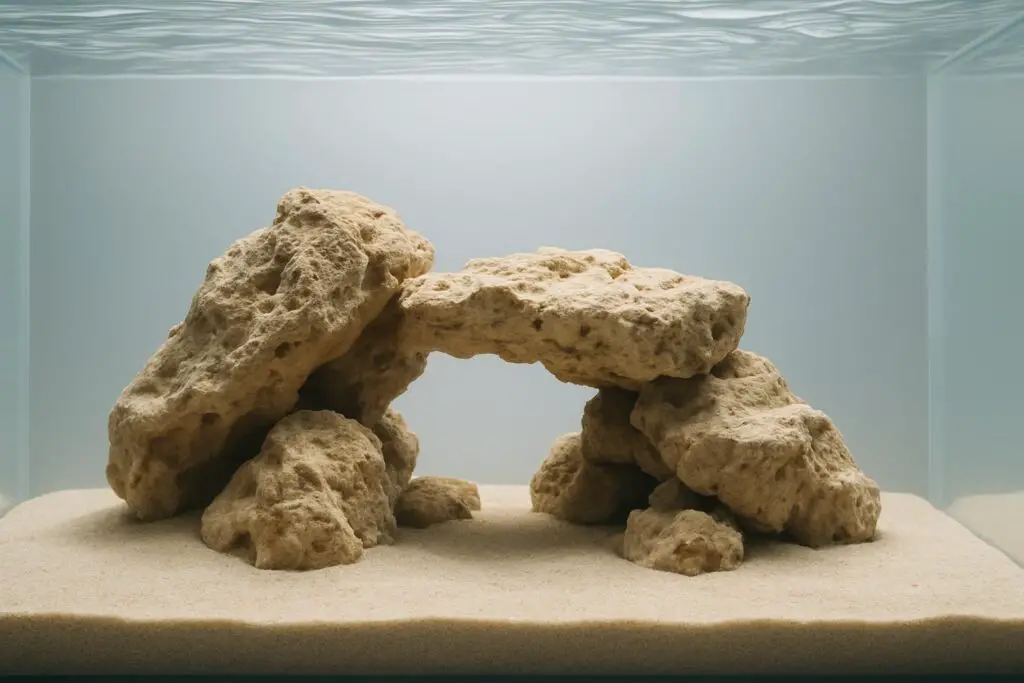
African cichlids need rock caves, lines of sight breaks, and solid hiding places. Always place rocks on the tank bottom first, then add sand. Do not rest heavy rocks on sand alone, because cichlids will dig under them and cause collapses. Use stable stacks, consider egg crate under big piles for weight distribution, and test your structure before filling the tank.
Choose rocks that help your chemistry when possible. Limestone and Texas Holey Rock slowly release minerals and support higher pH. Combined with a suitable sand, these rocks help you keep water stable with less effort.
Rinsing and First Fill Tips
Rinse sand in a large bucket in small batches. Stir it with your hand or a stick while running water until it is mostly clear. Even pre-rinsed products benefit from a quick wash. For aragonite and crushed coral, rinse well to reduce initial cloudiness.
When filling the tank, pour water onto a plate or plastic bag placed on the sand. This prevents craters and sandstorms. Expect a little haze for a day or two. Run fine mechanical filtration and a pre-filter sponge on the intake. Avoid turning on powerheads that blast the bottom until the water clears and the sand settles.
Maintenance That Keeps Sand Clean
Cleaning sand is simple once you learn the technique. During water changes, hover the siphon just above the surface and let debris rise into the tube. Do not plunge deep into fine sand or you will suck it out. For stubborn spots, pinch the siphon hose to reduce flow and gently stir the top layer with your fingers.
To prevent anaerobic pockets, keep sand to a reasonable depth and let the fish do most of the turning. You can also lightly rake the surface with a chopstick before water changes. If you notice rotten egg smell or black layers, your bed is too deep or too compact. In that case, remove some sand or increase gentle stirring during maintenance.
Magnetic algae scrapers and sand do not mix. Keep a safe gap between the magnet and the substrate to avoid trapping grains and scratching glass.
Boosting Hardness If You Use Inert Sand
If you choose an inert sand like pool filter sand or black blasting sand, you can still achieve perfect water chemistry. Place crushed coral or aragonite in a mesh bag inside your filter to raise KH. Use mineral-rich rocks in the aquascape. Consider a reliable cichlid buffer product if your tap water is very soft. Make changes slowly and test weekly until you learn how your tank responds.
Do not chase exact numbers every day. Aim for stable, reasonable ranges and avoid large swings. Your fish will handle a steady pH of 7.8 better than a pH that jumps between 7.6 and 8.4 every week.
Common Mistakes to Avoid
Do not mix many different sands and gravels in layers. Cichlids will dig and mix them, and the result often looks messy. Layering can also trap debris between sizes. It is better to pick one main substrate and use your filter or rocks to adjust chemistry.
Avoid extremely sharp gravel that can injure mouths. Be careful with play sand that compacts and clouds water. Do not use undergravel filters with fine sand; they clog quickly and stop working. Finally, do not skip rinsing. A few extra minutes at the start saves days of haze and frustration.
Budget Picks and Smart Upgrades
On a budget, pool filter sand with crushed coral in the filter is an excellent, proven setup. It is safe, looks good, and lets you tune your chemistry. If you want the easiest path to stable pH and happy sifters, choose aragonite sand. Special-grade aragonite balances comfort and easy cleaning. For a darker look with gentle buffering, try a calcite-based dark sand like Onyx.
If you already own inert sand and your pH is low, add a bag of crushed coral to your canister or HOB filter, and add mineral rocks. If you want more buffering without changing the whole substrate, sprinkle a thin layer of aragonite on top and mix lightly over time. The goal is simplicity and stability, not constant tinkering.
Planting With African Cichlids
Most African cichlids are not friendly to rooted plants. They dig them up and like to rearrange the scape. If you want greenery, choose hardy epiphytes like Anubias or Java fern attached to rocks. Vallisneria can survive in hard, alkaline water, but you may need root tabs and heavier sand to keep it in place. Substrate choice matters less for epiphytes, so focus on rock placement and fish-proof attachment methods.
Real-World Substrate Combinations That Work
For a Malawi mbuna setup, use special-grade aragonite sand at 2 inches deep, add lots of rock caves, and rely on the substrate plus limestone rock to keep pH steady. For Malawi peacocks, switch to oolite aragonite for a smoother sifting experience. For shell dwellers, use fine oolite at 2 to 3 inches with plenty of shells grouped into territories. For a mixed African community where you want budget control, pick pool filter sand at 2 inches and run a mesh bag of crushed coral in the filter.
Troubleshooting Cloudy Water and pH Drift
If your water is cloudy after adding sand, check your rinse steps, reduce flow that stirs the bottom, and run fine filter floss until it clears. If your pH is drifting down between water changes, you may not have enough buffering. Increase the amount of crushed coral in the filter, add more aragonite to the bed, or increase water change frequency. Test KH regularly; if KH is low, pH stability will suffer.
Safety Tips When Working With Sand
Always turn off filters and heaters when your water level drops during maintenance. Keep sand away from filter impellers by using pre-filter sponges. When moving rocks, remove nearby sand first so you do not twist a rock onto the glass with grains trapped underneath. Take your time and let the water clear fully before judging the final look.
Choosing the Right Substrate for You
If you want set-and-forget chemistry, choose aragonite-based sands. If you want control and lower cost, choose pool filter sand plus buffering in the filter. If you love fine, soft movement, choose oolite. If you want easy vacuuming and less dust, choose special-grade aragonite. Consider your fish species, your tap water, your budget, and your preferred look. All of these factors are valid, and there is no single perfect answer for every tank.
Conclusion
The best substrates for keeping African cichlids are the ones that support natural behavior, protect delicate mouths and gills, and help you hold stable, alkaline water. Fine aragonite sands, special-grade aragonite, and carefully rinsed pool filter sand are the most reliable choices. Crushed coral belongs in your filter or used sparingly to boost buffering. Avoid rough gravels and ultra-fine play sand unless you are experienced and ready to manage their challenges.
Focus on smooth sand in the right depth, solid rockwork that sits on the glass, and simple maintenance that keeps the surface clean. Match the substrate to your species and your tap water, and pick a color that keeps your fish calm and confident. With these basics in place, your African cichlids will dig, sift, display, and thrive, giving you a vibrant, dynamic aquarium that looks beautiful and runs smoothly for years.