
We are reader supported. When you purchase through links on our site, we may earn an affiliate commission. Also, as an Amazon affiliate, we earn from qualifying purchases.
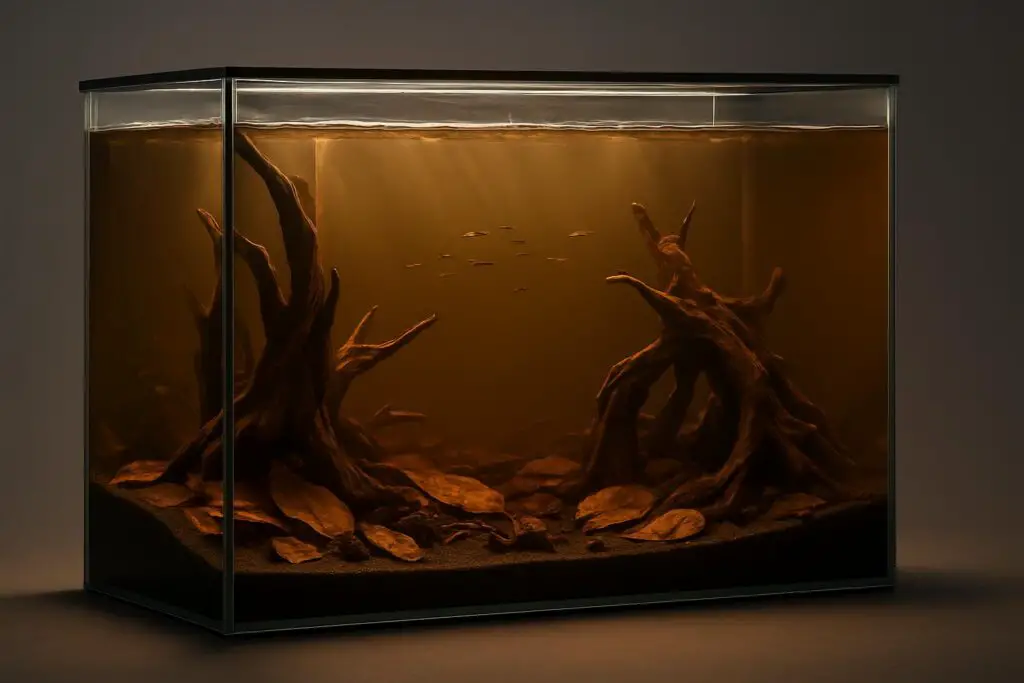
Blackwater aquariums are calm, deeply colored, and built to mimic quiet forest streams. The water is tea-stained, the light is soft, and the fish behave naturally. If you want a tank that supports sensitive species and looks like a slice of the Amazon or Southeast Asia, this guide walks you through every step. You will learn what to buy, how to prepare botanicals, how to set parameters, how to cycle, how to stock, and how to keep it stable. Follow the sequence, avoid shortcuts, and you will get repeatable results.
What Is a Blackwater Aquarium
A blackwater aquarium imitates tannin-rich habitats where fallen leaves, seed pods, wood, and peat stain the water and lower its pH. These waters are soft, acidic, and low in minerals. Many small river fish evolved in this environment and show better color, calmer behavior, and improved health when kept in similar conditions. The goal is not only the amber color. The goal is to create low-mineral, low-light, leaf-litter conditions that your livestock understands.
How Blackwater Forms in Nature
Leaves and wood decompose slowly in soft rainwater. Tannins and humic substances leach out and bind metals, reduce light penetration, and buffer pH downward. There is little carbonate content to resist acids, so pH remains low. Flow is often gentle and the bottom is leaf litter, twigs, and roots. Macro plants are sparse, while marginal and floating plants are common.
Why Keep One
It showcases natural behavior. It is friendly to shy fish that hate bright light. It reduces stress for many species. It is also forgiving about algae because light is dim and nutrients are low. The challenge is stability. With low carbonates, pH can swing if you neglect maintenance. With planning, this is manageable.
Plan Your Setup
Plan before you buy. Decide the look, the fish, and the size. Every later choice depends on these three points.
Choose Tank Size
Larger tanks are more stable. For beginners, 20 to 40 gallons is comfortable. You get enough water volume to buffer mistakes and enough space for a natural scape. Nano tanks can work but demand stricter habits. If you want surface-oriented fish like hatchetfish or pencilfish, choose tanks with length and a lid.
Budget and Timeline
Expect costs for tank, lid, filter, heater, light, substrate, RO water system or purchased RO, botanicals, test kits, and hardscape. Plan two to four weeks for cycling. Botanicals need regular replenishment. If you want wild-caught fish, add quarantine time.
Location and Stand
Place the aquarium away from windows and vents. Stability wins. Use a level stand. Soft light suits blackwater tanks, and nearby electric outlets should be above the floor to avoid splash issues. A tight lid is essential because many blackwater fish jump.
Gather Equipment
Choose equipment that delivers soft flow, stable heat, and reliable filtration without stripping tannins.
Tank and Cover
Use glass or acrylic with a fitted lid. Blackwater fish reach for insects at the surface and jump. A mesh lid causes more evaporation and heat loss; a solid lid is safer for humidity and temperature.
Filter and Flow
A canister or a large sponge filter works well. Aim for gentle flow with surface ripple for gas exchange. Add a pre-filter sponge to any intake to prevent small fish from being drawn in and to protect the biofilm that builds in leaf litter. Avoid overpowered hang-on-back filters that blast the surface. Carbon in the filter will remove tannins, so skip it.
Heater and Temperature
Use a reliable, adjustable heater with a guard. Many blackwater species thrive between 24 and 28 Celsius. Pick the temperature for the fish you will keep and stick with it. Use a thermometer you can read at a glance.
Lighting
Choose a dimmable LED. Blackwater needs lower intensity and warmer color. Set a short photoperiod of 6 to 7 hours to start. Bright white light fights the look and stresses fish. A light with adjustable spectrum lets you favor warmer tones that flatter amber water.
Substrate
Use inert sand or fine gravel in dark or natural tones. Avoid sharp sand. Avoid active soil unless you plan for plants that need it and you understand how it will lower pH further. Many blackwater setups do well with a thin layer of sand topped with leaf litter.
Water Source and Remineralization
Use RO or distilled water for consistency. Tap water often has high KH and GH that fight the blackwater profile. Remineralize with a product intended for soft water fish to reach low GH without raising KH too much. Avoid random salts that spike sodium or alkalinity.
Test Kits and Tools
Get tests for pH, GH, KH, ammonia, nitrite, nitrate, and a TDS meter. A turkey baster helps remove debris from the leaf bed. A spare bucket and dedicated tongs for botanicals help keep everything tidy.
Botanicals and Hardscape
Gather botanicals that are aquarium safe. Good options include Indian almond leaves, magnolia leaves, oak leaves, alder cones, sterile seed pods like calyx pods, and driftwood such as Malaysian or mopani. Avoid conifer wood and unknown seeds. Buy from reputable sources that clean and sort for aquarium use.
Optional Equipment
A small powerhead set on low can prevent dead spots. A UV sterilizer is optional for clarity but will not remove tannins. A small bag of peat in the filter can add acids but use it carefully. Keep a supply of seachem or equivalent buffers if you need emergency pH adjustments.
Set Target Water Parameters
Define your target before you fill the tank. It prevents endless chasing later.
Recommended Targets for Most Blackwater Community Tanks
pH between 5.5 and 6.5. GH between 1 and 4 dGH. KH between 0 and 2 dKH. TDS between 30 and 120 ppm. Temperature according to species, often 25 to 27 Celsius. These are general ranges. Check the needs of your chosen fish and adjust within this spectrum.
Understanding pH, GH, KH
pH measures acidity. GH measures calcium and magnesium. KH measures carbonates that resist pH changes. In blackwater, GH and KH are low. This makes the system sensitive to acids from biological processes. Your job is to keep bioload modest and maintenance steady so the pH does not collapse.
Using RO and Remineralizer
Start with pure RO or distilled water. Add a remineralizer designed for soft water fish. Mix in a bucket, stir, then test. Aim for the GH and TDS target. Keep KH very low. Record the amounts so you can repeat the mix the same way every time. Consistency is everything.
How Tannins Affect pH
Tannins are weak acids. They may lower pH slightly but do not replace proper remineralization. Do not rely on leaves alone for parameters. Build the water first, then use botanicals to fine tune feel and appearance.
Note for Shrimp and Snails
Caridina shrimp may enjoy soft acidic water, but they need stable parameters. Many snails need higher calcium. In very soft water, snail shells erode. If you want snails, consider a separate tank or be ready to supplement calcium and accept cosmetic shell wear.
Clean and Prepare Botanicals
Botanicals bring tannins and structure. Preparation prevents mold and unwanted hitchhikers.
Types and Effects
Leaves break down fastest and create the leaf litter bed. Cones and seed pods leach slowly and add visual points. Driftwood adds both tannins and structure. Combine them to create layers. Dense leaf litter gives fish cover and fosters microfauna for fry.
Pre-treatment Steps
Rinse each item under hot water. Boil leaves for 10 to 15 minutes to sterilize and pre-sink them. Boil cones and pods for 20 to 30 minutes, replacing water once if very dark. Soak driftwood for several days, changing the water daily, or boil if size allows. Let everything cool before adding to the tank. This reduces early cloudiness and curbs biofilm bloom.
How Much to Add
Start moderate. For a 20-gallon tank, try 6 to 10 almond-sized leaves, 8 to 12 alder cones, and a few small pods. Observe color over a week. Add more if you want deeper amber. Too much at once can cloud water and depress oxygen if the tank is immature.
Step-by-Step Setup
Build the system carefully in one session, then cycle slowly.
Rinse and Place Substrate
Rinse sand until the water runs clear. Add a thin bed, about 2 to 3 centimeters. Slope it slightly from back to front for depth. Keep the layer thin; most of the structure will come from leaves.
Arrange Hardscape
Place driftwood and roots to create shaded zones and open swim areas. Think about sightlines and cover near the surface for surface fish. Leave enough room along the front for maintenance.
Add Botanicals
Spread a light layer of prepared leaves across the floor. Tuck cones and pods near the wood. Keep some space open for feeding. You can add more later. Packed leaf litter looks nice but start lean to stabilize first.
Install Equipment
Mount the heater in a hidden but well-circulated spot. Install the filter and pre-filter sponge. Set the light to a low intensity. Check that the lid fits with all cables and closes tight.
Fill With Prepared Water
Place a plastic bag or plate on the substrate and pour your remineralized RO water onto it to avoid disturbance. Fill slowly. Turn on heater and filter. Let the tank run for an hour. Check for leaks and verify temperature. Test pH, GH, KH, and TDS to confirm your mix.
Start the Cycle
Use a fishless cycle. Add bottled nitrifying bacteria if available. Dose pure ammonia to about 2 ppm. Test daily for ammonia and nitrite. Keep the light off to reduce algae. When ammonia drops to near zero and nitrite spikes, dose ammonia again to 2 ppm. When the tank can process 2 ppm ammonia to nitrate within 24 hours and nitrite reads zero, the cycle is done. In soft acidic water, nitrification can slow. Be patient. If pH drops below your target during cycling, do a small water change with fresh remineralized water to restore stability.
Fine Tune Tannins and Clarity
As the filter matures, water may look hazy for a few days. This is normal. If color is lighter than you want after a week, add a few more leaves or cones. If very dark, wait. Tannins reduce over time through dilution and breakdown.
Optional Plants
Plant floating species like Salvinia or frogbit to shade the surface. Try epiphytes like Anubias, Bucephalandra, and Java fern on wood. They tolerate low light and soft water. Avoid heavy root feeders unless you plan for a deeper substrate.
Aquascaping for Blackwater
Design supports fish behavior. Build lanes for schooling, pockets for territory, and dappled light.
Layout Principles
Keep dark refuges under wood arches. Leave a clear midwater path for tetras and rasboras. Add floating cover for hatchetfish. Use leaf litter to soften transitions from open sand to wood clusters. Think about where food will land, so timid fish can eat in cover.
Plant Choices
In dim blackwater, slow growers win. Attach small Anubias and Buce to wood. Use Cryptocoryne species that handle low light if you want rooted plants, but watch for melt when parameters shift. Keep plant mass modest at first to avoid oxygen dips at night.
Surface and Oxygen
Ensure a gentle surface ripple. Blackwater looks calm, not stagnant. Oxygen supports fish and bacteria, especially when leaves are fresh and decomposing.
Stocking Strategy
Choose species that evolved in soft, acidic, tannin-stained water. Stock slowly and quarantine new arrivals.
Good Candidates
Small tetras like cardinal, ember, and rummynose. Rasboras such as chili and lambchop. Pencilfish and hatchetfish for the surface. Dwarf cichlids like Apistogramma and Mikrogeophagus in pairs or harems if the layout suits them. Wild-type Betta species for species-only setups. Catfish like Corydoras from soft water lineages and Otocinclus for gentle algae control. Caridina shrimp if you can keep parameters steady and predators limited.
Species to Avoid
Hard water fish such as African rift cichlids and livebearers. Large boisterous fish that stir leaf litter. Fin nippers that stress surface fish. Snails that require high calcium if you care about shell condition.
Order of Introduction
Add the least messy fish first, such as small tetras, once cycling is complete. Wait one to two weeks, test, then add the next group. Add dwarf cichlids later when the biofilm and microfauna are established. Keep the total bioload modest. In low KH water, less is more.
Quarantine and Acclimation
Quarantine for at least two weeks in a separate bare tank. Match temperature and gradually match pH and TDS by drip acclimation. Sudden jumps from hard store water to soft blackwater shock fish. Slow mixing prevents losses.
Feeding in Blackwater
Feed small amounts that reach the fish before sinking into leaves. Use floating foods for surface species. Offer frozen and live foods for conditioning. Avoid overfeeding. In low oxygen environments, excess food decays and stresses livestock.
Routine Maintenance
Blackwater tanks are simple if you follow a schedule. Consistency beats big interventions.
Water Changes
Change 10 to 20 percent weekly with preheated, remineralized RO water. Match TDS and temperature. This tops up minerals gently and removes organics. Top off evaporation with pure RO only, not remineralized water, to avoid creeping TDS.
Filter Care
Rinse sponges and mechanical media in tank water during water changes. Do not overclean biological media. Avoid activated carbon. If tannins feel too strong, a partial water change is better than carbon, which strips the look and chemistry.
Botanical Management
Replace leaves every 3 to 6 weeks as they break down. Remove mushy pieces with a net or baster. Add new leaves gradually to prevent sudden parameter shifts. Pods and wood last longer; rotate a few at a time.
Glass and Light
Wipe the front glass weekly. Keep the light at low intensity and a short photoperiod. If algae appears, reduce light by an hour and increase floating plant cover.
Monitoring
Test pH and TDS weekly. Watch fish behavior at feeding. If fish gasp or hover near the surface, increase surface agitation and check ammonia and nitrite. Log your parameters and changes.
Troubleshooting
Problems happen. Use these cues to respond quickly.
Cloudy Water in Week One
Likely a bacterial bloom from new botanicals. Do not panic. Keep the filter running, increase aeration, and wait. If it smells bad or persists beyond a week, reduce botanicals and do a small water change.
White Fuzz on Leaves or Wood
This is normal fungal and bacterial colonization. Shrimp and some fish eat it. If it grows thick, siphon lightly and add more flow. It fades as the tank matures.
Brown Film on Surfaces
Diatoms are common in new tanks, especially with silica-rich sand. Wipe glass, gently scrub wood with a soft brush, and keep up with water changes. Otocinclus help once the tank is stable.
Algae Under Dim Light
If algae spreads even with low light, nutrients are building up. Reduce feeding, increase water changes, and refresh leaves less aggressively. Check that your photoperiod is not creeping longer.
pH Crash
Symptoms include listless fish and stalled bacteria. Test KH and pH. If KH is near zero and pH plunged, perform a small to medium water change with your prepared water to bring values back up. Do not dump alkaline buffers blindly. If crashes are frequent, lighten the bioload, increase change frequency, or maintain a tiny KH margin around 0.5 to 1 dKH using careful remineralization. Avoid adding crushed coral unless you accept a higher pH and a less authentic blackwater profile.
Ammonia or Nitrite Spike After Stocking
Stop feeding, do a water change, and add bottled bacteria. Review your acclimation and stocking pace. In very soft water, filters mature slower. Patience is safer than antidotes.
Seasonal and Long-Term Care
Blackwater aquariums evolve. Plan for the long game.
Stability Over Perfection
Do not chase pH daily. Keep your mix consistent and your schedule steady. Fish care more about stable, safe ranges than a magic number.
Managing the Leaf Bed
Leaf litter builds microhabitats. Too thick and it traps waste; too thin and fish lose shelter. Aim for a thin but continuous layer. Rotate leaves so there is always fresh cover and some decayed matter for microorganisms.
Travel and Automation
Use a timer for lights. Arrange a trusted sitter to feed lightly every other day. Do a water change before you travel. Skip adding new botanicals right before you leave.
Ethical and Practical Sourcing
Buy botanicals from reputable vendors who collect sustainably. Avoid protected species and unknown pods. Choose fish from responsible sources. Captive-bred stock adapts more easily, but many blackwater fish are still wild-caught. Quarantine protects your main tank and your investment.
Example Timeline
Day 1: Assemble tank, hardscape, botanicals, and equipment. Fill with prepared water. Start cycle with bacteria and ammonia. Light off. Week 1: Test daily. Adjust temperature and gentle flow. Add a few more botanicals if color is pale. Week 2: Continue cycling until the tank processes 2 ppm ammonia in 24 hours. Add floating plants. Week 3: If cycled, perform a large water change with matched water. Add first small school of fish after drip acclimation. Week 4: Monitor, then add the next group. Begin steady maintenance routine.
Common Questions
Do I need peat. No. You can reach soft acidic conditions with RO water, remineralizer, and botanicals. Peat can help but stains heavily and is hard to control.
Can I run carbon. Carbon removes tannins and the look you want. Skip it. Use water changes to manage color depth.
How dark should the water be. That is up to you. Deeper amber is fine if oxygen is good and fish feed well. The color is not harmful by itself.
Can plants grow in blackwater. Yes, but use low-light tolerant species and accept slow growth. Floating plants do well and help shade the tank.
What about UV sterilizers. They improve water clarity by reducing free-floating microbes but do not remove tannins. They are optional.
Beginner Mistakes to Avoid
Do not skip remineralization. Pure RO without minerals is unstable and not healthy long term. Do not overload botanicals on day one. Add in stages. Do not chase pH with constant chemicals. Build a consistent water mix and stick to it. Do not stock sensitive species before the cycle is complete. Do not keep bright lights on for long hours. Do not ignore a lid. Many blackwater fish jump.
A Quick Species Setup Example
For a 29-gallon tank, target pH 6.2, GH 2 dGH, KH under 1 dKH, and 26 Celsius. Use a canister filter with a pre-filter sponge and a dimmable warm LED for 6.5 hours. Substrate is dark sand with a thin leaf layer. Stock with a school of 15 ember tetras, 8 chili rasboras, 6 Corydoras habrosus, and a trio of small Apistogramma if the aquascape has caves and breaks in sightlines. Feed small amounts twice daily. Change 15 percent water weekly with matched remineralized RO. Replace a few leaves every two weeks. This offers a balanced bioload and a calm display.
Safety and Housekeeping
Unplug equipment before water work. Use separate buckets for aquarium use. Wash hands before and after maintenance. Store botanicals dry and clean. Check cords and drip loops. Label your RO and remineralizer doses so you do not guess.
Conclusion
A stable blackwater aquarium is built on planning, measured steps, and consistent care. Start with RO water and a clear mineral target. Prepare botanicals thoroughly. Cycle patiently. Stock compatible species slowly. Keep the light low, the flow gentle, and the maintenance regular. When you build the system around the fish, they settle, color up, and behave as they do in nature. The tea-stained water becomes more than an aesthetic. It becomes a healthy, living environment that you can maintain with confidence. Follow this guide and your blackwater tank will stay calm, rich, and reliable for years.