
We are reader supported. When you purchase through links on our site, we may earn an affiliate commission. Also, as an Amazon affiliate, we earn from qualifying purchases.
Cherry shrimp are one of the easiest freshwater invertebrates to breed at home, but success depends on stable water, good biofilm, and a calm, well planned setup. This guide walks you through the exact steps and decisions that lead to a thriving, self sustaining colony.
Introduction
Breeding cherry shrimp is simple when you focus on stability and shrimp comfort. You do not need an expensive tank or advanced gear. You do need cycled water, soft flow, and consistent feeding. Follow the plan below to avoid common mistakes and see baby shrimp within weeks.
Cherry Shrimp Basics
Why They Suit Beginners
Cherry shrimp, Neocaridina davidi, adapt well to a wide range of conditions, accept many foods, and breed readily in community style nano tanks. They stay small, produce low waste, and reward patience with steady population growth.
Life Cycle Overview
Juveniles mature in two to three months. Females develop a saddle of developing eggs behind the head. After a molt, they release pheromones, mate, and carry eggs under the abdomen. Eggs hatch into fully formed shrimplets that graze on biofilm. There is no larval stage to manage.
Planning Your Breeding Setup
Tank Size and Layout
A 10 to 20 gallon tank is ideal for stable water and room to grow. Smaller tanks can work, but parameters swing faster and reduce breeding consistency. Leave open floor for graze space and use dense plants for cover.
Filtration and Flow
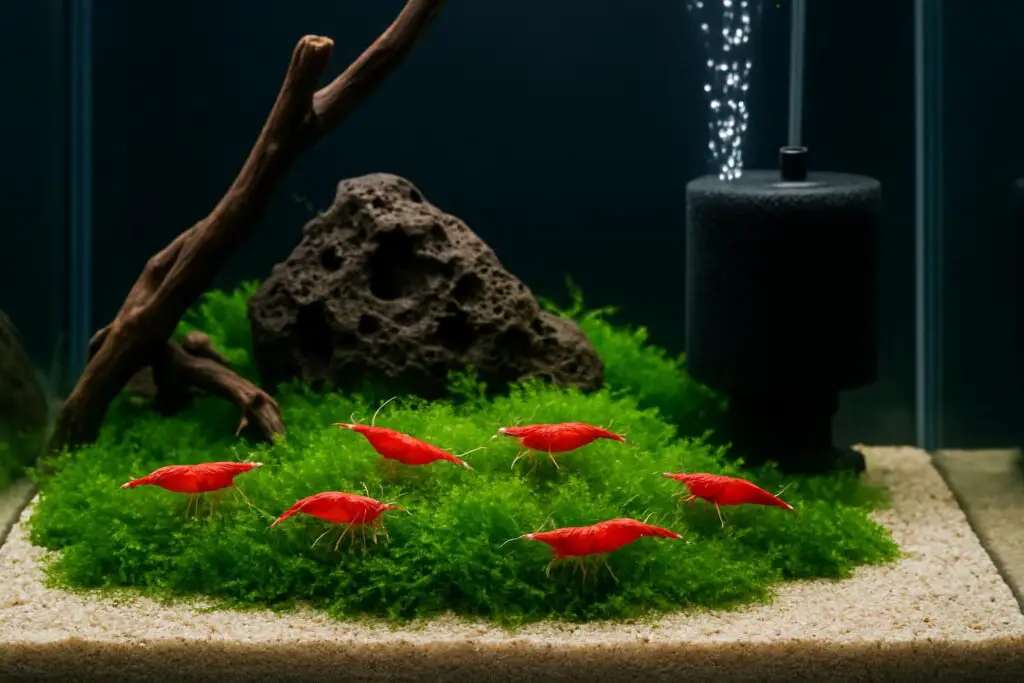
Use a large air driven sponge filter to provide gentle flow, oxygenation, and a safe surface for shrimplets. Pre filter any pump intake with sponge to prevent babies from being pulled in. Avoid strong currents that scatter food and stress shrimp.
Substrate and Hardscape
Use an inert substrate like sand or fine gravel for Neocaridina. Add porous hardscape such as lava rock, cholla wood, and shrimp tubes. These surfaces seed biofilm and give shrimplets safe microhabitats.
Plants, Moss, and Biofilm
Moss is your best breeding ally. Java moss, Christmas moss, and subwassertang trap food and grow biofilm where shrimplets feed. Add slow growers like Anubias, Bucephalandra, and floating plants to shade and stabilize nutrients. Indian almond leaves and alder cones add tannins, foster biofilm, and create natural grazing mats.
Lighting and Photoperiod
Use moderate lighting for 6 to 8 hours per day to encourage algae and biofilm without fueling nuisance algae blooms. Stability matters more than brightness. If algae overgrows, reduce duration instead of intensity to keep plant growth steady.
Water Parameters That Drive Breeding
Temperature Range and Stability
Cherry shrimp breed best between 20 and 24°C. Higher temperatures speed metabolism and shorten gestation but reduce oxygen and longevity. Lower temperatures slow growth. Keep temperature stable day and night.
pH, GH, KH, and TDS Explained
Neocaridina prefer neutral to slightly alkaline water with moderate hardness. pH affects biological activity but shrimp tolerate a range if it is stable. GH supplies calcium and magnesium for exoskeletons and successful molts. KH buffers pH against swings. TDS is a rough measure of dissolved minerals and organics; aim for consistent values.
Target parameters at a glance: 20 to 24°C, pH 6.5 to 7.5, GH 6 to 8 dGH, KH 0 to 4 dKH, TDS 180 to 250 ppm, and nitrate under 20 ppm.
Remineralized RO vs Treated Tap
Use remineralized RO water if your tap is unstable, very hard, very soft, or contains contaminants. A shrimp GH only remineralizer provides calcium and magnesium without raising KH too high. If your tap is safe and consistent, dechlorinate with a conditioner and keep parameters steady from change to change.
Cycling the Tank and Testing
Cycle the tank for at least 4 to 6 weeks. Seed with filter media or substrate from a mature aquarium if available. Feed a pinch of shrimp food or ground flake to feed the bacteria. Wait until ammonia and nitrite are zero for a week. Test weekly for pH, GH, KH, and TDS. Log results and adjust slowly.
Stock Selection and Acclimation
How Many to Start With
Start with a group large enough for genetic diversity and steady breeding. Twelve to twenty juveniles are ideal for a 10 to 20 gallon tank. Juveniles adapt better than large adults and settle faster.
Sexing and Ratio
Females are larger, with deeper bodies and brighter color; males are slimmer and paler. Aim for more females than males to speed growth while maintaining enough males for reliable fertilization.
Start with 12 to 20 juveniles if possible, and aim for a ratio of about 1 male to 2 or 3 females.
Color Grade and Single Line
Choose a single color line such as red cherry, fire red, or painted fire red. Mixing different Neocaridina color morphs crossbreeds and produces lower color quality in later generations. Buy from one breeder when possible to keep the line consistent.
Drip Acclimation Steps
Float the bag to match temperature for 20 minutes. Transfer shrimp and bag water to a clean container. Use airline tubing with a valve or knot to drip tank water at roughly 2 to 4 drops per second. Acclimate for 60 to 120 minutes until volume triples. Net the shrimp gently into the tank and discard the acclimation water.
Quarantine New Additions
Quarantine new shrimp for two to four weeks in a separate cycled tank. Observe for parasites, planaria, hydra, or unexplained deaths. Quarantine reduces the risk of wiping out your main colony.
Daily Care and Feeding
Biofilm First
Biofilm is the main food for shrimplets and relaxed adults. Encourage it with moss, wood, mineral rocks, leaf litter, and stable light. Avoid over cleaning surfaces so microfauna can thrive.
Staple Foods and Frequency
Feed a small amount of a quality shrimp specific pellet or wafer once per day or every other day depending on population. The food should be mostly gone within an hour. As the colony grows, increase portions slowly.
Vegetables and Protein
Offer blanched zucchini, spinach, kale, or green beans once or twice per week. Add a small protein rich food such as a shrimp pellet high in animal protein one to two times per week to support molting and breeding. Remove uneaten vegetables after a few hours.
Minerals for Molting Health
Maintain GH with water changes or a remineralizer. You can add a small piece of cuttlebone or a mineral stone as a slow calcium source. Consistent GH supports strong molts and reduces fatalities.
Avoid Overfeeding
Overfeeding fouls water and kills shrimp. Feed lightly, watch them finish, and adjust. Keep nitrate under 20 ppm and ammonia and nitrite at zero.
The Breeding Process and Timeline
Signs of Readiness
Look for the saddle in females, a yellow or green patch behind the head. When a female molts, her shell will shed and mating usually occurs within hours. Males dart around the tank following the pheromone trail.
Berried Females
Fertilized eggs are carried under the abdomen. The female fans and cleans them constantly. Good water flow across plant leaves and moss helps oxygenate the clutch.
Gestation and Hatch
At typical room temperatures, eggs hatch in three to five weeks. Warmer water shortens the time. Clutch size ranges from about twenty to forty eggs depending on female size and line.
Protecting Shrimplets
Dense moss, leaf litter, and fine hardscape keep babies safe and close to food. Avoid any fish if your goal is fast colony growth. Maintain stable water and consistent microfoods so shrimplets can graze constantly.
Population Growth Expectations
Most juveniles reach maturity in 2 to 3 months; after a female molts and mates she carries eggs for about 3 to 5 weeks, then shrimplets appear. With a good setup you can see a noticeable increase within one to two breeding cycles.
Maintenance That Keeps Breeding Consistent
Water Change Routine
Change 10 to 20 percent weekly with water that matches temperature and parameters. Remineralize RO water the same way every time or treat tap water consistently. Small, regular changes are safer than large, erratic ones.
Glass and Substrate Care
Wipe front glass as needed and leave some side or back glass for algae grazing. Lightly vacuum only open areas of substrate. Avoid deep substrate disturbance that releases pockets of waste.
Filter Care
Rinse sponge filters in a bucket of tank water during water changes to preserve bacteria. Squeeze gently until the flow recovers. Do not sterilize media or rinse under tap water.
Logs and Stability
Keep a simple log of test results, change volumes, foods offered, and dates of berried females. Patterns in your notes help explain swings in breeding activity and prevent repeated mistakes.
Tankmates That Help or Hurt
Species Only Works Best
A species only tank maximizes survival of shrimplets and speeds population growth. Without fish, even the smallest babies can graze in the open.
Invertebrate Companions
Nerite snails and Malaysian trumpet snails are generally safe and help manage algae and detritus. Avoid crayfish and larger crabs which will prey on shrimp.
Fish Risks
Even tiny fish can pick off newborns and reduce colony growth. Some keepers succeed with ember tetras or micro rasboras in dense planted tanks, but survival drops compared to a shrimp only setup.
The best choice is a species only tank; even small nano fish will pick off shrimplets, and if you insist on fish you can try a very dense planted tank with ember tetras or micro rasboras, but expect lower survival.
Managing Genetics and Color Quality
Do Not Mix Color Morphs
All Neocaridina davidi color morphs interbreed. Mixing colors usually produces lower grade offspring within a few generations. Keep one color per tank.
Selective Culling and Selling
As the colony grows, move paler individuals to a separate tank if you want to tighten color. Sell or rehome culls so your main tank trends toward deeper, more uniform red.
Adding New Blood
To avoid inbreeding over the very long term, add a small group from the same color line every year or two. Quarantine new arrivals and match parameters before mixing to avoid shocks and disease.
Troubleshooting Common Problems
Failed Molts
Causes include low GH, sudden parameter shifts, or lack of food variety. Check GH and keep it at 6 to 8 dGH. Offer a broader diet and ensure oxygen and flow are adequate.
Sudden Deaths After Water Change
Likely culprits are temperature shock, TDS swings, or residual chlorine or chloramine. Match new water parameters closely. Use a reliable conditioner and test TDS before and after changes to keep the difference small.
Planaria or Hydra
Overfeeding is the usual trigger. Reduce feeding, siphon debris, and increase water changes. Many chemical treatments harm shrimp or eggs, so focus on prevention and manual control.
Copper and Contaminants
Shrimp are sensitive to copper and pesticides. Avoid aerosol sprays, soaps, and metal contact near the tank. Some fertilizers contain trace copper at plant safe levels, but dose lightly and monitor shrimp behavior. When in doubt, skip copper containing products in breeding tanks.
Slow Breeding or No Berried Females
Check temperature, GH, and feeding. Ensure at least 20 to 24°C, GH 6 to 8 dGH, and a steady food supply with plenty of biofilm. Verify that you have enough females and that the tank is not overcrowded by fish.
Scaling Up and Long Term Stability
Seasonal Adjustments
Rooms run warmer in summer and cooler in winter. Use a heater or fan as needed to keep a tight range with good surface agitation for oxygen.
Grow Out and Sorting
When the main tank becomes crowded, set up a second tank to move juveniles or culls. Match parameters and move shrimp slowly with a drip to avoid stress.
Harvesting Basics
Use a fine shrimp net and a clear container. Gently coax shrimp onto moss or a leaf, then lift. Avoid chasing. Always acclimate shrimp when moving between tanks with different parameters.
Maintenance Checklist Summary
Weekly Tasks
Test ammonia, nitrite, nitrate, pH, GH, KH, and TDS. Change 10 to 20 percent water with matched parameters. Rinse sponge filter in tank water if flow drops. Trim plants to keep light and flow even. Feed lightly and remove uneaten vegetables.
Monthly Tasks
Review your log and adjust feeding amounts. Thin moss to keep oxygen moving. Inspect for pests. Reassess stock levels and consider moving culls.
Conclusion
Successful cherry shrimp breeding is a process of stacking small advantages. Start with a stable, cycled tank. Use a sponge filter and dense moss. Keep parameters within a moderate range and avoid swings. Feed lightly and consistently. Choose a single color line and introduce new shrimp carefully. Make these habits routine and your colony will grow month after month.
FAQ
Q: What water parameters should I target for breeding cherry shrimp
A: Target parameters at a glance: 20 to 24°C, pH 6.5 to 7.5, GH 6 to 8 dGH, KH 0 to 4 dKH, TDS 180 to 250 ppm, and nitrate under 20 ppm.
Q: How many shrimp should I start with and what male to female ratio works best
A: Start with 12 to 20 juveniles if possible, and aim for a ratio of about 1 male to 2 or 3 females.
Q: Do I need a heater and what filter should I use
A: Use a large air driven sponge filter, and run a heater only if your room drops below 20°C or swings; keep the tank stable at 22 to 24°C for consistent breeding.
Q: How long until I see babies after setting up a breeding tank
A: Most juveniles reach maturity in 2 to 3 months; after a female molts and mates she carries eggs for about 3 to 5 weeks, then shrimplets appear.
Q: Are fish safe tankmates in a shrimp breeding tank
A: The best choice is a species only tank; even small nano fish will pick off shrimplets, and if you insist on fish you can try a very dense planted tank with ember tetras or micro rasboras, but expect lower survival.