
We are reader supported. When you purchase through links on our site, we may earn an affiliate commission. Also, as an Amazon affiliate, we earn from qualifying purchases.
Bristlenose Plecos are among the best beginner-friendly algae grazers, but one question keeps coming up: do they need driftwood to stay healthy. The short answer is no, they do not strictly need it to survive if you feed them correctly, but driftwood is one of the most useful pieces of aquascaping you can add for their long-term well-being. This guide explains why driftwood helps, what types to choose, how to prepare it, and how to build a complete care plan around it. By the end, you will know exactly how to set up a tank that keeps your Bristlenose thriving for years.
Introduction
Bristlenose Plecos, commonly in the genus Ancistrus, are small, hardy, and peaceful bottom dwellers. They rasp on surfaces, clean up biofilm, and prefer stable, clean water with plenty of hiding spots. Driftwood is often recommended for them, but many hobbyists keep Bristlenose without it. Understanding when driftwood is essential and how to manage it will help you avoid common mistakes, from sudden tea-colored water to nutrient gaps in their diet.
Species snapshot
Adult size: 4 to 6 inches. Lifespan: 5 years or more with good care. Behavior: nocturnal or crepuscular, peaceful, territorial around hiding spots. Key needs: oxygenated water, steady filtration, vegetable-heavy diet, safe places to hide and graze.
Why driftwood matters for Bristlenose Plecos
Natural behavior and gut health
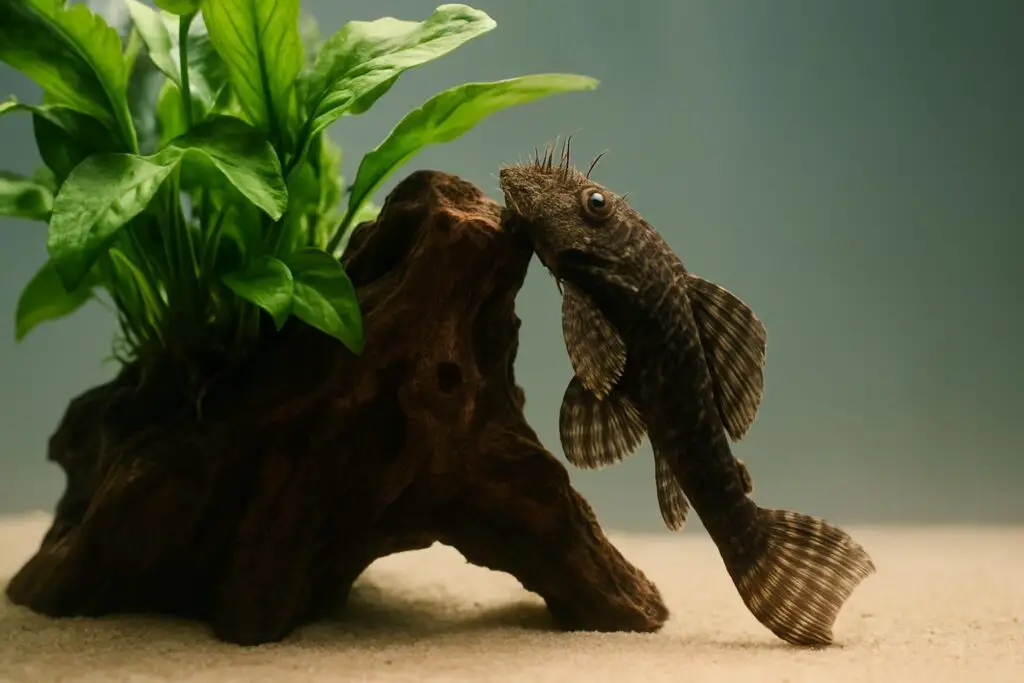
In the wild, Bristlenose Plecos live among roots, fallen branches, and leaf litter. They rasp constantly on hard surfaces to consume biofilm, algae, and microorganisms. While they are not obligate wood eaters like some Panaque species, small amounts of wood fiber can support gut motility and natural rasping behavior. The result is better digestion, fuller bellies, and less stress.
Biofilm and grazing surface
Driftwood grows biofilm, diatoms, and green algae. Your Pleco will work these surfaces nonstop. This grazing activity is free enrichment that keeps them occupied and reduces the likelihood they will irritate plants or outcompete other fish at feeding time.
Shelter and territory
Wood creates shaded zones, overhangs, and caves. Bristlenose like to wedge themselves under structure during the day and claim small territories. Reliable cover reduces stress, supports natural rest cycles, and aids breeding if you plan to spawn them.
Do Bristlenose Plecos need driftwood
Strictly speaking, no. If you provide a strong, fiber-rich diet with quality algae wafers and regular vegetables, plus other hard surfaces to rasp on, your Bristlenose can live well without driftwood. However, driftwood is strongly recommended. It supports digestion, provides grazing surfaces, helps with territory and shelter, and generally produces better long-term results. If you choose not to use wood, you must compensate with excellent diet and decor choices that offer similar structure and surface area.
Choosing the right driftwood
Safe types
- Malaysian driftwood: dense, sinks easily, moderate to strong tannins, long-lasting
- Mopani: heavy, very tannin-rich, attractive two-tone look, sinks fast
- Manzanita: clean, branching shape, low tannins, often needs pre-soaking to sink
- Spider wood: intricate shapes, great surface area, may grow harmless white fuzz initially
- Cholla: hollow, porous cactus wood, softer and great for grazing, degrades faster than hardwoods
Avoid softwoods and any piece that is resinous, treated, or still has bark. Do not use found wood that may have been exposed to chemicals or pesticides. If you want fast sinking and longevity, Malaysian and Mopani are excellent. If you want intricate aquascapes, Manzanita or spider wood work well.
Size and shape
Choose wood that offers tunnels, shaded arches, and broad faces your Pleco can rasp. Check for sharp points and sand them smooth. Aim for at least one medium piece per adult Bristlenose. Stability matters: wood should not shift or trap the fish.
How to prepare driftwood
Cleaning and soaking
- Rinse under running water and scrub with a new, dedicated brush
- Boil for 1 to 2 hours if the piece fits your pot, or soak for 1 to 2 weeks with daily water changes
- Weight it in a bucket so it stays submerged until it sinks on its own
Boiling or long soaks remove dirt, reduce tannins, and help the wood sink. Do not use bleach or soaps. If the piece is too large to boil, extended soaking is enough in most cases.
Managing tannins from day one
Even after prep, new wood may tint water a tea color. Tannins are not harmful; they can slightly lower pH and offer mild antimicrobial benefits. If you prefer clear water, use activated carbon or Purigen in the filter and do extra water changes for the first few weeks.
Water chemistry and driftwood
Effect on pH and KH
Most driftwood releases tannins that can nudge pH downward. If your carbonate hardness (KH) is modest to strong, pH will stay stable. If you keep very soft water with low KH, monitor pH after adding large wood pieces. Buffer with regular water changes and maintain KH around 3 to 10 dKH for stability. Driftwood has minimal effect on general hardness (GH).
Target parameters for Bristlenose Plecos
- Temperature: 22 to 26 C or 72 to 79 F
- pH: 6.5 to 7.8
- GH: 4 to 15 dGH
- KH: 3 to 10 dKH
- Ammonia and nitrite: 0 ppm
- Nitrate: ideally under 20 ppm
Stable water beats perfect numbers. Use a reliable test kit and keep your maintenance routine consistent.
Tank size and equipment
Minimum volume and footprint
A single adult Bristlenose does well in a 20 gallon tank. For each additional Bristlenose, add roughly 10 gallons and more hiding spaces to manage territorial behavior. Floor space matters more than height.
Filtration and oxygen
Use a filter that turns the tank volume over several times per hour. Bristlenose produce a lot of waste, and clean water is crucial. Add a sponge prefilter on intakes to protect their delicate mouths and to grow extra biofilm. An airstone or surface agitation improves oxygenation, especially at warmer temperatures.
Substrate, decor, and plants
Choose sand or smooth gravel to protect their barbels. Combine driftwood with rocks to create layers of cover. Low to moderate light encourages film algae and grazing opportunities. Attach hardy plants like Anubias and Java fern to wood for a stable, low-maintenance scape. Bristlenose are generally plant-safe and mainly target decaying leaves rather than healthy growth.
Diet that complements or replaces driftwood
Daily staples
- High-quality algae wafers or pellets, ideally with added wood fiber or cellulose
- Blanched vegetables: zucchini, cucumber, green beans, squash, and similar options
Feed after lights out when they are most active. Offer enough that they can finish within a few hours, then remove leftovers to protect water quality.
Protein in moderation
Provide a small protein source 1 to 2 times per week for adults, a bit more often for juveniles. Use shrimp pellets, bloodworms, or quality gel foods. Too much protein can cause bloating and poor health, so keep the base diet plant-heavy.
What if you skip driftwood
If you do not use driftwood, be disciplined with diet. Use high-fiber wafers and frequent vegetables. Add other rasping surfaces such as rocks, ceramic decorations, or pleco-safe caves. You can also use botanicals like Indian almond leaves for extra surface film, but they are optional.
Breeding and the role of wood
Bristlenose Plecos often breed in aquaria when conditions are stable. Males select and defend a snug cavity where eggs are laid. Driftwood with natural hollows can help, but ceramic pleco caves are the most reliable option because you can control opening size and position. Good cover, steady water parameters, and a robust diet are the real drivers of success. Wood then adds territory boundaries and additional grazing for parents and fry.
Tankmates and community planning
Keep Bristlenose with peaceful community fish like tetras, rasboras, small peaceful gouramis, and Corydoras. Avoid fin nippers and aggressive cichlids that may harass bottom dwellers. Most shrimp are compatible with adult Bristlenose, though tiny shrimp fry may be eaten opportunistically. Ensure every bottom dweller has its own hideaway to reduce conflict.
Maintenance with driftwood
Routine cleaning
Do weekly or biweekly partial water changes. Vacuum around and under wood to remove trapped waste, but do not sterilize the wood itself. The biofilm and light algae on wood are valuable food. If debris builds up on the surface, gently scrub with a soft brush during water changes.
White film on new wood
New driftwood often grows a white, fuzzy biofilm in the first few weeks. It is harmless and often eaten by fish and shrimp. If it bothers you, lightly brush it off during maintenance. It will fade with time.
When to replace wood
Good hardwoods can last for years. Replace pieces that become spongy or start to crumble when pressed. Smooth down sharp edges as needed to protect the fish.
Troubleshooting common issues
My Pleco ignores the wood
Not a problem as long as your diet is solid. Keep offering vegetables and quality wafers. Over time, biofilm will build and rasping interest may increase.
Water turned tea colored
This is from tannins. Increase water changes and add activated carbon or Purigen until it clears. The tint is not harmful, and some aquarists prefer the natural look.
pH drifted downward
Check KH. If buffering is low, raise it gradually using your usual remineralization method or mix in water with higher KH. Reduce the total amount of wood if needed and maintain consistent maintenance.
Common myths clarified
Myth: Bristlenose live on algae alone
They need a balanced, vegetable-forward diet. Algae in the tank is a supplement, not a staple.
Myth: Driftwood will rot and crash the tank
Proper hardwoods are stable. With normal maintenance they will not spoil water quality. Avoid softwoods and unprepared found wood.
Myth: Bristlenose destroy plants
They may graze on decaying leaves, but healthy, hardy plants are usually safe. Heavy plant damage usually indicates a dietary gap or a different species.
A simple setup plan
- Choose a 20 gallon tank for one adult Bristlenose
- Add a reliable filter with a sponge prefilter and an airstone
- Use sand or smooth gravel, plus Malaysian or Mopani wood for shelter and grazing
- Attach Anubias or Java fern to the wood and include a pleco cave if breeding is a goal
- Cycle the tank fully, then keep temperature 22 to 26 C, pH 6.5 to 7.8, GH 4 to 15 dGH, KH 3 to 10 dKH
- Feed algae wafers daily and rotate blanched vegetables; add a small protein meal 1 to 2 times weekly
- Do regular water changes and monitor pH and KH, especially in very soft water
Conclusion
Do Bristlenose Plecos need driftwood. Not strictly. With a high-fiber, vegetable-based diet and proper decor, they can do well without it. That said, driftwood is one of the most beneficial additions you can make. It offers grazing surfaces, fiber support, natural shelter, and territory for breeding. Choose safe woods, prepare them correctly, and manage tannins and buffering. Pair wood with stable water parameters, good filtration, and a thoughtful feeding plan. The result is a healthy, active Bristlenose Pleco that thrives for years in your care.
FAQ
Q: Do Bristlenose Plecos need driftwood?
A: Not strictly, but it is strongly recommended. With a high-fiber diet of quality algae wafers and vegetables, they can live without wood, yet driftwood improves digestion, provides grazing surfaces and shelter, and often supports better long-term health and breeding.
Q: What kind of driftwood is best for Bristlenose Plecos?
A: Malaysian, Mopani, Manzanita, spider wood, and cholla are all good choices. Avoid softwoods, treated wood, and pieces with bark. Expect stronger tannins from Mopani and Malaysian wood.
Q: How do I prepare driftwood for my Bristlenose Pleco?
A: Rinse and scrub the wood, then boil it for 1 to 2 hours or soak it for 1 to 2 weeks with daily water changes until it sinks. Add activated carbon or Purigen to clear tannins if needed.
Q: What water parameters suit a Bristlenose Pleco with driftwood in the tank?
A: Aim for 22 to 26 C, pH 6.5 to 7.8, GH 4 to 15 dGH, KH 3 to 10 dKH, ammonia and nitrite at 0 ppm, and nitrates under 20 ppm. Tannins may slightly lower pH, so keep KH stable.
Q: What should I feed a Bristlenose Pleco if I do not use driftwood?
A: Base the diet on algae wafers with wood fiber and frequent blanched vegetables like zucchini, cucumber, green beans, and squash. Offer a small protein meal 1 to 2 times per week and remove leftovers to protect water quality.