
We are reader supported. When you purchase through links on our site, we may earn an affiliate commission. Also, as an Amazon affiliate, we earn from qualifying purchases.
Cleaning aquarium gravel without removing fish is simpler than most people think. You can remove waste, protect beneficial bacteria, and keep your fish calm in one routine. This guide gives you a clear, repeatable method that works on any tank size. You will learn the exact tools to use, the safest order of steps, and the small details that prevent stress, cloudiness, and parameter swings. Follow this process and your substrate stays clean, your water stays stable, and your fish stay healthy.
Introduction
Gravel traps fish waste, leftover food, and plant debris. If you do not clean it, the buildup feeds algae, raises nitrate, and harms water quality. Many people worry about disturbing fish, so they avoid gravel vacuuming or remove all fish before cleaning. Neither is ideal. You can clean the gravel with fish in the tank safely. You just need the right tools, a gentle technique, and a plan that protects your filter bacteria and your water chemistry.
Why Clean Gravel Without Removing Fish
What Builds Up in Gravel
Food particles, fish waste, plant leaves, and biofilm sink into the gravel. Over time this becomes mulm, a soft brown debris that fuels algae and raises nitrate. If it compacts, it can produce pockets of low oxygen.
Risks of Skipping Substrate Cleaning
Skipping gravel cleaning leads to rising nitrate, cloudy water, a musty odor, and visible debris. In severe cases, hydrogen sulfide can form in deep, compacted areas. This harms fish and shrimps and makes your tank unstable between water changes.
Why Keep Fish in the Tank
Netting and moving fish is stressful, risky, and unnecessary. Fish can remain calm if you work slowly and keep the process steady. Your biological filter stays more stable as well because you are not exposing media and substrate to air for long. The right technique lets you remove waste while leaving the fish in place and the bacteria intact.
Tools You Need
Gravel Vacuum Options
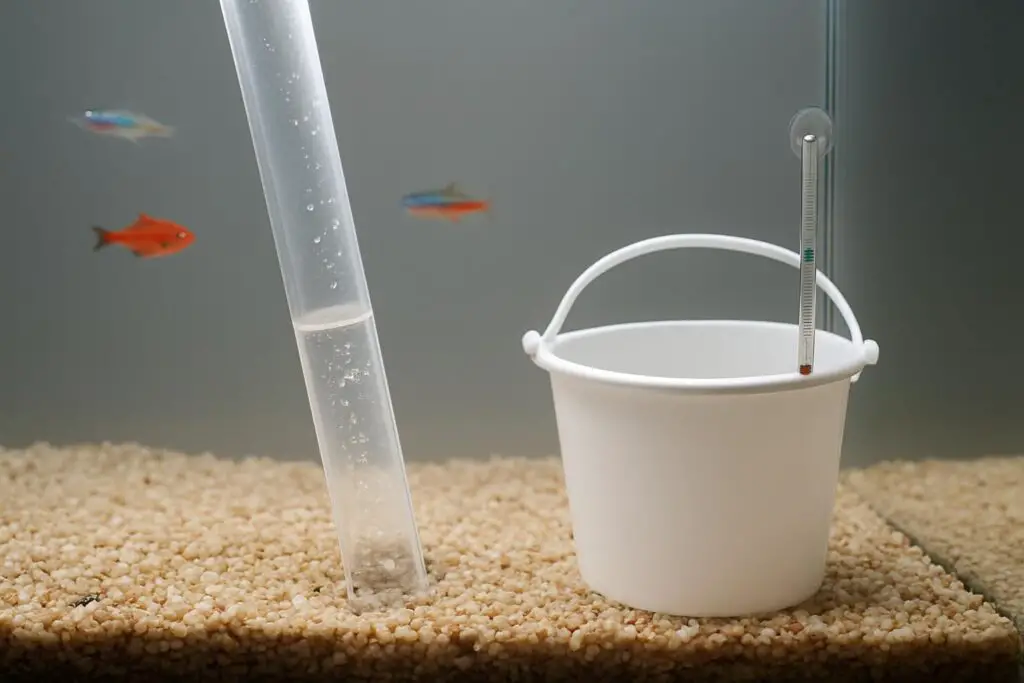
Basic siphon with a gravel tube: A manual siphon with a clear tube and hose. Good control, very reliable, budget friendly.
Self-priming or squeeze-bulb siphon: Has a one-way valve or bulb to start flow without sucking on the hose.
Battery or electric gravel cleaner: Pumps water through a fine mesh to trap debris while returning water to the tank. Useful for spot cleaning or when you cannot drain much water.
Buckets and Hoses
Use dedicated aquarium buckets and hoses only. Mark them so they are never used for chemicals. A wide, stable bucket reduces spill risk. For larger tanks, use a longer hose to reach a drain or a sink.
Conditioners and Thermometer
Dechlorinator is essential for tap water. Keep a thermometer to match refill water temperature within 1 to 2 degrees Celsius or 2 to 3 degrees Fahrenheit of tank water.
Useful Extras
Towels and a mat for the floor, a hose clamp to control flow, a prefilter sponge for the vacuum intake if you keep shrimp or fry, and a colander to check for tiny creatures in the bucket before you discard waste water.
Prepare Your Tank
Timing and Feeding
Clean the gravel during a regular water change. Do not feed the fish for 2 to 3 hours before starting. Less food in the water means less mess while you work.
Lights, Noise, and Movement
Dim the lights and move steadily. Avoid sudden motions. Fish calm down when the environment is steady.
Equipment Safety
Turn off heaters and filters before the water level falls below their intake or water line. Heaters must never run dry. If your filter remains submerged and will not run dry, you can leave it on low flow. Otherwise, switch it off and keep filter media wet in tank water. Do not rinse media under tap water.
Protect Small Livestock
If you keep shrimp, fry, or very small fish, place a fine mesh or sponge on the vacuum intake. Move slowly and watch the inlet. Check the bucket before you discard water.
The Step-by-Step Method
Start the Siphon
Method 1, priming with water: Submerge the gravel tube and hose fully to fill with water, cap the end with your thumb, lift the hose end to the bucket below tank level, and release. Gravity starts the flow without mouth contact.
Method 2, squeeze bulb: Attach the bulb inline, place the gravel tube in the tank, and squeeze until water flows steadily to the bucket.
Method 3, lift and drop: Move the gravel tube up and down in the water to push air out and start the siphon. Some vacuums are designed for this.
Control the Flow
Place the outlet hose in a bucket below the tank. Use a valve or clamp to slow flow if needed. Strong flow can disturb plants or small fish. Slower flow gives you more time to target debris.
Vacuum Technique That Fish Tolerate
Work in sections. Divide the substrate into four to six zones. Clean one or two zones per session. This preserves bacteria and avoids stirring too much debris at once.
Insert the gravel tube straight down into the gravel. Let the gravel lift and tumble inside the tube while the siphon pulls out waste. Lift the tube slightly to let gravel fall back. Move to the next spot. Keep the tube vertical for control.
For light cleaning, skim the surface. For heavy mulm, push deeper but do not reach the glass base every time. Avoid disturbing plant roots and decor bases. If a fish swims near the tube, pause and let it move away instead of chasing it.
Integrate With a Water Change
Track how much water you remove. Most tanks do well with 20 to 30 percent weekly. Heavily stocked tanks may need 30 to 50 percent. If water is very dirty, stop at 50 percent and plan another session in a few days rather than doing a massive single clean. Stability beats extremes.
Refill Safely
Treat new tap water with dechlorinator for the full tank volume or the refill volume per product directions. Match temperature closely. Pour gently onto a plate or plastic bag on the water surface to avoid stirring the substrate. Restart filter and heater once the water level is back to normal and equipment is submerged. Confirm the heater is covered and the filter is primed.
Special Substrate Setups
Cleaning Sand
Sand compacts, so debris stays on top. Hover the vacuum just above the surface and swirl gently to lift waste without sucking up large amounts of sand. If sand enters the tube, pinch the hose to slow flow and let sand fall out. Do not dig deep into sand unless you see gas pockets or dark layers. Stir lightly with a chopstick in small areas to prevent anaerobic spots.
Planted Tanks and Root Tabs
Healthy plants store nutrients in the substrate. Avoid deep plunges around stems and root-heavy plants. Clean the open areas and the top layer around plants. If you use root tabs, avoid sucking them up while they dissolve. A thin gravel wand helps in tight aquascapes. Keep the flow low to avoid uprooting.
Deep Substrates and Anaerobic Pockets
Deep gravel or soil caps can form low oxygen zones. Clean gradually. Stir a small patch per session and vacuum any released gas. Malaysian trumpet snails help by turning the substrate slowly. If you smell rotten egg, stop, do a partial water change, run strong aeration, and address compaction over several sessions.
Undergravel Filters
If you use an undergravel filter, vacuum through the gravel regularly to prevent clogging under the plate. Clean a different quadrant each session. For severe buildup, consider reverse-flow powerheads or lifting one riser at a time to flush gently. Never strip the whole bed in one day.
Fish and Invertebrate Considerations
Reduce Stress
Most fish handle gravel cleaning well if you move slowly, avoid chasing, and keep hands in the water for short periods. Dim lights and keep noise low. Do not tap the glass. If a fish guards a nest or a cave, skip that area today and return later.
Shrimp and Fry Safety
Shrimp and fry explore the substrate and can enter the vacuum. Use a prefilter sponge or fine mesh on the vacuum inlet. Before discarding bucket water, pour it through a fine net or strainer to save any tiny animals.
Bottom Dwellers and Burrowers
Corydoras, loaches, eels, and gobies hide in the substrate. Approach slowly and watch for movement. Never pin a fish under the tube. Keep the tube vertical and lift immediately if you feel it catch on anything.
Water Chemistry and Beneficial Bacteria
Preserve Bacteria
Beneficial bacteria live on surfaces, including gravel and filter media. Cleaning in sections preserves enough bacteria to keep ammonia and nitrite at zero. Do not boil or bleach gravel. Do not clean all substrate and filter media on the same day.
Avoid Sudden Parameter Swings
Match temperature and treat chlorine and chloramine. If your tap has very different pH or hardness from the tank, change smaller volumes more often to avoid swings. For soft water or RO systems, remineralize to stable KH and GH before refill.
Testing and Adjustments
After cleaning, test ammonia, nitrite, and nitrate. If nitrate remains high, increase the cleaning section next time or clean more often. If ammonia or nitrite appears, reduce how aggressively you clean and confirm the filter is running properly.
Frequency and Schedules
Guidelines by Tank Type
Lightly stocked community tanks often do well with 20 to 30 percent weekly and a half-bed gravel clean every two weeks. Heavily stocked tanks or messy eaters like goldfish benefit from 30 to 50 percent weekly with targeted gravel cleaning each time. Nano tanks need smaller but more frequent maintenance because waste builds up faster relative to volume.
Signs You Need Extra Cleaning
Rising nitrate despite water changes, visible mulm on the gravel, a dusty look after feeding, a musty smell, detritus worms visible in the water column, or algae blooms that start at the substrate line. Address these by improving gravel cleaning technique and adjusting feeding.
Post-Clean Check
Watch fish for normal behavior and appetite. Verify the heater turns on, the filter is primed, and surface agitation is present. If water looks hazy, it should clear within a day. If not, review your technique and filter media condition.
Troubleshooting
Siphon Clogs or Sucks Up Gravel
Use the correct tube size for your gravel. Coarse gravel works with wide tubes. Fine gravel or sand needs a narrow tube and lower flow. Keep the tube vertical so gravel falls back down. Add a strainer to stop large pieces from entering the hose.
Water Turns Cloudy After Cleaning
Cloudiness can be trapped detritus or a bacterial bloom. Improve the technique by moving slower and cleaning in sections. Rinse only mechanical media in used tank water to restore flow. Add a fine polishing pad for a day or two and remove when clear. Avoid flocculants unless necessary and use them only at half dose if livestock are sensitive.
Fish Gasping at the Surface
This points to chlorine exposure, low oxygen, or a temperature spike. Confirm dechlorinator dose, add surface agitation or an airstone, and check the temperature of refill water. If your tap has high chloramine, ensure your conditioner handles it.
Detritus Worms and Planaria
These tiny worms live in substrate and become visible when waste is abundant. They are not dangerous in small numbers but signal overfeeding and poor cleaning. Reduce feeding, improve gravel vacuuming, and increase filter maintenance. Only consider treatments if the population remains high after husbandry improves.
Algae or Cyanobacteria in Gravel
Green algae on the surface often improves with better flow and regular cleaning. Cyanobacteria forms slimy sheets and smells earthy. Increase flow, reduce excess nutrients, manual remove, and consider a short blackout for three days while keeping oxygen high. Address the cause, not only the symptom.
When You Should Remove Fish
Rare Cases Only
If you must replace the entire substrate, perform a deep rescape, or use harsh medications that can harm fish during cleaning, move them to a holding tub with heated, aerated, and conditioned water. Use tank water and seeded filter media. Keep the process short and stable. Return fish only when the main tank is refilled, at temperature, dechlorinated, and the filter is running.
Prevent Future Buildup
Feed With Precision
Feed small amounts that fish finish in under two minutes. Siphon leftover food. Rinse frozen foods in a net to reduce juice that fuels algae. Adjust feeding based on activity and water tests.
Improve Flow and Filtration
Dead spots behind decor collect waste. Slightly angle the filter outlet or add a small powerhead to move debris toward the intake. Use a prefilter sponge on the intake to trap large particles for easy rinsing in tank water.
Keep a Maintenance Routine
Set a weekly or biweekly schedule. Keep tools together and clean after use. Pre-mix water if your tap parameters vary. Record your water test results so you can spot trends and adjust cleaning before problems grow.
Small vs Large Tanks
Nano Tanks
Nano aquariums accumulate waste quickly. Use a thin siphon and remove 10 to 20 percent twice a week if needed. Move very slowly to protect shrimp and fry. Temperature and dechlorination accuracy matter more due to the small volume.
Medium and Large Tanks
Larger tanks handle waste better but can hide debris in corners. Use a longer gravel tube, clean in sections, and plan the route so you do not stir up one area and then miss it. For very large tanks, a hose to a drain makes the process faster and cleaner.
Plant and Aquascape Protection
Work Around Hardscape
Lift one side of rocks or wood slightly to release trapped debris and vacuum it immediately. Never fully remove a large piece during routine cleaning. Clean the space around it and return it gently.
Root Safety
For carpet plants, skim the surface only. For stem plants, vacuum the open paths and avoid uprooting. If a plant pulls up, replant and place a small stone to anchor it until roots regrow.
A Sample Routine You Can Copy
Weekly Process
Step 1: Gather siphon, bucket, dechlorinator, towels, and thermometer. Dim lights.
Step 2: Stop feeding for a few hours before cleaning. Turn off heater and filter if water will drop below intake or heater line.
Step 3: Prime the siphon and start at one corner. Clean one or two substrate zones. Keep the tube vertical, lift to release gravel, and move steadily.
Step 4: Remove 20 to 30 percent of the water, depending on stocking and mess level.
Step 5: Refill with temperature matched, dechlorinated water. Pour gently to avoid disturbing the bed.
Step 6: Restart filter and heater. Confirm normal flow and temperature. Test nitrate after an hour if you are dialing in a new routine.
Mistakes to Avoid
Common Errors
Cleaning the entire substrate aggressively in one day. Rinsing gravel or filter media under tap water. Letting the heater run dry. Ignoring the bucket for shrimp or fry. Refilling without dechlorinator. Pouring refill water too fast and stirring up the bed. Skipping routine and then doing an extreme clean to compensate.
Advanced Tips
Flow Control for Precision
Install an inline valve near the bucket end. Lower flow for delicate areas like plants and shrimp zones. Increase flow for open gravel areas with heavy mulm.
Pre-Filter and Polishing
Keep a spare fine filter pad. After cleaning, add it to your filter for one day to clear fine particles. Remove it before it clogs and reduces flow.
Water Prep Station
If you have space, set up a container with a heater, pump, and lid to precondition water. Match temperature and dechlorinate ahead of time. This makes large tanks faster and safer to refill.
Frequently Asked Practical Questions
How Often Should I Clean the Gravel
Most tanks: lightly vacuum weekly in sections. Heavy stock or messy feeders: vacuum every water change and cover the whole bed over two or three sessions. Planted tanks: focus on open areas and pathways weekly, deep work monthly only where needed.
How Deep Should I Vacuum
Go deeper in open gravel where roots are absent and debris accumulates. Stay shallow near plant roots and under fragile decor. Rotate depth across sessions to cover the whole bed over time without disrupting bacteria.
Can I Clean During a Bacterial Bloom
Yes, but gently. Clean a small section, improve aeration, and avoid overfeeding. Ensure your filter has adequate mechanical media and flow.
Conclusion
You can keep aquarium gravel clean without removing fish by using a steady, sectioned approach and matching water conditions during the refill. Work slowly, protect small livestock with a prefilter, and combine gravel cleaning with a sensible water change. Avoid extremes that strip bacteria or shock your fish. As you repeat this routine, your water stays clear, nitrate stabilizes, algae pressure falls, and your fish behave naturally even while you work. Clean in sections, keep parameters stable, and let consistency do most of the heavy lifting. This simple method keeps your aquarium healthy and your fish stress free.