
We are reader supported. When you purchase through links on our site, we may earn an affiliate commission. Also, as an Amazon affiliate, we earn from qualifying purchases.
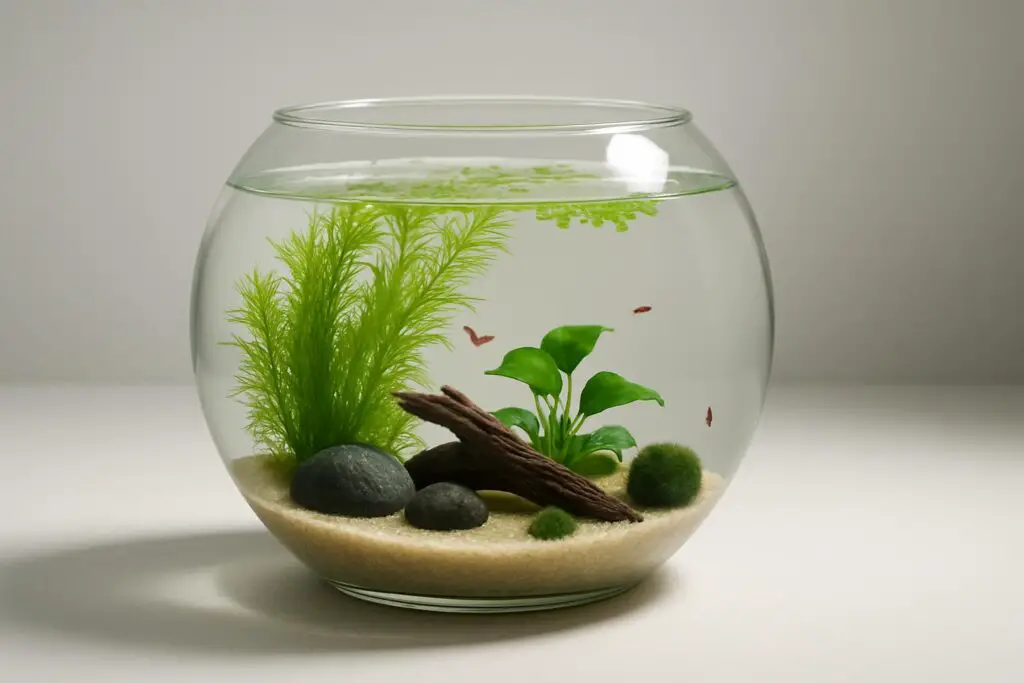
Keeping a vase or bowl aquarium clean without a filter is possible if you plan for low waste, high plant mass, and steady, simple maintenance. The goal is stable water with minimal debris and algae. You can achieve this with careful stocking, strong plant growth, and a routine that fits into your week. This guide walks through the setup and the habits that keep a small, unfiltered container clear and healthy.
Introduction
Many people start with a bowl because it looks elegant and takes little space. The catch is that small water volumes change fast. Waste accumulates quickly, oxygen can drop at night, and temperature swings are common. A filter would buffer those swings. Without one, you must compensate with planning and discipline.
The most reliable path is a plant-first approach. Think of your bowl as a planted container that may host shrimp or snails. Avoid fish. Fish need more water volume, stable temperature, and consistent filtration than a bowl can offer. If you insist on fish, choose a larger, filtered tank instead. Bowls and vases are best for plants, shrimp, and small snails.
Understand the limits before you begin
Small containers have limited oxygen and low dilution for toxins. Ammonia from waste can spike in hours. Evaporation can concentrate minerals. A little extra food can cloud the water. Light from a window can trigger algae fast. Knowing these risks keeps you proactive rather than reactive.
Focus on bioload control. Bioload is the total waste your organisms produce. Lower bioload means slower buildup of ammonia and nitrate and fewer algae issues. In bowls and vases, low bioload is non-negotiable.
Choose the right container
Size and shape
Pick the largest container you can place safely. More water means more stability. Cylinders and wide bowls offer better gas exchange at the surface than narrow-neck vases. A removable, wide opening makes cleaning easier. Avoid sharp internal corners that trap debris where a siphon cannot reach.
Material and placement
Glass or clear acrylic both work. Rinse well with warm water only. No soap. Place the bowl away from direct sun to prevent overheating and algae blooms. Keep it on a stable, level surface where spills are easy to manage.
Plan a low-waste stocking list
Best choices for unfiltered bowls
Plants are the core. Add shrimp or a few small snails if you want movement and a gentle cleanup crew. Nerite snails are good for algae but need stable water and are better in larger containers. In very small bowls, stick to a few pond or ramshorn snails. Shrimp can thrive if you keep parameters steady and avoid overfeeding.
Avoid fish in bowls and vases
Can a fish live in a bowl without a filter is a common question. It is not recommended. Bowls and vases are best for plants, shrimp, and small snails. Fish need more water volume, stable temperature, and consistent filtration than a bowl can offer.
Build a plant-first filtration
Fast growers for nutrient uptake
Use fast growers such as hornwort, water sprite, and elodea. These plants pull ammonia and nitrate from the water quickly and compete with algae for nutrients.
Floating plants to shade and polish water
Add floating plants like salvinia, frogbit, and duckweed. Floaters reduce light intensity, absorb excess nutrients, and improve oxygen at the surface. Thin them weekly so they do not block all light or trap heat.
Low-maintenance anchors
Include mosses, anubias, and marimo balls for stability and surface area. You can also grow pothos with roots in the water above the rim. The aerial leaves pull nutrients effectively while adding a tidy look.
Substrate choice
Use a thin layer of inert sand or fine gravel. If you want planted growth, you can use a nutrient soil capped with sand to prevent clouding. Keep the total depth shallow to reduce anaerobic pockets and to make cleaning easier.
Set up step by step
Rinse and hardscape
Rinse the container and substrate with warm water. Place hardscape pieces like small stones or wood to anchor plants and create flow paths so debris collects in one easy-to-siphon spot. Leave open swimming and foraging space for shrimp or snails.
Plant heavy from day one
Pack the bowl with stems and floaters at the start. Heavy planting prevents the early algae phase. Trim and replant as they grow. Attach mosses and anubias to hardscape rather than burying rhizomes.
Fill and dechlorinate
Fill slowly over a plate to avoid disturbing the substrate. Dose a quality water conditioner to neutralize chlorine and chloramine. Match water temperature to room temperature to avoid stress.
Optional botanicals
You can add a small piece of Indian almond leaf or other safe leaf litter. Tannins gently shade the water and can help stabilize pH. Replace periodically as the leaf breaks down.
Cycling without a filter
Bacteria do not need a filter to grow. They colonize every surface. You still must cycle so the system converts toxic ammonia to nitrite and then to nitrate.
Seeding bacteria
Seed the bowl with media or substrate from an established tank if you can. You can also add bottled bacteria to jump start colonization. More plant mass speeds the early weeks.
Fishless cycle
Run a fishless cycle by feeding a tiny pinch of fish food every few days. The decaying food produces ammonia for bacteria to process. Test until ammonia and nitrite stay at zero and only nitrate rises. This often takes 2 to 4 weeks depending on temperature, plant mass, and seeding.
Testing targets
Use a liquid test kit. During cycling, you will see ammonia spike, then nitrite, then nitrate. When ammonia and nitrite are zero for several days in a row and nitrate is present, add shrimp or snails if you plan to keep them.
Daily and weekly routines
Daily check
Observe clarity, livestock behavior, and plant health. Remove any dead leaves. Top off evaporation with treated water. Avoid big swings in temperature and salinity from top offs.
Feeding discipline
Feed light. For shrimp, most days can be biofilm only. Offer a tiny sinking pellet or a small piece of blanched vegetable once or twice per week. Remove uneaten food after 2 to 3 hours. For snails, algae and film usually suffice, with an occasional calcium-rich wafer if needed.
Weekly care
For lightly stocked planted setups, change 30 to 50 percent once per week. For plant only or shrimp bowls, change 50 to 80 percent once or twice per week, matching temperature and water treatment each time. Trim fast growers and thin floaters. Wipe the glass and remove detritus pockets.
Water change technique for tiny tanks
Use gentle tools
Use airline tubing as a mini siphon to control flow. A turkey baster is perfect for spot cleaning. Direct the baster to collect mulm from open areas while avoiding plant roots.
Stir with care
Lightly stir only the top 1 centimeter of substrate if you see buildup. Do not deep vacuum a planted soil layer. The goal is to lift loose debris without uprooting.
Prepare fresh water
Treat tap water with dechlorinator. Match temperature by letting the water sit in the room or by mixing hot and cold until it feels the same as the bowl. If you use reverse osmosis water, remineralize to provide calcium and buffer. Snails need calcium for healthy shells. A small piece of cuttlebone or a bit of crushed coral in a mesh bag can help maintain hardness.
Algae control without gadgets
Control light
Limit light to 6 to 8 hours per day. Use indirect light or a low intensity lamp. Avoid windows and midday sun. Too much light with low nutrients is as problematic as too many nutrients with high light.
Plant growth remains the best defense
Healthy, fast-growing plants outcompete algae. Keep stems trimmed so lower leaves get light. Thin floaters so they cover about half the surface. Remove dying leaves promptly.
Manual removal
Use a soft toothbrush to twist out hair algae from hardscape. For green dust or film on glass, wipe with a plastic card or a soft pad. Nerite snails can help on glass in larger bowls, while shrimp and small snails graze on biofilm.
Stability in small volumes
Temperature and placement
Room temperature stability is key. Most neocaridina shrimp do fine between 20 and 26 C. Avoid heat sources, vents, and window drafts. At night plants consume oxygen, so ensure some surface agitation from gentle movement or from floaters that allow gaps for gas exchange.
Water parameters
Keep pH, GH, and KH consistent. Sudden changes stress shrimp and snails. Do not swing TDS with large top offs of mineral-rich water. Frequent smaller changes are safer than rare large ones unless the bowl is plant only.
Cleaning tools and methods
Dedicated tools
Keep a dedicated bucket, airline tubing, turkey baster, soft toothbrush, and a plastic card for scraping. Never use soap or detergents. For hard water spots on the outside, use a little diluted vinegar on a cloth and avoid contact with the aquarium water.
Routine glass care
Wipe the inside glass weekly. Clean the rim where films collect. If you see stubborn green spot algae, a small razor scraper can work on glass only, used carefully.
Troubleshooting common problems
Cloudy water
Causes are overfeeding, disturbed substrate, or a bacterial bloom. Stop feeding for a day or two, increase plant mass, and perform a 50 percent water change. Resume feeding at half the previous amount.
Strong odor
Odor signals decay and poor oxygenation. Remove decaying matter, improve surface access by thinning floaters, and increase water change frequency. Reduce feeding and consider adding more fast-growing plants.
Algae bloom
Reduce light duration to 6 hours, add or thin floaters to balance shading, wipe surfaces, and perform back-to-back partial water changes on separate days. Check that nutrients are not accumulating from overfeeding.
Shrimp or snail stress
Look for rapid climbing, poor color, or inactivity. Test ammonia and nitrite. If above zero, do immediate partial water changes until both are zero. Check temperature swings. Ensure calcium availability for snails.
Seasonal tips
Summer
Heat raises metabolism, which increases waste and lowers oxygen. Shorten the light period, increase water change frequency, and ensure the surface is not fully covered by floaters. Keep the bowl away from windows.
Winter
Heaters in small bowls can be risky. Choose livestock that match your room temperature. Prevent drafts. Allow more plant mass to buffer waste at lower metabolic rates.
When to reset
If the bowl stays cloudy or algae-covered despite reduced feeding, frequent changes, and heavy planting, a reset is more efficient. Move livestock temporarily, rinse the bowl, trim plants, and replant densely. Refill, condition, and cycle again. A clean restart often saves time compared to chasing problems.
Conclusion
Clean, unfiltered vases and bowls are built on three pillars. Keep bioload low, plant heavily, and maintain a steady routine. Choose the largest practical container, pack it with fast growers and floaters, cycle patiently, and commit to small, frequent water changes. Feed lightly. Trim weekly. Wipe glass. When you respect the limits of small water volumes, your bowl will stay clear, lively, and simple to care for.
FAQ
Q: Can a fish live in a bowl without a filter
A: It is not recommended. Bowls and vases are best for plants, shrimp, and small snails. Fish need more water volume, stable temperature, and consistent filtration than a bowl can offer.
Q: How often should I change water in an unfiltered bowl or vase
A: For lightly stocked planted setups, change 30 to 50 percent once per week. For plant only or shrimp bowls, change 50 to 80 percent once or twice per week, matching temperature and water treatment each time.
Q: What plants clean a vase aquarium best
A: Use fast growers such as hornwort, water sprite, and elodea, plus floating plants like salvinia, frogbit, and duckweed. Add mosses, anubias, marimo balls, or pothos with roots in the water to increase total plant mass.
Q: How do I cycle a bowl without a filter
A: Seed the bowl with media or substrate from an established tank or add bottled bacteria, then run a fishless cycle by feeding a tiny pinch of fish food every few days. Test until ammonia and nitrite stay at zero and only nitrate rises.
Q: How do I control algae without chemicals or filters
A: Limit light to 6 to 8 hours, use floaters to shade, remove detritus with a turkey baster, wipe the glass weekly, trim plants, and rely on a small clean up crew like shrimp or a few small snails if the bowl size allows.