
We are reader supported. When you purchase through links on our site, we may earn an affiliate commission. Also, as an Amazon affiliate, we earn from qualifying purchases.
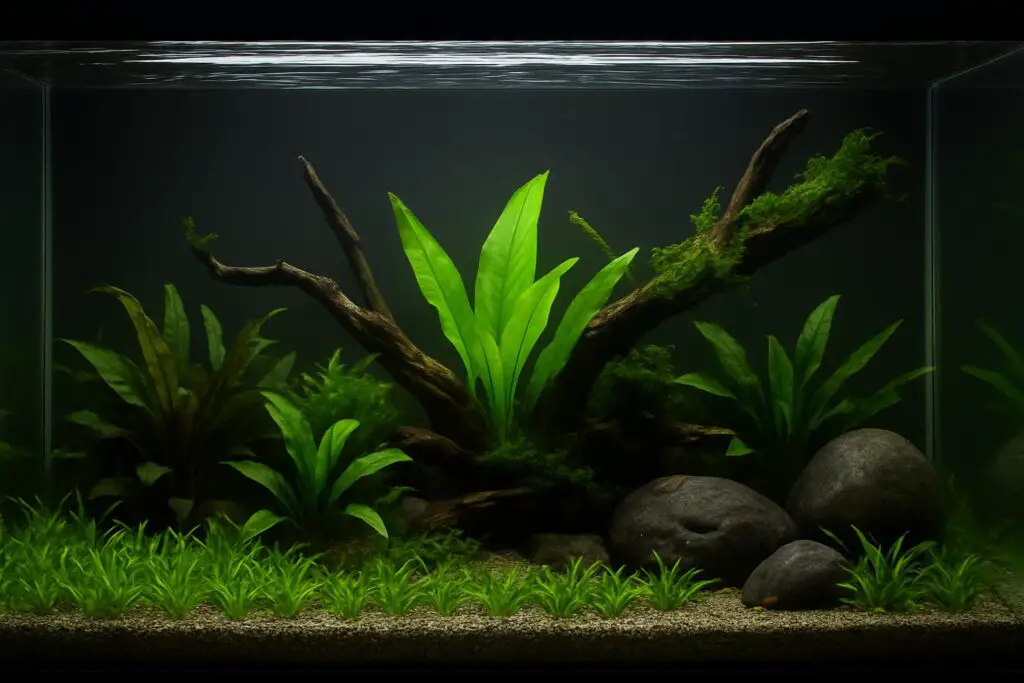
Many aquarists love the calm of a planted aquarium but do not want the cost or complexity of pressurized carbon dioxide. This raises a common question: is CO2 necessary for low-tech tanks? The short answer is no, but the long answer matters if you want healthy plants, clear water, and low algae. Keep reading to understand when CO2 helps, when it gets in the way, and how to build a low-tech tank that works.
What Low-Tech Really Means
Simple gear and steady routines
A low-tech tank uses moderate light, no pressurized CO2, and simple fertilizing. It relies on fish respiration, natural decay, and regular maintenance to supply plants. The goal is stability over speed. You aim for slow, steady growth and minimal intervention.
Lower risk, slower pace
Without injected CO2, plants grow slower and are less likely to crash during small mistakes. Low-tech is easier for beginners because it has wider safety margins. You trade speed and colorful high-demand plants for predictability and lower effort.
Plant Basics You Must Know
The triangle: light, CO2, nutrients
Plants need three main resources: light, carbon, and nutrients. Light drives photosynthesis. Carbon, mostly from CO2, builds plant tissue. Nutrients like nitrogen, phosphorus, potassium, and trace elements support growth. Balance is the rule. If you increase light but not carbon or nutrients, algae often takes over.
The low-tech balance
In low-tech tanks, fish and bacteria release enough CO2 for slow to moderate growth when light stays reasonable. Many plants evolved to use lower CO2 levels in natural water. If you match plant choice and light to the CO2 that exists in the tank, you get healthy growth without gas cylinders.
So, Is CO2 Necessary?
CO2 is not necessary for a low-tech planted tank if you keep light moderate, choose easy plants, and provide balanced nutrients from fish waste, substrate, and light fertilization. You can grow full, green aquascapes with simple tools if you accept slower growth and set proper expectations.
When CO2 is helpful
CO2 becomes useful when you push light high, aim for fast growth, tight foreground carpets, or fine delicate stems and red species. If you want a contest aquascape timeline or heavy trimming every week, CO2 makes that possible. It also adds consistency once dialed in, but at the cost of more monitoring.
When CO2 gets in the way
Many beginners add CO2 and crank up light before they learn plant demand. This often causes algae, unstable pH, and stressed livestock. In low-tech, restraint is power. Focus on light control, plant mass, and routine first.
Where Carbon Comes From Without CO2 Injection
Everyday sources inside the tank
Fish, shrimp, snails, and bacteria breathe out CO2. Organic matter breaks down and releases CO2. These sources are steady and safe in low-tech setups, especially with moderate light and many plants.
Gas exchange at the surface
The water surface absorbs CO2 from the room and releases gases back. A gentle ripple improves oxygen for livestock and prevents stagnation. Too much turbulence will vent more CO2, but in low-tech the priority is oxygen and stability, not CO2 retention.
The Real Trade-offs Without CO2
Growth speed
Plants grow slower, which means less trimming and fewer nutrient swings. This is a benefit in a busy schedule. It also means carpets and bushy stems take months, not weeks.
Algae risk
With sensible light and many plants, algae pressure stays low. If light is too strong or nutrients are chaotic, algae still appears. Good habits beat gadgets.
Plant selection
Some species need high CO2 to thrive. Choose plants that match your system. You can design a beautiful scape without rare or fragile plants.
Light Management: The Main Lever
Match light to carbon
High light without CO2 is the fastest path to algae. Keep intensity moderate and photoperiod controlled. Aim for a daily photoperiod of 6 to 8 hours, keep PAR at the substrate around 20 to 40, and avoid blasting high-intensity light that outpaces the natural CO2 supply.
Practical tips
If your light is not dimmable, raise it or add a shade. Start at 6 hours for the first month, then move to 7 to 8 hours if growth is stable. Look for compact, healthy new leaves rather than chasing pearling. Consistency beats intensity.
Nutrients in Low-Tech Tanks
Substrate choices
Inert gravel or sand works with root tabs under heavy root feeders like swords and crypts. Enriched aquasoil feeds plants well but may leach ammonia early. If using aquasoil without CO2, keep light and feeding low at the start and plant densely from day one.
Water column dosing
Lean dosing fits low-tech. An all-in-one fertilizer 1 to 2 times per week supports steady growth without surplus. If you see yellowing new leaves, consider a bit more micros. If fast growers stall and older leaves pale, add a bit more macros. Make changes slowly and give plants two weeks to respond.
Fish load as a nutrient source
Moderate stocking provides nitrate and phosphate. Avoid overfeeding which causes swings and algae. Focus on stable biofiltration and regular water changes.
Filtration and Gas Exchange
Flow that supports plants
Use flow strong enough to move leaves gently and keep debris from settling, but not so strong that delicate plants uproot. A spray bar that ripples the surface is ideal. Clean mechanical media often so flow does not fade.
Oxygen is valuable
Good oxygen supports fish health and beneficial bacteria. It also helps plants at night when they respire. In low-tech, prioritize oxygen and stability over trapping CO2.
Plant Selection for No CO2
Rhizomes and epiphytes
Anubias, Java fern, and Bolbitis thrive attached to wood or rock. They grow slowly and handle low to medium light. Tie or glue them to hardscape. Do not bury rhizomes.
Mosses
Mosses like Taxiphyllum are reliable for texture and cover. They collect debris, so brush or trim them during maintenance to keep flow open.
Rosette and root feeders
Cryptocoryne wendtii and lucens, Vallisneria, Sagittaria subulata, dwarf Sagittaria, Amazon sword, and lotus are strong choices. Use root tabs if the substrate is inert.
Stems that stay happy without CO2
Bacopa caroliniana, Hygrophila polysperma, Ludwigia repens, Hydrocotyle leucocephala, hornwort, and water wisteria grow well in low-tech tanks. Trim tops and replant to maintain shape and density.
Floaters for nutrient control
Salvinia and frogbit shade the tank, soak up excess nutrients, and buffer light swings. Thin floaters weekly so they do not block all light.
Foreground options without pressurized CO2
Dwarf Sagittaria and smaller crypts can form gentle carpets over time. Marsilea species are another slow but reliable choice under moderate light.
Plants to Avoid at First
High-demand stems and fine leaves
Rotala wallichii, Tonina, and many delicate red stems struggle without injected CO2. They stunt and attract algae under low-tech conditions.
Carpets that want high carbon
Monte Carlo and dwarf baby tears need stronger light and stable CO2 to carpet tightly and fast. Choose slower foreground plants if you skip CO2.
Algae Control Without CO2
Prevention beats reaction
Control algae by limiting light to 6 to 8 hours, stocking many fast-growing plants and floaters, keeping the filter clean with good surface ripple, performing 30 to 50 percent weekly water changes, and dosing lean all-in-one fertilizer 1 to 2 times per week.
Reading plant signals
If plants pale and stall, increase nutrients modestly. If algae increases, first reduce light or photoperiod, then adjust dosing. Change one thing at a time. Give it two weeks before making another change.
Liquid Carbon: What It Is and Is Not
Not a CO2 replacement
Liquid carbon products are not the same as dissolved CO2. They can help suppress some algae and may boost growth slightly in tolerant plants, but they do not replace real CO2 availability. Use carefully if you keep sensitive species, and never exceed recommended dosing.
Realistic Goals and Timelines
What success looks like
Expect steady, healthy leaves, small weekly trims, and a tank that looks better each month. Color will be mostly green with some bronze or red in easy species under moderate light. Carpets form over months, not weeks.
Signs to adjust
If you see long string algae, reduce light and increase plant mass. If you see stunting and twisted new leaves, you likely have a light to carbon imbalance or a nutrient deficiency. Slow down light, fix basics, and wait for new healthy growth.
Testing and Observation
Simple checks
Watch new growth. Healthy new leaves mean the system is on track. Measure nitrates to ensure they do not hit zero. Track GH and KH so livestock and plants have a stable environment. Chasing perfect numbers is less important than consistent, gentle trends.
Water changes
Weekly 30 to 50 percent water changes reset organics, stabilize nutrients, and bring in trace elements. This one habit solves many problems before they start.
A Proven Low-Tech Setup Plan
Before planting
Pick a tank size you can maintain. Larger volumes are more stable. Choose a moderate LED with known output or a reputable brand. Decide on substrate: inert with root tabs, or a light layer of aquasoil capped with sand or fine gravel. Prepare a good filter with a spray bar and add a heater if needed for your species.
Initial planting day
Plant heavy from day one. Combine epiphytes on wood, rosette plants in groups, and several fast stems to absorb nutrients. Add a few floaters to buffer light. Set the photoperiod to 6 hours. Start a lean all-in-one fertilizer at half the label dose, once or twice per week.
First month routine
Trim melting leaves to prevent decay pockets. Clean filter sponges lightly every 1 to 2 weeks to maintain flow. Do 30 to 50 percent weekly water changes. If algae appears, reduce light intensity or duration before changing nutrients.
Month two and beyond
Extend the photoperiod to 7 to 8 hours if plants grow steadily and algae is minimal. Tune fertilizer up or down based on plant response. Keep floaters thinned. Replant stem tops for bushier groups. Stay consistent.
When to Consider Adding CO2 Later
Clear upgrade signals
Consider adding CO2 if you want dense carpets and fine-stem plants, if you run high light and see stunting or chronic algae, or if you need faster growth and tighter maintenance windows. Add CO2 only after you already control light and nutrients well. Start with lower light, then bring light up slowly once CO2 is stable.
Case Example: A Balanced 20-Gallon Low-Tech
Stock and plants
Use a small community of peaceful fish and shrimp. Plant Anubias, Java fern, Cryptocoryne wendtii, dwarf Sagittaria, Bacopa caroliniana, Hygrophila polysperma, and a patch of Salvinia.
Settings and routine
Run 20 to 40 PAR at the substrate for 7 hours daily. Keep a gentle surface ripple and steady temperature. Dose an all-in-one fertilizer twice per week at a lean rate. Change 40 percent of the water weekly. Trim stems every two to three weeks. After three months, expect full midground groups and a settling foreground.
Quick Answers at a Glance
CO2 is not necessary for a low-tech planted tank if you keep light moderate, choose easy plants, and provide balanced nutrients from fish waste, substrate, and light fertilization.
Aim for a daily photoperiod of 6 to 8 hours, keep PAR at the substrate around 20 to 40, and avoid blasting high-intensity light that outpaces the natural CO2 supply.
Good no-CO2 choices include Anubias, Java fern, Bolbitis, mosses like Taxiphyllum, Cryptocoryne wendtii and lucens, Vallisneria, Sagittaria subulata, dwarf Sagittaria, Amazon sword, lotus, Bacopa caroliniana, Hygrophila polysperma, Ludwigia repens, Hydrocotyle leucocephala, Salvinia, frogbit, hornwort, and water wisteria.
Control algae by limiting light to 6 to 8 hours, stocking many fast-growing plants and floaters, keeping the filter clean with good surface ripple, performing 30 to 50 percent weekly water changes, and dosing lean all-in-one fertilizer 1 to 2 times per week.
Consider adding CO2 if you want dense carpets and fine-stem plants, if you run high light and see stunting or chronic algae, or if you need faster growth and tighter maintenance windows.
Conclusion
CO2 is a tool, not a requirement. Low-tech tanks thrive when you respect the balance of light, carbon, and nutrients. Keep light moderate, plant heavily with easy species, dose lean, and change water weekly. Accept slower growth and enjoy a stable, low-maintenance ecosystem. If your goals change and you want faster growth or more demanding plants, you can always add CO2 later. Master the basics first and the tank will reward you.
FAQ
Q: Is CO2 necessary for a low-tech planted tank?
A: CO2 is not necessary for a low-tech planted tank if you keep light moderate, choose easy plants, and provide balanced nutrients from fish waste, substrate, and light fertilization.
Q: What light settings are best for low-tech tanks without CO2?
A: Aim for a daily photoperiod of 6 to 8 hours, keep PAR at the substrate around 20 to 40, and avoid blasting high-intensity light that outpaces the natural CO2 supply.
Q: Which plants grow well without injected CO2?
A: Good no-CO2 choices include Anubias, Java fern, Bolbitis, mosses like Taxiphyllum, Cryptocoryne wendtii and lucens, Vallisneria, Sagittaria subulata, dwarf Sagittaria, Amazon sword, lotus, Bacopa caroliniana, Hygrophila polysperma, Ludwigia repens, Hydrocotyle leucocephala, Salvinia, frogbit, hornwort, and water wisteria.
Q: How can I control algae in a low-tech tank without CO2?
A: Control algae by limiting light to 6 to 8 hours, stocking many fast-growing plants and floaters, keeping the filter clean with good surface ripple, performing 30 to 50 percent weekly water changes, and dosing lean all-in-one fertilizer 1 to 2 times per week.
Q: When should I consider adding CO2 to a low-tech setup?
A: Consider adding CO2 if you want dense carpets and fine-stem plants, if you run high light and see stunting or chronic algae, or if you need faster growth and tighter maintenance windows.