
We are reader supported. When you purchase through links on our site, we may earn an affiliate commission. Also, as an Amazon affiliate, we earn from qualifying purchases.
CO2 injection is one of the most debated topics in planted aquariums. Many beginners assume it is required for healthy plants. Others say it complicates a calm, low-maintenance tank. The truth sits in the middle. You can grow a thriving low-tech planted tank without injected CO2 if you set realistic goals, match plants to light, and keep a stable routine. This guide explains when CO2 is optional, when it helps, and how to succeed either way.
Introduction
Low-tech planted tanks focus on stability and simplicity. They run moderate light, avoid complex gear, and rely on fish waste and gentle fertilizing to support plant growth. CO2 injection can speed things up, but it is not mandatory for most easy plants and conservative lighting. Before buying a cylinder and regulator, learn what plants actually need, how low-tech systems provide carbon, and what trade-offs you accept with or without injection.
What Low-Tech Really Means
A low-tech tank aims for steady growth, low maintenance, and predictable routines. You choose hardy plants, avoid high light, and accept slower growth. You let natural processes supply most of the carbon and nutrients. You prioritize balance over speed and show restraint with changes.
Lighting in Low-Tech
Light drives plant demand for carbon and nutrients. In low-tech, keep light in the low to moderate range and use a consistent photoperiod. Start at 6 to 7 hours per day and increase slowly to a maximum of 8 hours if plants are healthy and algae is minimal. Avoid intense lighting that pushes plants faster than your system can support.
Substrate and Nutrients
You can use inert sand or gravel with root tabs under root feeders, or a nutrient-rich aquasoil for better initial growth. In either case, dose a mild all-in-one fertilizer weekly or every other week. Light fertilization prevents deficiencies without fueling algae.
Filtration and Flow
Use reliable filtration with gentle flow. Strong surface agitation can drive off dissolved CO2 that plants need, so aim for a soft ripple rather than a splash. Good flow distributes nutrients and prevents dead zones but should not blast delicate stems.
Maintenance Rhythm
Regular maintenance is the anchor of low-tech success. Trim plants lightly and often. Vacuum detritus without overdoing it. Perform consistent water changes around 25 to 40 percent weekly for most setups. Stability beats perfection.
How CO2 Works in Planted Tanks
Plants need carbon to build tissue. In nature, they get it from dissolved CO2 and bicarbonate. Injected CO2 adds more carbon to the water, which increases growth speed and capacity to handle higher light. Without injection, plants must rely on the limited carbon that accumulates from natural processes, which slows growth but still supports many species if light and nutrients match the lower pace.
Natural Carbon Sources in Low-Tech
Fish and bacteria release CO2 through respiration. Organics break down and release CO2 in the substrate. Mildly reduced surface agitation helps retain CO2. Normal room air exchanges CO2 with the water. These steady inputs are small but often enough for easy plants under modest lighting.
The Balance Triangle
Growth depends on balance between light, nutrients, and carbon. Raise light too high without raising carbon and nutrients, and algae usually wins. Keep light modest, fertilize lightly but consistently, and let natural CO2 set the growth pace. That is the core of low-tech management.
When CO2 Injection Is Not Necessary
CO2 injection is not necessary if your plants are easy species, your light intensity is conservative, and your goal is a calm, low-maintenance aquascape. Many aquarists run balanced, beautiful tanks for years without a single bubble of injected CO2.
Plants That Thrive Without Injection
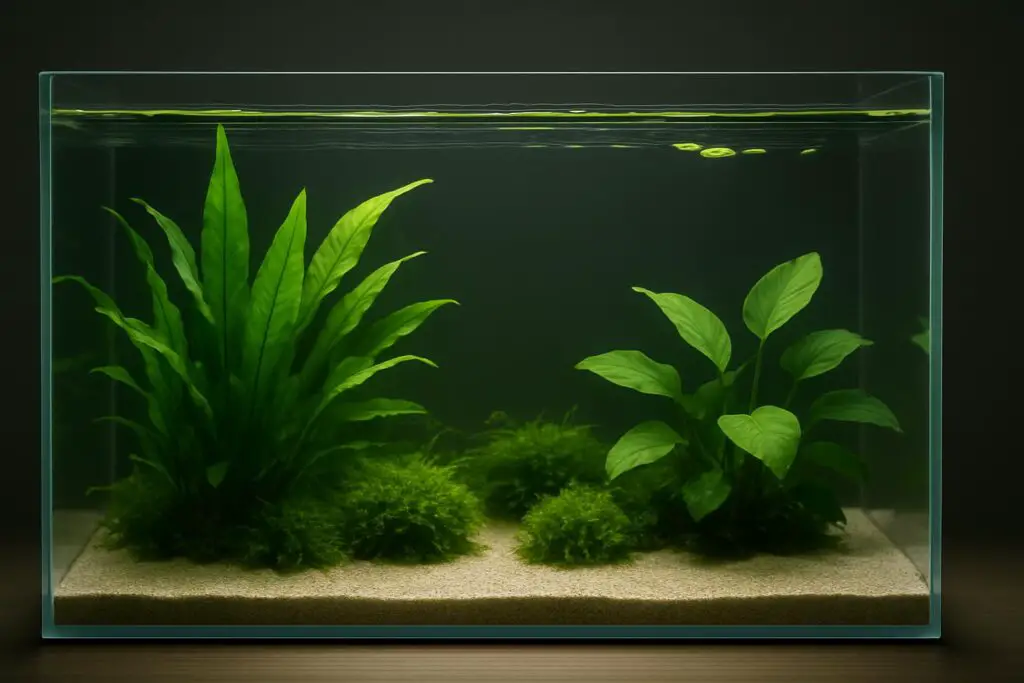
Choose hardy, low-demand plants. Good options include Anubias, Java fern, Bolbitis, Bucephalandra, Cryptocoryne, Vallisneria, Sagittaria, dwarf Sagittaria, Amazon sword in moderate setups, Hygrophila polysperma, Hydrocotyle leucocephala, and floating plants like Salvinia or frogbit. Mosses like Java moss and Christmas moss are also reliable in low-tech.
Lighting That Fits Low-Tech
Plants adapt to the carbon you provide. Keep brightness moderate and avoid long photoperiods. In many cases, a carefully chosen LED at 6 to 8 hours per day is enough. If algae appears, reduce intensity or shorten the photoperiod before changing other variables.
Algae Control Through Restraint
Algae often signals excess light or unstable conditions. With modest light, regular trims, and small, regular fertilizer doses, most algae stays minimal. Patience is key. Fast fixes rarely beat a stable routine.
Benefits of Skipping Injection
Skipping CO2 simplifies your system. You avoid buying and maintaining a regulator, cylinder, diffuser, and drop checker. You reduce risk of sudden pH swings. You spend less time tuning and more time enjoying the tank. Costs drop and maintenance is more predictable.
When CO2 Injection Helps Even in Low-Tech Goals
Some situations benefit from added CO2, even if you prefer a simple tank. Consider CO2 if you want faster growth, better coloration in some red plants, or specific aquascape goals that are difficult without it.
Faster Growth and Recovery
CO2 speeds growth, which helps plants outcompete algae during the first months of a tank and after heavy trims. It also helps sensitive stems and rotalas maintain form under moderate light.
Carpeting Plants and Dense Layouts
True carpets like Hemianthus callitrichoides and many hairgrasses prefer added CO2 to spread quickly and avoid melting. Without injection, carpets can still work but will be slower and may be thinner. For crisp, fast carpets, CO2 is the safer path.
Red Plants and Color
Some red plants display deeper color under higher light and added CO2, especially when nutrients are balanced. Without CO2, these plants may grow but color up less and may be slower to respond to pruning.
Trade-Offs to Expect
CO2 adds cost, complexity, and risk. You must monitor pH changes, refill cylinders, and tune diffusion and flow. If your goals do not require CO2, the added control may not be worth the effort.
Alternatives to Pressurized CO2
If you want a slight boost without a full system, there are options, each with limits. Understand what they do and what they do not do before committing.
Liquid Carbon Products
Liquid carbon products are not a true substitute for dissolved CO2. They can help control certain algae and may offer a small benefit to plant growth in some systems. Use carefully and follow labels, as some livestock and plants are sensitive. Think of liquid carbon as a targeted tool, not as a replacement for gas injection.
DIY Yeast CO2
DIY CO2 can work but is unstable. Output fluctuates as the yeast cycle changes, which can stress plants and invite algae. For true low-tech, stability matters more than chasing a cheap and inconsistent CO2 source.
Optimize Natural CO2
Keep surface agitation gentle to retain CO2 while maintaining good oxygenation. Increase plant mass gradually to boost uptake and stability. Feed fish modestly and consistently so their respiration supports the carbon cycle. Trim floating plants to avoid over-shading.
Building a Successful Low-Tech Tank Without CO2 Injection
You can stack the deck in your favor with a clear plan. Follow a simple setup flow and adjust slowly based on plant response.
Step 1: Choose the Right Plants
Begin with hardy species that handle lower carbon and light. Use a mix of slow epiphytes, a few rooted plants, and some floaters for nutrient uptake. Start with more plants than you think you need to outcompete algae from day one.
Step 2: Set Reasonable Light
Install a reliable LED and set a 6 to 7 hour photoperiod to start. Place the light high enough or dim it to avoid hotspots. Watch for algae or pale leaves and adjust in small steps. Do not increase light until you see sustained healthy growth.
Step 3: Feed the Substrate and Water Column
Use root tabs under heavy root feeders every 2 to 3 months. Dose a mild all-in-one fertilizer once or twice a week in small amounts. Aim for consistent, lean dosing rather than big swings.
Step 4: Manage Flow and Gas Exchange
Set filter outlets to create gentle circulation without strong surface agitation. Maintain enough ripple to keep fish safe and oxygenated. Keep intakes clean and sponges rinsed to prevent detritus buildup.
Step 5: Routine Maintenance
Change 25 to 40 percent of the water weekly in most setups. Clean glass and prune lightly. Remove decaying leaves. Rinse filter media in tank water during water changes to preserve beneficial bacteria. Avoid overhauls that disrupt balance.
Step 6: Stocking and Feeding
Stock fish moderately. Overcrowding raises waste to the point that algae gains an advantage. Feed small portions your fish finish in a minute or two. Stable feeding equals stable nutrient and carbon supply.
Diagnosing Common Problems Without CO2
Issues in low-tech tanks rarely require CO2 to solve. Most come from excess light, inconsistent routines, or nutrient imbalances. Learn the typical signs and make one change at a time.
Algae Types and Corrections
Green dust or film algae often points to too much light or an immature system. Shorten the photoperiod and keep up with water changes. Green hair algae suggests a mismatch between light and plant mass; trim, reduce light, and add fast growers. Black beard algae commonly follows unstable conditions or high organics; improve maintenance, stabilize routines, reduce surface turbulence, and consider cautious spot treatment with liquid carbon products.
Plant Nutrient Symptoms
Yellowing new leaves can indicate low iron or micronutrients; increase your all-in-one dose slightly. Pinholes and ragged edges may signal low potassium; choose a fertilizer with adequate K or add a small K boost. Slow growth alone is not a problem in low-tech. Focus on healthy, firm leaves and steady new growth over speed.
Melting and Replanting
Cryptocoryne and some stems melt when conditions change. Trim the dead tissue, avoid major new changes, and let roots regrow. New leaves often return stronger after the adjustment period.
CO2 Equipment, Cost, and Risk Snapshot
A pressurized system requires a regulator, cylinder, tubing, check valve, bubble counter, diffuser or reactor, and a drop checker. You will also need periodic refills and safety checks. Injection can alter pH during the photoperiod. With proper tuning, this is manageable, but it adds a layer of complexity that low-tech tanks are designed to avoid.
A Practical Decision Checklist
Use this quick checklist to decide. If you want easy plants, moderate light, slow growth, and low maintenance, skip CO2 and focus on balance and routine. If you want fast carpets, dense stems, deeper red coloration, or aggressive scaping under higher light, consider CO2 and be ready to tune nutrients, flow, and maintenance more often. If you are unsure, start without CO2 and add it later only if your goals demand it.
Realistic Expectations Set You Free
Low-tech success depends on matching expectations to biology. Choose plants that fit the carbon available. Keep light conservative. Dose gently and consistently. Embrace slower growth and fewer variables. With that mindset, you do not need injected CO2 to enjoy a healthy, attractive planted tank.
Conclusion
CO2 injection is a powerful tool, not a requirement. For low-tech planted tanks with modest light and easy plants, natural CO2 sources and stable routines are enough. Skipping injection cuts cost and complexity while still delivering healthy growth. Add CO2 only when your goals exceed what low-tech can comfortably support, such as fast carpets, dense stems, or enhanced reds. Start simple, keep changes small, and let stability do the heavy lifting.
FAQ
Q: Is CO2 injection necessary for a low-tech planted tank
A: CO2 injection is not necessary if your plants are easy species, your light intensity is conservative, and your goal is a calm, low-maintenance aquascape.
Q: What plants grow well without CO2 injection
A: Good options include Anubias, Java fern, Bolbitis, Bucephalandra, Cryptocoryne, Vallisneria, Sagittaria, dwarf Sagittaria, Amazon sword in moderate setups, Hygrophila polysperma, Hydrocotyle leucocephala, floating plants like Salvinia or frogbit, and mosses like Java moss and Christmas moss.
Q: How long should I run lights in a low-tech tank
A: Start at 6 to 7 hours per day and increase slowly to a maximum of 8 hours if plants are healthy and algae is minimal.
Q: Are liquid carbon products a substitute for CO2
A: Liquid carbon products are not a true substitute for dissolved CO2 and should be seen as a targeted tool, not as a replacement for gas injection.
Q: When should I consider adding CO2 to a low-tech tank
A: Consider CO2 if you want faster growth, better coloration in some red plants, or specific aquascape goals like crisp carpets that are difficult without it.