
We are reader supported. When you purchase through links on our site, we may earn an affiliate commission. Also, as an Amazon affiliate, we earn from qualifying purchases.
Corals do not live alone. Inside their tissues live microscopic algae that power almost everything a coral does. This partnership, called symbiosis, builds reefs, drives color, and sets the rules for reef aquarium success. When you understand how corals and algae help each other, your choices on lighting, nutrients, and flow become simpler and more effective.
What This Partnership Is
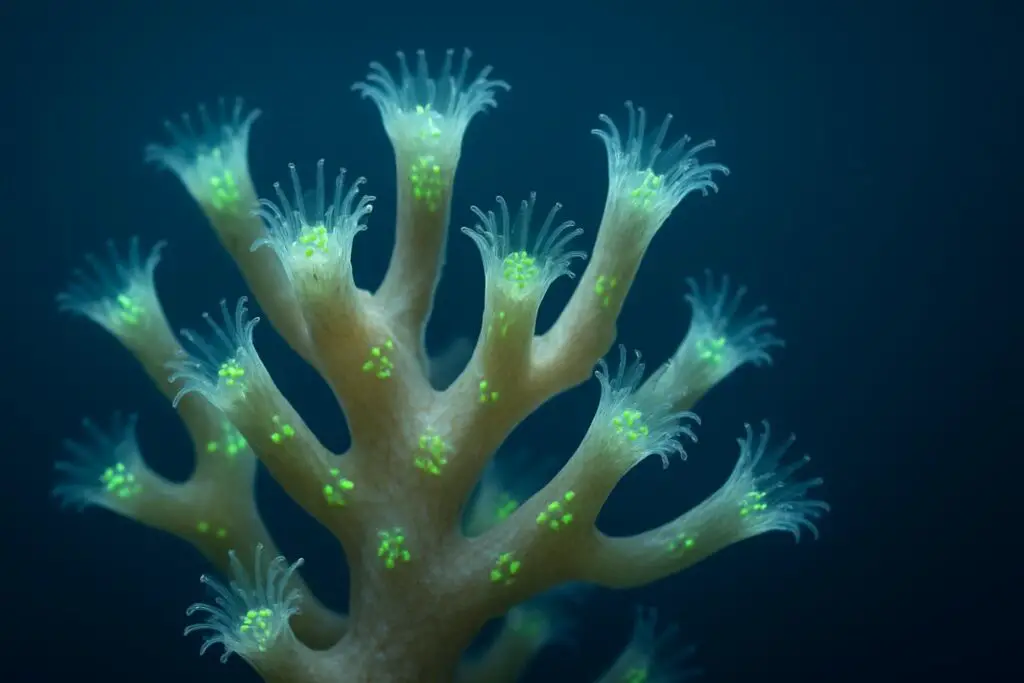
Corals are animals. Each coral polyp sits in a cup of calcium carbonate and extends tentacles to feed. In shallow, clear water many corals also host tiny dinoflagellate algae known as Symbiodiniaceae. Hobbyists often call them zooxanthellae. These algae live inside coral cells and share the products of photosynthesis with their host.
Meet the Partners
The coral brings structure, protection, and a steady supply of carbon dioxide and waste nutrients. The algae bring photosynthetic power, turning light into sugars and other carbon rich compounds the coral can use. Over time this alliance allowed fast growth, large reef structures, and striking coloration.
Where They Live in the Coral
Algal cells sit inside coral cells in small membrane bound spaces called symbiosomes. This close placement keeps the exchange efficient. The coral can move resources to the algae and can rapidly take back photosynthates. The proximity also means stress in one partner spreads quickly to the other.
How the Exchange Works
Photosynthesis Fuels the Coral
Under light, the algae fix carbon and produce sugars, lipids, and other metabolites. A large share of this production flows to the coral. For many species this covers most daily energy needs for tissue maintenance, mucus production, and skeletal growth. The exact fraction varies with light, nutrients, and species, but the rule is simple. Healthy photosynthesis makes healthy corals.
Nitrogen and Waste Recycling
Corals excrete ammonium from protein metabolism. The algae consume this ammonium as nitrogen for their own growth. The coral benefits twice. Waste is removed, and algae remain productive. When nitrogen is extremely low, algae cannot build proteins to maintain their photosynthetic machinery. When nitrogen is very high, algal cells may multiply faster than the coral can support, which can reduce energy transfer efficiency and push corals toward brown coloration.
Oxygen, CO2, and Calcification
Daytime photosynthesis produces oxygen and consumes carbon dioxide. This raises pH in the coral tissue and near the skeleton. Elevated pH and efficient carbon handling support calcification. Corals also supply carbon dioxide to the algae through respiration. The flow of carbon and oxygen shifts by day and night, which is one reason stable gas exchange and flow are vital.
Why It Matters for Growth and Color
When the exchange is balanced, corals grow faster and display stable color. Many pigments in corals respond to light intensity and spectrum. Some corals increase protective proteins under strong blue light. Others deepen browns when algal density increases under high nutrients. Color reflects the combined state of the coral, its algae, and the surrounding environment. Growth, skeletal density, polyp extension, and color stability all track the quality of the symbiosis.
Environmental Conditions That Support the Symbiosis
Light
Light drives the partnership. The algae use photons in the blue violet range very efficiently, but a balanced spectrum supports even growth and viewing. A simple approach for most reef tanks is a blue heavy spectrum with moderate white for color rendition.
Intensity matters. Many soft corals do well around 50 to 150 micromoles per square meter per second. Many LPS corals are comfortable around 75 to 150. Many SPS corals thrive around 200 to 350 when other factors are stable. These are general guides, not rigid targets. Each species can photoacclimate within a range if changes are slow. If you lack a light meter, ramp intensity cautiously over weeks and watch for signs of stress such as retracted polyps, tissue paling, or excessive algae on glass.
Photoperiods of 8 to 12 hours are typical. A gentle ramp up and ramp down helps prevent light shock. New corals benefit from reduced intensity for the first week followed by gradual increases.
Temperature
Most reef building corals live best in a narrow temperature range. In aquaria, 24 to 27 degrees Celsius is a safe zone. Stability is as important as the set point. Sudden spikes above 28 to 29, even for a few hours, can trigger bleaching under high light. Sudden drops stress metabolism and feeding. Use reliable heaters, fans, or a chiller and aim for daily swings under one degree.
Nutrients
Symbiosis requires balanced nitrogen and phosphorus. Starved nutrients limit photosynthesis and pigment maintenance. Excess nutrients increase algal cell density and can reduce energy transfer per cell. In reef tanks a practical starting range is nitrate around 2 to 10 ppm and phosphate around 0.02 to 0.08 ppm. Keep them measurable and stable. If nutrients hit zero, corals may pale and become light sensitive. If nutrients shoot up, corals may brown and nuisance algae can outcompete them.
Changes should be gradual. Adjust feeding, export, and stocking in small steps. Large swings cause instability even if the final number looks good.
Water Flow and Gas Exchange
Flow supplies carbon dioxide and removes oxygen during the day, then supplies oxygen at night. It moves inorganic nutrients to the tissue and carries waste away. Moderate to strong, randomized flow that reaches all sides of the colony supports consistent photosynthesis and reduces boundary layers. If polyps cannot extend at any point in the cycle, the flow at that location may be too harsh. If detritus accumulates on tissue, flow may be too weak.
Alkalinity, Calcium, and pH
Calcification depends on alkalinity, calcium, and stable pH. In marine reef tanks modest stability targets work for most setups. Keep alkalinity around 7 to 9 dKH with slow changes. Keep calcium around 380 to 450 ppm. Keep magnesium around 1280 to 1350 ppm. Daytime photosynthesis often raises pH. Nighttime respiration lowers it. A daily swing is normal. Aim to keep pH broadly between 8.0 and 8.4 with gentle transitions. Stable alkalinity is more important than chasing a perfect pH number.
Day and Night Dynamics
During the day algae produce oxygen and sugars. Coral tissue pH rises. The calcifying fluid tends to favor skeleton growth. At night the algae stop photosynthesis. The coral and its algae respire, consuming oxygen and releasing carbon dioxide. pH falls and oxygen demand increases. This is why good oxygenation and flow at night are critical. Many corals extend feeding tentacles more at night, which supports heterotrophy and complements the daytime energy budget.
Diversity of Algal Partners
Symbiodiniaceae is not a single type. Different lineages vary in thermal tolerance, light tolerance, and the way they share resources. Some types handle heat better but may support slower growth. Others drive fast growth under moderate conditions but are more sensitive to stress. A single coral can host more than one type, and the mix can shift through time based on conditions. In the aquarium, stability tends to select a stable community. Strong stress can shift the balance or lead to loss of algae.
How Corals Acquire Symbionts
Some coral larvae receive algal partners from their parents. Others start without algae and acquire them from the environment. In aquaculture this matters. Juveniles without symbionts need gentle light and stable water while they acquire compatible algae. Once established, the partnership strengthens as the coral grows and refines its control over resource exchange.
Bleaching Explained and How to Respond
What Triggers Bleaching
Bleaching is the visible loss of algae or algal pigments from coral tissue. It often follows heat stress, light shock, large salinity swings, or exposure to pollutants. The common pathway involves damaged photosystems generating reactive oxygen under high light and heat. This overwhelms cellular defenses. The coral expels algae or algae lose pigments, and tissue becomes pale or white. Bleached corals are energy limited and vulnerable but can recover if stress stops quickly.
Early Warning Signs
Watch for reduced polyp extension, tissue paling rather than bright white skeleton, a sudden change in mucus production, or unusual film on the water surface. In high light, a coral that once showed deep color but now looks washed out is signaling imbalance. If the protein skimmer suddenly draws more or less than usual after an event, consider the possibility of stress compounds in the water.
Emergency Steps
Act early. Reduce light intensity by 20 to 40 percent or shorten the photoperiod. Bring temperature back to 25 to 26 degrees Celsius and keep it stable. Check salinity and correct slowly to 35 ppt if needed. Ensure nitrate and phosphate are not zero. Feed small, frequent meals to support metabolism without spiking nutrients. Increase gentle flow across the colony. Run fresh activated carbon to remove organics. Avoid large alkalinity adjustments during the event. A modest water change helps if the cause is unknown. Once tissue color stabilizes, re acclimate to higher light over weeks, not days.
Feeding and Symbiosis
Photosynthesis covers much of the daily energy needs, but heterotrophy improves resilience. Captured food supplies nitrogen, phosphorus, and trace compounds that support pigments, tissue growth, and repair. Small particle foods and dissolved organics benefit many species. Peak feeding responses often occur in low light or at night. Feed lightly and consistently. Do not let nutrients crash to zero after feeding reductions. Steady input and steady export keep the symbiosis stable.
Practical Setup Tips
Plan for stability. Place corals where light and flow match their needs. Use a light schedule with controlled ramps. Keep temperature in a narrow band using reliable equipment. Test alkalinity, calcium, magnesium, nitrate, and phosphate at consistent times and adjust slowly. Provide varied flow patterns to prevent dead spots.
For nutrient balance, combine responsible feeding with export. Protein skimming, macroalgae refugia, media, and water changes all help. The goal is measurable yet moderate nitrate and phosphate. Avoid large, frequent swings from aggressive cleaning or overuse of media. If you need to change something, change one thing at a time and track results.
When adding new corals, light acclimate them. Start low and move them to target intensity over weeks. Stabilize alkalinity before moving high demand species into high light. Quarantine when possible to reduce pests. Avoid chemical dips that are harsher than needed, as damaged tissue disrupts the symbiosis during acclimation.
Troubleshooting Common Patterns
Browning
Corals darken when algal density increases under higher nutrients or slightly lower light. If growth is steady and tissue is full, the symbiosis still works. You can slowly increase light or gently lower nutrients to restore balance. Make changes over weeks.
Paling
Paling without visible skeleton suggests low nutrients under high light or sudden changes. Check nitrate and phosphate. If they are zero, increase feeding and reduce light modestly. Stable, measurable nutrients usually bring color back.
Bleaching
Bright white skeleton under thin tissue means severe stress. Follow the emergency steps. Focus on temperature stability, lower light, and moderate nutrients. Give the coral time to rebuild its algae.
Tissue Recession
Receding edges and exposed skeleton indicate either chronic stress or pests. Verify parameters, reduce light if needed, improve flow, and inspect for parasites. Stabilize alkalinity. Keep organic pollutants low with carbon and water changes.
Connecting Choices to Biology
Every husbandry choice ties back to the exchange between coral and algae. Light sets the energy supply. Nitrogen and phosphorus set the capacity to use that light. Flow sets access to gases and nutrients and prevents waste buildup. Temperature sets the safety margin for photosynthesis. Alkalinity and calcium set the pace of skeleton building. When these variables are aligned, the symbiosis runs smoothly and corals show stable color and growth.
Conclusion
Coral and algae symbiosis is a precise exchange with clear rules. The algae deliver energy from light. The coral delivers building blocks and a safe space. Light, nutrients, flow, temperature, and chemistry either support or disrupt this exchange. Focus on balance and stability. Build conditions slowly, watch your corals, and adjust in small steps. When the partnership works, growth is steady, color is stable, and your reef becomes easier to manage.
FAQ
Q: What do corals and their algae exchange
A: The algae use light to produce sugars and other carbon rich compounds that flow to the coral, while the coral supplies carbon dioxide and waste nutrients such as ammonium that the algae use to grow.
Q: What conditions support healthy coral algae symbiosis
A: Stable light with a blue heavy spectrum, temperature around 24 to 27 degrees Celsius, measurable nitrate around 2 to 10 ppm, phosphate around 0.02 to 0.08 ppm, moderate to strong randomized flow, and stable alkalinity, calcium, magnesium, and pH support the partnership.
Q: What causes coral bleaching
A: Bleaching follows stress such as heat spikes, light shock, salinity swings, or pollutants, which damage photosynthesis and lead to loss of algal cells or their pigments, leaving tissue pale or white.
Q: How should I respond to early signs of bleaching
A: Reduce light by 20 to 40 percent or shorten the photoperiod, stabilize temperature to 25 to 26 degrees Celsius, keep salinity steady, ensure nutrients are not zero, feed small meals, increase gentle flow, run fresh carbon, avoid large alkalinity changes, and re acclimate slowly once color stabilizes.
Q: Do corals still need feeding if they have algae
A: Yes, heterotrophic feeding supports nitrogen, phosphorus, and recovery, improves resilience, and complements daytime photosynthesis, especially when nutrients are low or corals are recovering from stress.