
We are reader supported. When you purchase through links on our site, we may earn an affiliate commission. Also, as an Amazon affiliate, we earn from qualifying purchases.
New aquariums often look clean, but the chemistry inside can turn dangerous fast. Ammonia is the first hurdle every new tank faces. If you set up a tank and add fish too soon, ammonia spikes are likely. The good news is that you can predict them, test for them, and prevent them with a clear plan. This guide explains what ammonia spikes are, why they hit new tanks, how they harm fish, and the exact steps to avoid or fix them.
Understanding Ammonia in New Tanks
What an ammonia spike really is
An ammonia spike is a rapid rise of toxic NH3 and NH4+ in a new aquarium before the biofilter is established. It happens because fish waste, uneaten food, plant decay, and tap water treatments can release ammonia faster than bacteria can process it. In a brand new tank, the bacteria that convert ammonia into safer compounds are not ready yet.
The nitrogen cycle in simple terms
The nitrogen cycle is the process that turns toxic ammonia into nitrite and then into nitrate. Ammonia oxidizing bacteria convert ammonia to nitrite. Nitrite oxidizing bacteria convert nitrite to nitrate. Nitrate is less toxic and can be kept safe with water changes and plants. A tank is considered cycled when it can process a given daily ammonia input quickly, with ammonia and nitrite reading zero between feedings, and nitrate slowly rising over time.
Why new tanks are at risk
New tanks lack a mature biofilter. Filters may run, but the biological media is sterile or sparse. New aquariums also swing in pH and temperature more easily, which changes how much of the total ammonia is in the toxic free ammonia form. Add fish too early or feed too much and ammonia climbs before bacteria can catch up. This is the classic new tank syndrome.
Where Ammonia Comes From
Primary sources
Fish respiration and waste release ammonia constantly. Uneaten food breaks down and releases ammonia. Dead plant leaves and decaying organics do the same. Some tap water contains chloramine, a disinfectant that water conditioners break into chlorine and ammonia, adding to the load. Overstocking and overfeeding amplify all of the above.
Hidden contributors
Disturbed substrates can release trapped organics. Inadequate filtration or clogged media lower oxygen levels in the filter, slowing nitrifying bacteria. Cleaning media too aggressively under tap water can kill the biofilter, causing a sudden spike.
Why Ammonia Is Dangerous
How ammonia harms fish
Ammonia damages gill tissue, making it hard for fish to breathe. It interferes with the way blood carries oxygen. It stresses the immune system and opens the door to infections. Even short exposures cause irritation, and longer exposures can be lethal. Sensitive species and small fish are hit first.
NH3 versus NH4+
Total ammonia is the sum of NH3 free ammonia and NH4+ ammonium. NH3 is far more toxic. The ratio of NH3 to NH4+ depends on pH and temperature. Higher pH and higher temperature push more of the total into the toxic NH3 form. This means the same total ammonia reading is more dangerous in warm, high pH water.
The role of pH and temperature
At pH below 7, most ammonia exists as NH4+. At pH 8 and above, a larger fraction becomes NH3. Warmer water increases the NH3 fraction further. If you keep African cichlids or reef fish with higher pH and temperature, you must be stricter about ammonia than someone with cooler, lower pH setups.
Recognizing Ammonia Spikes
Common early signs
Common signs of ammonia stress are gasping at the surface, clamped fins, lethargy, loss of appetite, flashing, and red or inflamed gills. Water may look clear while fish struggle. A faint smell like household cleaner can also be noticeable when levels are high.
Typical timelines in new tanks
Days 1 to 7 often show rising ammonia if fish are present. Days 7 to 21 often show ammonia peaking, then nitrite appearing as bacteria start to grow. Weeks 3 to 6 usually see ammonia drop, nitrite peak, then nitrate rise. This timeline varies with temperature, pH, starting bacteria, and feeding. Bottled nitrifiers and seeded media can shorten the timeline a lot.
Testing and Interpreting Results
How to test well
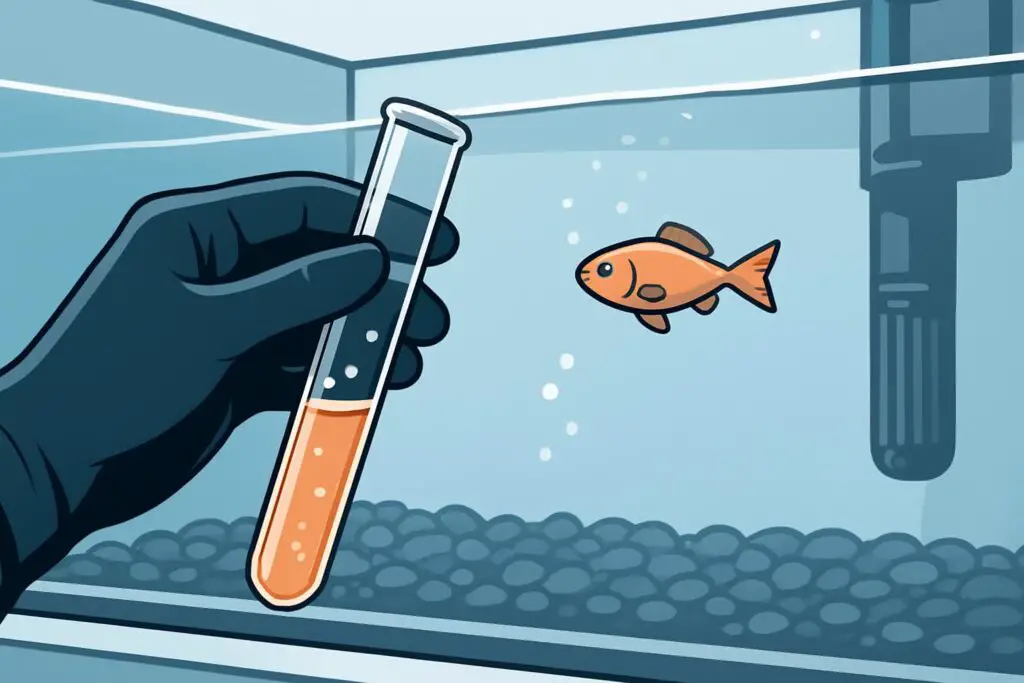
Use a liquid test kit for ammonia. Shake reagents well and follow timing carefully. Test daily in the first weeks. Record readings to see trends. If your tap water has chloramine, test both tank water and dechlorinated tap water so you know the baseline.
What the numbers mean
Most hobby kits report total ammonia nitrogen TAN. TAN includes both NH3 and NH4+. Because toxicity depends on NH3, use online calculators to estimate NH3 from TAN using your pH and temperature. If you want a simple rule without math, be conservative and act early.
Any detectable free ammonia NH3 is harmful; total ammonia nitrogen TAN above 0.25 ppm is a warning and above 1.0 ppm is an emergency.
Avoiding testing mistakes
Do not test right after dosing a detoxifier if your kit is known to read bound ammonia. Wait the label time or use a kit that reads free ammonia only. Rinse vials with tank water, not tap. Compare colors in good light and against a white background.
Prevention Strategies That Work
The fishless cycle step by step
Set up the tank with filter, heater, and aeration. Dechlorinate the water fully. Set temperature around 77 to 82 F 25 to 28 C. Aim for a stable pH between 7.0 and 8.0. Add your chosen biological media to the filter. Turn on everything and let it run.
Optionally add a reputable bottled nitrifying bacteria product. Dose pure ammonium chloride or unscented ammonia to reach about 2 ppm TAN. Test daily. When ammonia drops near zero and nitrite rises, redose ammonia to 2 ppm. When both ammonia and nitrite drop to zero within 24 hours after dosing, the tank is cycled for that feeding level. Do a large water change to reduce nitrate, then add fish gradually.
Seeding the filter
Seeding means adding live bacteria from an established healthy tank. Use a piece of mature sponge, ceramic media, or a handful of substrate placed into your new filter. Transport it wet and oxygenated. This can cut cycling time from weeks to days. Avoid seeding from tanks with disease or medication history.
Stocking and feeding rules
Start with a small bioload and add fish in stages. Wait a week between groups while confirming ammonia and nitrite stay at zero. Feed lightly for the first two weeks. Remove uneaten food after a few minutes. Keep hands off the filter media unless flow is reduced.
Water prep and conditioners
Use a conditioner that neutralizes chlorine and chloramine. Dose for the full tank volume during water changes. If your tap has chloramine, the conditioner will release ammonia that your new biofilter must process. Plan around this with slower stocking and extra testing.
Oxygen and flow
Nitrifying bacteria need high oxygen. Keep good surface agitation. Aim the filter output to ripple the surface. Clean prefilters and sponges gently in old tank water to preserve bacteria while restoring flow. Avoid turning off the filter for long periods.
Live plants help
Fast growing plants use ammonia and nitrate. Floating plants are effective because they grow quickly and oxygenate at the surface. Plants do not replace cycling, but they buffer spikes and improve stability.
Stable parameters
Keep temperature steady. Maintain KH alkalinity so pH does not crash, especially during nitrite surges. Do not chase pH with constant chemicals. Stability helps bacteria and fish more than hitting a target number.
Simple prevention summary
Prevent spikes by doing a fishless cycle, keeping pH stable, seeding the filter with mature media or bottled nitrifiers, stocking slowly, feeding lightly, and testing daily.
Emergency Response When Ammonia Spikes
Immediate actions
In an ammonia emergency, do a large dechlorinated water change of 50 to 80 percent, dose an ammonia detoxifier, boost aeration, stop feeding for 24 to 48 hours, and test again in a few hours.
Protecting the biofilter
Keep the filter running. Do not replace all media. Rinse sponges in removed tank water only. Avoid deep gravel vacuuming while fish are in distress. Maintain oxygen by adding an airstone or raising the filter output to agitate the surface.
Extra tools for emergencies
Zeolite media can temporarily pull ammonia from water. Place it where flow is strong. Replace or recharge per instructions. Add fast growing plants to absorb nitrogen. Lower temperature a couple of degrees if safe for your species to slightly reduce NH3 fraction. Do not swing pH rapidly.
After the spike
Resume light feeding only when ammonia and nitrite return to zero. Keep testing daily for a week. If spikes return, reduce stocking, increase water changes, and review filter capacity and maintenance.
Troubleshooting Persistent Ammonia
Common causes
Overstocking or sudden additions outpace the biofilter. Overfeeding creates constant decay. A recently cleaned or replaced filter media removed bacteria. Low oxygen slows nitrification. Chloramine in tap water adds ammonia at each water change. Medications or salt used at high levels can reduce nitrifier activity. Dead spots in the substrate trap waste.
Fixes that stick
Reduce feeding to what fish eat in 30 to 60 seconds. Increase water change frequency while levels are elevated. Add more biological media to the filter. Improve aeration and flow patterns. Seed from a healthy tank. Use live plants. Verify your conditioner neutralizes chloramine. Space out new fish purchases.
Realistic Cycling Timeline
With seeding and bottled bacteria
Ammonia control can appear within 3 to 7 days. Nitrite may still rise and then fall over the next 1 to 2 weeks. Full stability often arrives by week 3, assuming proper temperature, pH, and oxygen.
Without seeding
Expect 3 to 6 weeks before ammonia and nitrite both hit zero daily after feeding or dosing. Cooler temps, low pH, or low oxygen can extend this. Patience saves fish and money.
Signs you are done
The tank can process a measured daily ammonia input to nitrate within 24 hours. Ammonia reads zero. Nitrite reads zero. Nitrate rises slowly and is kept in check with routine water changes. Fish show normal behavior and appetite.
Myths and Facts
Myth and reality about water changes
Myth: water changes stop the cycle. Fact: water changes protect fish by diluting toxins and do not remove bacteria that live on surfaces. Use them freely during emergencies and as needed during cycling with fish.
Myth and reality about filter cleaning
Myth: a clean filter is always better. Fact: overcleaning or replacing media destroys the biofilter. Rinse mechanical media gently in tank water and leave biological media undisturbed unless flow is blocked.
Myth and reality about bottled bacteria
Myth: bottled bacteria never work. Fact: reputable nitrifying cultures can shorten cycling if stored correctly and used as directed. They are not a license to fully stock on day one.
Maintenance Habits That Prevent Spikes Long Term
Regular testing
Test ammonia and nitrite weekly in new tanks and after any major change. In mature tanks, test monthly and before adding new fish. Catching a small rise early keeps it from becoming an emergency.
Consistent water changes
Change 25 to 50 percent weekly during the first month, then adjust based on nitrate levels and stocking. Always dechlorinate the new water. Match temperature to avoid stress.
Smart feeding and stocking
Feed high quality food in small amounts. Add fish in small groups. Quarantine new fish to prevent disease and sudden bioload jumps. Keep a stocking plan appropriate for your filter capacity.
Conclusion
Ammonia spikes are predictable and preventable. They hit new tanks because bacteria need time to grow. They harm fish quickly, especially at high pH and temperature. With testing, fishless cycling, seeding, careful stocking, and strong oxygenation, you can avoid spikes entirely. If a spike happens, large water changes, detoxifiers, and aeration protect fish while your biofilter catches up. Keep your approach simple, measured, and consistent. Your fish will show the results through steady behavior, normal appetite, and long term health.
FAQ
What is an ammonia spike in a new fish tank
An ammonia spike is a rapid rise of toxic NH3 and NH4+ in a new aquarium before the biofilter is established.
What are the main signs of ammonia stress
Common signs of ammonia stress are gasping at the surface, clamped fins, lethargy, loss of appetite, flashing, and red or inflamed gills.
How high is dangerous ammonia for fish
Any detectable free ammonia NH3 is harmful; total ammonia nitrogen TAN above 0.25 ppm is a warning and above 1.0 ppm is an emergency.
How do I prevent ammonia spikes during cycling
Prevent spikes by doing a fishless cycle, keeping pH stable, seeding the filter with mature media or bottled nitrifiers, stocking slowly, feeding lightly, and testing daily.
What should I do during an ammonia emergency
In an ammonia emergency, do a large dechlorinated water change of 50 to 80 percent, dose an ammonia detoxifier, boost aeration, stop feeding for 24 to 48 hours, and test again in a few hours.