
We are reader supported. When you purchase through links on our site, we may earn an affiliate commission. Also, as an Amazon affiliate, we earn from qualifying purchases.
A lid looks simple, but it affects almost everything in your aquarium. It controls safety, water quality, temperature, humidity, and even energy use. Many beginners skip a cover and later fight jumping fish, rapid evaporation, or salty deposits around the tank. Before you set up or upgrade your aquarium, understand what a lid does and where a different approach might make more sense. Small changes here save money, prevent losses, and make the tank easier to care for.
This guide explains when a lid is essential, what type to choose, and how to avoid the common mistakes that make covered tanks run hot or low on oxygen. You will also learn safe options if you prefer an open-top display. Read on to make a clear, confident choice.
Do Fish Tanks Need a Lid?
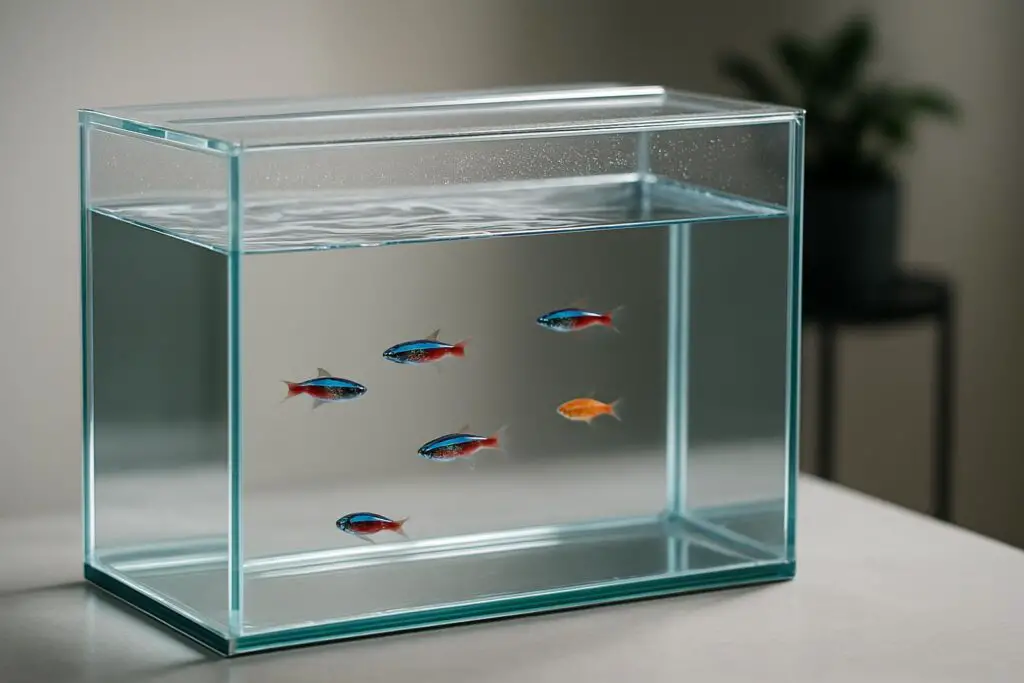
For most home aquariums, yes. A cover protects your fish from jumping out, keeps dust and sprays out of the water, reduces evaporation, stabilizes temperature, and lowers room humidity. It also prevents pets and small children from reaching the water. The exceptions are specific set-ups where you want open air exchange or emergent plant growth. Even then, there are safer alternatives to a fully open tank, such as a mesh screen or partial cover. If you want predictable, low-maintenance results, use a lid and manage airflow correctly.
What a Lid Does for Your Tank
Stops Fish From Jumping
Many fish jump when startled, during courtship, or while chasing food. Common jumpers include danios, rainbowfish, hatchetfish, killifish, rasboras, some tetras, and bettas. In saltwater, wrasses, gobies, jawfish, anthias, and firefish are frequent escapees. Shrimp, snails, and fry can also climb or crawl out through gaps. A tight-fitting lid or a mesh jump guard prevents accidental losses. Leave minimal gaps around equipment, and use cutouts or grommets to seal hose and cable exits. A single open corner is often all it takes for a fish to get out.
Controls Evaporation and Room Humidity
An open tank can lose a noticeable volume of water daily, depending on temperature, airflow, and room humidity. Evaporation cools the tank but increases your top-off work and raises room humidity. In small rooms, humidity can lead to condensation on windows, peeling paint, and mold risks. A lid slows evaporation so your water level stays stable and your home stays dry. This also means fewer swings in water chemistry between top-offs. You can still get good gas exchange with a covered tank by maintaining surface agitation and small vents.
Stabilizes Temperature and Saves Energy
A lid reduces heat loss and blocks drafts, so your heater works less to maintain the target temperature. This matters in cool rooms or winter months. Stable temperature keeps fish healthier and reduces stress. In warm climates or during summer, a sealed lid can trap heat, so use vent slots, a mesh panel, or a small fan if the tank runs warm. Balance is the goal. Keep enough cover to retain heat overnight, but allow airflow when daytime temperatures rise.
Keeps Contaminants, Pets, and Kids Out
A cover protects your water from household risks. Airborne oils, cooking residues, aerosols, and cleaners can land on open water and harm fish and beneficial bacteria. Curious cats, dogs, and children may splash or knock objects in. A lid forms a physical barrier, reduces accidents, and keeps your aquascape intact. For maximum safety, choose a cover that locks onto the rim or add simple clips to stop pets from lifting it.
Reduces Noise and Salt Creep
Surface agitation and splashing can be loud. A lid dampens sound and keeps water off your furniture and electronics. In marine tanks, salt creep forms as saltwater splashes and evaporates. This crust can damage lights, corrode metal, and create messy deposits. A cover with a drip edge and good fit limits salt creep and keeps your gear cleaner for longer. Less cleanup means more time enjoying the tank.
How Lids Affect Gas Exchange and Oxygen
The Balance You Must Strike
Fish, plants, and bacteria need oxygen. The water surface is where most gas exchange happens. A lid can reduce air movement across the surface. You can offset this by adding gentle surface agitation with a filter return, a spray bar angled up, or a small airstone. If you keep a tight lid, keep at least one small vent or gap for airflow. Aim for a steady ripple at the surface, not turbulent waves. This protects oxygen levels without driving off too much heat or CO2.
Signs of Low Oxygen and Quick Fixes
If fish hover near the surface, breathe fast, or gather around filter outlets, oxygen may be low. At night, plants consume oxygen, so symptoms can appear in the early morning. Fix this by increasing surface agitation, adding an airstone, cleaning clogged filters, and clearing any surface film. You can also create small vent slots in the lid. Recheck within an hour. If behavior improves, you have solved the gas exchange bottleneck.
How a Lid Influences Water Chemistry
Freshwater Hardness and Top-Off
When water evaporates, minerals stay behind. If you top off with hard tap water, hardness and buffering can creep upward over time. A lid slows evaporation and reduces this drift. For tanks that need soft, stable water, consider topping off with reverse osmosis or distilled water. Use your usual water for water changes, but plain RO or distilled for evaporation loss. Test GH and KH monthly to confirm stability.
Marine Salinity and ATO Stability
In reef and fish-only marine systems, evaporation raises salinity. A lid reduces daily swings, but you still need to replace evaporated water with freshwater, not saltwater. Many reef keepers use an automatic top-off system for consistency. If you do not use ATO, check salinity daily and top off to the same water line. A lid buys you time and keeps salinity closer to target between checks.
CO2 Retention in Planted Tanks
A covered planted tank holds CO2 longer, which can improve plant growth and reduce injector demand. The risk is that low airflow and heavy plant respiration at night can depress oxygen. The solution is simple. Maintain surface movement, run an airstone on a timer at night if needed, and keep a small vent in the lid. Measure results with a drop checker for CO2 and watch fish behavior. The goal is strong plant growth without stressing livestock.
When You Might Skip a Solid Lid
Open-Top Aquascapes and Emergent Plants
Some layouts use emergent stems, riparium baskets, or floating planters. They need open air above the water line. In this case, a mesh jump guard is safer than a fully open top. You get airflow and plant access while keeping fish inside. Lower the water line slightly to reduce jump risk, and keep lighting supports secure so fish cannot leap through gaps.
Hot Climates and Cooling Needs
If your room runs hot, an open or semi-open top allows faster cooling through evaporation. You can also use a fan across a mesh lid to drop temperature by a few degrees. This method works well, but it increases evaporation and top-off. If you choose this route, plan a consistent top-off routine or use an ATO to prevent swings.
Specialty Setups and Behavior
Some biotopes feature emergent wood and vines that sit above the water line. Some keepers prefer an open look for easy access during frequent trimming. Use a perimeter screen or custom jump guard to keep livestock safe. Most community fish can still jump, even if they seem calm. Never assume any species is fully safe in an open tank.
Choosing the Right Cover
Glass Canopies
Glass is clear, scratch resistant, and does not bow. Hinged glass canopies are common and fit many standard tanks. They block evaporation well and are easy to clean with vinegar to remove mineral spots. Downsides include weight, risk of breakage, and limited custom cutouts. Clean glass transmits light well, but dirty glass can cut light. Keep both sides clean for best results.
Acrylic Lids
Acrylic is light and safer to handle. It insulates well and can be drilled for fittings or feeding ports. The main issues are scratching and warping over time, especially over warm, humid water. Thicker sheets and cross-bracing help reduce bowing. If you choose acrylic, leave small vents and wipe condensation to prevent constant heat buildup.
Polycarbonate Sheets
Solid or twinwall polycarbonate resists warping better than acrylic and is light. It is popular for DIY canopies and condensation covers. Twinwall insulates well and is easy to cut with basic tools. Seal the open channels with tape to keep moisture and algae out. Polycarbonate can handle heat from lights better than acrylic, but still provide vents and avoid fully sealing the tank.
Mesh and Screen Jump Guards
A mesh lid stops jumpers while allowing maximum gas exchange and cooling. It is ideal for reef tanks and warm rooms. Use fine clear mesh to minimize light loss. Screen kits with corner pieces and spline tracks are easy to assemble and customize around equipment. Mesh does not block evaporation much, so plan regular top-offs or an ATO.
Compatibility With Equipment and Lights
Filters, Hoses, Cables, and Overflows
Plan your cover around hang-on-back filters, canister hoses, air lines, and power cords. Use cutouts that match your equipment and avoid large open corners. On rimless tanks, measure the inside opening carefully for screen frames. On tanks with sumps, leave space for overflow boxes and return lines. Seal gaps with weather stripping or small acrylic inserts to keep fish inside without blocking airflow.
Light Placement, PAR, and Condensation
Glass can reduce light slightly when clean and more when dirty. Acrylic and polycarbonate can fog with condensation. Mesh lids pass almost all light. If you run a solid cover, wipe it weekly to maintain light output. Consider a small condensation tray beneath lights to keep drips off your fixtures. Keep a safe gap between LEDs and the lid to prevent heat buildup and corrosion.
Simple DIY Options
How to Build a Mesh Screen Lid
Measure the inside rim or the top dimensions of your tank. Buy a screen frame kit, clear fine mesh, corner connectors, spline, and a spline roller. Cut the aluminum frame pieces to size with a hacksaw. Dry fit the corners and check the fit on the tank. Lay the mesh over the frame, press it in with the spline, and trim the excess mesh. Add cutouts for hoses by using extra frame pieces or U-shaped notches reinforced with small brackets. The result is light, safe, and easy to lift for feeding.
How to Build a Polycarbonate Canopy
Use solid or twinwall polycarbonate. Cut to size with a fine-tooth saw. Create a center brace or add thin aluminum flat bar to prevent bowing. Drill small vent holes near the back and add a feeding port toward the front. If using twinwall, seal the edges with tape to keep moisture out. Support the canopy on the tank rim with small acrylic tabs or a U-channel. Test fit around equipment. Sand sharp edges lightly. Keep a towel under the cut to prevent chipping and work slowly for clean edges.
Maintenance and Cleaning
Routine Care
Wipe the lid inside and out weekly with a damp cloth. For mineral spots, use a vinegar solution and rinse well. For salt creep, remove crust with a plastic scraper, then wipe the area. Check hinges and clips monthly. Inspect screens for sagging and retension the spline if needed. Clean any condensation tray so it does not overflow or drip onto lights.
Managing Condensation and Drips
Condensation forms where warm, humid air meets a cooler lid. Add a drip edge or small gutter strip on the underside so water returns to the tank, not onto the stand. Keep electrical cords in a drip loop. If the lid fogs heavily, increase a small vent near the back and add a gentle fan over the surface. Stable airflow reduces fogging without removing the benefits of a cover.
Troubleshooting Common Issues
Foggy Lids Cutting Light
If plants or corals slow down, check the lid. Hard water leaves spots that block light. Clean both sides and the light splash guard. Glass regains clarity with vinegar and a non-abrasive pad. Acrylic and polycarbonate need a soft cloth to prevent scratches. If fog returns fast, add small vents and reduce splash at the surface to cut humidity against the lid.
Overheating Under a Lid
If temperature climbs above target, open a feeding port, add vent slots, or use a mesh panel in place of a solid section. A clip-on fan across the surface can drop temperature a few degrees quickly. Verify that lights are not sitting directly on the lid. Raise fixtures or add spacers to allow heat to escape.
Surface Film and Stale Air
A protein film can form on calm surfaces, reducing gas exchange. Angle filter returns to make a gentle ripple. Use a skimmer attachment on the intake or add a small airstone. Clean any oily residue on the underside of the lid. A little movement breaks the film and restores oxygen transfer.
Species Notes
Fish That Need a Cover
Plan for a lid if you keep danios, rainbowfish, killifish, hatchetfish, most rasboras, many tetras, bettas, gouramis, pencilfish, and corydoras that dart to the surface. In marine tanks, plan a jump guard for wrasses, gobies, jawfish, firefish, anthias, and blennies. These fish can clear several inches above the water line. Most losses happen at night or when lights switch quickly, so keep the cover on at all times.
Lower-Risk Species Still Benefit
Goldfish, many cichlids, and calmer community fish jump less often, but they still spook during maintenance or feeding. A lid prevents rare accidents and keeps water cleaner. Shrimp and snails cannot jump, but they can crawl out through small gaps, especially around HOB filters. Seal raises and openings with simple strips or mesh inserts.
Household Benefits You Will Notice
A covered tank lowers room humidity, reduces water stains on walls, and protects nearby electronics from spray and salt. It keeps pets safer and blocks odors and splashes. You will refill water less often and spend less on heating. The tank looks neater because cables, hoses, and feeding ports are organized. Small quality-of-life gains add up to a smoother, quieter aquarium experience.
Final Checklist Before You Decide
List your priorities. If safety, stability, and lower maintenance matter most, use a lid and plan for airflow. If you need cooling or emergent growth, choose a mesh screen or a partial cover. Make sure your choice fits your equipment and lights. Confirm there are no large gaps. Add surface agitation to protect oxygen levels. Set a simple cleaning routine so the cover stays clear and odor free. The best cover is the one that supports your goals without adding daily work.
Conclusion
Most aquariums run better with a cover. A good lid protects fish from jumping, slows evaporation, stabilizes temperature, keeps contaminants out, and reduces room humidity. You can still get excellent gas exchange and plant growth with proper surface movement and small vents. If you prefer an open-top look or need extra cooling, switch to a mesh jump guard or a partial cover rather than leaving the tank fully open. Choose materials that fit your layout, cut them to match your equipment, and keep them clean. With the right cover, your fish stay safe, your water stays stable, and your home stays clean and comfortable. That is the kind of foundation every successful aquarium needs.