
We are reader supported. When you purchase through links on our site, we may earn an affiliate commission. Also, as an Amazon affiliate, we earn from qualifying purchases.
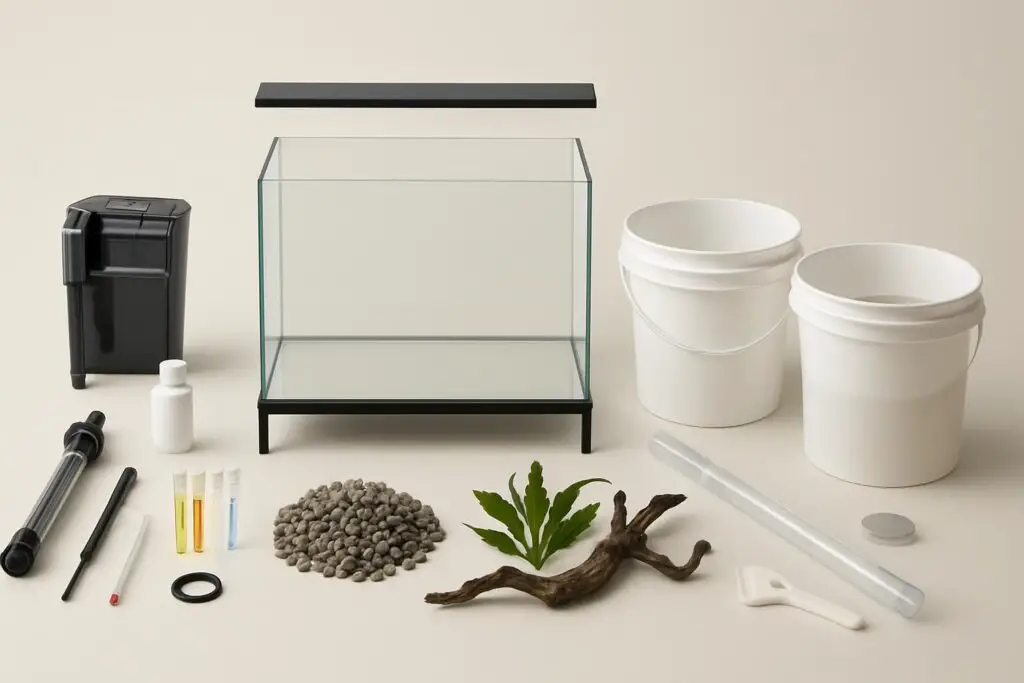
Setting up your first home aquarium should feel exciting, not overwhelming. With the right supplies and a clear plan, you can avoid common mistakes, protect your fish, and enjoy a healthy tank from day one. Use this checklist to buy only what you need, understand why each item matters, and set up your tank with confidence.
What You Need Before You Buy Fish
Plan Size and Location First
Choose a tank size that fits your space and your schedule. For beginners, a 20 to 29 gallon aquarium is the easiest to stabilize and maintain. Place the tank on a stable, level surface, away from direct sunlight and drafts. Keep it close to a water source and a drain to make water changes easy.
Budget and Time Commitment
Set a budget that includes the tank, equipment, testing supplies, and décor. Plan 15 to 30 minutes twice a week for testing and cleaning during the first month, then about an hour weekly for water changes and care. The right gear will reduce work and prevent emergencies.
1. Aquarium, Stand, and Lid
Pick the Right Tank Size
Larger water volume is more forgiving. A 20 gallon long or 29 gallon standard is ideal for most beginners and common freshwater fish. Tiny tanks swing in temperature and water quality and make learning harder.
Choose a Strong, Level Stand
Water is heavy. A 20 gallon setup with substrate and décor can weigh over 200 pounds. Use a purpose-built stand or furniture rated for that load. Confirm the surface is level side to side and front to back. Use a foam mat if the manufacturer recommends it.
Add a Tight-Fitting Lid
A lid prevents fish from jumping, slows evaporation, reduces dust, and keeps humidity out of your room. Use a glass canopy or a rigid, well-fitting lid designed for your tank and lighting. Leave space for filter returns and cables, and cover gaps with feeding doors or mesh.
2. Filter
Why Filtration Matters
Your filter houses beneficial bacteria that convert toxic waste into safer compounds. It also traps debris and circulates water for oxygen exchange. A good filter maintains water clarity and stability.
Types to Consider
Hang-on-back filter: Easy to use, great for most beginners. Look for adjustable flow and room for media.
Canister filter: Powerful and quiet when installed properly, best for larger tanks or heavy stocking.
Internal filter: Simple and compact for small tanks or quarantine setups.
Sponge filter: Cheap, reliable, and gentle for shrimp, fry, or hospital tanks. Needs an air pump.
How to Size Your Filter
Choose a filter that turns over 5 to 7 times your tank volume per hour. For a 20 gallon tank, target 100 to 140 gallons per hour. If you keep delicate fish or plants, prefer adjustable flow.
Use the Right Media
Mechanical media: Sponges or pads to catch debris. Rinse in tank water during maintenance.
Biological media: Ceramic rings, bio balls, or sponges for bacteria. Do not replace unless falling apart.
Chemical media: Activated carbon or resin for odor or specific problems. Optional for routine use.
3. Heater and Thermometer
Match Temperature to Your Fish
Tropical fish need stable warmth. Most do best between 24 and 26 degrees Celsius. Coldwater species like goldfish often do not need a heater if your room stays cool and steady. Research your stocking plan before buying.
Heater Sizing and Placement
Use about 3 to 5 watts per gallon for most rooms. For a 20 gallon tank, a 75 to 100 watt heater usually works. Place the heater near flow from your filter to spread heat evenly. Always add a separate liquid crystal or digital thermometer to verify temperature.
Safety and Stability
Use a heater with an auto shutoff and a protective guard if keeping energetic fish. Allow the heater to rest for 20 minutes before plugging it in after water changes to prevent damage. Aim for slow adjustments, not sudden changes.
4. Lighting
Choose Lights Based on Your Goal
If you only want to view fish, a simple LED fixture is fine. If you plan to keep live plants, choose a light designed for planted tanks with balanced spectrum and enough intensity for your tank depth.
Control the Photoperiod
Start with 6 to 8 hours of light per day to reduce algae while your tank matures. Use a plug-in timer or a smart outlet for consistency. Increase only if plants need it and algae is under control.
Fit with Lid and Access
Ensure the light fits your lid or canopy. Keep cables dry and route them with drip loops. Leave enough room to feed and maintain the tank without moving the fixture every time.
5. Water Conditioner and Beneficial Bacteria
Neutralize Tap Water
Tap water often contains chlorine or chloramine that harms fish and bacteria. Use a conditioner that detoxifies both. Dose for the full volume of new water at every water change and anytime you replace more than a small amount of water.
Seed the Biofilter
Bottled bacteria products help jump-start the nitrogen cycle. They do not replace patience, but they reduce the risk of ammonia spikes during the first weeks. Store them as directed and use within shelf life.
Understand the Cycle
Fish and food create ammonia. Bacteria convert ammonia to nitrite, then to nitrate. Ammonia and nitrite should always be zero. Nitrate should stay below 20 to 40 parts per million for most community fish. Water changes control nitrate and other waste.
6. Water Test Kit and Tracking
What to Test
Ammonia: Toxic even at low levels. Should be zero after cycling.
Nitrite: Toxic. Should be zero after cycling.
Nitrate: Keep low with water changes. Aim under 20 to 40 parts per million.
pH: Stability matters more than chasing a specific number for most beginners.
KH and GH: Help buffer pH and support fish health. Useful to know your baseline.
How Often to Test
During the first month: test ammonia and nitrite every 1 to 2 days. After cycling: test nitrate weekly and before water changes. Test pH, KH, and GH monthly or when fish behave oddly.
Keep a Simple Log
Record date, test results, water changes, and any problems. Trends help you catch issues early and avoid repeated mistakes.
7. Substrate
Pick a Substrate that Matches Your Plan
Gravel: Easy to clean, good for most community tanks. Choose smooth gravel for fish that sift or rest on the bottom.
Sand: Looks natural and suits bottom dwellers that burrow. Stir lightly during maintenance to prevent gas pockets.
Planted substrates: Soil or nutrient-rich options support plant growth. Follow brand directions and avoid aggressive vacuuming at first.
Depth and Prep
Use 2 to 3 inches of substrate for most setups. Rinse inert gravel or sand until the water runs mostly clear. Do not rinse planted soils unless the brand instructs you to.
Avoid Sharp or Painted Rocks
Sharp gravel can injure fish. Low-quality paints or dyes can flake. Buy aquarium-safe materials from reputable sources.
8. Hardscape, Décor, and Plants
Give Fish Hiding Places
Fish feel safe when they have cover. Add caves, driftwood, and plants to break lines of sight. Shy fish come out more when they can retreat.
Use Safe Materials
Choose aquarium-safe rocks and woods. Avoid items that dissolve, rust, or have unknown coatings. Boil or soak new driftwood to reduce tannins and ensure it sinks.
Start with Easy Live Plants
Beginner plants that handle low to moderate light: Anubias, Java fern, Java moss, Amazon sword, Cryptocoryne, Vallisneria, Water sprite, Floating plants like Salvinia or frogbit. Plants help absorb nutrients and stabilize water. Rinse plants and remove hitchhikers before adding.
9. Maintenance Tools
Make Water Changes Simple
Gravel vacuum or siphon: Removes waste from the substrate and drains water at the same time.
Buckets marked for aquarium use only: Prevent contamination. Keep one for dirty water and one for clean water.
Algae scraper or pad: Keep glass clean without scratching.
Aquarium-safe towel and turkey baster: Handy for spills and spot cleaning.
Schedule and Routine
During the first month, change 25 to 40 percent of the water weekly or as needed to keep ammonia and nitrite at zero and nitrate low. After cycling, maintain 20 to 30 percent weekly for most community tanks. Condition new water before it enters the tank and match temperature within a couple of degrees.
Electrical Safety
Use drip loops on every cord so water cannot run into outlets. Consider a GFCI outlet or adapter. Unplug heaters and filters before large water changes and plug back in only when the water level is correct and glass is not hot.
10. Fish Food and Feeding Tools
Get the Right Foods
Staple diet: Quality flakes or small pellets matched to your fish size.
Protein boosts: Frozen or freeze-dried brine shrimp, daphnia, or bloodworms for occasional treats.
Vegetable matter: Algae wafers or blanched vegetables for herbivores and bottom feeders.
Feeding Schedule
Feed small amounts once or twice daily. Offer only what fish finish in about two minutes. Remove uneaten food to prevent water quality issues. Skip feeding one day per week to reduce waste and help digestion.
Storage and Tools
Keep food sealed, cool, and dry. Buy small containers to preserve nutrition. Use feeding rings for floating foods and target feeders or tongs for bottom dwellers where needed.
Putting It All Together: Setup Steps in Order
Day 0: Dry Setup
Place the tank on the stand and level it. Rinse substrate and add 2 to 3 inches. Arrange rocks and wood securely. Install the filter, heater, and thermometer. Fit the lid and light. Route cables with drip loops.
Day 1: Fill and Condition
Place a plate or plastic bag on the substrate and pour water onto it to avoid stirring the substrate. Fill the tank, treat with water conditioner, and start the filter and heater. Set the light on a timer for 6 to 8 hours. Check for leaks, proper flow, and stable temperature.
Day 2 to 7: Seed and Test
Add bottled bacteria per directions. Feed a tiny pinch of food or add pure ammonium chloride if following a fishless cycle. Test ammonia and nitrite daily or every other day. Keep temperature and light schedule steady.
Week 2 to 4: Cycle and Stabilize
Continue testing. When ammonia drops to zero and nitrite rises, the cycle is progressing. When ammonia and nitrite both read zero within 24 hours of adding a small ammonia source, the tank is cycled. Keep nitrate under control with partial water changes. Clean the glass and lightly vacuum as needed.
Adding Fish Gradually
Introduce a small group first, no more than 25 to 30 percent of the final stocking. Match temperature during acclimation and add fish gently. Test daily for a week after each addition. Wait 1 to 2 weeks between groups. Feed lightly and watch behavior closely.
Common Mistakes and How to Avoid Them
Rinsing Filter Media Under Tap Water
Chlorine and chloramine kill beneficial bacteria. Rinse sponges and biological media only in old tank water during water changes. Replace mechanical pads only when falling apart, and never swap all media at once.
Overstocking and Overfeeding
Too many fish and too much food cause ammonia spikes and algae. Plan your stocking based on adult size and behavior. Feed less than you think. Stable water quality beats a full-looking tank.
Skipping Testing
Water can look clear and still be unsafe. Test regularly, especially in the first month and after adding fish. Use results to guide water changes and feeding.
Rushing the Cycle
Beneficial bacteria need time to grow. Shortcuts often lead to fish stress and disease. Use bottled bacteria to help, but still test and wait for stable zero ammonia and zero nitrite.
Ignoring Evaporation
Evaporation raises salinity of dissolved minerals. Top off with conditioned water to the original level, then perform regular water changes on schedule to reset parameters.
Budget Tips: Where to Spend and Where to Save
Spend On Reliability
Buy a quality filter and heater. These two parts protect your fish every day. Quiet, adjustable filters and accurate heaters prevent stress and emergencies.
Save With Smart Choices
Standard tank sizes often cost less and accept more accessories. Use simple lids and lights for fish-only setups. Start with a few hardy plants and expand later. Buy test kits that include refills rather than replacing the entire kit.
Plan for the Long Term
Choose gear that suits your final stocking plan. Upgrading later often costs more. A slightly larger tank, a filter with adjustable flow, and a timer will pay off in stability and reduced maintenance.
Your 10 Item Checklist
Review Before You Buy Fish
1. Aquarium, stand, and tight-fitting lid.
2. Filter sized for 5 to 7 times tank volume per hour, with mechanical and biological media.
3. Heater matched to volume and a separate thermometer.
4. LED lighting with a timer.
5. Water conditioner that handles chlorine and chloramine, plus bottled bacteria.
6. Test kit for ammonia, nitrite, nitrate, and pH; KH and GH if possible.
7. Substrate suited to your fish and plants.
8. Safe hardscape and beginner-friendly live plants or décor with hiding places.
9. Maintenance tools: siphon, buckets, algae scraper, towels.
10. Quality fish foods matched to species, with proper storage.
Conclusion
A healthy aquarium starts with the right supplies and a simple plan. Choose a stable tank size, add dependable filtration and heat, treat and test your water, and give fish cover and a clean environment. Set up step by step, cycle patiently, and add fish slowly. With this checklist, you avoid guesswork, protect your fish, and enjoy a clear, calm tank that is easy to maintain. Start right, keep it simple, and build your skills with every water change.