
We are reader supported. When you purchase through links on our site, we may earn an affiliate commission. Also, as an Amazon affiliate, we earn from qualifying purchases.
Feeding right is the fastest way to improve fish health and water quality. Most problems in home aquariums come from overfeeding. Uneaten food breaks down into ammonia and fuels algae. Fish can look hungry and still be overfed. This guide gives you clear rules, easy schedules, and simple portion control that work for beginners and busy keepers.
Introduction
The goal is consistent energy for your fish with minimal waste in your tank. You do not need complex math or special tools. A few repeatable habits make feeding precise and stress free. Start with a time based portion test, match frequency to species and age, and adjust for temperature and filtration. You will see better color, steady growth, and clearer water.
Why Feeding Frequency Matters
Fish digest quickly, and most aquarium species do best with small meals. Too much food overwhelms digestion and pollutes water. Too little food slows growth and weakens immunity. The right rhythm supports stable behavior and healthy fins and gills. Good feeding makes maintenance easier because the filter handles less waste and you do not chase algae blooms.
The Core Rule: The 30 to 90 Second Portion Test
Feed only what your fish consume within 30 to 90 seconds. This window fits most freshwater and marine community fish. Start a timer when food hits the water. If food remains after 90 seconds, you fed too much. Remove leftovers with a net or siphon. Next meal, reduce the portion by 25 to 50 percent. If all food is gone in under 20 seconds and fish keep actively searching, increase the portion slightly next time. Repeat this test for three to five meals to lock in the right amount.
How to Run the Test
Turn off pumps that create strong surface current so food does not blast into the filter intake. Spread food across the surface or sink it in several spots so timid fish get a fair share. Observe all layers of the tank. Surface feeders, midwater fish, and bottom dwellers should all get access. Use a feeding ring to keep floating food in one place if flow is strong. After the timer, remove excess. Record what worked so you can repeat it.
Daily Frequency by Common Fish Types
Small Tropical Community Fish
Tetras, rasboras, danios, guppies, platies, and similar fish thrive on one to two small meals per day. Use micro pellets or crushed flakes that fit their mouths. Feed once in the morning and optionally once in the evening. Each meal should pass the 30 to 90 second test. Young or very active fish may benefit from two smaller meals instead of one large meal.
Bettas
Feed bettas two small meals daily. Offer a total of about two to four small pellets per meal or the frozen equivalent, adjusted by the 30 to 90 second test. Skip food one day per week to support digestion. Avoid large floating pellets that swell too much. Micro pellets or thawed frozen foods give better control.
Goldfish
Goldfish do best with small portions two to three times a day. Spread the same daily amount into more feedings rather than one heavy feed. Use sinking pellets or gel foods to reduce surface gulping. Offer vegetables or gel based diets regularly to support digestion. Always size portions by the time test and remove leftovers to prevent cloudy water.
Cichlids
Juvenile cichlids need two to three small meals daily to support growth. Adults generally do well on one to two meals. For herbivorous species, include spirulina rich pellets or blanched vegetables. For carnivorous and omnivorous species, use pellets and occasional frozen foods. Keep portions tight with the time test. Heavy feeds increase bloat risk in some species.
Bottom Dwellers
Corydoras, loaches, and plecos need targeted sinking foods. Feed after lights dim so midwater fish do not steal everything. Place sinking wafers or pellets in multiple spots. Check after 10 minutes and remove visible leftovers. For plecos, provide stable plant foods such as zucchini or algae wafers and size the offering so only a small piece remains by morning.
Shrimp and Snails
Neocaridina and other dwarf shrimp graze on biofilm. Supplement lightly every other day or daily in sparse tanks. Use small shrimp pellets or tiny portions of powdered foods. Remove any uneaten food after a few hours. For snails, offer modest amounts of blanched vegetables or wafers and adjust based on consumption.
Marine Fish Basics
Active planktivores like anthias often need two to three small meals daily. Grazers such as tangs benefit from a daily sheet of nori or algae based foods plus one small pellet meal. Larger carnivores generally do well on one to two meals. Use the same 30 to 90 second rule and target feed timid species so faster fish do not outcompete them.
Life Stage Feeding
Fry
Fry need frequent micro meals. Aim for four to six small feeds spread across the day using powdered foods, infusoria, or baby brine shrimp depending on species. Keep water quality tight with extra small water changes because frequent feeding raises waste. Watch growth and bellies to tune portions.
Juveniles
Juvenile fish grow fast and convert food efficiently. Feed two to three modest meals daily. Keep each meal small and clean. As growth slows, reduce frequency to adult levels to avoid excess weight and waste.
Adults
Most adult fish maintain well on one to two meals per day. Herbivores may graze more often in smaller quantities. If your tank is heavily planted with natural algae and microfauna, you can reduce artificial feeds slightly while keeping portions consistent.
Portion Control Techniques That Work
Count and Calibrate
Counting pellets helps you repeat success. For a single betta, two to four micro pellets per meal is a good start. For small tetras, start with one to three micro pellets per fish per meal, spread so the school can feed evenly. For goldfish, use several small pellets per feed and adjust by the time test. For mid sized cichlids, start with a pinch that clears within one minute. Always let the timer and cleanup tell you whether to add or subtract next time.
Know Food Density
Pellets are dense and easy to overfeed. Flakes are airy and scatter widely. Frozen foods add moisture weight and can carry extra juices that foul water. Thaw and strain frozen portions before feeding to reduce waste. Freeze dried foods are light and can float; soak briefly to sink them and avoid float gulping. Gel foods allow precise cuts for large fish and goldfish.
Use Tools
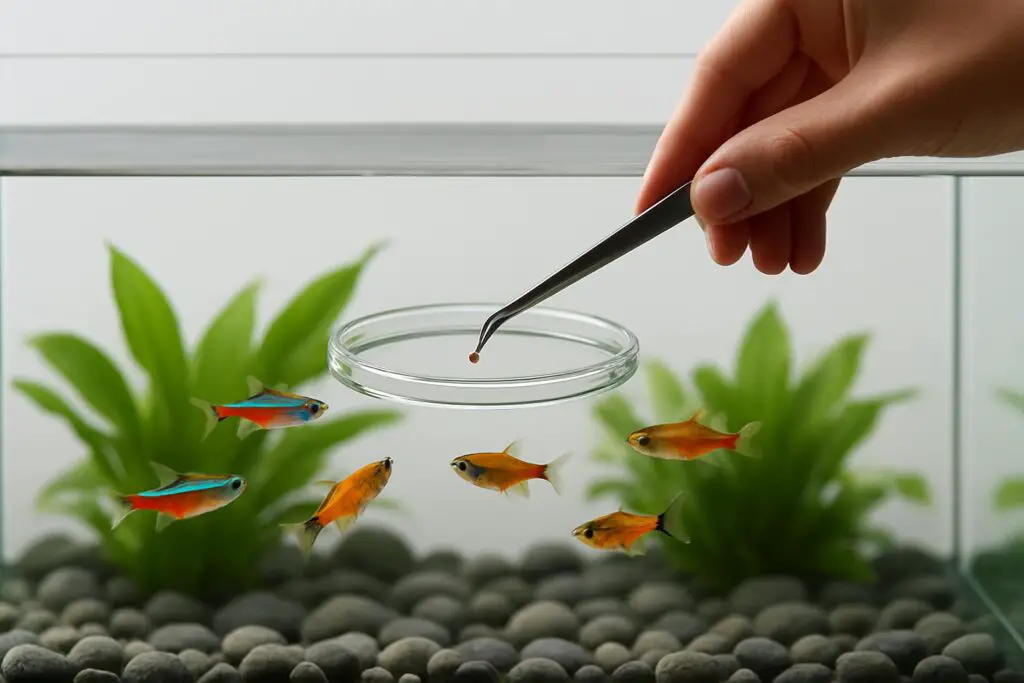
A feeding ring keeps floating food in place and stops it from entering the filter. Feeding tongs or a pipette let you target shy fish and bottom dwellers. This reduces competition and makes portion control exact. Turn off strong flow for a few minutes so food stays available and does not vanish into the filter.
Fasting Days
A weekly fasting day helps many fish avoid digestive issues. Skip a single day, then resume normal feeding. Do not fast fry or delicate juveniles.
Adjust for Tank Variables
Temperature
Warmer water increases metabolism. In warm tanks, fish may need slightly more frequent or slightly larger portions. In cooler tanks, reduce portions. Avoid large changes. Make small adjustments and watch behavior.
Activity and Species Mix
Active schooling fish need steady but modest energy. Sedentary species need less. In mixed tanks, split the same daily amount into two feedings and position food in different zones. This way, fast fish do not take everything.
Filtration and Maintenance
Strong filtration can handle a bit more input, but do not use that as a reason to overfeed. Test water weekly. Rising nitrate faster than usual often signals excess feeding. If you see cloudy water, film on the surface, or visible debris, reduce portions and increase cleanup after meals.
Signs You Are Overfeeding
Visual Clues
Food remains after 90 seconds. Fish spit food repeatedly and stop eating. The substrate collects crumbs. The water looks hazy or has surface scum. Algae increases rapidly on glass and decor.
Water Quality Clues
Ammonia or nitrite appears on tests. Nitrate climbs faster than your normal pattern between water changes. The filter clogs quickly. These are clear signals to cut portions and improve cleanup.
Signs You Are Underfeeding
Behavior and Body
Fish become thin along the belly line. Colors fade. Aggression rises as fish compete for scarce food. Growth in juveniles slows or stalls. If fish eat everything in under 20 seconds and keep searching intensely, increase portion slightly and retest.
Sample Schedules You Can Copy
10 Gallon Community Tank
Morning: a small pinch of micro pellets spread across the surface. Evening: a tiny amount of crushed flakes or a few micro pellets. Both meals should be gone within one minute. Twice a week, substitute a small portion of thawed frozen food and strain well before feeding.
Betta in a Five Gallon Tank
Morning: three micro pellets. Evening: two micro pellets or a small bite of thawed frozen food. All food should be eaten within one minute. One weekly fasting day.
Goldfish in a Twenty Gallon Tank
Three small feeds spaced across the day. Use sinking pellets or gel food. Each feed should clear within ninety seconds. Offer blanched greens or a gel food portion several times per week. Remove leftovers after ten minutes.
Shrimp Focused Planted Tank
Feed a tiny shrimp pellet or powdered food every other day. Aim for complete pickup within an hour. Supplement with blanched vegetables in very small pieces and remove any remains the same day.
Mixed Cichlid Tank
Two modest meals. Morning pellets sized for the largest mouth. Evening a varied pellet or spirulina based option. Drop food in multiple spots. Keep to the one minute clearance rule. Adjust amounts if any food reaches the filter intake uneaten.
Vacation and Automation
Automatic Feeders
An automatic feeder helps with regular small meals. Calibrate it a week before travel. Run daily tests and adjust the gate until food clears in one minute. Use dry pellets that dispense consistently. Avoid flakes in humid rooms because they clump and vary in output.
Short Trips
Healthy adult fish can miss a day or two without harm. For a weekend away, feed normally before leaving, do not add extra, and resume on return. For longer trips, use a calibrated feeder and ask a helper to follow your measured portions. Pre portion feedings in labeled containers for clarity.
Cleanup Habits That Protect Water Quality
After Each Meal
Remove uneaten food after five minutes. Use a net, turkey baster, or siphon. For frozen foods, thaw and strain to remove excess juices before feeding. Rinse feeding tools and rings to prevent film buildup.
Weekly Routine
Test water for ammonia, nitrite, and nitrate. If numbers trend upward faster than usual, reduce portions by 10 to 25 percent and retest after a week. Clean prefilters and wipe the glass. Stable water confirms that your portion control is on point.
Troubleshooting Common Problems
Shy Fish Being Outcompeted
Feed in two zones at once. Use sinking pellets for bottom dwellers during low light. Target feed shy individuals with a pipette. Adjust portions so both zones clear within the test window.
Greedy Fish Begging Constantly
Begging is not a reliable hunger signal. Stick to the schedule and the timer. Use the fasting day to reset appetite cues. Consistency reduces begging behavior over time.
Cloudy Water After Feeding
Reduce portion size, strain frozen foods, and increase flow during the day while still pausing it briefly during feeding. Ensure your filter capacity and media are clean. Recheck the one minute clearance rule.
Putting It All Together
Start with the 30 to 90 second portion test. Match daily frequency to your species and life stage. Use counting and simple tools to repeat success. Adjust for temperature, activity, and filtration. Watch for the signs of overfeeding and underfeeding, and respond with small changes. Keep cleanup tight.
Conclusion
Feeding does not have to be guesswork. Small, measured meals eaten within a minute keep fish healthy and water clear. Choose a schedule that suits your fish type, portion with a timer, and remove leftovers. Over time, your tank will stabilize, your fish will show better color and behavior, and maintenance will feel easier. Precision comes from habits you can repeat every day.
FAQ
Q: How often should I feed my fish
A: Most adult community fish do well on one to two small meals per day. Use the 30 to 90 second rule and adjust for species and activity.
Q: How much should I feed at each meal
A: Feed only what the fish eat within 30 to 90 seconds. If food remains after that time, reduce the next portion and remove leftovers.
Q: Should I give my fish a fasting day
A: A weekly fasting day helps many fish with digestion. Do not fast fry or delicate juveniles.
Q: How do I make sure bottom dwellers get food
A: Use sinking foods after lights dim, place food in multiple spots, and remove leftovers after about ten minutes.
Q: What are signs I am overfeeding
A: Food remains after 90 seconds, hazy water, rising nitrate faster than usual, and visible debris on the substrate.