
We are reader supported. When you purchase through links on our site, we may earn an affiliate commission. Also, as an Amazon affiliate, we earn from qualifying purchases.
Stocking a pond looks simple. Add some fish, feed them, enjoy the view. The truth is different. A pond is a living system with swings in temperature, oxygen, and water quality. Put in the wrong fish and you get problems you cannot easily reverse. This guide shows you which fish you should not add to a pond, why they cause trouble, and what to do instead. Keep it simple, match species to your climate and pond type, and you will avoid loss, stress, and legal risk.
Why a Pond Is Not an Aquarium
Ponds change fast. Sun and wind push temperature and oxygen up and down. Rain dilutes minerals. Leaves add tannins and organic load. Predators visit. You do not control these factors like you do indoors. Fish that tolerate swings and cold snaps thrive. Fish that need tight control fail. Start with this reality and your stocking choices will make sense.
Water depth, volume, and filtration matter more outdoors. Shallow ponds heat and chill quickly. Heavy planting and low flow reduce oxygen at night. Strong flow in a koi pond boosts oxygen but uproots delicate plants. Before you pick fish, define the pond you have and the pond you want.
A Simple Rule Set Before You Buy
Match species to climate. If winter water dips below 10°C, do not add tropical fish. If summer water rises above 25°C, avoid coldwater species that need high oxygen.
Match species to pond type. A water garden with lilies and shallow shelves is not a predator pond and not a koi grow-out system. Herbivores and big diggers do not belong in plant-heavy ponds.
Control size. Do not add fish that outgrow your pond within two years. Plan for adult size, not the size in the store.
Control behavior. Predators, fin nippers, and bottom raspers turn calm ponds into stress zones. Stress leads to disease and losses.
Follow the law. Some fish are restricted or illegal to release or keep without permits. Never stock a fish that can escape and harm local waters.
Fish You Should Not Add to a Pond
Tropical Aquarium Fish in Temperate Ponds
Guppies, mollies, platies, swordtails, tetras, angelfish, discus, gouramis, corydoras, and similar tropical species need stable warm water. In an unheated outdoor pond in a temperate climate, a cold night can kill them. Even in summer, night dips and storms trigger stress and disease. They are not pond fish for most regions.
In warm regions, some of these species can survive outdoors and then become invasive if they escape or you drain a pond. They compete with native fish and spread parasites. If you cannot keep them contained year-round with heat and barriers, do not add them.
Mosquitofish Are Not the Quick Fix
Mosquitofish nip fins, harass other fish, and breed fast. They outcompete small natives, and they are not a magic solution for mosquitoes. Good water movement, surface skimming, and correct filtration break the mosquito life cycle more reliably than adding a problem fish.
In many regions, mosquitofish are invasive and restricted. If you want mosquito control, fix circulation and remove stagnant pockets. Avoid stocking a species that harms pond mates and local ecosystems.
Predators That Eat Your Pets
Largemouth bass, pike, pickerel, and many catfish species see small koi and goldfish as food. They grow large, spawn, and quickly convert a peaceful pond into a food chain. Even if you enjoy native predators, mixing them with ornamental fish is a recipe for losses.
Some predators are also illegal to possess or release in certain areas. If you keep a wildlife pond for observation, do not add ornamental prey fish. If you keep ornamental fish, do not add predators.
Suckermouth and Algae Eaters That Do Harm
Common plecos and related suckermouth catfish are sold as algae cleaners. In ponds they create new problems. They need warm water, grow large and heavy, and in cool weather they rasp the slime coat of koi and goldfish. This leaves wounds and opens the door to infection. In winter they die or suffer if the pond is unheated.
Chinese algae eaters start small and helpful, then turn aggressive and latch onto other fish. Siamese algae eaters and otocinclus are tropical and fragile in outdoor swings. Do not use fish as your main algae control tool. Use shade, plants, balanced feeding, proper filtration, and a UV clarifier to manage green water.
Plant Destroyers and Bottom Diggers
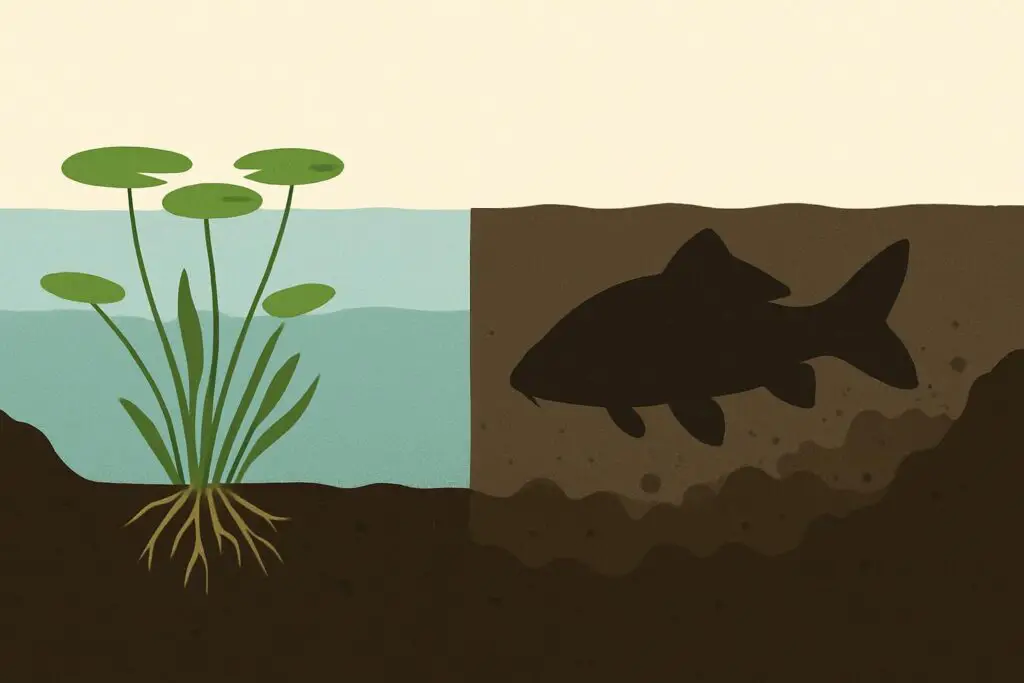
Common carp and grass carp uproot plants, muddy water, and strip foliage. In a water garden this ruins your layout and clogs filters. These fish are built to dig and graze. They will not change behavior because the plants are expensive.
Koi are beautiful but are also strong diggers. In a dedicated koi pond with bottom drains and no delicate plants, koi thrive. In a small water garden with lilies and marginal plants, koi will uproot baskets, stir silt, and snap stems. If your goal is a stable plant display, do not add koi.
Giants That Outgrow Backyard Ponds
Pacu, redtail catfish, and other tropical giants show up in stores at hand size and end up as pond breakers. They need huge warm systems, high oxygen, and powerful filtration. In a typical backyard pond they suffer, crash water quality, and force rehoming.
Channel catfish and similar large natives also outgrow small ponds and will eat pond mates. Plan for adult size and adult appetite. If you cannot house them at full size for life, do not add them.
Delicate Coldwater Species With High Oxygen Needs
Trout and salmonids need cold, fast, oxygen-rich water year-round. Shallow ornamental ponds heat up and hold less oxygen. Warm spells and summer nights become lethal. Do not add trout to water gardens or warm, still ponds.
Golden orfe are active and need high oxygen and long swimming lanes. They are fine in large, well-aerated ponds but not in small, warm, or stagnant ponds. If you cannot keep high oxygen and strong circulation, avoid orfe.
Aggressive Fin Nippers and Territorial Bullies
Tiger barbs, many cichlids, and aggressive sunfish bite fins and chase pond fish. They cause constant stress. Stressed fish hide, feed less, and fall ill. Outdoor space does not erase aggression if the pond is small and sight lines are open.
Green sunfish and similar species look cute but dominate small ponds and wreck community balance. If you want a peaceful ornamental pond, keep these out.
Wild Caught Fish and Legal Risks
Collecting wild fish without permits risks fines and brings in parasites and diseases. Even with permits, mixing wild fish with ornamental species is risky for biosecurity. Many regions restrict stocking to protect native waters. Know the rules and respect them.
Never release pond fish to streams or lakes. If you cannot keep a species for life, do not buy it. Return, rehome, or work with a licensed facility.
Combinations That Do Not Work
Fancy goldfish with round bodies and long fins do poorly with koi. Koi outcompete them at feeding time and can injure delicate fins in tight spaces. If you keep koi, avoid mixing with delicate fancy goldfish. Choose hardier single tail goldfish if you want to mix.
Small native minnows and fry become food when housed with larger carp family fish. If you plan to breed small fish in a mixed pond, expect predation. Do not stock tiny fish you want to protect in a pond with hungry adults.
Match Stocking to Climate
In temperate climates with winter ice, choose hardy coldwater fish with proven overwintering success. Use depth, aeration, and deicers to maintain gas exchange. Do not add tropical fish unless you heat the pond and provide backup power.
In hot climates, even hardy coldwater species can struggle in shallow ponds. Long heat waves and warm nights drain oxygen. Increase depth, shade, and aeration. Avoid species that demand cool water and high oxygen. Stock lightly and feed sparingly in heat.
Match Stocking to Pond Type
Water Garden With Plants
Goal is clear water, strong plant growth, and calm behavior. Do not add koi, common carp, grass carp, plecos, or large catfish. Stock peaceful, plant-safe, cold-tolerant fish if your climate fits. Keep flow gentle around plant shelves and provide predator cover.
Dedicated Koi Pond
Goal is koi health, growth, and viewing. Skip delicate plants and bottom gravel. Use bottom drains, strong aeration, and large filtration. Do not add plecos, predators, or fin nippers. Do not mix with fancy goldfish. Keep stocking low for water quality and growth.
Wildlife or Native Pond
Goal is habitat support and observation. Avoid ornamental carp and goldfish that outcompete natives. Match species to region and permits. Provide varied structure for refuge. Never import exotic fish for a native pond.
Safer Alternatives to Common Problem Fish
For Algae Control
Reduce sunlight with shade sails or floating plants until coverage is stable. Do not rely on fish to eat algae. Improve mechanical and biological filtration and add a UV clarifier to control green water. Avoid overfeeding and vacuum sludge before summer.
Balance nutrients with more plants and fewer fish. Remove decaying leaves fast. The goal is to starve algae, not to stock a fish that makes new issues.
For Mosquito Control
Break surface tension with aeration and circulation. Skim debris so larvae have no calm pockets. Keep spillways and streams running. Stock only species suited to your pond and region. In many cases, your existing hardy fish will already consume larvae once circulation is right.
Stocking Density Basics That Prevent Mistakes
Stock light, then wait and watch. In new or small ponds, add a few hardy fish and test water weekly. Grow the population only when ammonia and nitrite remain at zero and oxygen remains high in the early morning.
As a conservative guide, plan about 100 to 150 liters per adult single tail goldfish, or 400 to 600 liters per small koi, with more volume as koi grow. Large koi need far more space. It is better to keep fewer fish with better growth and health than to crowd a pond and fight algae and disease.
Quarantine and Biosecurity
Quarantine all new fish for at least four weeks in a separate container with mature filtration. Observe for parasites, ulcers, and odd behavior. Treat issues before release. This one step prevents most pond-wide disease outbreaks.
Disinfect nets and tubs. Avoid mixing fish from unknown sources. Buy from reputable dealers who handle fish carefully. Keep wildlife out of the quarantine system.
A Quick Decision Checklist
Is the species suited to your lowest winter and highest summer water temperatures without heating or chilling
Does the adult size fit your pond volume and filtration for life
Will the fish eat, nip, or harass existing fish
Will the fish uproot plants or stir the bottom
Is the species legal to keep and move in your region
Can you quarantine and source it safely
If any answer is no, do not add the fish.
Case Examples of Fish to Avoid
Common Pleco in a Backyard Pond
Starts small, seems helpful, then outgrows the space. In cool weather it rasps the slime coat of pond fish, causing wounds. It dies in winter without heat. It contributes little to lasting algae control. Do not add it.
Use shade, filtration, and UV for green water. Remove string algae by hand and improve nutrient balance. Focus on prevention, not a risky fish.
Koi in a Small Water Garden
Looks beautiful at first, then uproots lilies and muddies water. Grows fast and strains filtration. Winter care becomes complex. If your priority is plants and a calm display, avoid koi and stick with a few hardy, plant-safe fish or no fish at all.
If you want koi, redesign to a koi pond with proper depth, drains, aeration, and no delicate plants.
Mosquitofish in a Community Pond
Breeds fast, nips fins, and stresses tankmates. Offers less mosquito control than proper water movement. Can become invasive. Do not add it.
Improve circulation, skim the surface, and keep water clean. Your existing fish will consume larvae once conditions deny mosquitoes a still surface.
Common Misconceptions
Algae eater fish will fix water quality is a myth. Algae problems come from light and nutrients. Fix those and algae fades. Fish alone cannot correct imbalance.
Predators keep ponds balanced is a myth in ornamental systems. In small ponds they clear out ornamental fish and then stagnate. Balance comes from proper stocking, filtration, and maintenance.
Maintenance Habits That Reduce Stocking Risk
Measure water parameters. In warm months, test at dawn for oxygen and ammonia. Adjust feeding to match biofilter capacity. Do water changes after heavy rain and leaf drop.
Prepare for seasons. Add aeration in summer heat. Keep a deicer or aeration open in winter. Thin plants to prevent night oxygen dips. Stable systems let you keep a narrower range of safe, compatible fish.
Conclusion
Good pond stocking is selective. Many fish are beautiful or interesting but do not belong in most backyard ponds. Avoid tropical aquarium fish in unheated ponds, predators that eat your pets, algae eaters that rasp and fail in the cold, plant destroyers, giants that outgrow the space, and delicate coldwater species that need constant high oxygen. Respect climate, pond type, adult size, behavior, and law. Build your system around prevention and stability, not quick fixes. If you follow the rule set and avoid the no go fish in this guide, you protect your budget, your fish, and your time.
FAQ
Q: Can I put a pleco in my outdoor pond
A: Do not add a common pleco to a pond. It needs warm water, grows large, and in cool weather it rasps the slime coat of koi and goldfish. It does not solve algae long term and often dies in winter.
Q: Are mosquitofish good for ponds
A: Mosquitofish are fin nippers that stress other fish and are not a reliable fix for mosquitoes. Improve circulation and surface skimming instead. In many regions they are also invasive.
Q: Which fish will eat or harass my pond fish
A: Predators like largemouth bass, pike, and many catfish will eat small koi and goldfish. Aggressive species like tiger barbs and green sunfish nip fins and chase pond fish.
Q: Are koi safe for a small water garden with plants
A: No. Koi uproot plants, stir silt, and strain filtration in small water gardens. Keep koi in a dedicated koi pond without delicate plants.
Q: Can I keep tropical aquarium fish in an unheated pond
A: No. Tropical fish like guppies, mollies, tetras, and corydoras need stable warm water and fail in outdoor temperature swings.