
We are reader supported. When you purchase through links on our site, we may earn an affiliate commission. Also, as an Amazon affiliate, we earn from qualifying purchases.
Ghost Shrimp and Amano Shrimp are two of the best cleanup crews you can add to a freshwater aquarium. They graze on algae, sift detritus, and stay active without bothering fish. They also need the right setup to thrive. Get the basics right and you will see constant grazing, clean plants, and steady growth. Miss the basics and you may face molting issues, sudden deaths, or vanishing shrimp. This guide keeps it simple and practical so you can set them up for success from day one.
By the end, you will know how to size the tank, stabilize water, feed correctly, pick safe tank mates, and avoid the most common mistakes. Keep reading and build a tank that lets Ghost Shrimp and Amano Shrimp do their best work.
Meet the Species
Ghost Shrimp at a Glance
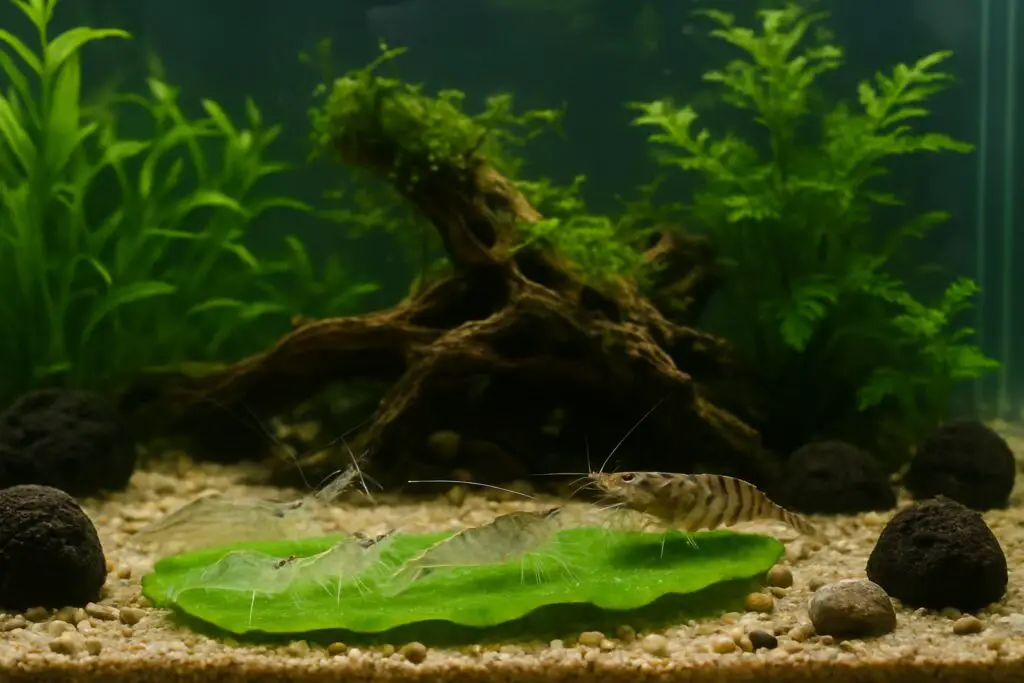
Ghost Shrimp are small, clear-bodied scavengers that stay under two inches. They are inexpensive, active, and great for learning shrimp care. They breed in freshwater, but survival of babies is low in community tanks. Ghost Shrimp are delicate during shipping, so careful acclimation matters. They prefer calm flow, lots of biofilm, and many hiding spots.
Amano Shrimp at a Glance
Amano Shrimp grow larger than Ghost Shrimp and are famous for their algae appetite. A small group can strip diatoms and soft algae from leaves and wood. They are hardy once settled and bold at feeding time. They carry eggs often, but the larvae need brackish water to develop, so you will not raise young in a standard freshwater community tank without a special setup.
Key Differences That Affect Care
Amano Shrimp are stronger algae eaters and less likely to be eaten by small fish due to size. Ghost Shrimp are smaller, cheaper, and more sensitive to poor handling. Keep both species in stable, clean water, but plan more space and food competition when housing Amano Shrimp. For beginners, a mixed tank works well if you control flow, provide shelter, and avoid aggressive fish.
Tank Setup Essentials
Size, Stocking, and Filtration
A 10-gallon tank is a practical minimum for beginners and gives room to stabilize water. You can keep 6 to 10 Ghost Shrimp with 3 to 6 Amano Shrimp in a 10-gallon tank if you maintain the tank well. Use a sponge filter or a gentle hang-on-back filter with a sponge prefilter to protect tiny shrimp and babies. Keep flow moderate so shrimp can graze without being blown around.
Substrate and Plants
Fine sand or small rounded gravel works well. Planted substrates are fine if you understand how they affect pH and KH. Add fast growers, mosses, ferns, and floating plants. Plants host biofilm, which is the main natural food for shrimp. The more plant surface, the more grazing and the less algae on display glass.
Hiding Spots and a Tight Lid
Provide natural shelters using wood, rocks, moss, and leaf litter. Cholla wood and lava rock have pores that trap biofilm and provide cover. Shrimp hide after molting, so multiple shelters reduce stress. Use a tight lid because shrimp can climb filter intakes and airline tubing. A snug cover also slows evaporation and keeps parameters stable.
Lighting and CO2 Notes
Moderate lighting grows algae and biofilm at a healthy rate. If you run pressurized CO2, keep levels stable and ensure good oxygen at night. Large swings in CO2 and pH stress shrimp. For low tech tanks, keep lights 6 to 8 hours and adjust based on algae growth and plant health.
Water Parameters and Stability
Core Targets for Both Species
Keep temperature between 20 and 26 C, or 68 to 79 F. Aim for pH 6.5 to 7.8. General hardness between 4 and 12 dGH supports healthy molts. Carbonate hardness between 2 and 8 dKH adds buffering against pH swings. Ammonia should be zero. Nitrite should be zero. Keep nitrate under 20 ppm. These ranges work for both Ghost Shrimp and Amano Shrimp.
Stability Over Perfection
Stable parameters matter more than chasing exact numbers. Sudden changes in temperature, TDS, GH, or pH cause failed molts and deaths. When you do water changes, match temperature and mineral content as closely as you can. If your tap water is very soft, remineralize to reach a GH of at least 4 dGH so shrimp can build new shells after molting.
Testing and Dechlorination
Test weekly for ammonia, nitrite, nitrate, pH, GH, and KH. Always dechlorinate new water. Chlorine and chloramine kill shrimp fast. Use a reliable conditioner and wait the recommended time before adding water. If you use reverse osmosis water, remineralize to your target GH and KH every time for consistency.
Cycling and Acclimation
Cycle the Tank Before Shrimp
Cycle the tank fully so beneficial bacteria can process waste. Add an ammonia source, monitor until ammonia and nitrite read zero for at least a week, and confirm nitrate is present. Seed the filter with media from a healthy tank if possible. Patience at this step prevents most early losses.
Safe Acclimation on Arrival
Dim the lights, float the bag to match temperature, then drip acclimate slowly for 60 to 120 minutes. The goal is to match your tank’s temperature and water chemistry. Net the shrimp into the tank and discard bag water. Do not pour store water into your aquarium. Keep flow low and food light for the first day while shrimp settle.
Feeding and Nutrition
What They Eat Day to Day
Both species graze biofilm, algae, and detritus all day. Supplement with high quality shrimp pellets, algae wafers, blanched zucchini, spinach, or green beans. Rotate foods to cover all needs. Amano Shrimp will take larger bites and often reach food first. Feed enough that slow Ghost Shrimp still get a share.
Feeding Routine That Works
Offer a small portion once per day. If your tank has visible algae and biofilm, feed every other day. Remove leftovers after 2 to 3 hours to prevent water quality issues. If shrimp stop rushing to food, reduce the amount. Clear stomach lines and steady grazing are good signs. Bloating or foul smell from leftovers are warning signs.
Minerals and Molting Support
Molting depends on calcium and magnesium. Keep GH in range and avoid sudden drops. If your water is very soft, add a small bag of crushed coral to your filter or use a shrimp mineral product to hold GH between 4 and 12 dGH. Leave shed shells in the tank. Shrimp eat them to recycle minerals.
Behavior and Tank Mates
How They Behave in Groups
Shrimp are social and feel safer in groups. Start with at least six of each species you keep, space allowing. Amano Shrimp are bolder and will swim into the open for food. Ghost Shrimp are calmer but very active when grazing. Provide multiple feeding points so everyone gets a share.
Safe Companions
Good tank mates include small rasboras, ember tetras, pygmy and other small Corydoras, otocinclus, and peaceful snails such as nerite or mystery snails. These fish and snails leave shrimp alone and help with algae control. Dense plants and hides make the community calmer and safer.
Fish to Avoid
Avoid aggressive or predatory fish. Many bettas will harass shrimp. Cichlids, larger barbs, loaches, and any fish with a big mouth will hunt them. If you try a betta in a shrimp tank, watch closely and be ready to separate. When in doubt, do not risk your shrimp.
Molting and Health
Understanding the Molt Cycle
Shrimp shed their shell to grow. Before a molt they may hide and eat less. After molting they are soft and vulnerable, so hiding spots are critical. If molts look incomplete or shrimp die during molts, check for parameter swings, low GH, or high nitrates. Fix the cause and increase hiding places.
Common Issues and Early Signs
Opaque white patches in the body can signal bacterial problems or old age. Lethargy, curled tails, or aimless swimming point to stress from toxins or sudden changes. Planaria and hydra can harm baby shrimp. Overfeeding often invites these pests. Cut feeding, siphon waste, and improve maintenance to reduce them.
Copper and Medications
Copper is toxic to shrimp. Many fish medications and some fertilizers contain copper. Avoid products that list copper unless they are proven shrimp safe. If you must medicate fish, move shrimp to a separate tank first and wait until the display is safe again.
Breeding Basics
Ghost Shrimp Breeding in Freshwater
Ghost Shrimp breed in freshwater. Females carry green or yellow eggs under the abdomen. Larvae are free swimming and very small. In community tanks, most will be eaten or trapped by filters. A sponge filter, dense moss, and microfoods such as infusoria improve survival, but expect low numbers without a dedicated setup.
Amano Shrimp and the Brackish Stage
Amano females carry eggs often, but the larvae require brackish water to develop. In standard freshwater tanks you will not raise young. Breeding Amano Shrimp needs a separate rearing tank, brackish water, and plankton foods. Most hobbyists enjoy Amano Shrimp for algae control and do not attempt breeding.
Maintenance Routine
Water Changes That Keep Shrimp Safe
Do 15 to 30 percent water changes weekly. Match temperature and remineralize to the same GH and KH as the tank. Always dechlorinate fresh water. Pour new water in slowly to avoid stirring debris and shocking shrimp. Stable, small changes beat big, rare changes.
Filter and Substrate Care
Rinse sponge filters and media in old tank water, not in tap water. Chlorine kills the good bacteria. Vacuum the surface of the substrate lightly. Leave deeper areas undisturbed in planted tanks to protect roots and microbes. Clean prefilters often so they do not clog and restrict flow.
Testing and Observation
Test weekly and before adding new livestock. Watch feeding response. Healthy shrimp arrive fast at food, graze constantly, and molt cleanly. If things look off, test first, then adjust. Do not guess. Data prevents losses.
Troubleshooting
Sudden Deaths After a Water Change
Common causes are chlorine, a big temperature difference, a large TDS or GH drop, or copper contamination. Always dechlorinate, match temperature, and keep minerals steady. If you changed a large volume, reduce to 15 to 30 percent and increase frequency.
Lethargy and Poor Appetite
Check ammonia, nitrite, and nitrate. Ammonia or nitrite at any level is dangerous. Nitrate over 20 ppm adds stress. Reduce feeding, clean the filter gently, increase aeration, and do a careful water change. Review feeding amounts and remove leftovers promptly.
Disappearing Shrimp
Many shrimp hide after molting and reappear within a day or two. Empty shells are normal and should be left in the tank. If shrimp keep vanishing, suspect predation, strong filter intake, or night-time fish aggression. Add more hides and a sponge prefilter, and review tank mates.
Sourcing and Budget
Choosing Healthy Stock
Pick active shrimp with full antennae, clear eyes, and intact legs. Avoid shrimp with milky patches, fungus, or missing limbs. Ask the store about their water parameters. The closer they are to yours, the easier the transition. Acclimate slowly when you get home.
Wild Caught and Stress
Many Amano Shrimp are wild caught and can be stressed from transport. Handle gently, acclimate with care, and give them time in a calm tank with steady food. Ghost Shrimp are often farmed and cheaper but may be mixed species. Buy from a source that handles shrimp well.
Conclusion
Ghost Shrimp and Amano Shrimp are efficient, engaging, and rewarding when you give them stable water, calm flow, and steady food. Keep parameters within the safe ranges, make small and consistent changes, and choose peaceful tank mates. Build cover, grow plants, and let biofilm work for you. Start simple, observe daily, and adjust with data. Do this and your shrimp will graze, molt, and thrive for the long term.
FAQ
Q: What water parameters do Ghost Shrimp and Amano Shrimp need?
A: Keep temperature between 20 and 26 C, or 68 to 79 F. Aim for pH 6.5 to 7.8. General hardness between 4 and 12 dGH and carbonate hardness between 2 and 8 dKH. Ammonia zero, nitrite zero, and nitrate under 20 ppm.
Q: Can Amano Shrimp breed in freshwater home aquariums?
A: Amano females carry eggs often, but the larvae require brackish water to develop. In standard freshwater tanks you will not raise young. Breeding Amano Shrimp needs a separate rearing tank, brackish water, and plankton foods.
Q: How often should I feed shrimp and what foods work best?
A: Offer a small portion once per day, or every other day if your tank has visible algae and biofilm. Use high quality shrimp pellets, algae wafers, and blanched vegetables such as zucchini or spinach. Remove leftovers after 2 to 3 hours.
Q: What tank mates are safe for shrimp?
A: Safe companions include small rasboras, ember tetras, pygmy and other small Corydoras, otocinclus, and peaceful snails such as nerite or mystery snails. Avoid aggressive or predatory fish.
Q: Why do shrimp sometimes die after a water change?
A: Sudden deaths often come from chlorine, a big temperature difference, a large TDS or GH drop, or copper contamination. Always dechlorinate, match temperature, and keep minerals steady. Limit changes to 15 to 30 percent weekly.