
We are reader supported. When you purchase through links on our site, we may earn an affiliate commission. Also, as an Amazon affiliate, we earn from qualifying purchases.
Gill flukes are a common, stubborn parasite in home aquariums and ponds. They attack the delicate gill tissue, block oxygen uptake, and open the door to secondary infections. The faster you spot the pattern and act, the more fish you save. This guide explains symptoms you can trust, step by step treatments that work, exact dosing guidance, and prevention that actually keeps flukes out for good.
What Gill Flukes Are
Gill flukes are tiny flatworms in the monogenean group, commonly from the genera Dactylogyrus and Gyrodactylus. They attach to the gills with hooks and feed on tissue and mucus. Heavy loads cause rapid breathing, gasping, and sometimes sudden death, especially in crowded or low oxygen systems.
Lifecycle and Spread
Gill flukes reproduce quickly. Dactylogyrus lays eggs that hatch into free swimmers that colonize new hosts. Gyrodactylus gives birth to live young and multiplies on the fish. Eggs resist many treatments, so a single dose often fails. Spread happens through new fish, contaminated plants, water, nets, and even a wet hand that moves between tanks.
Why They Are Common
Flukes thrive when fish are stressed. Poor water quality, shipping stress, sudden temperature changes, and overstocking weaken gill function and immunity. In new tanks, biofilters are not mature, oxygen drops at night, and flukes take advantage.
Early Symptoms You Must Not Ignore
Breathing and Gill Clues
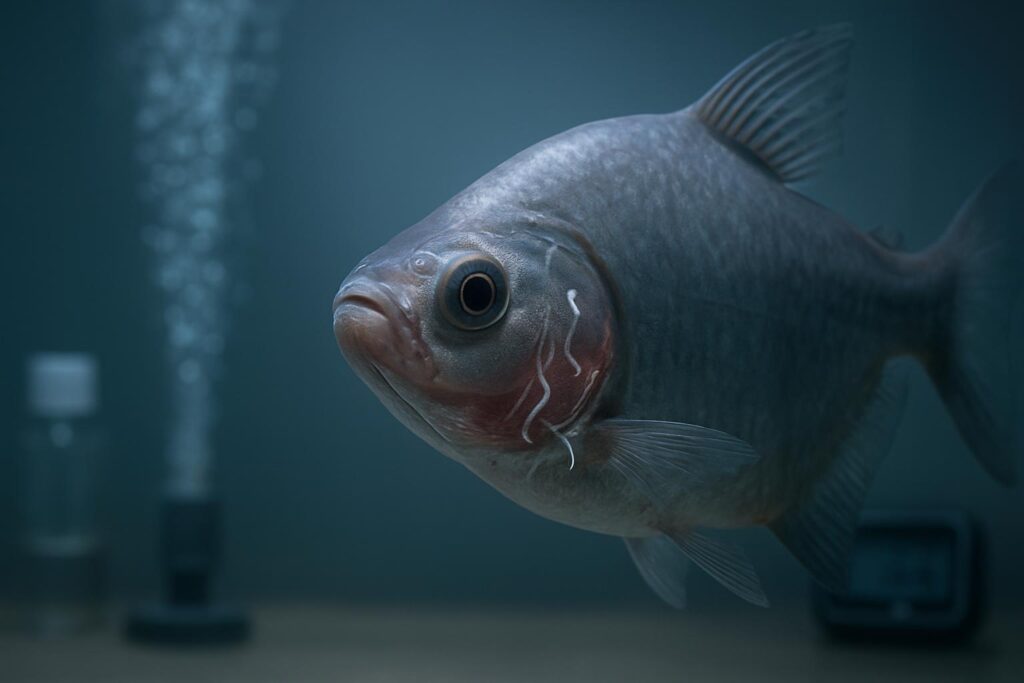
Watch gills closely. Fish with flukes often breathe fast, pump the operculum hard, or keep one gill clamped shut while the other works overtime. You may see strings or patches of excess mucus around the gill plate. Some fish hang near filters or at the surface, seeking oxygen.
Skin and Behavior Changes
Flashing or rubbing on decor is common as parasites irritate the gills and skin. Fins may clamp. Appetite drops. Activity fades from alert swimming to resting on the bottom or hovering with effort.
A Simple Symptom Checklist
The earliest red flags are faster gill movement, one gill held closed, surface gulping, flashing on decor, excess gill mucus, and lethargy with reduced appetite.
Signs Often Confused With Other Problems
Poor water quality causes similar stress breathing. Ammonia burns gills and mimics fluke irritation. Ich can also cause flashing. That is why testing water and looking for the gill specific pattern is important before medicating.
Confirming Gill Flukes
Rule Out Water Quality First
Test ammonia, nitrite, nitrate, pH, temperature, and dissolved oxygen if you can. Ammonia and nitrite must be zero. Nitrate should be under 40 ppm, ideally under 20 ppm for sensitive species. Correct any water issues first, then reassess behavior. Many fish breathe easier within hours of improved water, which helps you separate water stress from parasites.
Visual Cues You Can Trust
When water is good but fish still pump gills fast, hold one gill closed, or show heavy gill mucus and flashing, flukes move high on the list. If several fish across species show the same pattern, assume a parasite load until proven otherwise.
Microscopy and Expert Help
A gill or skin scrape under a microscope confirms the diagnosis. Many aquarium clubs and some veterinarians can check samples. If a microscope is not available, make a treatment decision based on consistent symptoms plus water tests.
Treatment Overview
Safety Checklist Before Medicating
Increase aeration with an airstone. Remove chemical media such as carbon and Purigen. Turn off UV sterilizers during treatment. Perform a 30 to 50 percent water change to reduce organics and help medications work. Move sensitive invertebrates if the chosen treatment may harm them. Read the product label and stick to it.
Medications That Work
Praziquantel is the first choice for most aquariums, with flubendazole as a strong alternative; formalin and potassium permanganate also kill flukes but demand tighter control and stronger aeration.
Salt As Support
Salt helps fish manage osmotic stress and can weaken some flukes. Prolonged in tank salt at modest levels can support recovery. Strong dips can dislodge parasites rapidly. Balance this with plant and invertebrate safety.
Salt can help, but high salt levels can harm some plants and invertebrates; use metered in tank salt only when plants and shrimp are not a priority, or move fish to a treatment tank.
Step by Step Treatment Plans
Community Tanks With Plants or Shrimp
Use praziquantel or flubendazole. These are generally safe for biofilters, plants, and most invertebrates. Dose the whole tank so every fish receives treatment. Repeat doses to break the lifecycle. Maintain strong aeration and stable heat within the safe range for your species. Keep lights moderate to reduce fish stress.
Bare Quarantine Tanks
Quarantine allows stronger tools. Praziquantel remains first line. You can also use formalin or potassium permanganate under close observation with heavy aeration. Consider salt at 3 grams per liter during the course if your species tolerates it. Observe fish closely and stop stronger treatments if distress appears.
Ponds and Large Systems
For ponds, potassium permanganate or flubendazole are practical, and praziquantel can be used but may be costly at large volumes. Treat with robust aeration. Monitor ORP if available. Repeat as needed for egg hatches. Vacuum mulm and reduce organic load before dosing.
Dosage Guidance and Practical Examples
Praziquantel
In tank dose is commonly 2 milligrams per liter. Hold for 24 to 48 hours. Perform a partial water change and redose after 5 to 7 days. Complete 2 to 3 rounds to cover new hatchlings. Example calculation: a 100 liter tank needs 200 milligrams per dose. A 200 liter tank needs 400 milligrams per dose. Many commercial liquids provide dosing by volume. Follow the label if it differs from this general guide.
Praziquantel is gentle on most fish including scaleless species. It does not reduce oxygen directly, but keep an airstone running to support fish under gill stress.
Flubendazole
Typical in tank dose is 1 to 2 milligrams per liter as a single dose that remains in the tank for several days. Repeat after 7 days. It is filter safe and works well in planted tanks. It can cloud water slightly as it binds to organics. Maintain good aeration.
Formalin
Formalin is effective but requires caution. Use only in well aerated tanks without invertebrates. A common in tank regimen is 10 to 15 milligrams per liter of active formaldehyde for 4 to 8 hours, then perform a large water change and run carbon. As a short bath, 25 milligrams per liter for 30 to 60 minutes can be used in a separate container with strong air. Never use formalin in warm, low oxygen water. Watch fish constantly and stop the bath at the first sign of distress.
Potassium Permanganate
Permanganate oxidizes organic material and kills flukes on contact. A common dose is 2 milligrams per liter for 4 hours, aiming for a light pink tint that persists. Heavy organics will neutralize it quickly. Use strong aeration. Neutralize with a large water change or hydrogen peroxide at the end if the color persists. Do not combine with other medications.
Salt Dips and In Tank Salt
For dips, use 10 to 15 grams per liter for 5 to 10 minutes in a separate container with heat and air. Observe closely and end the dip if fish roll or lose balance. For in tank support, use 3 grams per liter for several days where plants and invertebrates are not a concern. Dissolve salt fully before adding. Scaleless fish and fry are more sensitive; start lower and increase slowly if needed.
Aeration and Filtration Notes
Flukes damage gills, so oxygen support is vital. Run extra airstones or point filter outlets at the surface to maximize gas exchange. Formalin and permanganate reduce oxygen safety margins, so never treat without added aeration. Remove carbon before dosing. Keep biomedia in place unless the product instructs otherwise. Expect a mild biofilter wobble after strong oxidizers; test ammonia and nitrite daily for a week.
Aftercare and Recovery
Signs of Improvement
Within 24 to 72 hours of a correct treatment, breathing evens out, surface gasping decreases, and fish return to normal swimming. Appetite improves. Excess gill mucus declines over several days. If there is no improvement, recheck water, redose on schedule, and consider a different proven medication.
Feeding and Immune Support
Offer small, frequent meals of high quality food. Keep the diet simple and clean while gills heal. Avoid overfeeding to prevent ammonia spikes. Stable temperature and minimal stress during recovery help gill tissue regenerate.
Prevent Secondary Infections
Flukes leave wounds that allow bacteria and fungi to enter. Keep water very clean with partial changes. If you see fin rot, ulcers, or cottony growth after fluke control, address them promptly with targeted care. Do not mix multiple primary treatments at the same time unless a label directs a combination.
Prevention That Actually Works
Quarantine Routine
Quarantine new fish for 4 to 6 weeks. Observe breathing, appetite, and behavior daily. A prophylactic round of praziquantel in quarantine is often used by advanced keepers, but observation with ready treatment on hand also works. Do not rush quarantine for rare or expensive fish; the risk to your display is high.
Equipment Hygiene
Keep separate nets, siphons, and towels for each tank. If you must share, disinfect with a strong oxidizer or allow items to dry completely for 24 hours before reuse. Do not move plants or decor from unknown systems without a quarantine period.
Stocking and Stress Control
Keep stocking moderate to protect oxygen levels and reduce conflict. Match species that get along. Maintain stable temperature and pH. Provide cover so timid fish do not stress. Strong biofiltration and regular maintenance prevent the conditions that let flukes take hold.
Common Mistakes To Avoid
Misdiagnosis and Premature Dosing
Do not medicate before testing water. Many breathing issues are solved by fixing ammonia or improving aeration. If medication is needed, choose a proven anti fluke tool, not a general tonic.
Mixing Medications
Do not stack formalin, permanganate, copper, or antibiotics with dewormers unless a specific label allows it. Mixed chemicals raise risk without improving outcomes. Finish one course, run carbon and water changes, then reassess.
Under Dosing and Skipping Repeats
Under dosing allows parasites to survive and rebound. Skipping the repeat dose leaves egg hatchlings untouched. Set reminders and finish the full series.
Ignoring Oxygen and the Biofilter
Flukes already limit oxygen uptake. Add aeration before the first dose and keep it running through recovery. After strong oxidizers, test ammonia and nitrite and be ready for extra water changes.
Temperature and Timing
Within the safe range for your species, a small temperature increase can speed the parasite lifecycle so eggs hatch sooner and the next dose hits more targets. Do not overheat cool water fish. Balance temperature with oxygen. Warmer water holds less oxygen, so add more aeration as you raise heat.
Putting It All Together
Good outcomes come from a clear sequence. Confirm water quality. Identify the gill focused pattern. Choose a proven medication and support with oxygen and clean water. Repeat on schedule to break the lifecycle. Protect the biofilter and the fish through recovery. Then lock in prevention with quarantine and hygiene.
Conclusion
Gill flukes are beatable when you act with a plan. Watch for the early gill and breathing pattern. Use praziquantel or another proven agent and repeat on schedule. Support fish with oxygen rich, clean water and steady feeding. Quarantine and good hygiene keep flukes out of your display. Stay methodical and you will protect your fish and your time.
FAQ
Q: What are the earliest signs of gill flukes?
A: The earliest red flags are faster gill movement, one gill held closed, surface gulping, flashing on decor, excess gill mucus, and lethargy with reduced appetite.
Q: Which medications work best for gill flukes?
A: Praziquantel is the first choice for most aquariums, with flubendazole as a strong alternative; formalin and potassium permanganate also kill flukes but demand tighter control and stronger aeration.
Q: Do I need to repeat treatment and why?
A: Yes, you must repeat treatment because many gill flukes lay eggs that survive the first dose; redose after 5 to 7 days and complete 2 to 3 rounds.
Q: Is salt safe for plants and invertebrates?
A: Salt can help, but high salt levels can harm some plants and invertebrates; use metered in tank salt only when plants and shrimp are not a priority, or move fish to a treatment tank.
Q: How can I prevent gill flukes in the future?
A: Quarantine every new fish for 4 to 6 weeks, never share wet nets or buckets between tanks, keep stocking moderate, and keep water parameters stable to reduce stress.