
We are reader supported. When you purchase through links on our site, we may earn an affiliate commission. Also, as an Amazon affiliate, we earn from qualifying purchases.
Gill flukes are one of the most common and stubborn parasites in aquariums. They attack the gills, the organ fish use to breathe. Damage builds fast, oxygen drops, and fish can decline in days if you miss the early signs. The good news is that gill flukes are treatable with a clear plan. This guide explains what gill flukes are, how to recognize symptoms with confidence, and how to pick safe, effective treatments that work for beginners and experienced keepers alike. Read on, step by step, and act early.
What are gill flukes
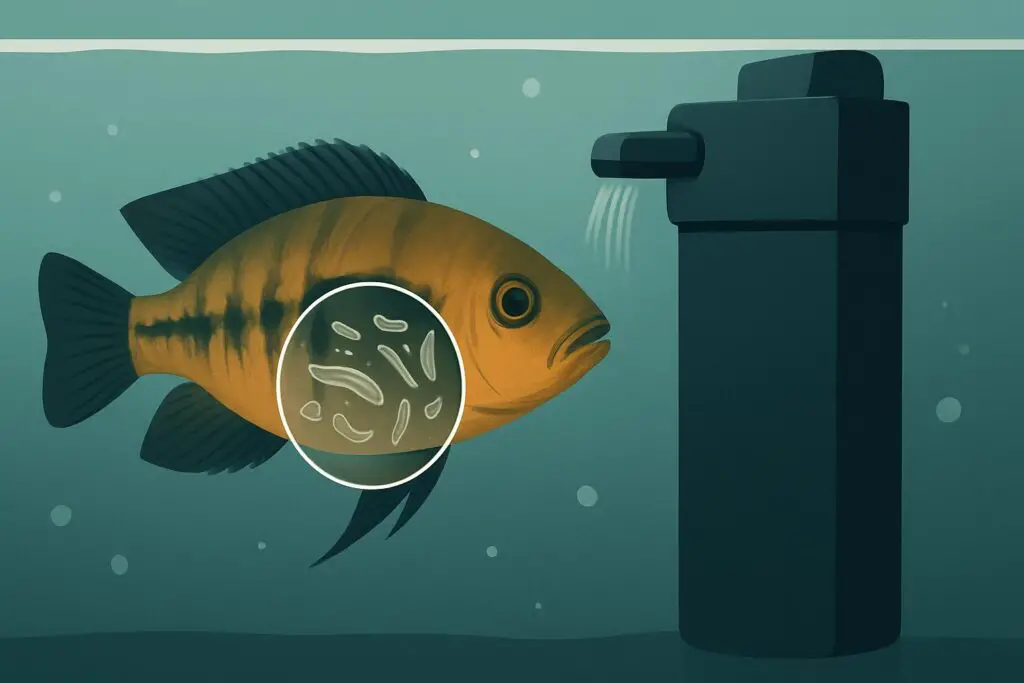
Gill flukes are tiny flatworm parasites that live on fish gills and skin. They are monogeneans, a group of external worms that complete their life cycle on a fish without needing an intermediate host. In aquariums they spread quietly, multiply under stress, and can kill fish by destroying delicate gill tissue.
The two common types
Most cases come from two groups. Dactylogyrus usually lays eggs, which makes reinfestation likely unless you repeat treatment to catch new hatchlings. Gyrodactylus gives birth to live young and reproduces even faster on the fish. Both can infest freshwater species. Marine systems have their own monogeneans with similar behavior.
Life cycle and why timing matters
Dactylogyrus eggs resist many treatments. After dosing, adults die but eggs can hatch days later. This is why a single treatment often fails. You need repeated doses spaced by a few days to break the cycle. Warmer water speeds hatching, so treatment intervals get shorter as temperature rises. Gyrodactylus does not lay eggs, but reproduces rapidly on the host, so you still need to treat all fish at the same time and complete the full course.
How fish get gill flukes
Common sources in home aquaria
New fish from stores or breeders often carry flukes without clear signs. Unquarantined additions are the top source. Live plants and hardscape moved from infected tanks can carry juvenile flukes or eggs. Nets, siphons, buckets, and hands transfer water and mucus between tanks. Live or wild-caught foods can introduce parasites. Even a single drop of contaminated water is enough.
Why stress makes flukes worse
Stress weakens gill tissue and the immune response. Poor water quality, low oxygen, sudden temperature swings, rough transport, crowding, and bullying all tilt the balance toward the parasite. Once flukes take hold, inflamed gills shed extra mucus, trapping debris and bacteria. Breathing gets harder and secondary infections can follow. Cut stress, and treatments work better.
Symptoms you can recognize fast
Behavior changes
Watch for faster breathing than normal. Gill covers pump hard and fast. Fish may hang near the filter outflow or surface where oxygen is higher. Many fish flash and scratch on decor or substrate. Restlessness can switch to lethargy as oxygen falls. Appetite often drops. Schooling fish may isolate themselves.
Gill and body signs
Inspect gills with a flashlight. Look for pale or reddened gill tissue, excess mucus, frayed filaments, or swollen gill covers. One gill may stay clamped closed or held wide open. In heavy cases, fish gasp at the surface. Skin may show extra mucus but usually without the white sugar-like dots that mark ich. External sores are uncommon early on, but damaged gills open the door to bacterial issues later.
Signs in fry and sensitive species
Fry, discus, angelfish, livebearers, and scaleless fish like loaches often show early breathing stress and rapid decline if untreated. Small fish may die without obvious external marks. If multiple young fish die in a short window while breathing fast, consider gill flukes early and test water immediately.
Rule out other problems first
Water quality checks you must do
Many issues can mimic gill flukes. Always test water before medicating. Check ammonia, nitrite, nitrate, temperature, pH, and KH. Confirm strong aeration. Ammonia and nitrite burn the gills and cause the same gasping and reddening. Low oxygen from poor surface agitation or an overstocked tank looks similar. Fix these first or your treatment may fail and losses may continue.
Quick differential checklist
If fish breathe fast and hang near flow, test ammonia and nitrite right away. If water quality is safe and you see scratching plus one gill clamped or swollen, suspect gill flukes. If you see tiny salt-like dots on skin and fins, think ich. Velvet causes a fine dusty sheen and light sensitivity. Bacterial gill disease often follows poor sanitation and dense organics and can come with frayed gills and milky slime. When in doubt, seek a vet or experienced hobbyist for a gill scrape under a microscope. If that is not possible, use symptoms and process of elimination, but keep the focus on water quality as your foundation.
Start treatment with a clear plan
Prepare the tank
Do a large water change, at least 30 to 50 percent, and vacuum the substrate. Clean filter intakes and output lines to improve flow. Increase aeration with an airstone or raise the filter return to disturb the surface. Remove chemical media like carbon and Purigen so they do not absorb medication. Turn off UV sterilizers during treatment. Stabilize temperature and avoid big swings. Treat the display tank if multiple fish show symptoms or if the system shares water. If only one fish is affected and handling is gentle, a hospital tank can reduce medication cost and let you protect invertebrates and plants in the display.
First line medication praziquantel
Praziquantel is gentle on most fish, biofilter safe, and highly effective against monogenean flukes. Choose a trusted aquarium product that keeps prazi suspended in water. Dose per the label based on the net water volume. Keep aeration high. After the first dose, wait 5 to 7 days and repeat. In cool water under 22 C, extend the interval to 7 to 10 days. Run at least two to three full doses to cover egg hatch cycles. In heavy cases or ponds, a third or fourth round may be needed. Do not mix prazi with other meds unless the label says it is safe. Resume carbon and UV only after the full course is done.
When to consider flubendazole
Flubendazole is another excellent anthelmintic for monogeneans. It stays active in water for longer and can help when prazi underperforms or when you face repeat infestations. It is also gentle on most fish and the biofilter. As with prazi, dose by net water volume, remove carbon, turn off UV, increase aeration, and repeat in 5 to 7 days for two to three rounds. If you keep shrimp or delicate invertebrates, research species sensitivity first or treat fish in a hospital tank.
Salt dips and in tank support
Short salt dips can rapidly knock down flukes on gills and skin and give fast relief. Prepare clean, dechlorinated water at the same temperature and pH as the tank. Dissolve non-iodized salt to 10 to 15 grams per liter. Place the fish in the dip for up to 5 minutes while watching closely. If the fish rolls or shows distress, return it to the tank immediately. Salt dips are not ideal for very small fry, scaleless species, or fish already in severe distress. As supportive care in a freshwater tank, a low in tank salt level around 1 gram per liter can ease osmoregulation and mucus damage. Do not use salt with plants, snails, or shrimp, and research the tolerance of your species first.
Formalin or potassium permanganate only with care
Formalin and potassium permanganate are powerful options that can clear heavy fluke loads but require strict safety and experience. Both reduce oxygen and can harm fish if overdosed or used in dirty water with high organics. Formalin is best used as a separate bath with strong aeration. Potassium permanganate oxidizes organics and can damage gills if misused. If you are new to these chemicals, use praziquantel or flubendazole instead. If you must use them, research exact protocols, avoid mixing with other meds, and monitor oxygen relentlessly.
Safe treatment schedules by temperature
At 24 to 26 C, repeat anthelmintic doses every 5 to 7 days for two to three rounds. At 20 to 23 C, space repeats to 7 to 10 days. Below 20 C, eggs hatch slowly, so plan three rounds spaced 10 days apart. Warmer water shortens hatching time but do not chase temperature changes during treatment. Stability is more important than small gains in speed.
Supportive care during recovery
Oxygen and filtration
Fluke damage plus medications can lower oxygen fast. Run extra airstones or raise filter outlets to ripple the surface. Clean prefilters and pads to prevent clogs. Do not deep clean bio media during treatment. Keep biofiltration stable. If fish are gasping, add more aeration immediately.
Feeding and maintenance
Feed lightly and remove leftovers. High organics soak up medication and invite bacteria. Vacuum the substrate and change 25 to 30 percent of the water before each redose. Match temperature and dechlorinate. After the course, run carbon for a few days, then remove it if you plan another round. Do not cram multiple medications together. Finish one plan before starting another unless a label specifically allows combining.
Signs treatment is working
Within 24 to 72 hours of the first dose, breathing should slow, flashing should ease, and fish should spend less time at the surface. Appetite should improve. Gills may still look sore for a few days as tissue heals. If there is no improvement by day three, review water quality, confirm dosage by actual water volume, and consider switching from prazi to flubendazole or vice versa. Persistent trouble suggests a misdiagnosis, severe water issues, or a secondary infection that needs separate attention.
Aftercare and long term prevention
Quarantine that actually works
Quarantine all new fish for at least four weeks. Observe breathing, appetite, and waste. Test water twice a week. Prophylactic prazi or flubendazole in quarantine is common practice and reduces the chance of introducing flukes to your display. Never share nets, siphons, or water between quarantine and display. Discard quarantine water outside, not in sinks used for food.
Disinfection and cross contamination control
Keep separate nets and buckets for each tank. If you must share tools, disinfect with a strong hydrogen peroxide solution or diluted bleach, then rinse and air dry completely. Wash hands and arms between tanks. Do not move plants, decor, or media from unknown sources into displays without quarantine. Avoid pouring store bag water into your tank. Use a dedicated acclimation container and net fish out.
Stocking and routine habits that lower risk
Stock moderately. Crowding drives stress and rapid spread. Maintain stable temperature and pH. Keep filters sized generously for your bioload. Vacuum and change water weekly. Feed a varied, high quality diet without excess. Healthy fish resist parasites better and recover faster if they get infected.
Common mistakes to avoid
Treating without testing water is a top mistake. Poor water quality can mimic flukes and will sabotage any medication. Underdosing by guessing tank volume is another. Measure internal dimensions, subtract substrate and decor displacement, and calculate net liters or gallons. Stopping after one dose is common and lets eggs hatch back into a full outbreak. Mixing multiple medications at once raises risk and rarely helps. Relying on herbal remedies or tea tree oils wastes time against flukes. Turning off aeration during treatment is dangerous. UV alone will not clear flukes on fish. Heat does not eliminate flukes and can worsen oxygen stress.
Quick step by step protocol for beginners
Test ammonia, nitrite, nitrate, temperature, pH, and KH. Fix any water issues first. Do a 30 to 50 percent water change and vacuum the substrate. Increase aeration and remove carbon and turn off UV. Dose praziquantel per label for the full water volume. Observe fish closely for 48 to 72 hours. Before redose, change 25 to 30 percent of the water, then repeat the same dose in 5 to 7 days at normal tropical temperatures. Complete two to three rounds. If improvement is weak by day three, confirm water quality and dose accuracy, then switch to flubendazole and repeat the schedule. Consider salt dips for severe breathers if species tolerate it. After the course, run carbon for a few days and resume normal maintenance. Quarantine and disinfect tools to prevent reintroduction.
Conclusion
Gill flukes are dangerous, but they are not a mystery. Recognize the core signs early, verify water quality, and treat with a proven anthelmintic on a schedule that matches the parasite life cycle. Support with extra oxygen, light feeding, and clean water. Finish the full course. Then lock in prevention with solid quarantine and good hygiene. With a calm plan and consistent steps, you can protect your fish, clear the parasites, and keep your aquarium stable long term.
FAQ
Q: What are gill flukes
A: Gill flukes are tiny monogenean flatworms that live on fish gills and skin, damage gill tissue, and reduce the fishs ability to breathe.
Q: What are the main symptoms of gill flukes
A: Fast breathing, hanging near strong flow or the surface, flashing and scratching, reduced appetite, and gill changes such as swelling, excess mucus, pale or reddened tissue, or one gill clamped or held open.
Q: What is the best treatment for gill flukes in a home aquarium
A: Use praziquantel as the first line treatment, dose per label for the full water volume, remove carbon and turn off UV, increase aeration, and repeat doses on schedule to break the life cycle.
Q: How often should I repeat treatment for gill flukes
A: At 24 to 26 C repeat every 5 to 7 days for two to three rounds, and at cooler temperatures extend intervals to 7 to 10 days, with more rounds if the case is heavy.
Q: How can I prevent gill flukes from coming back
A: Quarantine new fish for four weeks, consider prophylactic anthelmintics in quarantine, keep tools separate or disinfected, avoid sharing water between tanks, and maintain stable, clean water with moderate stocking.