
We are reader supported. When you purchase through links on our site, we may earn an affiliate commission. Also, as an Amazon affiliate, we earn from qualifying purchases.
Most fish losses in new aquariums come from invisible waste, not from bad luck. The cause is almost always ammonia and nitrite buildup. The solution is simple but non‑negotiable. You must understand and manage the nitrogen cycle. Do this well, and fish live longer, water stays clear, and maintenance gets easier. Skip it, and problems keep coming back. This guide shows you exactly how to master the cycle, why it matters, and how to keep it stable for the long term.
Introduction
The nitrogen cycle is the natural process that turns toxic fish waste into a safer form. In a closed tank, it does not exist until you build it. Beneficial bacteria convert ammonia to nitrite, then nitrite to nitrate. Ammonia and nitrite are highly toxic. Nitrate is far less toxic and can be controlled with water changes and plants. Once your biofilter handles this process reliably, your tank becomes steady and your fish can thrive.
What the Nitrogen Cycle Is
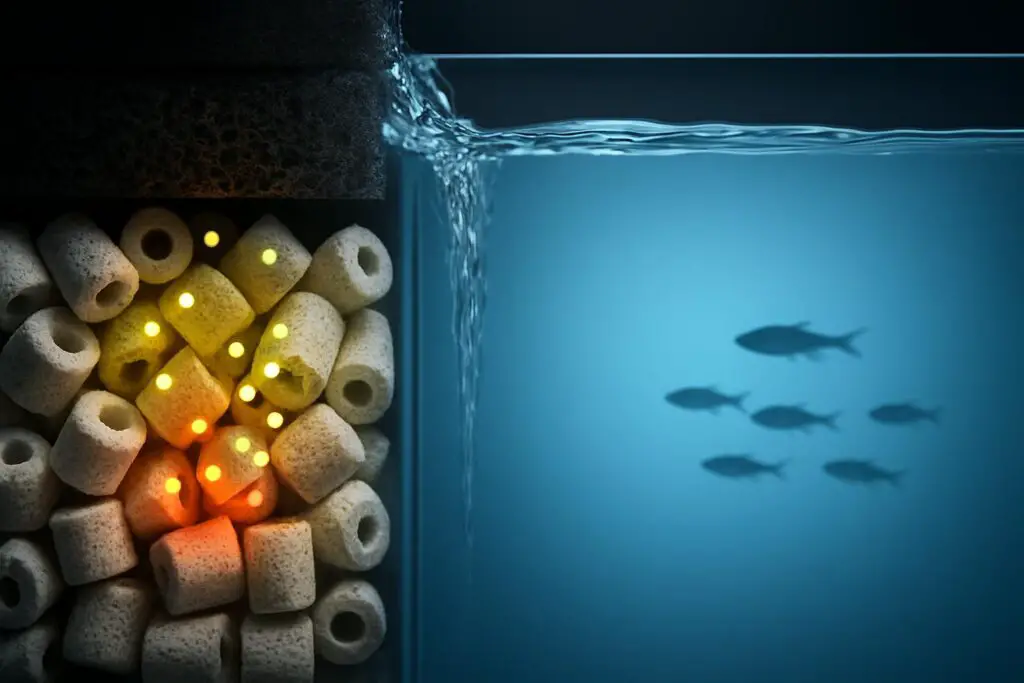
The nitrogen cycle in an aquarium is a chain of bacterial actions that break down nitrogen waste. Food, fish waste, decaying plants, and dead microorganisms release ammonia. One group of bacteria consumes ammonia and releases nitrite. Another group consumes nitrite and releases nitrate. Your filter and hard surfaces host these bacteria. Your job is to help them grow, then protect them.
Why it matters to fish survival
Ammonia burns gills, stresses fish, and can kill them quickly. Nitrite interferes with oxygen transport in the blood and can be lethal even at low levels. Nitrate is tolerated at moderate levels, but high nitrate weakens fish over time. When your cycle is stable, you should read zero ammonia, zero nitrite, and controlled nitrate.
The Three Stages: Ammonia, Nitrite, Nitrate
Ammonia is the first waste product and the most dangerous. It forms from fish respiration, uneaten food, and decay. It is more toxic at higher pH and higher temperature. In a new tank, ammonia can spike within days.
Nitrite appears when ammonia-oxidizing bacteria start working. Nitrite is also dangerous and should remain at zero once the cycle matures. During cycling, you will see it rise after ammonia, then fall when nitrite-oxidizing bacteria catch up.
Nitrate is the end product. It is much less toxic but still needs control. Aim to keep nitrate under roughly 20 to 40 ppm, depending on stocking and species. Regular water changes and live plants help keep nitrate in check.
Where Beneficial Bacteria Live
These bacteria live on surfaces, not in open water. The best homes are porous filter media, sponge filters, ceramic rings, and bio balls. They also colonize gravel, decorations, driftwood, and glass. A strong, oxygenated flow through the filter supports them. Keep your filter running 24 or 7. Do not let it dry out. Do not rinse media under chlorinated tap water, since chlorine kills beneficial bacteria.
How to Cycle a Tank
Fishless cycling step by step
Set up the tank with filter, heater if needed, and dechlorinated water. Run everything for a day to stabilize temperature. Keep good aeration.
Add a source of ammonia. The cleanest method is pure household ammonia without surfactants or perfumes. Alternatively, use fish food that will decay, but this is slower and less precise.
Target an ammonia reading around 2 ppm. Do not exceed 4 to 5 ppm. Too much ammonia can stall bacteria growth.
Test daily for ammonia and nitrite with a liquid test kit. At first you will see only ammonia. After a few days to a couple of weeks, nitrite will appear. Continue to keep ammonia around 1 to 2 ppm by dosing small amounts as it drops. If nitrite skyrockets, stay patient and keep good oxygenation.
Once ammonia drops to near zero within 24 hours of dosing, and nitrite also drops to zero within the same 24 hours, your biofilter can process the waste load you have been feeding it. You will see rising nitrate as proof the process is working.
Perform a large water change, often 50 to 80 percent, to bring nitrate down before adding fish. Then stock slowly, and feed lightly at first.
Fish in cycling when you already have fish
Use this only if you must. Keep the fish, but protect them. Feed very lightly. Test water daily.
Use a water conditioner that detoxifies chlorine and chloramine. If available, use a conditioner that also binds ammonia and nitrite temporarily. This reduces toxicity between water changes.
Change water as needed to keep ammonia and nitrite as close to zero as possible. Frequent small changes are safer than rare large ones. Maintain strong aeration, since oxygen supports the bacteria and helps fish cope with stress.
Seed the filter with mature media if possible. The cycle will complete faster with seeding and steady care.
How to Seed a New Tank
Seeding introduces established bacteria to your new system. Move a used sponge filter, a bag of ceramic media, or a piece of cycled filter foam from a healthy aquarium. Keep it wet in tank water and transfer quickly. Do not rinse it under tap water. Place it where strong flow passes through.
You can also add a cup of substrate or some decor from the established tank. Bottled bacteria products can help, especially when paired with real seeded media. Even with seeding, continue testing until the tank proves stable.
Testing and Interpreting Results
Use a liquid test kit for ammonia, nitrite, and nitrate. Strips are convenient but less precise. Shake reagents thoroughly and follow timing exactly. Read colors under neutral light.
During cycling, test daily. After cycling, test weekly at first, then as part of routine maintenance. Track results in a simple log. Trends matter. Rising nitrate with zero ammonia and zero nitrite means the biofilter is doing its job. Sudden ammonia or nitrite in a mature tank signals a problem that needs fast action.
Common Problems and Fixes
New tank syndrome means spikes of ammonia and nitrite in a fresh setup. Fix it by reducing feeding, adding seeded media, ensuring strong aeration, and performing water changes as needed.
Cycle stalls happen when ammonia is too high, oxygen is too low, or pH crashes. Keep ammonia in a moderate range during fishless cycling. Maintain good surface agitation. Keep pH stable. If pH drops sharply, do a partial water change and review buffering capacity.
Chlorine or chloramine exposure kills bacteria. Always use a water conditioner that neutralizes chlorine and chloramine before water enters the tank or filter. Rinsing filter media under tap water can wipe out colonies. Instead, swish media gently in a bucket of tank water during maintenance.
Filter downtime damages bacteria. Beneficial bacteria are aerobic and need oxygen. If the filter is off for more than an hour, keep media submerged in tank water with an airstone if possible. Restore flow as soon as you can.
Overcleaning removes too much biofilm. Clean only part of the filter at a time. Never replace all media at once. Stagger cleanings and keep at least half the mature media untouched.
Maintenance After Cycling
Change water regularly to control nitrate and replenish minerals. For many community tanks, 25 to 50 percent weekly is a safe baseline. Adjust to your nitrate readings and stocking density.
Vacuum the substrate to remove trapped waste. A thin, even layer of gravel or sand is easier to keep clean than deep beds for most beginners.
Service the filter on a schedule. Rinse mechanical sponges when flow slows. Avoid replacing biological media unless it crumbles. Keep impellers and intake strainers clear to maintain oxygenated flow.
Avoid sudden changes. Stability protects both fish and bacteria. Make adjustments step by step, then test and observe.
Stocking and Feeding Rules
Add fish in small groups and wait a week or more between additions. This gives bacteria time to scale up. Large, fast additions can cause mini cycles with ammonia or nitrite spikes.
Feed small portions the fish finish in a minute or two. Uneaten food becomes ammonia. Underfeeding for a few days is safer than overfeeding once.
Match fish choices to the size of your tank and the capacity of your filter. Heavily stocked tanks need stronger filtration and stricter maintenance.
Plants and the Cycle
Live plants use ammonia and nitrate as nutrients. Fast growers can lower nitrate and even soften the impact of cycling. This is helpful, but plants do not replace the need for a biofilter. At night, plants consume oxygen, so maintain good aeration. Heavily planted tanks can show very low nitrate while still processing waste, but you should still confirm zero ammonia and zero nitrite before increasing stocking.
Floating plants and stem plants often remove nitrogen faster than slow rhizome plants. Use them to support stability, then fine tune with water changes.
Saltwater and Brackish Notes
The nitrogen cycle principle is the same in saltwater and brackish systems. Bacteria adapted to those salinities handle the conversions. Live rock and sand provide large surface area for colonization. Protein skimmers remove dissolved organic compounds before they break down, but they do not replace the biofilter. You still aim for zero ammonia, zero nitrite, and controlled nitrate with regular testing and water changes.
Temperature, pH, and Oxygen
Beneficial bacteria work faster with warmer water within species limits. Many tanks cycle well around typical tropical temperatures. Do not overheat. Stability is more important than chasing a number.
Ammonia is more toxic at higher pH and higher temperature. If your pH is high, be extra cautious with ammonia levels during cycling and when stocking new fish.
Oxygen is essential. Surface agitation, a well maintained filter, and regular cleaning keep oxygen high. Stagnant water slows the cycle and stresses fish.
When to Add Fish
Add fish only when testing shows zero ammonia and zero nitrite for several days in a row, while nitrate is rising. If you are doing a fishless cycle, confirm that the tank processes a measured ammonia dose to zero ammonia and zero nitrite within 24 hours. Perform a large water change to reduce nitrate and stabilize pH before stocking.
Troubleshooting Checklist
If ammonia or nitrite appears in a mature tank, take these steps. Stop or reduce feeding. Test ammonia, nitrite, nitrate, and pH. Perform a partial water change with dechlorinated water. Increase aeration. Check that the filter is running properly and not clogged. Rinse mechanical media in tank water only. Consider adding seeded media from a healthy tank. Resume normal feeding only after readings return to zero for ammonia and nitrite.
Quick Reference Targets
Ammonia: 0 ppm
Nitrite: 0 ppm
Nitrate: keep under roughly 20 to 40 ppm, lower is better for sensitive species
Oxygen and flow: steady, with visible surface movement
Filter: always on, media cleaned gently in tank water
Stocking: add slowly and test after each addition
Putting It All Together
Set up a filter with good flow and oxygenation. Dechlorinate all water. Feed the biofilter with a safe ammonia source until it reliably converts to nitrate. Test daily during cycling and weekly after. Protect your bacteria during maintenance. Control nitrate with water changes and plants. Add fish slowly. If problems show up, pause feeding, test, change water, and restore strong flow.
Conclusion
The nitrogen cycle is the foundation of every healthy aquarium. It explains most early failures and nearly all sudden water quality crashes. When you build and protect a strong biofilter, fish stress drops, algae battles get easier, and your tank stays stable. Master the basics, monitor your numbers, and move in small steps. The payoff is a calm, predictable aquarium where fish live well.
FAQ
How long does cycling take
Most tanks cycle in 3 to 6 weeks, and seeding with mature media can shorten this to about 1 to 2 weeks.
Do I need a filter if I have live plants
Yes, plants help but do not replace the biofilter, and a running filter also maintains vital oxygen and flow.
What should ammonia, nitrite, and nitrate read in a cycled tank
Ammonia should be 0 ppm, nitrite should be 0 ppm, and nitrate should be controlled under roughly 20 to 40 ppm.
Can I speed up the nitrogen cycle
Seed with mature filter media, keep strong aeration, hold ammonia around 1 to 2 ppm during fishless cycling, dechlorinate all water, and keep conditions stable.
Why did my cycle crash after I cleaned the filter
Rinsing media in chlorinated tap water or replacing all media at once can kill beneficial bacteria, and turning the filter off for long periods starves them of oxygen.