
We are reader supported. When you purchase through links on our site, we may earn an affiliate commission. Also, as an Amazon affiliate, we earn from qualifying purchases.
Power outages can turn a stable aquarium into a fragile system in minutes. Fish and invertebrates depend on oxygen, steady temperature, and a running biofilter. When the power goes out, those supports stop at once. You need a clear plan you can execute fast. This guide shows what to do in the first minutes, the first day, and beyond. You will also learn how to prep now so the next outage is easier to handle.
Understand the risks in a power outage
Three failures happen at the same time. Oxygen drops because water stops moving. Temperature drifts because heaters or chillers stop. The biofilter loses oxygen and starts to fail. Each problem builds on the others. Warm water holds less oxygen, so tropical tanks run out faster. Heavy stocking, recent feeding, or lots of organic waste speed up the decline.
What fails first
Dissolved oxygen usually becomes the first critical problem. In a warm, well stocked tank with no surface agitation, fish can struggle within two to four hours. Cold water holds more oxygen and buys more time, but not much if the tank is crowded.
The biofilter is next. Nitrifying bacteria need oxygen rich flow. If your filter stops, oxygen inside drops. Bacteria become stressed within hours. If they die off, ammonia and nitrite rise after power returns, not just during the outage.
Temperature shifts can be slow at first, then speed up if the room is hot or cold. Large tanks drift slower than small tanks. Marine tanks and tanks with sensitive species have tighter temperature windows.
Before the outage: preparation that pays off
Preparation converts panic into a routine. Build a simple outage kit and keep it with your aquarium supplies.
Core items to keep ready
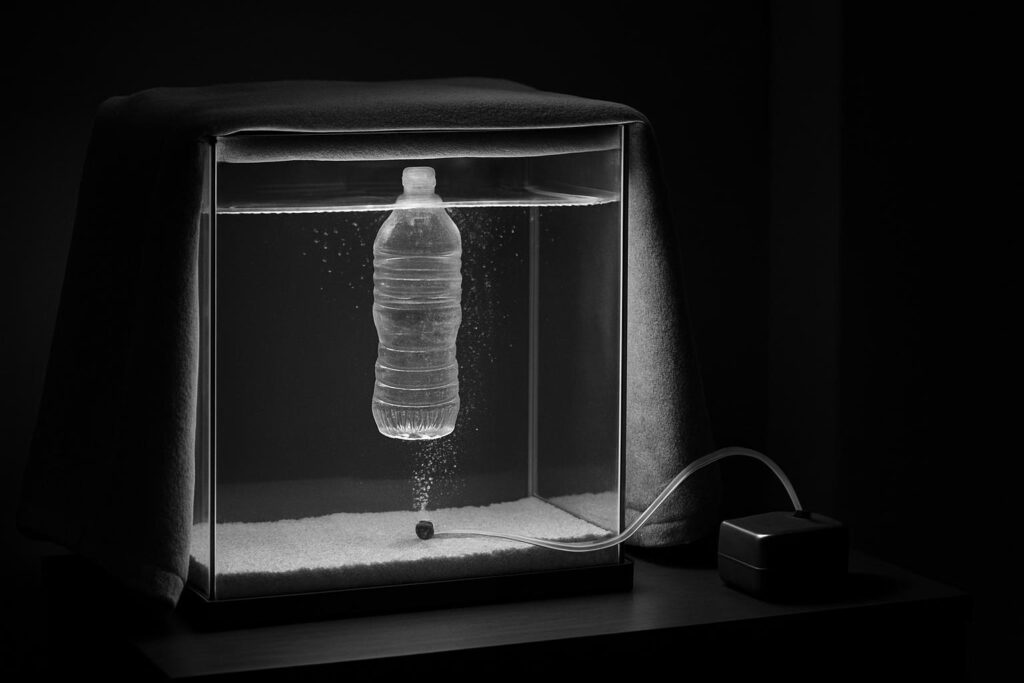
Have at least one battery powered air pump with spare batteries or a USB air pump and a power bank. Keep several airstones and airline tubing. Store a warm blanket or moving quilt to insulate the tank. Keep resealable bags or clean bottles to make hot water packs or ice packs. Stock a water conditioner that detoxifies ammonia and nitrite for short periods, and basic test kits for ammonia, nitrite, and temperature. Keep a clean pitcher or cup for manual aeration. If you run a canister filter, keep a bucket and towel nearby.
Backup power options to consider
A simple battery air pump can keep oxygen stable for many hours. A small UPS can run a low wattage air pump for a while. A deep cycle battery plus inverter can run air pumps for days if sized well. A car inverter can run a hang on back filter or small powerhead for short intervals. A generator can run heaters and filters, but only if used outdoors with safe extension cords. Never run a generator inside.
Plumbing and electrical safety
Install drip loops on all cords. Use check valves on airlines that go below the waterline. GFCI outlets are recommended. Keep all power strips off the floor. Label plugs so you can restart gear in the right order.
Immediate response when the power goes out
Act in this order. Focus on oxygen, temperature, and the biofilter. Small steps early make a big difference later.
Step 1: note the time and stop feeding
Note when the power stopped. Stop feeding at once. Less waste means lower oxygen demand and less ammonia. Fish can miss meals for a day or two without harm.
Step 2: add oxygen now
Install a battery air pump with an airstone. Place the stone near the bottom under the filter intake or near your filter media if you remove it to the tank. Aim for strong surface ripples. If you have no battery pump, do manual aeration. Scoop tank water with a clean cup and pour it back from above the surface to break the surface film. Do this for a few minutes every 10 to 15 minutes until you can set up better aeration. Keep lights off to reduce oxygen demand.
Step 3: protect the biofilter
Keep filter media wet and oxygenated. If you have a canister filter, open it, move the media baskets into the tank in a mesh bag or strainer, and position an airstone right next to them. Do not let media dry out. Do not rinse media in tap water. If you have a hang on back filter, lift the media into the tank and bubble next to it. A seeded sponge filter is ideal because a single battery pump can keep it alive in place.
Step 4: stabilize temperature
Insulate the tank. Wrap the sides and back with a blanket or towels to slow heat loss or heat gain. Leave some of the top area open for gas exchange, especially where the airstone is working. For tropical tanks in cold rooms, float sealed bottles filled with warm water, and swap them as they cool. For coldwater tanks in hot rooms, float sealed ice packs. Avoid rapid changes. Aim for no more than one to two degrees Celsius change per hour.
Managing the next 24 hours
Once you have oxygenation and insulation in place, settle into a schedule. Your goals are stable oxygen, controlled temperature, and safe ammonia and nitrite.
First 0 to 2 hours
Maintain aeration. Keep lights off. Keep the room calm to reduce stress. If you still have filter media inside a stalled canister or hang on back filter, move it into the tank now. Unplug heaters if they are at risk of being exposed to air, so they do not crack when power returns.
Hours 2 to 6
Test temperature. Adjust insulation or hot or cold packs as needed. Continue manual aeration if you lack a battery pump. If fish are piping at the surface, increase agitation and reduce any blankets that block airflow across the water surface.
Hours 6 to 24
Test ammonia and nitrite every 6 to 12 hours. If ammonia exceeds about 0.5 ppm or nitrite exceeds about 0.25 ppm, do a partial water change of 25 to 50 percent using dechlorinated, temperature matched water. You can add a water conditioner that temporarily detoxifies ammonia and nitrite as a buffer, then repeat per the label until power returns and the biofilter recovers. Keep feeding on hold. Maintain steady aeration. Reposition the airstone if flow seems weak in some areas.
If the outage lasts longer than a day
Extended outages need more strategy. Focus on rotation of devices and more frequent water quality checks.
Rotate limited power to key devices
If you have a car inverter, run a hang on back filter or a small powerhead for 30 to 60 minutes every few hours to push oxygenated water through media. Keep the car outdoors. If you have a deep cycle battery and inverter, prioritize a low wattage air pump and a small internal filter. Keep heaters off rotation unless temperatures approach unsafe limits, since heaters drain power fast.
Increase water change frequency
Small, regular water changes help remove ammonia, nitrite, and dissolved organics that raise oxygen demand. Match temperature and dechlorinate. Aerate the new water with your air pump for a few minutes if possible to raise oxygen before adding it.
Reduce bioload if needed
If you have multiple tanks, move the most sensitive fish to the tank with the best aeration. If you have a quarantine tank with an established sponge filter and battery air, place a few fish there to reduce load in the main display. Avoid moving fish repeatedly.
Special notes for different setups
Planted freshwater tanks
Plants consume oxygen in the dark. During an outage they will not produce oxygen without light, and at night they add to demand. Keep lights off to control heat and stress, but increase aeration to compensate. Turn off any pressurized CO2 system to avoid extra pH swings and oxygen competition.
Coldwater freshwater tanks
Cold water holds more oxygen, which helps. The main risk is rising temperature in a warm room. Insulate the tank from sun and heat sources. Use ice packs in sealed bags to keep the tank near its normal range. Do not drop the temperature too fast.
Marine fish only tanks
Marine species often use more oxygen than freshwater species. Strong aeration and surface agitation are critical. Place a battery airstone under the surface and near live rock to improve local flow. Keep the skimmer off if it cannot run steadily to avoid overflow when power flickers. Maintain temperature with insulation and warm or cool packs as needed.
Reef tanks with corals and invertebrates
Reef tanks are sensitive to temperature swings and low oxygen. Prioritize strong aeration in the display and sump if accessible. Keep live rock and bio media wet and oxygenated. Avoid stirring deep sand beds during manual aeration. As soon as you have limited power, run a small wavemaker intermittently to improve gas exchange.
Common mistakes to avoid
Do not feed during the outage. Do not seal the tank completely under blankets because that blocks gas exchange. Do not leave canister water stagnant and then dump it into the tank when power returns, because it can contain toxic byproducts. Do not clean bio media in tap water. Do not run a generator indoors or in a garage. Do not forget to install check valves on air lines to prevent back siphon.
After power returns: bring the system back safely
Bring systems back in a controlled order. Prevent shocks to livestock and equipment.
Step 1: stabilize and observe
Keep room lights dim. Check temperature. If heaters were exposed to air, ensure they are fully submerged and give them 15 to 20 minutes to equalize before turning on. Confirm aeration continues while equipment restarts.
Step 2: handle filters correctly
If you have a canister filter that sat idle, do not pump its old water into the tank. Carry the canister to a sink or bucket. Discard the stale water. Rinse the media gently in tank water you remove during a partial water change, then reassemble and prime with fresh dechlorinated water. For hang on back filters, rinse impellers and housings with tank water and restart. Keep a battery airstone running until you confirm stable flow.
Step 3: clear the water and monitor
Perform a 25 to 50 percent water change if ammonia or nitrite rose, or if the tank smells foul. Add fresh carbon if the water carries a strong odor. Test ammonia and nitrite daily for a week. If either spikes, repeat partial changes and use a temporary ammonia detoxifier as needed. Consider adding bottled nitrifying bacteria to speed recovery. Resume feeding lightly for the first few days.
Build a simple outage plan
Write a one page plan and keep it near the tank. List the steps in order. Include which plugs to pull first, where the battery pump and airstones are stored, and how to insulate the tank. Note the target temperatures for your species. Add an action timeline for 0 to 2 hours, 2 to 6 hours, and 6 to 24 hours. If others care for your tank, they can follow the plan without guessing.
Make your aquarium more resilient
Stable systems ride out outages better. Keep stocking moderate. Clean filters and siphon debris on schedule so oxygen demand stays low. Use at least one sponge filter in the display or sump that is always seeded and can run on a battery air pump. Ensure good surface agitation during normal operation so fish are used to strong gas exchange. Choose fish suited to your temperature range and tank size.
Quick reference timelines
The first 10 minutes
Stop feeding. Start battery aeration or manual aeration. Unplug heaters that might be exposed. Loosen lids slightly for airflow. Note the time. Gather your outage kit.
The first hour
Move bio media into the tank with an airstone next to it if your filter stopped. Wrap the tank sides with a blanket. Prepare hot water bottles or ice packs if needed. Keep lights off.
Hours 2 to 6
Check temperature. Adjust insulation. Continue aeration. Watch fish for surface breathing and stress. Test ammonia and nitrite if you have the kits.
Hours 6 to 24
Do partial water changes if ammonia or nitrite rise. Use an ammonia detoxifier as a stopgap. Maintain aeration. Keep the room quiet and dark. Plan device rotation if you can access any limited power source.
Conclusion
Handling a power outage safely is about priorities. Oxygen first, biofilter second, temperature always. Prepare simple tools now so you do not scramble later. When the outage starts, act in minutes, not hours. Keep media wet and oxygenated. Insulate without blocking gas exchange. Avoid feeding and reduce waste. After power returns, restart equipment in order and protect the tank from a shock of foul water. With a clear plan and a small kit, most tanks can ride out 24 hours and longer with minimal losses. Put your plan in writing, stock your kit, and review the steps with anyone who might care for your tank. The next time the lights go out, you will know exactly what to do.
FAQ
Q: How long can fish survive without power
A: Without aeration, oxygen can drop within two to four hours in warm, stocked tanks. With a battery air pump and no feeding, many setups can last about a day while you manage temperature and water quality. Beyond 24 hours, risks rise and you must test and intervene with partial water changes and continued aeration.
Q: Should I feed fish during a power outage
A: No. Stop feeding at once. Less waste means lower oxygen use and less ammonia. Fish can miss meals for a day or two without harm.
Q: How do I keep my filter bacteria alive when the filter is off
A: Keep media wet and oxygenated. Move canister or hang on back media into the tank and position an airstone right next to it. Do not let media dry out and do not rinse it in tap water. When power returns, discard stale canister water and rinse media in tank water before restarting.
Q: What is the quickest way to add oxygen without equipment
A: Do manual aeration. Scoop tank water with a clean cup and pour it back from above the surface to break surface tension and mix in air. Repeat for a few minutes every 10 to 15 minutes until you can run a battery air pump.
Q: What should I do first when the power returns
A: Keep lights low, check temperature, and restart gear in order. Ensure heaters are fully submerged and let them equalize before turning on. Discard stagnant canister water, rinse media in tank water, prime filters, and restore steady flow. Test ammonia and nitrite daily for a week and resume feeding lightly.