
We are reader supported. When you purchase through links on our site, we may earn an affiliate commission. Also, as an Amazon affiliate, we earn from qualifying purchases.
Learning to cycle a fish tank fast saves time, protects your fish, and prevents the most common beginner mistakes. This guide shows you exactly how to establish the nitrogen cycle quickly and safely, using clear steps you can follow today. You will learn which shortcuts actually work, which myths waste time, and how to confirm your tank is truly ready for fish.
What Cycling Means and Why It Matters
Cycling grows beneficial bacteria that convert toxic fish waste into safer compounds. Ammonia from fish waste and leftover food is burned by one group of bacteria into nitrite. Another group turns nitrite into nitrate. Ammonia and nitrite are dangerous even in small amounts. Nitrate is much less toxic and is removed by water changes and plants.
A cycled tank processes daily waste without letting ammonia or nitrite build up. An uncycled tank exposes fish to toxins, leading to stress, disease, and death. Cycling first is the fastest way to a stable, healthy aquarium.
The Fastest Path in One Look
The fastest safe method is a fishless cycle with heavy seeding. Combine seeded media from an established tank, a proven bottled bacteria starter, correct ammonia dosing, strong aeration, and stable pH and KH. With these steps you can finish in 1 to 7 days. Without seeding you may need 2 to 4 weeks. With fish-in cycling you slow down and risk harming fish, so avoid it unless you have no choice.
What You Need Before You Start
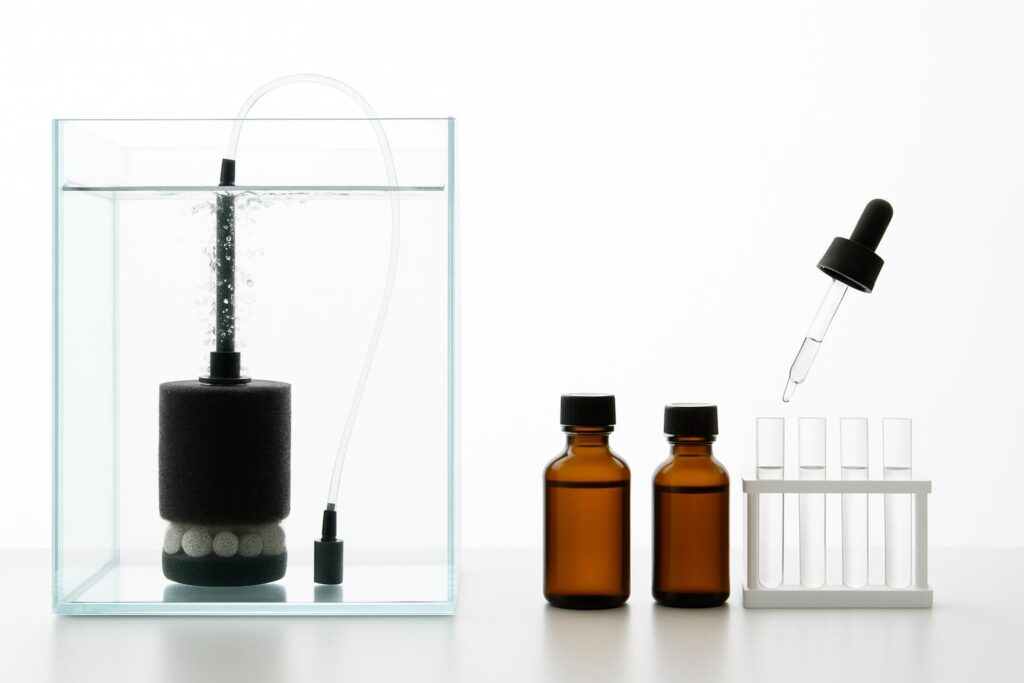
Liquid test kit for ammonia, nitrite, nitrate, and pH. Strips are too rough for cycling decisions.
Dechlorinator that treats chlorine and chloramine.
Ammonia source for fishless cycle. Use pure ammonium chloride or household ammonia with no dyes, scents, or surfactants.
Bottled bacteria from a reliable brand stored cool and within date.
Filter with mature media space. Sponge filters and canisters are ideal. Hang-on-back filters also work.
Heater and thermometer to hold a steady temperature.
Air pump and air stone or strong surface agitation for oxygen.
Optional seeded media, used sponge, or a cup of filter gunk from a healthy, disease-free tank to accelerate growth.
Optional KH buffer if your water is very soft. Aim for at least 3 dKH to prevent pH crash.
Step-by-Step: Fast Fishless Cycle
Step 1. Prepare the Tank and Water
Set up the tank, substrate, and filter. Fill with tap water. Add dechlorinator at the full dose for the whole volume. Chlorine and chloramine kill bacteria. Never skip this step.
Turn on the filter and heater. Aim for 80 to 86 F for freshwater fishless cycling. Warmer water speeds bacteria growth. If your planned fish need cooler water, cycle warm, then lower the temperature slowly after you finish.
Increase surface agitation or run an air stone. Nitrifying bacteria require a lot of oxygen.
Step 2. Seed With Proven Bacteria
Add a full dose of a reputable bottled bacteria starter. Shake the bottle well. Dose directly into the filter media and into the tank. If you have access to established media, move a piece of sponge or biomedia into your new filter as well. Keep seeded media wet and oxygenated during transfer.
Do not rinse seeded media with tap water. If needed, gently swish in tank water. Avoid handling it more than necessary.
Step 3. Dose Ammonia Correctly
For most community tanks, target 2 ppm ammonia. For heavy stocking plans, 3 ppm. Do not go over 4 to 5 ppm or you risk stalling bacteria growth and crashing pH.
Add your ammonia source slowly, testing after mixing for a few minutes. Record how many drops or milliliters reach your target so you can repeat it later with confidence.
Step 4. Test Daily and Redose on Time
Test ammonia and nitrite every day. At first you will see ammonia fall and nitrite rise. As the second group of bacteria grows, nitrite will fall and nitrate will rise. This is normal progress.
Each time ammonia drops to around 0.25 to 0.5 ppm, redose back to your target. Keep feeding the colony, but do not overdo it. Consistent moderate ammonia is faster than big spikes and crashes.
Step 5. Control pH and KH to Prevent Stalls
Bacteria slow down in acidic water. Keep pH between 7.0 and 8.0 during the cycle. If your pH drifts under 6.8, check KH. If KH is under 3 dKH, add a small amount of a KH buffer or a small bag of crushed coral in the filter to stabilize pH. Adjust in small steps and retest.
Step 6. Boost Oxygen and Temperature
Strong oxygen and warm water speed growth. Keep the filter outflow breaking the surface. Run an air stone. Hold temperature steady in the 80s for freshwater during fishless cycling. For planted tanks, you can keep normal temperature, but expect a slightly slower cycle unless plants are heavily stocked.
Step 7. Handle Nitrite Spikes Wisely
When nitrite rises very high, cycling can stall. If your nitrite test is off the chart for several days, do a large water change of 50 percent, dose dechlorinator, and redose ammonia back to 1 to 2 ppm. This reduces nitrite stress on the bacteria and lets them catch up.
Step 8. When To Do Water Changes During the Cycle
If ammonia or nitrite exceed your test range for days, change water. If pH drops near 6.5 or lower, change water to restore buffering. Always redose dechlorinator and then adjust ammonia back to your target. Skipping water changes because you are cycling is a myth. Smart water changes keep conditions optimal for bacteria growth.
Step 9. Know When You Are Done
Your tank is cycled when it can process your daily load of ammonia to zero ammonia and zero nitrite within 24 hours, while showing rising nitrate. To confirm, dose to 2 ppm ammonia and test after 24 hours. If both ammonia and nitrite read zero, you are ready. Repeat once more the next day to be sure.
Step 10. Reset Nitrate Before Adding Fish
After a successful test, perform a large water change of 50 to 80 percent to bring nitrate under 20 to 40 ppm. Match temperature and treat the new water with dechlorinator. Keep the filter running during the change so the media stays wet and oxygenated.
Speed Boosters That Actually Work
Seeded filter media from a healthy tank. A chunk of used sponge or a handful of established biomedia is the fastest accelerator and often completes a cycle within days.
Proven bottled bacteria stored in a cool chain. Check the date and buy from a busy store with fast turnover.
Extra oxygen. Add an air stone. Nitrifiers are oxygen hungry.
Higher temperature for fishless cycles. Warmth speeds growth for freshwater bacteria. For saltwater, stay in the normal fish range around 78 to 80 F.
Stable pH and KH. Maintain KH at or above 3 dKH and pH around neutral to slightly alkaline.
Fast-growing live plants. Stem plants and floating plants absorb ammonia and nitrate. Heavy planting can allow a near silent cycle, but you still need to test.
Common Mistakes That Slow the Cycle
Not using dechlorinator or treating for chloramine. Chlorine and chloramine kill bacteria. Always treat new water.
Overdosing ammonia. Very high ammonia slows bacteria. Stay near 2 ppm.
Letting pH crash. Low pH stalls nitrite conversion. Keep KH adequate.
Cleaning or replacing filter media. Never wash media in tap water during the cycle. Do not change media. Only gently swish in tank water if it is clogged.
Turning off the filter. Nitrifiers die without oxygen. Keep filters running 24 or 7. During power outages, keep media wet and add aeration if possible.
Impatience with testing. Guessing leads to stalls. Test daily so you know what the system needs.
Fish-In Cycle Emergency Plan
If you already have fish in an uncycled tank, protect them while the bacteria grow.
Test ammonia and nitrite daily. Keep both under 0.25 ppm with large water changes as needed. Dose dechlorinator for the full tank volume after each change. Many conditioners temporarily detoxify ammonia and nitrite between changes.
Add bottled bacteria, and if possible, seeded media from a healthy tank. Increase aeration and keep temperature stable for the species.
Feed lightly. Less waste means lower ammonia production. Remove uneaten food after a few minutes.
Expect daily maintenance for 2 to 4 weeks. Once the tank shows zero ammonia and nitrite for several days without daily water changes, you are stable. Then expand water change intervals.
After the Cycle: Add Fish the Smart Way
If your tank can process 2 to 3 ppm ammonia in 24 hours, it can usually handle your planned full stocking. For beginners, adding fish in two or three batches is safer. Add the hardier species first, wait a week while testing, then add the next group.
Feed lightly the first week. Keep testing every few days for the first month. If ammonia or nitrite appear, pause additions and let the bacteria catch up.
Do weekly water changes of 30 to 50 percent to manage nitrate. Clean the glass and gently swish filter media in removed tank water only when flow slows.
Special Notes for Planted, Shrimp, and Saltwater Tanks
Heavily Planted Freshwater Tanks
Plants use ammonia as fertilizer. With fast-growing stems or floating plants, you can keep ammonia dosing lower and still cycle. You may see small nitrate rises because plants consume it. Continue testing. Avoid high ammonia that can harm delicate plants. Dose to 0.5 to 1 ppm and watch for rapid zero readings.
Shrimp and Snail Tanks
Invertebrates are sensitive to ammonia, nitrite, copper, and big parameter swings. Complete a fishless cycle and verify zero ammonia and nitrite for several days. Keep nitrate below 20 ppm. Maintain steady GH and KH, and avoid harsh medications.
Saltwater and Reef Tanks
Use live rock, live sand, or bottled marine bacteria. Keep salinity stable around 1.025 and temperature near 78 to 80 F. Many reef keepers cycle with a low ammonia target of 1 ppm to protect life in live rock. Skimmers can remove bacteria starters; consider turning the skimmer off for 24 hours after dosing bacteria. Test ammonia, nitrite, and nitrate as with freshwater. Add hardy cleanup crew only after you confirm zero ammonia and nitrite.
Troubleshooting: Fix a Stalled Cycle Fast
Problem: Ammonia not dropping after several days. Cause: inactive bacteria, low temperature, or chlorine damage. Fix: verify dechlorination, raise temperature to 80 to 86 F for freshwater, add fresh bottled bacteria, and boost aeration.
Problem: Nitrite stuck off the chart. Cause: insufficient second-stage bacteria, pH crash, or too much ammonia earlier. Fix: 50 percent water change, restore KH and pH to at least 7.0, redose ammonia to only 1 to 2 ppm, add bacteria, and wait 24 to 48 hours.
Problem: pH dropping below 6.8. Cause: low KH and acid buildup. Fix: partial water change, add KH buffer or crushed coral, retest. Keep KH above 3 dKH.
Problem: Nitrate never rises. Cause: test error or no nitrite conversion occurring. Fix: check test kit directions and dates, shake bottles well, compare against a control sample, and confirm that you actually added ammonia at the start.
Problem: Cloudy water or white bacterial bloom. Cause: harmless heterotrophic bloom. Fix: do nothing except maintain aeration and filter flow. It clears as the cycle stabilizes.
Myths vs Reality
Myth: Cycling always takes a month. Reality: With heavy seeding and proper conditions, a new tank can cycle in 24 to 72 hours.
Myth: You should not change water during the cycle. Reality: Smart water changes fix stalls, reduce nitrite spikes, and support stable pH and KH.
Myth: Replace filter cartridges monthly. Reality: This removes your biofilter. Keep the media and only rinse gently in tank water.
Myth: Fish are required to cycle. Reality: Fishless cycling is safer, faster, and more controllable.
Exact Numbers to Aim For
Ammonia target during fishless cycle: 2 ppm for most setups, up to 3 ppm for heavy stocking. Avoid over 4 to 5 ppm.
Nitrite target: allow it to rise, but if it stays off the chart for days, do a large water change.
Nitrate target before fish: under 20 to 40 ppm after a big water change.
pH target: 7.0 to 8.0 during the cycle.
KH target: 3 dKH or higher for stable pH.
Temperature: 80 to 86 F for freshwater fishless cycling; 78 to 80 F for saltwater.
Example 7-Day Fast Cycle Plan
Day 1: Set up tank. Dechlorinate full volume. Heat to 82 F. Add bottled bacteria to tank and directly into the filter. Dose ammonia to 2 ppm. Add an air stone.
Day 2: Test ammonia and nitrite. If ammonia is under 0.5 ppm, redose to 2 ppm. If nitrite is high, leave it. Keep aeration strong.
Day 3: Test again. If ammonia drops to zero within 24 hours and nitrite is rising, you are on track. Redose ammonia to 2 ppm.
Day 4: If nitrite is off the chart, do a 50 percent water change, dechlorinate, and redose ammonia to 1.5 to 2 ppm. Add a second dose of bacteria if desired.
Day 5: Test. If ammonia and nitrite hit zero in 24 hours, you are close. Redose to 2 ppm and confirm another 24-hour zero.
Day 6: If you get back-to-back zero ammonia and zero nitrite in 24 hours, perform a 50 to 80 percent water change to reduce nitrate.
Day 7: Add first fish group or full planned stock if you confirmed processing 2 to 3 ppm in 24 hours. Feed lightly and test daily for a week.
Safety and Hygiene During Seeding
Only collect seeded media from a trusted, disease-free tank. If you are unsure, skip seeding or quarantine the material in a separate cycle tub. Do not mix nets or tools between tanks without disinfecting to prevent cross contamination.
If you must transport seeded media, keep it submerged or wrapped in wet tank water and placed in a bag with air to avoid suffocation. Install it immediately upon reaching home.
Maintenance Habits That Keep Your Cycle Strong
Never replace all filter media at once. Keep the biofilter intact. If you need more mechanical filtration, add a second sponge or floss pad and only change the polishing pad.
Rinse media only in removed tank water during a water change and only when flow slows. Do not scrub it clean.
Perform weekly water changes to control nitrate and replenish minerals. Always dose dechlorinator for the full tank volume you are treating.
Avoid overfeeding. Excess food breaks down into ammonia and fuels algae. Feed small portions that fish finish in under two minutes.
Quick Answers
How long does a cycle take without help: usually 3 to 6 weeks.
Can you cycle in 24 to 72 hours: yes, with seeded media and strong bottled bacteria under ideal conditions.
Do plants replace the cycle: no, but heavy planting can reduce ammonia and nitrate and may allow a near silent cycle if you still test and monitor.
Is cloudy water bad during cycling: usually harmless and temporary.
Do you need carbon in the filter: not for cycling. Biomedia and sponge are more important. Use carbon only to remove medication or tannins if needed.
Conclusion
Cycling a fish tank fast is simple when you control the core factors. Seed the filter with real bacteria, supply a steady and moderate ammonia source, raise oxygen and temperature, and stabilize pH and KH. Test daily, correct problems early, and confirm with a 24-hour zero test before adding fish. With this method, most beginners can go from empty tank to stable, fish-ready water in a week or less, without risking livestock.
Follow the steps in this guide exactly, keep your test kit close, and let the bacteria do the heavy lifting. The reward is a healthy, quiet tank that just works, right from the start.