
We are reader supported. When you purchase through links on our site, we may earn an affiliate commission. Also, as an Amazon affiliate, we earn from qualifying purchases.
Fish that shoal and swim together transform a tank from quiet to alive. When you see a coordinated group glide across open water, you know the setup is working. If your fish scatter, hide, or bicker, the fix is rarely one thing. It is the right species, the right numbers, the right space, and the right conditions. This guide gives you a clear plan to encourage natural group swimming without guesswork.
Introduction
Most small community fish evolved to live in groups. They feel safer together, read social cues, and move in response to flow, food, and light. In the home aquarium, you can tap into that instinct. Success depends on five fundamentals. Choose true shoaling species. Keep a proper group size. Provide horizontal swimming space with smart layout and flow. Keep stable water and suitable light. Avoid stress from aggressive tankmates or poor conditions. Put these together and fish will choose to swim together.
Shoaling vs Schooling
Shoaling means fish choose to stay near others of the same species for safety and communication. Schooling means they swim in tight, synchronized formation. Most community fish shoal loosely when calm and school tightly when alarmed. If you expect a perfect formation all day, you will be disappointed. Aim for calm, confident shoaling with periodic, coordinated bursts when feeding or cruising in the current.
Pick Species That Naturally Shoal
Not all fish have a strong shoaling drive. Some are solitary or territorial. To see frequent group swimming, start with species known to stay together.
Proven Freshwater Shoalers
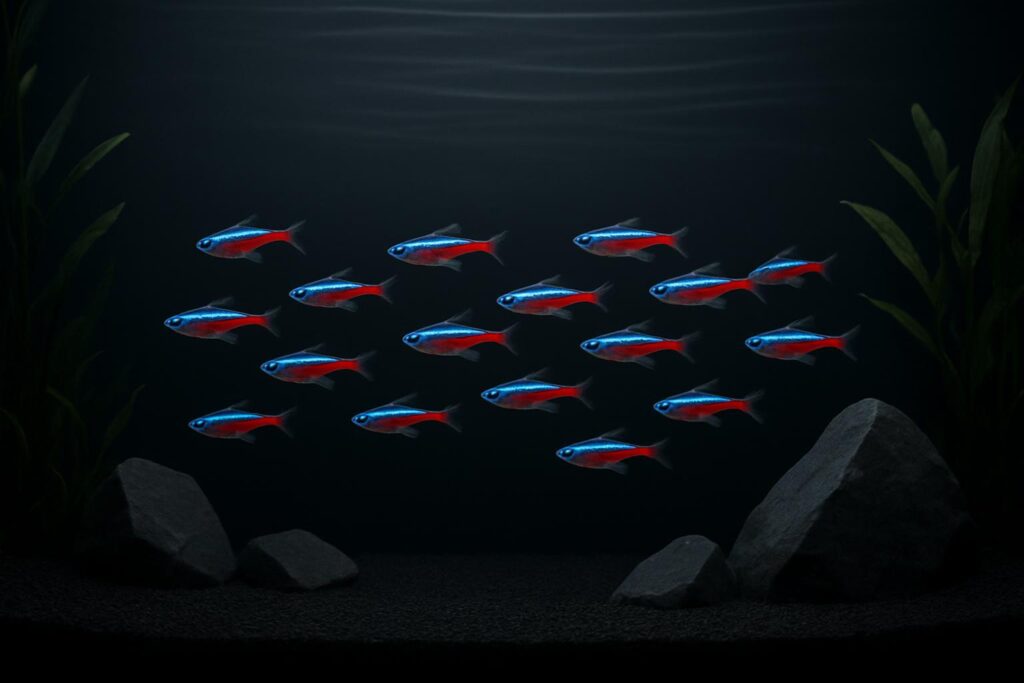
Many tetras like neon, cardinal, rummy nose, ember, and lemon tetras show strong shoaling behavior. Rasboras such as harlequin, lambchop, and chili are reliable. Danios including zebra and pearl need space and current and will cruise in groups. Barbs like cherry and gold barbs shoal well when kept in larger groups. Rainbowfish often move in formation as they mature. Corydoras catfish shoal along the bottom and explore together.
Common Marine Shoalers
Green chromis can shoal in larger reefs with careful planning. Some anthias species form harems that drift as a group when fed often. Even in marine tanks, success relies on numbers, space, and frequent small feedings.
Get the Group Size Right
Small groups feel exposed and break apart. Larger groups spread attention and create safety. For most small freshwater shoalers, aim for eight to twelve of the same species. Rasboras and tetras look best at ten or more. Danios need at least eight. Corydoras should be kept in groups of six or more. Barbs and rainbowfish show better group dynamics above eight. For marine, green chromis do better in fives to sevens or in very large groups if space allows. Anthias do best in one male with five to eight females, depending on tank size and feeding routine.
Consistency in species and color matters. Mixing different but similar species weakens cohesion. Mixing different color morphs of the same species can also split the group. A single, matched group almost always shoals tighter.
Tank Size and Shape
Horizontal length is more important than height for group swimming. A small group of tetras or rasboras benefits from a tank with at least 75 to 90 centimeters in length. Danios and rainbowfish appreciate even more. For bottom shoalers like Corydoras, floor space matters. A larger footprint lets them forage in a loose line and regroup often. Marine shoalers need long tanks with open midwater areas and clear sightlines.
A tight tank forces frequent turns and breaks the flow of movement. Aim for an open corridor that lets fish maintain direction. If space is limited, reduce hardscape in the midwater and use vertical elements at the rear and sides to keep the center open.
Aquascape to Guide Movement
Layout can pull a group together or break it apart. Use structure to create obvious paths for cruising and safe edges where fish can rest without vanishing from view.
Open Center, Structured Edges
Leave the middle third of the tank open. Build plants and hardscape on the sides and back. This creates a runway for group movement and shaded margins that reduce stress. The contrast between open water and safe edges encourages fish to form up and pass through the center together.
Flow Lanes with Hardscape
Angle wood and rocks to point along the length of the tank. Gaps between elements make alleys. Fish will naturally follow these paths, especially if the current also points that way. Avoid clutter in the midwater that forces abrupt turns.
Darker Background and Substrate
Bright bottoms and bare backs make fish feel exposed. A dark background and a darker substrate reduce glare and reflections. Many tetras, rasboras, and barbs relax under these conditions and shoal more predictably in open water.
Reduce Reflections and Cover the Top
Reflections can look like strangers and break group confidence. Use a solid background and place lights and glass covers so reflections are minimal. A secure lid reduces jump risk for active shoalers like danios and keeps them confident enough to cruise near the surface.
Flow and Filtration That Promote Group Swimming
Many shoalers orient to gentle current. Provide a steady, lengthwise flow that encourages cruising without blasting fish into a corner.
Place the filter outlet or powerhead so water moves along the long axis of the tank. Put the return or intake on the opposite side to complete the circuit. In freshwater, a moderate current with noticeable surface ripple is enough for most shoalers. Danios like a bit more speed in part of the tank. In marine systems, use wave makers to create a pulsing, alternating flow that keeps fish moving without constant struggle. Always leave quiet eddies behind plants or rock where fish can rest.
Strong oxygenation improves stamina and reduces stress. Keep filters clean and maintain good gas exchange at the surface. Stable flow patterns help fish learn predictable routes, which supports synchronized movement.
Lighting That Calms, Not Startles
Harsh light causes skittish behavior and scattered groups. Aim for moderate, even light with a dimmer edge and a brighter center. Floating plants in freshwater can soften light and make fish feel safe enough to pass through open water. In marine tanks, adjust intensity and avoid blasting the full output suddenly.
Use a ramp up and ramp down period if your light supports it. Sudden on and off switches cause tight, fearful schooling followed by hiding. A 30 to 60 minute transition helps. Keep a consistent photoperiod. Stability builds predictable routines and calmer shoaling.
Water Parameters and Consistency
Stable water keeps fish calm and social. Aim for zero ammonia and zero nitrite at all times. Keep nitrate low with regular water changes. For most community freshwater shoalers, a stable temperature around 23 to 26 degrees Celsius works well, depending on species. Many tetras and rasboras prefer the lower to middle part of that range. Danios tolerate a wide range but like cooler ends. Check the needs of your exact species and stay consistent.
pH and hardness should match the species you choose. If you keep mixed community fish, moderate values are often easier to maintain than extremes. Stability matters more than chasing a number every week. Use a reliable test kit, track results, and avoid rapid changes. For marine shoalers, maintain stable salinity, temperature, and alkalinity. Sudden shifts cause stress and break group cohesion.
Perform regular water changes, often 30 to 50 percent weekly for planted freshwater tanks with moderate stocking. In reefs, follow a schedule that maintains stable nutrients and salinity. When you add new fish, acclimate slowly to prevent parameter shocks that lead to isolation and hiding.
Feeding Strategies That Bring Fish Together
Feeding time is the easiest moment to encourage group swimming. Use foods that suspend in the midwater. A mix of high quality flakes, small pellets, and fine frozen or live foods works well. For tetras and rasboras, tiny pellets and crushed flakes fall slowly and hold the group together. For danios and rainbowfish, slightly larger floating or slow sinking foods stimulate fast, directed movement across the tank. Corydoras will shoal to sinking micro wafers and small frozen foods fed in multiple spots along the front glass.
Feed small amounts more than once a day rather than a single large meal. Spread the food linearly along the front or along the flow so fish travel together instead of crowding a single spot. In marine tanks, anthias and chromis respond to frequent small feedings. Consistent timing trains fish to assemble and cruise the same route before food arrives.
Reduce Stress and Pick Calm Tankmates
Stress breaks shoals. Avoid aggressive or predatory fish that harass or scare small shoalers. Fin nippers cause constant chasing that fragments groups. Calm, non competing neighbors help the shoal feel secure. Keep one dominant shoaling species per layer when possible. A single large group looks better and behaves better than several small mixed groups. Mixing similar species can cause loose mingling and weak cohesion.
Dither fish are confident, visible species that signal safety to shy fish. Some shoalers act bolder when other peaceful fish are active in the open. Use this tool with care. Do not overload the tank or pick species that outcompete your target shoal at feeding time.
Sex Ratios and Social Structure
Some species show more chasing and less group swimming when males outnumber females. Barbs and rainbowfish often behave better in female heavy groups. For anthias, keep one male with a group of females. If multiple males are kept in small spaces, fighting can split the group. Corydoras shoal well without strict sex ratios, but balanced groups are still healthy for long term dynamics. The key is to reduce harassment so the group can focus on foraging and cruising together.
Health First
Sick or irritated fish leave the group. Watch for clamped fins, gasping, flashing, thin bodies, or white patches. These issues cause individuals to isolate. Address water quality first. Then check for parasites or infections. Quarantine all new fish for two to four weeks before adding them to your display. Observation and treatment in quarantine prevent a slow breakdown in group behavior later. Handle fish gently during transfers to avoid fin and scale damage that leads to stress and hiding.
Seasonal and Environmental Triggers
Some fish increase group activity after cool, clean water changes that mimic seasonal rains. Corydoras often shoal and explore more actively after such changes. Gentle variations in flow can also spark coordinated cruising. Use these tools within safe ranges and always maintain stable core parameters. Enrichment helps too. Offer occasional live or frozen micro foods that trigger engaged, group feeding.
Build a Predictable Routine
Fish learn patterns. Keep a steady light schedule, consistent feeding times, and regular maintenance. Move slowly near the tank. Sudden shadows and loud movements cause tight stress schools that scatter quickly. Over time, a calm routine creates calm shoaling. Many keepers see the best group swimming about 30 to 60 minutes after lights on and again before lights off when fish cruise the midwater in relaxed formation.
Track Progress and Adjust One Variable at a Time
When you make a change, take notes. Increase the group size and watch for a week. Adjust flow and observe routes. Add floating plants and monitor how often the group uses the center lane. If you change several things at once, you will not know what works. Aim for clear, deliberate steps and give fish time to adapt.
Troubleshooting Common Scenarios
If fish hide instead of shoal, the light may be too bright, the tank may lack cover, or the group may be too small. Reduce intensity, add a dark background, build structured edges, and increase group size. Confirm water quality and temperature are stable.
If fish chase instead of swim together, the tank may be too small, sex ratios may be off, or there may be incompatible tankmates. Increase space if possible. Adjust the group to include more females for species that display male rivalry. Remove fin nippers or bullies.
If the group splits into subgroups, the layout may lack a single clear lane, the current may be scattered, or there may be too many similar species present. Open the center, align flow along the length, and focus on one primary shoaling species for the midwater.
If fish school tightly only when startled, that signals fear rather than healthy cohesion. Reduce sudden light changes, soften reflections, avoid rapid movements near the tank, and verify that no predators or aggressive species are present.
Marine Notes You Should Know
Green chromis often winnow their numbers due to hierarchy. Larger groups and larger tanks reduce the pressure, but consistent feeding and ample territory are still crucial. Anthias need frequent small meals and stable water to maintain group activity. Plan auto feeders or a reliable routine before committing to these species. Maintain strong but varied flow and stable salinity to support confident midwater cruising.
Example Setups That Encourage Shoaling
90 centimeter freshwater community with tetras
Use a 90 centimeter tank with a dark background and moderate light. Keep ten to twelve rummy nose or cardinal tetras as the main shoal. Add six to eight Corydoras as a bottom shoal. Aquascape with plants along the back and sides and keep the center open. Set the filter outlet to push water along the length. Feed small floating and slow sinking foods in a line along the front. Expect relaxed group movement across the open lane and coordinated feeding passes.
Long tank with danios and flow
Use a long tank with strong linear current and a tight lid. Keep eight to twelve zebra or pearl danios. Build hardscape that forms alleys, with no obstructions in the midwater. Keep light moderate. Feed buoyant foods that move with the flow. Danios will cruise in fast arcs and regroup at turns.
Rainbowfish display
Use a spacious tank with length and depth. Keep eight to ten of the same rainbowfish species. Balance sex ratios with more females than males. Provide open space, steady current, and bright but not harsh light. Feed quality flakes and small pellets. Expect loose, confident shoaling with bursts of synchronized movement when males display.
Marine chromis group
Use a large reef tank with strong but varied flow. Keep five to seven green chromis, added together. Provide many rock arches and midwater lanes. Feed several small meals per day. Watch for signs of bullying and adjust if needed. Expect group patrols during feeding and calm shoaling when the tank is stable and busy with peaceful neighbors.
Small Details That Add Up
Match temperature to the species and maintain it with minimal swings. Clean the glass to reduce random reflections. Place the tank where foot traffic is steady but not frantic. Trim plants to maintain a clear lane. Use quiet equipment that avoids sudden vibration or buzzing. Each small fix raises confidence and increases the time fish spend together in open water.
Conclusion
Encouraging fish to shoal and swim together is a system, not a single trick. Choose genuine shoaling species. Keep them in proper numbers. Provide horizontal space, clear lanes, and gentle, consistent flow. Calibrate lighting and reduce glare. Keep water stable and feed in ways that promote group movement. Avoid stress from aggression and poor handling. Observe, adjust one variable at a time, and let routine settle the tank. When these elements line up, your fish will choose the group, and the tank will come alive with steady, confident movement.
FAQ
Q: How many tetras should I keep to see a proper shoal?
A: Keep 8 to 12 of the same species and color form.
Q: Can I mix different tetra species in one shoal?
A: They may mingle loosely, but a single species group shoals tighter. Mixing species or color morphs weakens cohesion.
Q: What tank length helps small shoaling fish swim together?
A: Aim for 75 to 90 centimeters of length with a clear open lane through the center.
Q: How do I use flow to encourage group swimming?
A: Create a gentle lengthwise current with the outlet on one side and the return opposite, and leave sheltered eddies behind plants or rock.
Q: Why do my fish only school tightly when startled?
A: Tight schooling is a stress response. Reduce sudden light changes, harsh reflections, and aggressive tankmates, and increase cover and group size if needed.