
We are reader supported. When you purchase through links on our site, we may earn an affiliate commission. Also, as an Amazon affiliate, we earn from qualifying purchases.
Getting fish to move together as one group looks beautiful and feels satisfying. It also tells you the fish are calm, confident, and healthy. Shoaling is a natural behavior, but it does not appear on command. You need the right species, the right numbers, the right layout, and a steady routine. This guide shows you how to set up conditions that gently lead your fish to shoal together without stress.
Introduction
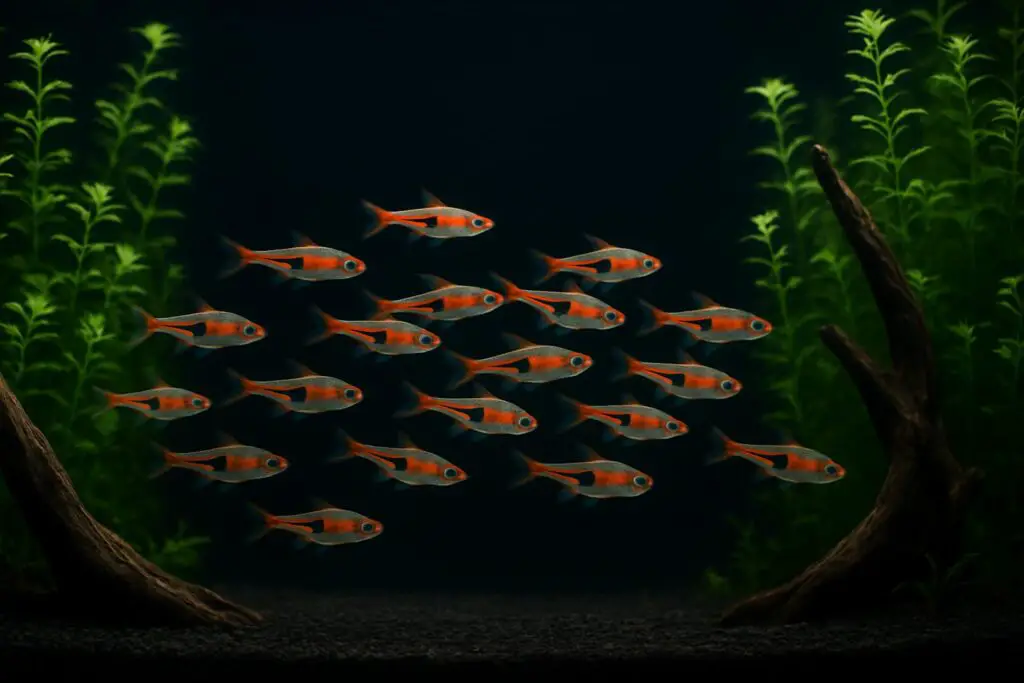
Shoaling is social grouping for safety and communication. In an aquarium, many popular species will shoal when they feel secure and have a reason to stay together. This article breaks down the process into clear steps. You will learn how to pick species that want to shoal, how to shape flow and space so fish align, how to tune light and water for calm behavior, and how to build a feeding routine that gathers the group every day.
Shoaling vs Schooling and What to Expect
Shoaling means a social group that stays near each other. Schooling means a tight, synchronized group that turns and moves together. In home aquariums, aim for stable shoaling and occasional schooling, not military precision.
Many fish loosen their group when they feel very safe. This is normal. The goal is to set up your tank so the group forms often and moves together for much of the day, with obvious tightness at feeding time.
Choose the Right Species
Reliable Shoalers for Community Tanks
Pick fish with a natural drive to shoal:
- Tetras such as cardinal, neon, rummy nose, ember
- Rasboras such as harlequin, chili, lambchop
- Danios such as zebra and pearl, also Devario species
- Small rainbowfish such as threadfin and dwarf neon
- Corydoras for bottom grouping behavior
- Hatchetfish for surface grouping
Rummy nose tetras are famous for tight groups and clear group signals. Their nose color also reflects water quality and stress. Danios prefer constant motion and align well in flow. Harlequin rasboras form calm, steady groups in midwater.
Species That Rarely Shoal
Some common fish only form loose groups or are solitary:
- Guppies and other livebearers form loose social groups
- Bettas are solitary and often aggressive
- Gouramis are territorial
- Angelfish do not shoal as adults
If your main goal is a cohesive shoal, focus on tetras, rasboras, danios, and small rainbowfish.
Group Size and Sex Ratio
Numbers matter more than any gadget. The group must be large enough for the behavior to appear.
- Absolute minimum 8 to 10 for small species
- Better target 12 to 20 for clear, stable shoals
- Large displays can run 30 or more
For most tetras and rasboras, sex ratio is not critical. For danios and rainbowfish, a mix of males and females helps reduce chasing. When in doubt, add numbers rather than tuning ratios. A bigger group spreads social pressure.
Tank Size, Shape, and Layout That Promote Shoaling
Open Runway With Safe Edges
Fish shoal best when they can cruise in a straight line and turn as a unit. Layout for that goal:
- Choose a long tank over a tall tank
- Keep an open midwater lane from left to right
- Place wood, stems, and rock along the back and sides to create safe edges
- Break line of sight with clumps so fish have staging zones
Think of a U or C shape of hardscape around an open center. Fish settle along the edges and then enter the lane together. If the tank is cluttered in the middle, the group will split.
Flow That Aligns the Group
Mild to moderate laminar flow helps fish face the same direction and hold formation with little effort:
- Use a spray bar along the back glass, angled slightly toward the surface, running the length of the tank
- Point output to create a gentle left to right current and a slow return along the front
- For danios, increase flow and surface agitation
- For small tetras and rasboras, keep flow smooth, not blasting
Proper flow cuts random milling and gives the shoal a path. The group will orbit the tank and bunch up on turns, which reads as schooling.
Light and Background That Calm Fish
Bright, harsh light scatters fish. Keep light gentle and predictable:
- Use a light ramp to fade up over 30 to 60 minutes at the start of the day
- Keep photoperiod 8 to 10 hours
- Add floating plants or tall stems to create shade patches
- Use a dark or black background to reduce reflections
Reduce glare on the front glass. Close curtains or soften strong room lights during the brightest tank hours. A calmer visual field leads to tighter groups.
Substrate and Plants for Comfort and Contrast
Dark substrate relaxes many midwater fish and boosts color. Dense planting along edges gives shelter. Leave the midwater lane open. Plants that work well include:
- Background stems such as Limnophila and Rotala in clumps
- Midground crypts for soft edges
- Floating plants such as Salvinia or frogbit to dim light
Hardscape arches and wood roots create natural funnels that guide the group without trapping them.
Water Parameters and Stability
Temperature, pH, Hardness, and Tannins
Match parameters to the fish and keep them stable:
- Most tetras and rasboras do well at 24 to 26 C
- Danios prefer 22 to 25 C with strong oxygenation
- Soft to moderate hardness is fine for most community shoalers
- Tannins from catappa leaves or botanicals can reduce stress and soften light
Use a reliable heater and thermometer. If you add tannins, expect a light tea tint. Fish often shoal more calmly in such water.
Filtration, Oxygen, and Maintenance
Good gas exchange supports active groups. Keep the surface slightly rippled. Use a filter sized for the tank and group size. Perform steady maintenance:
- Weekly water changes of 30 to 50 percent
- Rinse mechanical media in tank water when flow drops
- Keep nitrates low through changes and plants
Stable, clean water prevents stress signals that break the shoal such as rapid gill movement or flashing.
Tankmates and Stocking Strategy
Peaceful Companions
Choose calm species that occupy other zones:
- Corydoras for the bottom, groups of 6 to 12
- Otocinclus in groups for algae control
- Small bristlenose plecos for wood and surfaces
- Small shrimp in dense plants if tankmates are safe
These fish do not harass the shoal and add interest without pressure.
What to Avoid
Avoid fish that chase, nip, or loom:
- Large cichlids and angelfish
- Fin nippers such as tiger barbs when kept in low numbers
- Fast, nippy rainbows in small tanks
- Territorial gouramis in tight spaces
A single aggressive fish can scatter a shoal for hours. Remove bullies or rehome them if needed.
Dither Fish Concept Done Right
Some fish group more when calm midwater species are present. Use peaceful dithers of similar size or slightly larger. Do not add predators to tighten a shoal. The goal is confidence, not fear.
Feeding and Routine to Encourage Group Movement
Timed Feeding Cues
Consistency is powerful. Feed at the same times every day. Fish learn the schedule and gather before feeding. Use a slow ramp up of light before the first feeding so fish are alert and calm.
Food Types and Delivery
Pick foods that spread gently and keep the group together:
- Fine granules that sink slowly for tetras and rasboras
- Quality flakes crumbled into small pieces
- Frozen or live baby brine shrimp and daphnia for group chase
- Avoid large pellets that scatter individuals
Use a feeding ring near the center of the open lane. Let the flow carry food along the path so the shoal tracks it as a unit. Offer small amounts two to three times per day rather than one big dump.
Training Without Stress
You can shape behavior in simple steps:
- Place the feeding ring in the same spot daily
- Start the filter return 5 minutes before feeding to set the current
- Wait for the group to gather, then add a small pinch of food
- Repeat after a minute, keeping portions small
- End feeding while the group is still engaged
Do not tap the glass. Do not chase fish with a net. Calm repetition builds a predictable shoal at meal times, and over time the group will hold formation longer outside feeding.
Acclimation and the First Week
A smooth start sets the tone. Quarantine new fish when possible. On transfer day, keep tank lights off. Float bags to match temperature, then slowly mix small amounts of tank water over 20 to 30 minutes. Release fish gently into the dim tank.
For the first day, avoid sudden room movements and loud sounds. Start feeding lightly on day two. Add numbers in one or two batches rather than a few at a time. A full group settles faster than a small one where every fish feels exposed.
Troubleshooting: Why Fish Are Not Shoaling
Quick Checklist
- Species not inclined to shoal
- Group too small
- Tank too bright or too cluttered in the center
- No clear flow path
- Aggressive or looming tankmates
- Reflections on glass causing stress
- Unstable water or high nitrate
- Inconsistent feeding routine
Step by Step Fixes
- Increase group size to at least 12 if stocking limits allow
- Open a clear midwater lane by moving decor to the edges
- Install a spray bar to create gentle left to right flow
- Dim lighting with floating plants and a darker background
- Remove bullies and overlarge fish
- Reduce room glare and strong reflections
- Do a 30 to 50 percent water change and resume weekly schedule
- Set fixed feeding times and use a feeding ring
Make one to two changes at a time. Observe for a week. Most groups respond within days to improved space, flow, light, and numbers.
Example Setups That Work
75 Liter Tetra Shoal
- Tank: 60 by 30 by 45 cm
- Stock: 18 ember tetras, 10 corydoras pygmaeus, 6 otocinclus
- Layout: Driftwood and crypts along back and sides, open midwater lane
- Flow: Spray bar across the back glass, slight surface ripple
- Light: 9 hours with 45 minute ramp, floating Salvinia
- Water: 25 C, soft to moderate hardness, light tannins
- Feeding: Fine granules morning and evening, small frozen daphnia midweek
Result: Embers form a calm, glowing group that tightens at each turn and bunches at feeding time without panic.
High Flow Danio Stream
- Tank: 90 by 40 by 40 cm
- Stock: 24 zebra danios, 12 corydoras paleatus
- Layout: Rocks and wood create a riverbank feel, strong open runway
- Flow: Canister with long spray bar plus small powerhead for laminar current
- Light: 8.5 hours, brighter but softened with surface movement
- Water: 23 C, high oxygen, steady filtration
- Feeding: Flake and small pellets against the current so the group surfs and feeds together
Result: A fast, aligned school that loops the tank and displays synchronized turns.
Advanced Tips That Make a Difference
- Use a black background to reduce visual noise and reflections
- Keep the front glass clean to remove mirror effects
- Place the tank away from heavy foot traffic and doors that swing toward the glass
- Use lids to prevent sudden drafts and shadows that spook fish
- Spread intake and output to avoid dead zones where fish isolate
- Offer occasional live baby brine shrimp to trigger energetic group feeding
- Log behavior changes after maintenance to spot patterns
Common Myths to Avoid
- Chasing fish with a net will not teach them to school. It causes stress and health issues
- Adding a predator to tighten the shoal is harmful and unethical
- Blue night lights do not improve shoaling and can disturb rest
- One big feeding does not create a group. Small, scheduled feedings do
Maintenance for Lasting Results
- Weekly water changes and filter care keep fish calm
- Trim plants to preserve the open lane
- Review stock levels as fish grow and adjust numbers if needed
- Refresh floating plants to maintain shade without blocking gas exchange
- Check heater and thermometer monthly for accuracy
Healthy systems create steady behavior. Shoaling is a sign of that balance.
Conclusion
Fish shoal when the tank invites it. Start by choosing species that want to be together. Build a long, open lane with safe edges and gentle flow. Dim and stabilize light. Keep water clean and parameters steady. Add enough fish to feel secure as a group. Feed on a schedule with foods that spread and keep the group moving together. Remove bullies and reduce visual stress. When you align these factors, the shoal appears and holds without force. You get a living display that is calm, coordinated, and resilient.
FAQ
Q: How many fish do I need for a clear shoal?
A: Aim for at least 12 to 20 for small species, with 8 to 10 as a hard minimum. Larger displays can run 30 or more.
Q: Which fish shoal reliably in a community tank?
A: Tetras such as cardinal, neon, rummy nose, and ember, rasboras such as harlequin and chili, danios, small rainbowfish, and corydoras for bottom grouping.
Q: Do I need strong current to make them school?
A: Use gentle left to right flow for most tetras and rasboras, with higher but smooth flow for danios. Avoid blasting the fish.
Q: How can I get fish to shoal at feeding time?
A: Feed at fixed times, use a feeding ring in the open lane, start the filter return a few minutes before feeding, and offer small portions that drift with the current.
Q: Why do my tetras scatter instead of shoaling?
A: Common reasons include group too small, harsh lighting, no clear flow path, aggressive tankmates, reflections, or unstable water. Increase numbers, open a midwater lane, add gentle flow, dim light, remove bullies, and resume steady maintenance.