
We are reader supported. When you purchase through links on our site, we may earn an affiliate commission. Also, as an Amazon affiliate, we earn from qualifying purchases.
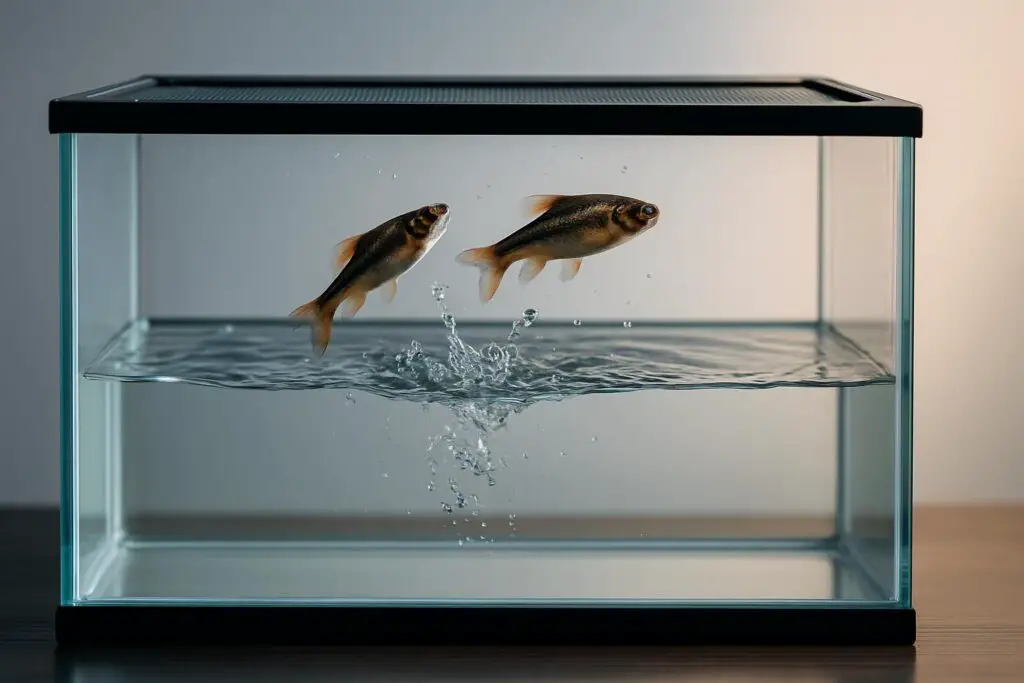
Fish jump for reasons you can control. Lost fish are heartbreaking and preventable. With a secure cover, stable water, calm lighting, and the right stocking, you can stop escape attempts and keep your tank safe. This guide gives you a clear plan from fast fixes to long-term habits, so you can act today and then lock in results for the future.
What Counts as Jumping and Why It Matters
Not every splash is a jump. Some fish dart upward when startled and hit the lid. Others launch themselves across the room. Both come from stress or instinct. Understanding what triggers your fish helps you remove the cause instead of only treating the symptom.
Freshwater fish known for jumping include hatchetfish, killifish, rainbowfish, danios, pencilfish, arowana, bichirs, and many cichlids. Bettas can jump too. In saltwater, wrasses, gobies, firefish, jawfish, and dartfish are frequent jumpers. If you keep any of these, a tight cover is mandatory. If you do not, you still need a cover because any stressed fish can jump.
Core Causes of Jumping
Poor Water Quality
Ammonia and nitrite burn gills and push fish to the surface seeking relief. High nitrate, chlorine, and chloramine also irritate fish. Many fish jump when water feels toxic. Use a liquid test kit to confirm ammonia and nitrite at zero. Keep nitrate under 20 to 40 ppm depending on species. Always dechlorinate tap water before it touches the tank.
Low Oxygen
Warm water holds less oxygen. Heavy bioload, surface film, and weak surface movement drain oxygen. Fish may gasp and then burst upward. Increase surface agitation and add aeration to keep oxygen steady.
Temperature Swings
Sudden temperature changes shock fish. Warm tap water poured into a cool tank or a heater that fails can trigger panic. Stable temperature is non-negotiable. Keep fluctuations within one to two degrees Celsius or two to three degrees Fahrenheit.
Aggression and Overcrowding
Chasing and constant tension can corner fish at the surface. With no escape route, they go up. Overcrowding amplifies stress. Incompatible tank mates make it worse. Fix the social dynamic or expect more jumps.
Startle Reflex
Fish bolt when lights snap on, when a door slams, or when a sudden shadow passes. Strong currents aimed at the surface can act as launch ramps. Even a quick hand movement can trigger a leap in a nervous species.
Parasites or Irritation
Itchy gills or skin can cause frantic dashes. Scratching on decor, clamped fins, and flashing hint at a health issue. Address water quality first, then evaluate disease signs and seek targeted treatment if needed.
Feeding and Hunger
Feeding frenzies lead to leaps, especially with floating foods or live insects on the surface. Underfed fish explore the surface and can pop out during excitement.
Open Gaps and Poor Covers
Most jump losses happen through tiny openings. Cable cutouts, filter gaps, feeding doors, and uneven rims are escape points. A fish only needs a small gap to get out.
Immediate Triage After a Jump
If a fish jumps, act fast. Gently pick it up with wet hands or a soft net. Rinse debris off with tank water, not tap water. Return it to the tank or a clean, heated, aerated quarantine container. Add extra aeration. Dim the lights. Reduce current for an hour. Observe for breathing, balance, and injuries. Improve cover before you step away so it cannot happen again.
Containment First: Build a Secure Cover
Choose the Right Lid
Use a solid glass or acrylic lid, or a tight mesh screen. Mesh allows better gas exchange and reduces condensation. Choose mesh with openings of 6 millimeters or smaller for most fish, and 3 millimeters or smaller for small marine jumpers like wrasses and gobies.
Close Every Gap
Block filter cutouts and cable holes with acrylic strips, foam weatherstripping, or purpose-made cover inserts. Cover feeding flaps when not in use. Add clips or weights so fish cannot nudge the lid open. Check corners on rimless tanks where lids often float unevenly.
DIY Screen Kits for Rimless Tanks
Aluminum window screen frames and clear poly mesh are simple to build. Measure twice. Cut frame sections to fit the inner rim. Tension the mesh evenly. Add corner connectors and a center brace on larger tanks to prevent bowing. Leave space for light mounts and plumbing, then seal the gaps with small mesh or vinyl grommets.
Balance Cover and Gas Exchange
Do not trap stale air. If you use solid lids, leave a narrow rear gap for ventilation but block it with mesh so fish cannot escape. Wipe condensation plates weekly. Clean salt creep on marine tanks to keep airflow open.
Lower the Water Line Strategically
Lower the water level by 1 to 2 inches to reduce the chance of clearing the rim. This provides a safety zone while you fix the root causes. Keep filter intakes and heaters fully submerged. If a strong powerhead stream points at the surface, angle it down for now.
Raise Oxygen and Smooth the Flow
Add Aeration
Run an air stone or sponge filter to boost oxygen. Aim your filter outlet to ripple the surface. In warm months, extra aeration offsets the lower oxygen capacity of warm water. In heavily planted tanks, aerate at night when plants consume oxygen.
Calm the Current Near the Surface
Diffuse strong jets with a spray bar or lily pipe. Direct flow along the back wall rather than straight up. You want surface disturbance without launch ramps that fling fish upward.
Stabilize Lighting and Daily Rhythm
Use a Light Schedule and Gentle Transitions
Set lights on a timer with a dawn and dusk ramp if your fixture supports it. If not, turn on a room light first, then the tank light after 10 minutes. In the evening, reverse the order. Sudden darkness or brightness triggers flight.
Limit Startle Events
Avoid sudden motions against the glass. Close lids before cleaning the glass or moving decor. During maintenance, keep a temporary mesh screen over open sections. If your aquarium is in a high-traffic hallway, add floating plants or a background to reduce sudden visual stimuli.
Create Safe Space Inside the Tank
Provide Cover and Line-of-Sight Breaks
Add caves, wood, rock stacks, tall plants, and floating plants. Fish relax when they can hide and cannot see aggressors across the entire tank. This reduces bolt responses.
Fix Surface Film
Oil films block gas exchange and create a mirror that disturbs some fish. Skim the surface with a paper towel during water changes or install a surface skimmer. Point a gentle flow to break the film.
Match Stocking and Compatibility
Right Fish for the Tank
Research adult size and activity. Overactive fish in small tanks pace and jump. Large predators often launch at feeding time. If the tank is undersized, plan an upgrade or rehome fish before accidents happen.
Balance Groups
Schooling fish need sufficient numbers to feel secure. A small group of danios or rainbowfish may act jittery and jump more than a full school. Add to the group within your stocking limit to reduce anxiety.
Avoid Aggressive Combinations
Fin nippers and territorial species push others upward. If you see persistent chasing, rearrange decor to reset territories, add more cover, or separate the bully. In cichlid tanks, crowding strategies can even out aggression, but that demands high filtration and discipline. New keepers should not rely on this tactic.
Water Quality and Stability Plan
Cycle the Tank and Test Weekly
Only add fish to a cycled tank with ammonia and nitrite at zero. Test weekly with a liquid kit. Keep nitrate in a safe range. Record results so you spot trends before fish react.
Regular Water Changes
Change 20 to 30 percent weekly for most community tanks. Match temperature and dechlorinate replacement water. Vacuum debris without stripping all beneficial bacteria. Consistency prevents the chemical stress that drives jumping.
Keep Temperature Stable
Use a reliable heater with a guard to prevent burns. Place the sensor in flow. In hot climates, use a fan over the surface or room air conditioning. Avoid rapid shifts from open windows or direct sun.
pH and Hardness Stability
Fish prefer stability more than chasing a perfect number. Avoid rapid pH changes from aggressive buffering. If you must adjust pH or hardness, do it slowly and consistently with each water change.
Feeding Without the Frenzy
Small, Controlled Meals
Feed small amounts that are eaten in a minute or two. Use a feeding ring to keep floating foods away from the glass edges. Soak pellets briefly to reduce bouncing on the surface.
Target Feeding and Lid Discipline
Open only a small feeding flap, and close it immediately after. For jump prone fish, feed with the main lid closed. In marine tanks, target feed shy individuals so they do not rush upward to compete.
Acclimation and New Fish Protocol
Dim, Slow, and Covered
Acclimate new fish with lights low and lids tight. Use drip acclimation for sensitive species. Keep the tank covered during the first two weeks when stress is highest. A nervous newcomer is the most likely to jump.
Reset Territories Before Introducing Fish
Rearrange some decor shortly before adding new fish. This reduces territory claims and chasing. Feed a small meal an hour before the introduction so residents are less reactive.
Species Notes You Should Not Ignore
Freshwater Jumpers
Hatchetfish, killifish, rainbowfish, danios, pencilfish, and arowana demand tight covers. Bettas can and will jump through small gaps around filters and heaters. Bichirs breathe air and may explore edges. Secure every opening and keep water level a bit lower for these species.
Marine Jumpers
Wrasses, firefish, jawfish, and gobies are famous for escaping. Use mesh with openings no larger than 6 millimeters, and 3 millimeters for small wrasses and juvenile gobies. Cover overflow boxes and weir teeth with mesh guards. Seal gaps around light mounts and plumbing bulkheads.
Human Factors and Home Environment
Maintenance Habits
During water changes, keep a temporary mesh or the main lid partially closed. Count fish before and after maintenance. Close lids between buckets. Avoid leaving the tank uncovered while you fetch supplies.
Noise, Pets, and Traffic
Loud music, slamming doors, or curious pets can spook fish. Place the tank away from speakers and heavy foot traffic. Use a background to reduce sudden shadows and reflections that trigger flight.
Seasonal Risks and How to Prepare
Summer Heat and Oxygen
As temperatures climb, oxygen falls. Increase aeration and surface ripple. Use a clip-on fan to lower water temperature through evaporation. Top off with dechlorinated water to maintain level and stability.
Storms and Barometric Swings
Some fish act skittish during storms. Keep lights steady, reduce room noise, and ensure the cover is secure. Do not perform large water changes during dramatic weather shifts if fish are already edgy.
A Simple Step-by-Step Plan
Step 1: Secure the Tank Today
Fit a tight lid or mesh screen. Close every gap with mesh or acrylic. Lower the water line by an inch or two. Add an air stone. Adjust flow away from the surface. Set your light on a timer with a gentle routine.
Step 2: Stabilize Water Within the Week
Test ammonia, nitrite, nitrate, pH, and temperature. Perform a 20 to 30 percent water change with matched temperature and dechlorinator. Clean the filter intake and remove surface film. Add cover and plants to create safe zones.
Step 3: Fix Stocking and Compatibility
Address bullying. Increase school sizes for schooling species within capacity. Rehome or separate persistent aggressors. Confirm tank size meets the needs of adult fish.
Step 4: Lock in Routine
Feed small amounts twice a day. Use a feeding ring. Keep lids closed during and after feeding. Maintain weekly water changes and monthly filter maintenance. Observe fish at the same time daily to notice stress early.
Common Mistakes to Avoid
Leaving Small Gaps
Even tiny openings are enough. Many losses happen through cable cutouts or feeding doors left open. Inspect after every maintenance session.
Chasing Numbers Instead of Stability
Do not swing pH or temperature trying to hit a target. Stable parameters reduce stress better than perfect numbers that change often.
Overfeeding and Surface Frenzy
Large floating meals cause explosive feeding. Soak foods and use a ring to keep fish away from rims.
Keeping Lights Abrupt
Sudden on and off events trigger jumps. Use timers and transitional lighting.
Troubleshooting by Symptom
Fish Gasp at the Surface
Increase aeration and surface ripple. Check ammonia and nitrite immediately. Perform a partial water change. Clean surface film.
Fish Bolt When Lights Turn On
Enable a ramp-up sequence. Turn on room lights first. Add floating plants to soften light. Keep the lid tight.
One Fish Chases Others to the Top
Rearrange decor. Add cover. Increase group size for dither fish if appropriate. Separate or rehome the aggressor if behavior does not improve.
New Fish Jump Within Days
Dim lights for a week. Keep the lid fully closed. Provide extra hiding places. Feed lightly. Confirm ammonia and nitrite at zero.
Quick Gear Tips That Help
Screen Kits and Clips
Use standard window screen kits with clear mesh. Add metal or plastic clips to prevent lifting. For cable management, add small grommets or silicone pass-throughs that grip cords tightly.
Surface Skimmers and Spray Bars
A surface skimmer removes film and raises oxygen. A spray bar spreads flow and removes launch points at the surface. Position them so they do not create gaps in the cover.
Feeding Rings and Lids
Feeding rings keep food in one area away from edges. Close the feeding flap immediately after use. Train yourself to check the lid before you walk away.
Putting It All Together
Stop jumps by mixing containment with calm, clean conditions. A tight cover is your seatbelt. Oxygen and stable water are your brakes. Stocking and scape are the road design that prevents crashes. When these parts work together, jumping becomes rare.
Conclusion
Fish jump when they feel unsafe or find a path out. You remove the urge by fixing water quality, oxygen, temperature, lighting, and social stress. You remove the opportunity by sealing every gap with a proper lid or mesh. Start today with a secure cover, lower the water line, add aeration, and set a gentle light routine. Over the next week, stabilize water and refine stocking and scape. Keep lids closed during maintenance and feeding. With these steps, your fish stay in, stress stays low, and your aquarium becomes a safer, calmer home.