
We are reader supported. When you purchase through links on our site, we may earn an affiliate commission. Also, as an Amazon affiliate, we earn from qualifying purchases.
Quarantine keeps your display tank safe. New fish can carry parasites, bacteria, or viruses that you cannot see on day one. A short period in a separate setup lets you stabilize the fish, check for problems, and treat risks without exposing your established livestock. This guide shows you exactly how to quarantine new fish with minimal stress, clear timing, and simple steps that work for beginners and experienced keepers alike.
What Quarantine Really Means
Quarantine is a temporary, separate holding system for new fish. It is not about keeping fish in a bucket for a few days. It is a controlled environment that allows you to observe, feed, test water, and treat if needed. By isolating new arrivals for a few weeks, you lower the chance of introducing ich, velvet, flukes, bacterial infections, or internal parasites to your main tank.
Quarantine also helps the fish. Shipping and moving cause stress. Stress lowers immunity. A calm, simple quarantine tank helps fish regain strength, start eating well, and adapt to your water parameters before they face tankmates and competition.
Core Goals of a Good Quarantine
Stability first. Keep ammonia and nitrite at zero, and keep temperature and pH steady. Observation second. Watch behavior and body condition every day. Intervention last. Treat only when indicated or follow a clear preventive plan you understand.
For most home aquarists, four weeks is a safe baseline. This window covers common incubation periods and allows time to detect subtle issues that would be lost in a crowded display.
Quarantine Tank Basics
Tank Size and Layout
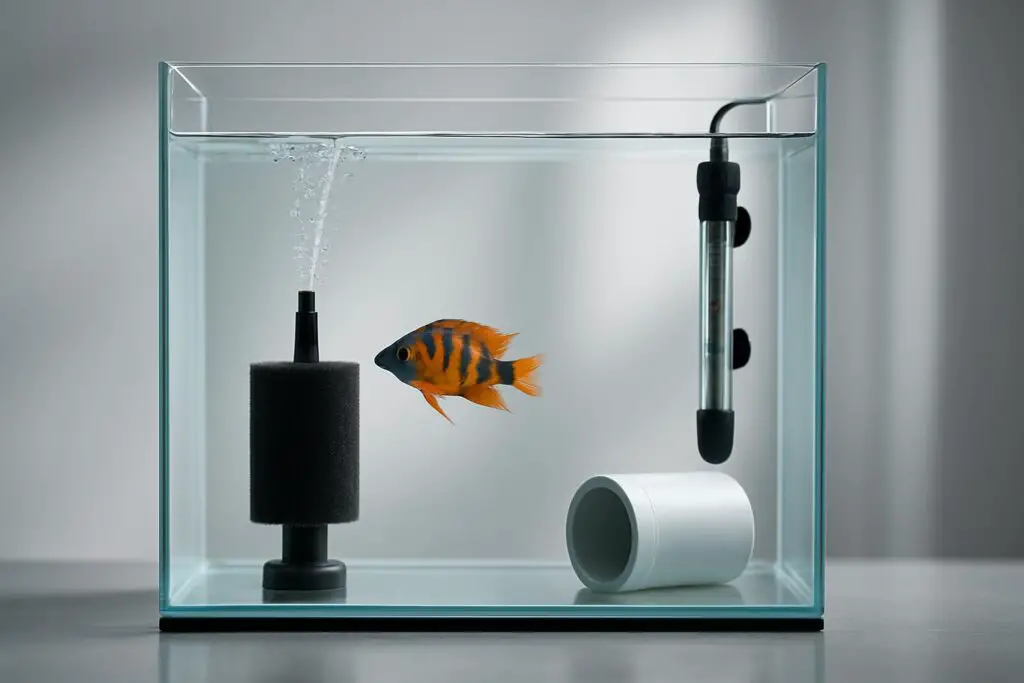
Use a bare-bottom tank to make cleaning easy and to see waste clearly. Ten to twenty gallons suits most small to medium freshwater fish. Larger or more active fish need more space. For marine fish, choose the smallest size that allows normal behavior without crowding. Add simple hides made from PVC elbows or inert ornaments so the fish can feel secure. A tight lid prevents jumping.
Filtration and Aeration
A sponge filter driven by an air pump is ideal. It is gentle, reliable, and provides both biological filtration and surface agitation for oxygen. Add an extra airstone whenever you use medications or raise temperature. Strong aeration saves lives during treatment.
Heating and Lighting
Use an adjustable heater with a thermometer you can read at a glance. Keep lights dim at first. Bright light stresses new fish. Gradually increase light over several days once the fish are calm and eating.
Test Kits and Tools
You need liquid tests for ammonia, nitrite, nitrate, and pH. For saltwater fish, you also need a copper test if you plan to treat for marine ich or velvet, and a refractometer or hydrometer for salinity. Keep separate nets, siphons, buckets, and towels for quarantine only. Do not share tools with your display tank.
Seeding and Cycling the Quarantine Tank
Biological filtration prevents ammonia spikes. The best method is to keep a spare sponge filter running in your main tank at all times. When you need a quarantine tank, move that seeded sponge over. This gives you instant beneficial bacteria.
If you had no time to seed the filter, manage ammonia with daily testing and large water changes. Use a water conditioner that detoxifies ammonia and nitrite temporarily, but do not rely on it alone. Feed lightly and remove waste promptly. Add bottled bacteria only as a supplement, not as an excuse to skip testing.
Location and Setup Checklist
Place the quarantine tank in a quiet area away from drafts and direct sun. Set up the tank, heater, sponge filter, lid, and hides. Fill with dechlorinated water. Match the temperature and, for marine fish, the salinity used in your display or the store water. Run the tank for at least a few hours to confirm stable temperature and good aeration before the fish arrive.
Acclimation on Arrival
Temperature First
Float the sealed bag in the quarantine tank for 15 to 20 minutes to match temperature. Keep the lights low. Do not open the bag yet.
Check Water Quality in the Bag
If shipping took more than a few hours, bag water can have high ammonia and low pH. When you open the bag and expose it to air, pH rises and ammonia becomes more toxic. In that case, do not drip acclimate for a long time. Instead, temperature match, then gently net the fish out of the bag and place it into the quarantine tank. Discard bag water. If the bag water tests clean and the source water is similar to your own, you can drip acclimate for 20 to 40 minutes. Always avoid adding bag water to your tank.
First Hour in Quarantine
Keep the room quiet and the light dim. Add extra aeration. Do not feed immediately. Give the fish at least a few hours to settle. Observe breathing rate, posture, and response to movement. Rapid gilling, lying on the bottom, gasping at the surface, or rolling are warning signs.
The First 48 Hours
Offer a very small feeding on day one evening if the fish seem alert. Use a familiar or enticing food. Remove uneaten food after 10 minutes. Check ammonia and nitrite daily. Perform a 25 to 50 percent water change whenever ammonia or nitrite is detectable, or whenever the fish are stressed. Keep hands out of the water unless necessary.
Watch for clamped fins, flashing, scratching, white spots, dusty gold or brown sheen, frayed fins, fin redness, body sores, heavy slime, stringy white feces, extreme thinness, bloating, or rapid breathing. Document what you see with photos and notes. Early notes help guide treatment decisions.
Choosing a Treatment Strategy
Observation Only
For low risk sources, you can observe without automatic medication. Treat only if you see symptoms. This avoids stress and side effects, and it is suitable when you already trust the supplier and when you quarantine for at least four weeks.
Preventive Protocol
For many community freshwater fish, a light preventive plan is common. A typical approach is to use a dewormer effective for tapeworms and flukes such as praziquantel, sometimes combined with a nematode treatment like levamisole or flubendazole, and an internal protozoa option like metronidazole when signs point to it. Apply only one medication class at a time unless a proven combination is known to be safe. Catfish, loaches, and other scaleless or sensitive fish need reduced doses and careful monitoring.
For marine fish, a controlled copper treatment is the standard against marine ich and velvet when you choose a preventive plan. Copper requires a reliable test kit and steady dosing. Some keepers use chloroquine phosphate under proper guidance. Freshwater dips of 3 to 5 minutes can help dislodge flukes from gills in marine fish, but monitor closely and stop if the fish is struggling. Do not use copper with invertebrates. Do not mix copper with ammonia detoxifiers that are not confirmed to be safe together.
Medication Safety
Read labels and follow active ingredient dosages. Remove carbon during treatment. Increase aeration. Do not combine multiple antibiotics or antiparasitics unless directed by a clear protocol. Watch for appetite loss, sudden lethargy, or surface gasping. If you see adverse reactions, do an immediate large water change and add fresh carbon to remove medication.
Daily Quarantine Routine
Test ammonia and nitrite each day for the first week, then every other day if stable. Keep nitrate under 20 to 40 ppm for freshwater and as low as practical for marine. Feed small portions two to three times per day for fish that benefit from frequent meals. Siphon waste daily. Top off evaporated water with dechlorinated water, and in marine tanks, top off with freshwater to maintain salinity. Keep notes on feeding response, behavior, and any visible changes.
Water Parameters to Target
Freshwater tropical fish do well at stable temperatures around 24 to 27 C. Goldfish prefer cooler water around 20 to 23 C. Softwater species need steady pH in their comfort range, but stability matters more than hitting an exact number. For marine fish, hold salinity steady at the same value you use in your display and maintain temperature around 24 to 26 C. Avoid sudden changes. Stability reduces stress and speeds recovery.
How Long to Quarantine
Four weeks is a practical minimum for most fish. This covers the life cycle of many common parasites and gives time for slow bacterial issues to show. If you treat for a disease, restart the clock after the final dose and after all symptoms have resolved. Only end quarantine when the fish is eating well, has clear eyes and skin, shows full fins, normal respiration, and steady weight.
When Problems Appear
Ammonia or Nitrite Spikes
Reduce feeding, increase water changes, and add additional seeded media if available. Confirm your test kit is not expired. Keep aeration high. Spikes often follow overfeeding or too many fish in a small uncycled tank. Correct the cause, not only the numbers.
Ich in Freshwater
Look for white salt-like spots and flashing. Treat the whole quarantine tank, not just the fish. Raise temperature cautiously to speed the life cycle, for example to 28 to 30 C if the species tolerates it. Add aquarium salt to a therapeutic level if your fish are salt tolerant. Maintain treatment for at least two weeks after the last visible spot. Never move an exposed fish to the display until the full course is done.
Marine Ich or Velvet
Use a verified copper level for the full recommended duration, typically 14 to 30 days depending on the pathogen and product. Test copper daily and keep it stable. Provide strong aeration and high quality food. Velvet often progresses faster than ich and demands immediate action. If copper is not suitable for the species, consult alternatives like chloroquine phosphate with proper support.
External Flukes
Rapid breathing, excess slime, and flashing can indicate flukes. Praziquantel is effective against many flukes. Repeat dosing may be needed to catch newly hatched stages. Combine with good oxygenation and frequent water changes.
Internal Parasites
Look for weight loss despite eating or white stringy feces. Metronidazole and dewormers that target nematodes may help. Soaking food can improve delivery, but maintain water quality and observe appetite.
Bacterial Infections
Frayed fins, red streaks, ulcers, or fuzzy patches are warning signs. Improve water quality first. If signs persist or worsen, consider an appropriate antibiotic. Do not shotgun multiple antibiotics. Finish full courses. Feed lightly during treatment and keep oxygen high.
Feeding During Quarantine
Start with foods the fish recognize. Offer small frequent meals and remove leftovers. Mix high quality dry food with frozen or live options as appropriate to trigger feeding response. For shy fish, feed when lights are low and the room is quiet. A healthy appetite is one of the best indicators of progress.
Biosecurity Rules
Use dedicated equipment. Wash hands and arms before and after working in each tank. Disinfect nets and tools between uses with a dilute bleach solution or a hydrogen peroxide soak, then rinse and dry completely. Do not move water from quarantine to the display. Do not top off one tank with water from another. Keep lids on to prevent jumping and aerosol transfer.
Special Cases
Goldfish and Loaches
These are sensitive to many medications and to salt or heat changes. Use reduced doses and change parameters slowly. Focus on strong filtration and large water changes. Parasite checks are still important, but adjust methods to species tolerance.
Shrimp and Snails
Do not medicate with copper or many antibiotics in an invert quarantine. Use observation only. Keep parameters stable and avoid sudden swings in TDS and temperature. Quarantine inverts separately from fish to avoid disease crossover.
Live Plants
Plants can carry pest snails, algae, and pathogens. Quarantine plants in a separate container for two to four weeks. Consider an alum or potassium permanganate dip before quarantine. Rinse well. Do not add store water to your display.
Corals and Marine Inverts
Use a fishless quarantine system. Observation and coral dips help reduce pests. Never expose invertebrates to copper. Keep tools separate from fish quarantine gear.
Graduating Fish to the Display
Match temperature and, for marine tanks, salinity between quarantine and display. Fast the fish for 12 to 24 hours to reduce waste during transfer. Use a clean container and net. Do not move quarantine water to the display. Add the fish during a calm period with low room light. Observe closely for the first hour, then again at feeding time.
Aftercare and Keeping Quarantine Ready
After the fish move out, drain the quarantine tank. Clean the glass, sponge filter, heater, and hides. Disinfect with a mild bleach solution if disease was present, then rinse and dry fully. Store the tank dry and keep a spare sponge filter seeded in your display so the next quarantine can start fast. A ready quarantine setup turns impulse purchases into safe additions rather than risks to your display.
Common Myths and Mistakes
Myth one is that healthy looking fish do not need quarantine. Many pathogens have delayed symptoms. Myth two is that a few days is enough. Short quarantines miss slow infections. Myth three is that medications replace water quality. No treatment can overcome poor parameters. Another mistake is overfeeding in a bare tank. Keep portions small and clean up. Finally, do not mix medications without a plan. Simple and controlled beats complex and risky.
A Simple Four Week Timeline
Day 0 to 2 is for temperature matching, settling, and baseline checks with light feeding. Day 3 to 7 is for stable feeding, daily testing, and optional first preventive dewormer dose if you choose that path. Week 2 is continued observation and water quality control, with second dewormer dose if indicated. Week 3 is deeper assessment of behavior and weight, and corrections to diet or environment. Week 4 is final observation with zero symptoms. If all is clear and the fish is thriving, schedule the move to the display.
Troubleshooting a Stalled Quarantine
If fish are not improving, reset to the basics. Confirm ammonia and nitrite are zero. Increase aeration. Simplify feeding to one or two proven foods. Remove unnecessary decorations. Reevaluate the diagnosis before adding more medications. Seek a second opinion if you are unsure. Patience and clean water are often the turning point.
Practical Tips That Make Success Easy
Keep a quarantine log. Write down dates of arrivals, treatments, water changes, and observations. Use painters tape on the tank with the current dosing schedule to prevent mistakes. Prepare premeasured doses in labeled containers when you start a course. Test copper twice daily at the beginning if you use it for marine fish. Consider a small camera or phone time lapse to catch nighttime behavior in shy species. Replace test kits before they expire.
The Cost of Skipping Quarantine
A display outbreak can wipe out months or years of work and cost much more than a simple quarantine setup. Quarantine protects your investment, your time, and the well being of your fish. It also improves your fishkeeping skills, because you learn to read behavior, manage water quality under pressure, and apply treatments carefully.
Conclusion
Quarantine is straightforward when you focus on stability, observation, and clear actions. Set up a simple bare tank with a seeded sponge filter, strong aeration, and a few hides. Acclimate with care, keep the lights low at first, feed lightly, and test daily. Choose observation only or a well understood preventive plan, not a chaotic mix of treatments. Hold fish for a full four weeks unless a condition requires longer. Move fish to the display only when they are eating well, look clean and strong, and show steady behavior. Follow these steps every time and your display tank will stay healthy, stable, and rewarding for the long term.