
We are reader supported. When you purchase through links on our site, we may earn an affiliate commission. Also, as an Amazon affiliate, we earn from qualifying purchases.
Noise from a filter or air pump can turn a calm tank into a distraction. The good news is that most noise has a simple cause. You can fix many issues in minutes with basic tools. Start with fast checks, then move to deeper fixes if needed. By the end of this guide, you will know exactly what to do, in what order, and how to keep things quiet for the long term.
Why aquarium gear gets loud
Vibration and resonance
All motors and pumps vibrate. If that vibration transfers into a tank stand, shelf, or glass, it gets amplified. Hard surfaces act like a speaker. Even a small hum can become a buzz that fills a room.
Flow turbulence and waterfalls
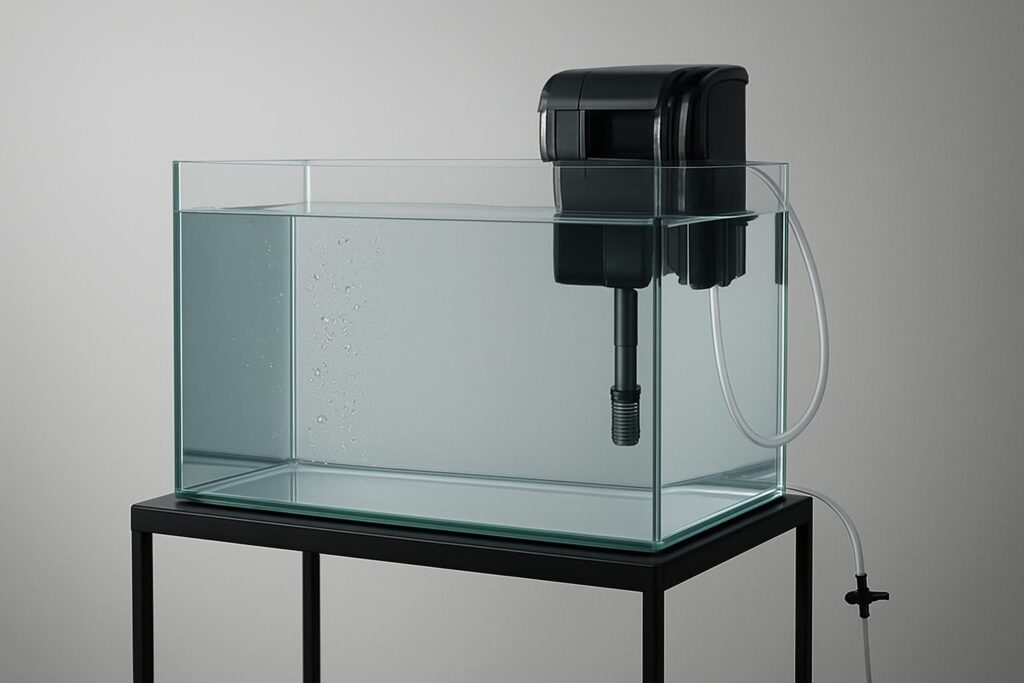
Water falling into the tank makes noise. When a hang on back filter outlet is above the water line, you get a waterfall effect. Turbulent return flow and splashes from spray bars can add hiss and trickle sounds.
Wear, dirt, and misalignment
Grit in the impeller well, swollen bushings, or bent shafts cause grinding and clicking. Air pumps with worn diaphragms slap and rattle. Loose lids and fittings vibrate. Clogged media forces the motor to work harder and get louder.
Quick wins in 5 minutes
Raise the water level
Top off the tank so the water line meets the bottom of the filter spillway. This removes most waterfall noise. If your tank evaporates often, mark a top off line and refill before the level drops.
Level and secure the filter
Make sure hang on back and internal filters sit level and fully seated. An uneven mount throws the impeller off axis and adds hum. Reseat the unit until it is stable and square.
Isolate vibration with padding
Put a soft pad under the filter or air pump. A mouse pad, neoprene, cork tile, or a folded towel all work. If the stand itself resonates, add a thin foam layer under the entire tank stand. Thin is better than thick. You want decoupling, not wobble.
Reseat tubing and fittings
Push all hoses and elbows fully home. Loose parts rattle. Support long hoses so they do not tug on the filter. Add gentle slack loops to absorb vibration.
Quiet the air line instantly
Airline against wood or glass transmits buzz. Use silicone airline tubing for softness. Add a check valve and a gang valve so you can control flow without choking the pump. If the pump is loud when back pressure is high, bleed off extra air with a T and a short open line pointing away from the tank.
Deeper fixes for filters
Clean the impeller and housing
Unplug the filter. Remove the impeller cover, impeller, and shaft. Clean the well and parts with a small brush and tank water. Remove slime, grit, and hair. Check the ceramic or stainless shaft for straightness. A clean and straight impeller spins true and runs quietly.
Replace worn parts
Inspect impeller magnets for swelling or cracks. Check rubber or plastic bushings for oval wear. Replace any part with visible damage. New impellers and bushings often restore near silent operation.
Pack media to prevent rattling and turbulence
Loose media bags and hard plastic baskets can rattle. Pack them snugly so they cannot move yet do not choke flow. Place coarse sponge first to catch debris, then finer media. Even flow reduces hiss and splashing at the outlet.
Silence the return flow
For hang on back filters, raise water to the spillway and add a prefilter sponge to the intake. This slows flow and lifts water in the filter box, which reduces drop height. For canisters, angle the spray bar slightly under the surface. Aim for gentle surface ripples without air sucking sounds. If the outlet lip vibrates, add a slim strip of sponge where water meets plastic to break the sheet of water.
Prime correctly and stop cavitation
Cavitation sounds like a grinding rattle from trapped air. Tilt and shake the filter gently after priming to release bubbles. Fill all canister hoses and the canister body with water before starting. If your filter self primes, still leave it running a few minutes and tilt to burp any stubborn pockets.
Fix lid and case rattles
Many lids rattle against the filter body. Add thin foam weather strip around the rim or a small dab of aquarium safe silicone on contact points. Let silicone cure fully before use. Tighten screws evenly. Replace broken clips and warped lids.
Deeper fixes for air pumps
Correct placement and mounting
Place the pump on a soft pad on a stable surface. Do not let it touch the tank glass or thin cabinet walls. If possible, wall mount the pump on rubber grommets, or suspend it with elastic cord so it does not transfer vibration into furniture.
Manage back pressure safely
Back pressure makes pumps strain and buzz. Never clamp the airline to reduce noise. Instead, split the line with a T and let extra air vent, or use a gang valve with a relief port. This keeps the pump within its comfort zone and lowers noise.
Choose the right airstone and tubing
Use a fine or medium pore airstone that matches the pump output. Oversized ceramic stones need more pressure and can amplify buzz. Silicone tubing is softer than vinyl and transmits less vibration. Keep tubing runs short and direct, with smooth bends instead of tight kinks.
Service or replace internal diaphragms
Air pumps use rubber diaphragms and check flappers. When they harden or tear, noise rises. Many models offer diaphragm kits. Unplug, open the case, and replace both sides together. After a kit swap, most pumps return to a soft hum.
Troubleshooting roadmap
If the noise is a hum from the stand
Confirm by lifting the pump or filter off the stand while it runs. If the hum drops, isolate with a pad, move the unit, or add decoupling under the stand feet. Make sure cabinet panels are tight and not acting like a drum.
If the noise is splashing or trickling
Raise the tank water line. Angle the return under the surface. Add a prefilter sponge to increase water depth in the filter box. Pack media to smooth flow. Avoid returns that break the surface too hard unless you need heavy gas exchange.
If the noise is clicking or grinding
Unplug and clean the impeller, shaft, and well. Check for sand, snails, or grit drawn into the intake. Inspect for swollen magnets and worn bushings. Replace worn parts. Burp trapped air after priming. For air pumps, replace diaphragms and check the one way valves inside the case.
If the noise comes and goes
Look for intermittent contact points like loose lids and hoses. Ensure the filter sits level. Check for evaporation that exposes the outlet over time. Verify that hoses are not touching the stand in one spot and that the pump has not shifted on its pad.
Preventive maintenance schedule
Weekly
Top off evaporated water to the marked line. Wipe salt creep and mineral deposits from outlets and lids. Confirm that pads and suction cups are seated and clean.
Monthly
Rinse prefilter sponges and coarse media in tank water. Clean impellers and wells. Reseat covers and fittings. Check air pump pads and tubing for hard spots or kinks.
Every 6 to 12 months
Replace worn impellers, bushings, and air pump diaphragm kits. Refresh weather strip or silicone dampers on lids. Replace stretched or brittle silicone tubing. Review return angles and flow as livestock and plants grow.
When to replace equipment
Signs a filter should be retired
Cracked housings, warped impeller wells, and broken shafts cause chronic noise and are not worth chasing. If spare parts cost approaches 50 to 70 percent of a new, quieter model, replacement is the better path.
Signs an air pump should be retired
After new diaphragms and valves, a pump that still buzzes or rattles likely has a worn armature or case. If the pump vibrates even when isolated and bled, choose a new model sized correctly for your depth and air needs.
Buying quiet gear next time
Features to look for in filters
Look for ceramic shaft impellers, rubber isolated motor blocks, and cushioned lids. Adjustable flow helps you tune turbulence. For canisters, choose models with soft feet and solid clamps. For hang on back, pick units with deep boxes that keep water high at the spillway.
Features to look for in air pumps
Choose pumps with rubber feet, a heavy case, and internal sound dampers. A flow control or a built in bleed helps manage back pressure. Match pump output to tank depth and the number of airstones so you do not overwork the unit.
Safety first
Always unplug equipment before service. Use a drip loop on every cord and airline. Keep electrical connections dry and away from splash zones. Do not oil impellers or internal filter parts. If you need lubricant for O rings, use aquarium safe silicone grease only and keep it off the impeller and media. Make sure check valves are present and oriented correctly on airlines to prevent back siphon.
Conclusion
Noise points to vibration, turbulence, or wear. Tackle them in order. Raise the water line, isolate vibration, and reseat parts. Clean the impeller and well. Angle returns and pack media to smooth flow. Service or replace worn pieces when simple steps do not solve it. With a short routine each month, your filter and air pump can run with a soft hum that fades into the background.
FAQ
Q: What is the fastest way to reduce waterfall noise from a hang on back filter
A: Top off the tank so the water line meets the bottom of the filter spillway, and add a prefilter sponge to the intake to lift water in the filter box and smooth the return.
Q: How do I stop a grinding noise from my filter
A: Unplug and clean the impeller, shaft, and well, remove grit and slime, inspect for swollen magnets and worn bushings, replace worn parts, and burp trapped air after priming to stop cavitation.
Q: How can I cut air pump buzzing and vibration quickly
A: Place the pump on a soft pad on a stable surface, switch to silicone airline, add slack loops, use a gang valve or a T bleed to relieve back pressure, and keep tubing runs short with smooth bends.
Q: Is bleeding off extra air safer than choking the airstone to quiet a pump
A: Yes, splitting the line with a T to vent air or using a gang valve with a relief port lowers back pressure and helps the pump run quieter without strain.
Q: When should I replace a noisy filter or air pump instead of repairing it
A: Replace filters with cracked housings, warped impeller wells, or broken shafts, or when parts cost approaches 50 to 70 percent of a new model, and replace air pumps that still buzz after diaphragm and valve service.