
We are reader supported. When you purchase through links on our site, we may earn an affiliate commission. Also, as an Amazon affiliate, we earn from qualifying purchases.
Nitrate creeps up in almost every aquarium. It does not crash your tank in a day, but it slowly weakens fish, fuels algae, and raises the risk of disease. The good news is you can lower nitrate with a clear plan and a few steady habits. This guide explains what nitrate is, why it rises, and practical ways to reduce it fast and keep it low for good.
Introduction
Nitrate is the end product of the nitrogen cycle. Fish eat, fish waste breaks down, and beneficial bacteria convert the toxic ammonia to nitrite and then to nitrate. Unlike ammonia and nitrite, nitrate is far less toxic but it is not harmless. In closed systems, it accumulates. If you want healthy fish, stable water, and manageable algae, you must control nitrate. You do not need expensive gadgets to start. You need a test kit, smart water changes, cleaner feeding, and a simple routine you can keep.
What Nitrate Is and Why It Matters
Where nitrate comes from
Everything organic in your tank becomes nitrate. Fish waste, uneaten food, dead plant leaves, mulm in the gravel, and detritus in the filter all release nitrogen as they decay. Your biofilter finishes the job by converting ammonia to nitrate. That is normal and necessary, but in a closed tank the nitrate keeps building unless you remove it or plants use it.
Why high nitrate is bad
Prolonged exposure to high nitrate stresses fish, reduces growth and color, can harm fry, shrimp, and invertebrates, and fuels algae blooms. The higher it climbs, the harder it is to control algae and keep fish resilient against disease.
Target Nitrate Levels
Keep goals simple so you can act fast:
- Most freshwater community fish: under 20 ppm
- Sensitive species, fry, and shrimp: under 10 ppm
- Reef tanks with corals and marine invertebrates: under 10 ppm is a safe starting goal
ppm and mg/L are the same unit for this purpose. Pick a target and build your routine around it.
Test Before You Guess
How often to test
Test nitrate weekly in new tanks and after you change stocking, feeding, or maintenance. In stable mature tanks, test every 1 to 2 weeks and any time fish act off or algae increases. Write the number down. Trends tell you more than single readings.
What a test result tells you
Low but rising nitrate means your biofilter is working and your removal is lagging. Very high nitrate means chronic buildup from feeding, detritus, and insufficient water changes or source water with nitrate. A zero reading in an established, stocked tank often means heavy plant uptake or a testing or sample error. Always shake reagents well and follow the instructions.
Quick Wins: Lower Nitrate Fast and Safely
Do a large but safe water change
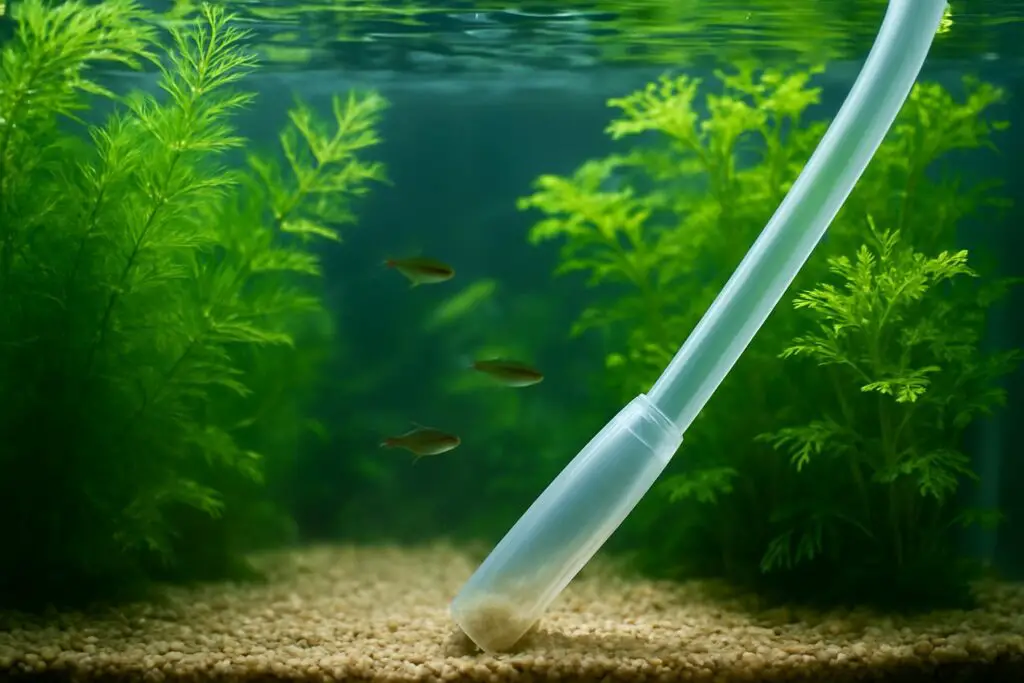
This is the fastest reliable fix. Change 30 to 50 percent of the water with dechlorinated, temperature-matched water. If fish are very stressed or nitrate is extreme, split it into two 25 to 30 percent changes 24 hours apart. Vacuum the substrate during the change to remove trapped waste.
Clean the mechanical filter stage
Rinse sponges, floss, and prefilters in a bucket of old tank water to remove gunk that would otherwise decay into nitrate. Do not scrub bio media with tap water. Preserve your beneficial bacteria by cleaning mechanical media often and bio media gently and less often.
Stir and siphon detritus traps
Gently stir debris out of decor, behind rocks, under wood, and from dead zones while you siphon. Each pocket you clear stops a slow leak of nitrate back into the water.
Reduce What Becomes Nitrate
Feed less and feed clean
Most tanks are overfed. Feed what fish finish in about 30 to 60 seconds, once or twice per day. Skip a day each week if fish are healthy. Rinse frozen foods in a net to remove excess juices. Use a feeding ring to keep food off the filter intake and out of the gravel.
Avoid overstocking
Stock for adult size, not juvenile size. A lighter bioload means slower nitrate buildup and a wider safety margin. Give your filter and plants a chance to keep up.
Remove decaying matter fast
Trim dead leaves, remove uneaten food after feeding, and net out visible waste. If you can see debris, it will become nitrate.
Boost What Uses or Exports Nitrate
Add fast-growing plants
In freshwater, fast growers are your allies. Options like hornwort, water sprite, guppy grass, duckweed, and floating plants consume nitrate quickly. Pothos with roots in the water also helps. Give plants 6 to 8 hours of light and harvest excess growth weekly so you physically export the nitrogen they store.
Use macroalgae in marine tanks
In saltwater, a simple refugium with macroalgae such as chaetomorpha helps. Light it on a reverse schedule to your display and harvest macroalgae regularly to export nutrients.
Choose filtration that removes organics early
Protein skimmers in marine systems remove dissolved organics before they turn into nitrate. In freshwater, strong mechanical prefiltration and frequent rinsing serve the same purpose by trapping and removing waste before it decays.
Improve Filtration for Long-Term Control
Optimize mechanical, biological, and flow
Mechanical media should catch fine particles and be easy to rinse. Biological media should have enough surface area and good oxygen supply. Ensure steady flow through the filter and in the tank so debris does not settle in dead zones. Aim for circulation that gently moves waste toward the intake without blasting fish.
Clean smart, not hard
Rinse mechanical media weekly or as it clogs. Swish bio media in tank water only when flow drops, and never replace all bio media at once. Clean the impeller and hoses to restore flow. Good flow supports bacteria and reduces pockets where waste accumulates.
Consider denitrifying options later
Advanced solutions like specialized anaerobic media or dedicated denitrators can lower nitrate, but they require careful setup and stable conditions. Focus on water changes, feeding, plants, and regular maintenance first. Add advanced gear only if your routine is already solid.
Mind Your Source Water
Test your tap or well
Some tap and well water contains nitrate. If your source water already has more than your target, every water change can keep nitrate high. Test it. If it reads high, switch strategies.
Use RO or distilled water when needed
If source nitrate is high, use reverse osmosis or distilled water for changes. You can blend it with tap to reach your desired parameters, or remineralize for freshwater stability. For sensitive livestock, using nitrate-free source water makes control much easier.
Substrate and Cleaning Technique
Gravel and sand maintenance
Waste sinks into substrate. During weekly changes, push the siphon deep into gravel and lift it out in a grid pattern so you cover the whole bottom over a few weeks. For sand, hover the siphon just above the surface to lift debris without removing too much sand.
Planted tank adjustments
In planted tanks, avoid deep vacuuming in dense root zones. Spot clean open areas and let plant roots process nutrients in the substrate. Remove dead leaves promptly to prevent decay.
Algae and Nitrate
Break the fuel supply
High nitrate feeds algae. Lowering nitrate reduces the fuel algae needs to spread. Combine nitrate reduction with stable lighting periods and manual removal to regain control. Do not black out the tank while leaving nitrate high. Fix the cause first.
Emergency Action Plan
When nitrate is very high
If nitrate reads very high, act in steps:
- Test with a fresh sample to confirm
- Change 30 to 50 percent of the water with dechlorinated, temperature-matched water
- Vacuum the substrate thoroughly
- Rinse mechanical filter media in old tank water
- Reduce feeding for the next few days
- Test again the next day and repeat a moderate change if needed
This approach lowers nitrate quickly without shocking fish.
Building a Weekly Routine
Simple schedule that works
A consistent routine keeps nitrate predictable and low:
- Test nitrate weekly until stable, then every 1 to 2 weeks
- Change 20 to 30 percent of the water weekly
- Vacuum substrate areas on rotation so the whole bottom is covered over 2 to 4 weeks
- Rinse mechanical media weekly or when flow drops
- Trim plants and remove dead leaves
- Feed only what fish finish in 30 to 60 seconds
Stick to this for a month and you will see nitrate settle near your target.
Special Notes for Saltwater and Reef
Export and stability
Marine systems benefit from nutrient export and strong skimming. Use a protein skimmer sized for your system. Consider a refugium with macroalgae and harvest it regularly. Rinse filter socks and floss often so trapped waste does not decay. Keep feeding controlled and avoid letting food blow behind rocks.
Live rock and flow
Adequate live rock supports biological filtration. Good in-tank flow prevents detritus buildup in low-flow areas. Gently baste rocks during water changes to lift debris for removal.
Troubleshooting Persistent High Nitrate
If nitrate stays high after water changes
Run through this checklist:
- Test your source water for nitrate
- Cut feeding in half for a week and observe fish condition
- Increase change volume or frequency temporarily
- Improve mechanical filtration and rinse more often
- Vacuum deeper or more sections of the substrate
- Add more fast-growing plants or macroalgae and harvest weekly
- Review stocking and rehome fish if the bioload is too high
Addressing two or three causes together usually solves persistent nitrate.
Case Example: Turning a Tank Around
From 80 ppm to control
A 30 gallon freshwater tank reads 80 ppm nitrate. The plan:
- Day 1: 40 percent water change with gravel vacuuming, rinse prefilter
- Day 2: 30 percent water change, clean decor pockets, trim plants
- Reduce feeding to one small meal per day for a week
- Add a large bundle of hornwort and a floating plant
- Weekly: 25 percent change, vacuum a new section each time, rinse sponge
Within two weeks nitrate stabilizes near 20 ppm and then drops to 10 to 15 ppm with steady plant growth and routine maintenance.
Conclusion
Nitrate control is about inputs, processing, and export. Feed only what fish need, keep detritus from rotting, give bacteria and plants the conditions to work, and remove nitrate with regular water changes. Test on a schedule, track your numbers, and adjust your routine before problems grow. With a few simple habits, you can keep nitrate low, fish healthy, and algae manageable in any tank.
FAQ
Q: What is a safe nitrate level for my tank
A: Keep nitrate under 20 ppm for most freshwater community fish, and under 10 ppm for sensitive species, fry, shrimp, and reef tanks.
Q: How often should I test nitrate
A: Test weekly in new or changing tanks, and every 1 to 2 weeks in stable tanks or any time fish act off or algae increases.
Q: What is the fastest way to lower high nitrate
A: Do a 30 to 50 percent water change with dechlorinated, temperature-matched water, vacuum the substrate, and rinse mechanical filter media in old tank water.
Q: Why are my nitrates still high after water changes
A: Your source water may contain nitrate, feeding may be heavy, the filter may hold decaying waste, detritus may be trapped in the substrate or decor, plant mass may be too low, or the tank may be overstocked.
Q: Do live plants help reduce nitrate
A: Yes, fast-growing freshwater plants and macroalgae in marine systems consume nitrate, and regular harvesting exports the stored nutrients.