
We are reader supported. When you purchase through links on our site, we may earn an affiliate commission. Also, as an Amazon affiliate, we earn from qualifying purchases.
Moving fish to a new tank can be smooth and safe when you follow a clear plan. The goal is simple. Keep water conditions stable, protect beneficial bacteria, reduce stress, and give fish time to adapt. This guide walks you through each step in order, from planning and preparation to acclimation and aftercare. Follow it closely and your fish will settle into their new home with minimal risk.
Introduction
Most problems during a move come from rushing, parameter shocks, and losing the biofilter. You can prevent these with preparation. You will learn how to seed the new filter, match water conditions, catch and transport fish safely, acclimate the right way, and monitor the tank afterward. Every step builds on the previous one so nothing is left to chance.
Plan the Move
Decide the move window
Choose a day with plenty of time and minimal distractions. Avoid late nights or tight schedules. Plan for at least a few hours so you can handle any surprise without stress.
Pick the right moment for the fish
Move fish when they are healthy, active, and eating well. Do not move if fish show clamped fins, flashing, heavy breathing, or visible disease. Resolve health issues first to avoid extra stress.
Gather tools and supplies
Have everything ready before touching the fish. Prepare dechlorinator, a reliable test kit, thermometer, spare heater, airline tubing, fish nets, fish bags or lidded containers, buckets reserved for aquarium use, towels, a siphon, a flashlight, and an insulated cooler or tote for transport if needed. Prepare extra water conditioner and battery air pumps if the move is longer than one hour.
Prepare the New Tank First
Place and clean the tank
Set the tank on a level stand away from direct sun and heavy foot traffic. Rinse the tank, substrate, and decor with plain water only. Do not use soap. Install equipment and check for leaks before adding fish.
Condition and heat the water
Fill with dechlorinated water. Add a conditioner that neutralizes chlorine and chloramine. Set the heater to the same temperature as your current tank. Aim for a difference of no more than 1 to 2 degrees Celsius or 2 to 3 degrees Fahrenheit.
Seed beneficial bacteria
The biofilter prevents ammonia and nitrite spikes. Most bacteria live on filter media, substrate, and hard surfaces, not in the water column. Move mature filter media, sponge, or biomedia from the old tank to the new filter to seed it. Keep media wet in old tank water during transfer and move it quickly. Do not rinse media under tap water. If you have an extra sponge filter running in the old tank, move it over as well.
Cycle or fast track
Ideally, fully cycle the new tank before moving fish. That means ammonia 0 ppm, nitrite 0 ppm, and nitrate kept low with water changes. If you cannot complete a full cycle in advance, seeding with mature media and bottled bacteria helps. Be ready to test frequently and change water as needed after the move.
Match key water parameters
Test both tanks before the move. Confirm ammonia 0 ppm, nitrite 0 ppm, and nitrate below 20 to 40 ppm. Match temperature within 1 to 2 degrees Celsius or 2 to 3 degrees Fahrenheit. Keep pH differences small. A gap under 0.2 to 0.3 is ideal for a drip acclimation plan. If the gap is larger than 0.5, adjust slowly over days before moving fish. Consider KH and GH for species that care about hardness. Stability is more important than chasing exact numbers.
Prepare extra conditioned water
Mix and dechlorinate extra water at the target temperature for top ups and acclimation. This keeps the process smooth and avoids last minute mixing.
Prepare the Fish
Stop feeding 24 hours before
Do not feed fish the day before the move. An empty gut reduces waste in bags and helps water quality during transport and acclimation.
Reduce stress
Keep the room calm, dim the lights, and avoid sudden movements around the tank. Have a towel ready to cover containers or coolers to keep fish in the dark during transport.
Plan the order of transfer
Move the biofilter first or at least at the same time as the fish. If you keep territorial or aggressive fish, add them last so the rest can settle. Move sensitive species with extra care and use drip acclimation.
Break Down the Old Tank Safely
Save your bacteria
Turn off the filter and place the media into a bucket of tank water to keep it wet and oxygenated. Move it to the new tank as soon as possible. Never let it dry and never rinse with tap water.
Handle plants and decor
Move plants in a bucket of tank water to keep them hydrated and to preserve microfauna. Keep decor damp. If you plan to reuse substrate, keep it wet but do not stir it deeply to avoid releasing trapped waste.
Keep some old tank water for stability
Old tank water does not carry much bacteria, but saving some helps maintain similar chemistry and temperature during the move. Use it to keep media and plants wet and for fish bags. Do not rely on old water to cycle a new tank.
Siphon and clean with restraint
Do a moderate gravel vacuum to remove loose waste before you start catching fish. Do not deep clean filters or substrate on move day beyond what is needed. Your priority is to preserve the biofilter.
Catching and Bagging Fish
Dim lights and be patient
Turn off the tank light 15 to 30 minutes before catching fish. Dim rooms reduce stress and make netting easier.
Use two nets or a container
Guide fish into a corner with a larger net and scoop with a smaller net. Alternatively, use a clear container to gently corral fish. Avoid chasing fish around the tank for long periods. Move slowly and deliberately.
Bag or container best practices
Use clean fish bags or lidded containers with enough water to fully cover fish while leaving plenty of air space. For bags, aim for about one third water and two thirds air. Double bag for safety. Group small, peaceful fish by species and size. Separate aggressive fish. Label bags if needed.
Oxygen and temperature
For short moves inside the same home, air in the bag is fine. For longer trips, use insulated coolers and consider battery air pumps for containers. In cold weather, use heat packs outside the bag with a barrier so they do not touch plastic. In hot weather, insulate and avoid direct sun.
Transporting Fish
Within the same home
Carry fish in bags or containers directly to the new tank. Keep the route clear. Do not leave fish sitting in warm rooms or near heat sources. Move bio media to the new filter immediately and start filtration and aeration as soon as water is in.
Between homes
Place bags upright in a cooler to prevent tipping and temperature swings. Keep the car temperature stable. Avoid sudden stops and rough handling. Cover the cooler to keep it dark. Go straight to your destination and set up the tank first before starting acclimation.
Set Up the New Tank on Move Day
Install and start the filter
Place the mature media into the new filter. Start the filter and an air stone to boost oxygen. Confirm the heater is on and stable.
Double check parameters
Test ammonia, nitrite, nitrate, pH, and temperature. If the temperature or pH is far off, adjust before starting acclimation. Minor differences can be handled during acclimation.
Acclimation Methods
When a simple float works
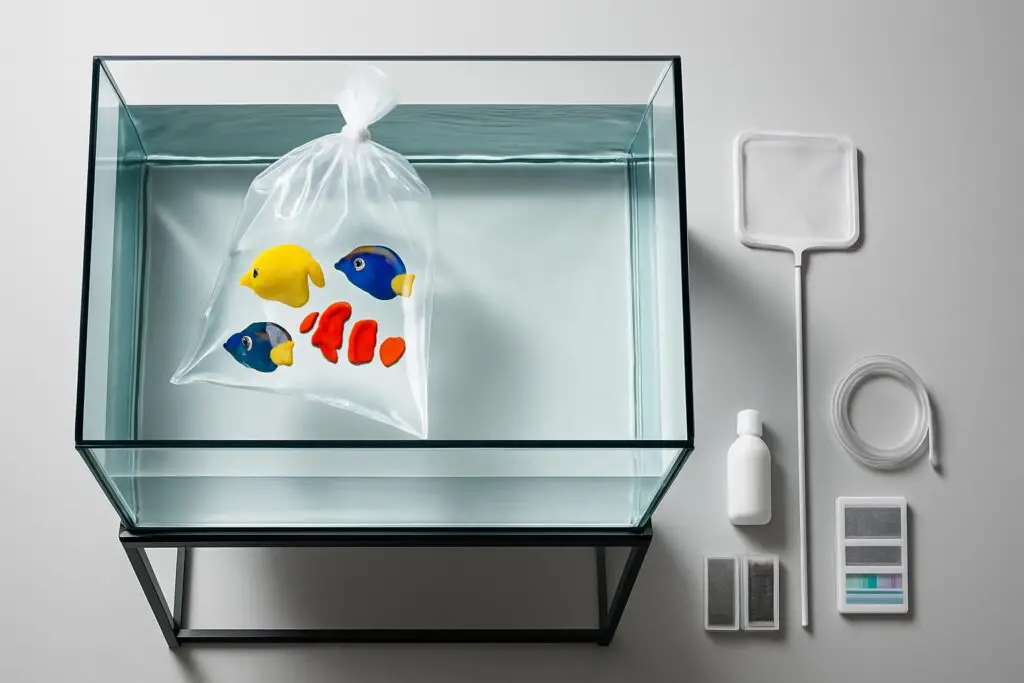
For hardy fish and small parameter differences, float the sealed bag in the new tank for 20 to 30 minutes to equalize temperature. Open the bag, roll down the edge to let it float, and add a small amount of tank water every 5 to 10 minutes for 30 minutes. This gently blends chemistry without big shocks.
How to drip acclimate
Use drip acclimation for sensitive species, invertebrates, or noticeable pH or hardness differences. Place fish and bag water in a small bucket. Use airline tubing with a loose knot or valve to start a siphon from the new tank into the bucket at 1 to 2 drops per second. Over 45 to 90 minutes, let the volume at least double. Keep water warm by floating the bucket or placing it near the heated tank. Discard water if it cools too much and restart with warmer tank water as needed.
How long to acclimate
Most fish do well with 30 to 60 minutes of gradual acclimation after a temperature float. Drip acclimation typically runs 45 to 90 minutes. If fish show stress like frantic swimming or gasping, slow the process, increase aeration, or release sooner if temperature and pH are already close.
Important cautions during acclimation
Keep the area quiet and the lights dim. Do not let the acclimation container sit in cold rooms. Do not overfill bags to the point of spilling. Once you open a bag, do not seal it for long trips because carbon dioxide and oxygen balance will shift rapidly.
Releasing the Fish
Net and release
Do not pour bag or bucket water into the new tank. Net the fish gently and release them into the tank. This avoids adding transport waste or potential pathogens. Keep the tank lights off for several hours after release so fish can settle without stress.
Position hiding places
Provide caves, plants, or decor so fish can retreat. Rearranging decor helps reduce aggression if you have territorial species.
Aftercare and Monitoring
Feeding schedule after the move
Do not feed immediately. Wait 12 to 24 hours, then offer a small meal. Resume normal feeding over the next few days. Underfeeding slightly during the first week helps keep ammonia down.
Test daily for the first week
Test ammonia and nitrite daily for 7 days. Both should remain at 0 ppm. Keep nitrate as low as practical with water changes. If you detect ammonia or nitrite at or above 0.25 ppm, take action.
Emergency actions for ammonia or nitrite
Do a 25 to 50 percent water change with temperature matched, dechlorinated water. Dose a conditioner that detoxifies ammonia and nitrite. Increase aeration. Reduce feeding. Confirm the seeded media is installed correctly and the filter is running well. Repeat testing daily and change water again as needed until readings stabilize at 0.
Water change routine
Plan two or three moderate water changes during the first two weeks, especially if you upgraded to a larger tank with fresh substrate. This helps remove organics released during the move and keeps nitrate low.
Common Mistakes to Avoid
Moving fish before the filter is ready
Fish should never go into an uncycled or unseeded system. At minimum, move mature media and start the filter before fish are added.
Big parameter gaps
Large jumps in temperature, pH, or hardness cause stress and can be deadly. Always match temp within 1 to 2 degrees Celsius or 2 to 3 degrees Fahrenheit and keep pH differences small. Use drip acclimation when in doubt.
Overcleaning the biofilter
Rinsing media under tap water or letting it dry destroys bacteria. Keep it wet in tank water and move it quickly.
Pouring bag water into the tank
Never add transport water to your display. Net the fish and discard the bag water.
Feeding too soon or too much
Feeding right after release or overfeeding during the first week raises ammonia. Wait 12 to 24 hours and feed lightly.
Special Cases
Large or aggressive fish
Use rigid containers with lids rather than bags for spiny or strong fish. Provide ample water volume and aeration. Move tankmates first and add aggressive species last after rearranging decor to reset territories.
Delicate species and invertebrates
Use drip acclimation and keep temperature tightly controlled. Some species are sensitive to copper and rapid pH swings, so take extra time and keep the environment calm.
Heavily planted or aquascaped tanks
Keep plants wet and transfer them early so the new tank can stabilize. Run good surface agitation to maintain oxygen when plants are adjusting and not yet photosynthesizing at full speed.
Step by Step Summary
One clear sequence
Set up the new tank, dechlorinate, heat, and seed the filter with mature media. Confirm ammonia 0 ppm, nitrite 0 ppm, and nitrate under control. Match temperature and pH as closely as possible. Stop feeding fish 24 hours before the move. Dim lights and catch fish calmly using two nets or a container. Bag fish with one third water and two thirds air, keep them warm and dark, and move bio media first. Start the new filter and aeration, then acclimate fish for 30 to 60 minutes or drip for 45 to 90 minutes depending on sensitivity and parameter gaps. Net fish into the tank without adding bag water. Keep lights off for several hours, avoid feeding for 12 to 24 hours, and test daily for a week. Do water changes if ammonia or nitrite appear and continue light feeding until the system stabilizes.
Conclusion
Safe fish transfers come down to preparation and patience. Seed the new filter, match key parameters, handle fish gently, acclimate with intention, and monitor closely afterward. Each small safeguard adds up to a smooth transition. Follow this plan and your fish will adapt quickly, eat well, and show normal behavior in their new tank.
FAQ
Q: How long should I acclimate fish when moving to a new tank
A: Most fish do well with 30 to 60 minutes of gradual acclimation after a temperature float, while drip acclimation typically runs 45 to 90 minutes.
Q: Should I use old tank water in the new tank
A: Old tank water does not carry much bacteria, but saving some helps maintain similar chemistry and temperature during the move and for keeping media and plants wet.
Q: When can I feed fish after the move
A: Do not feed immediately. Wait 12 to 24 hours, then offer a small meal and build back to normal feeding over the next few days.
Q: What water levels should I test before moving fish
A: Test ammonia, nitrite, nitrate, pH, and temperature. Aim for ammonia 0 ppm, nitrite 0 ppm, nitrate below 20 to 40 ppm, and temperature within 1 to 2 degrees Celsius or 2 to 3 degrees Fahrenheit between tanks.
Q: What if ammonia appears after the move
A: Do a 25 to 50 percent water change with temperature matched, dechlorinated water, dose a conditioner that detoxifies ammonia and nitrite, increase aeration, reduce feeding, and test daily until readings return to 0.