
We are reader supported. When you purchase through links on our site, we may earn an affiliate commission. Also, as an Amazon affiliate, we earn from qualifying purchases.
Fish aggression in a community tank feels frustrating, but it is solvable. Most fighting comes from clear triggers you can control. With the right tank layout, stocking plan, and routine, you can reduce stress, prevent bullying, and keep fish healthy. This guide walks step by step from diagnosis to prevention and long-term care, using simple methods that work for beginners and experienced keepers.
Why Fish Fight In Community Tanks
Fish do not fight without a reason. When you find the cause, you can stop it. Aggression usually comes from territory defense, mating behavior, hunger, cramped space, poor water, or incompatible species living together.
In a community tank, different fish compete for food, shelter, and breeding sites. Some species are more assertive by nature. Others become aggressive when stressed. Your job is to remove pressure points and set rules that keep the peace.
Early Warning Signs You Must Not Ignore
Watch your fish daily. Acting early prevents injuries and disease. Look for these warning signs before real fights begin.
Chasing that repeats and targets the same fish.
Fin nipping, split fins, or missing scales.
Blocking access to food or a cave, with one fish guarding a spot.
Flared gills, rigid posture, or side displays.
Hiding, loss of appetite, rapid breathing, or clamped fins in the victim.
Common Triggers Behind Aggression
Territory And Space
Many fish claim ground, caves, or plants. If the tank is small or open, a dominant fish can control everything. Tall, small-volume tanks make this worse. Long tanks with structure reduce territory overlap.
Overcrowding Or Understocking
Too many fish cause competition and stress. Too few of a schooling species also cause stress. Shoaling fish like tetras or barbs need a group big enough to spread attention and reduce nipping.
Male Heavy Ratios
For livebearers and some cichlids and gouramis, too many males means constant pursuit of females and fighting. Balance sex ratios to reduce tension.
Incompatible Species
Fin nippers target long-finned fish. Bottom dwellers compete when too many share the same hiding zones. Combining slow and fast feeders leads to frustration and hunger.
Hunger And Irregular Feeding
Hungry fish chase and steal. Inconsistent feeding times worsen it. Spread food to reduce competition.
Breeding Behavior
During courtship and brood care, even peaceful species can become defensive. Provide enough space and cover or keep pairs in separate tanks during breeding periods.
Poor Water Quality
Ammonia or nitrite, high nitrate, unstable pH, or low oxygen make fish irritable. Stress magnifies territorial behavior. Clean, stable water is non negotiable.
Strong Flow Or Harsh Lighting
Excessive current tires fish and forces them into the same calm corner. Bright, unbroken lighting leaves fish exposed, leading to constant stand-offs. Gentle flow and shaded zones help.
Immediate Triage When Fights Break Out
Stop the damage first. Then fix the root causes.
Step 1. Turn off the lights to calm the tank for 30 to 60 minutes.
Step 2. Feed a small, scattered meal of floating and sinking foods so all levels eat without crowding.
Step 3. Add temporary line of sight breaks. Move a rock or piece of wood between rivals. Even a quick decor change disrupts chasing paths.
Step 4. If one fish is injured, separate it with a breeder box or a tank divider. Clean water and rest speed healing.
Step 5. Test water for ammonia, nitrite, nitrate, pH, and temperature. Correct problems before returning lights to normal.
Build A Peaceful Layout
Choose Adequate Tank Size
Long tanks beat tall tanks for reducing aggression. Aim for at least 60 centimeters in length for small community setups. Increase length and volume as fish size and numbers grow. Give active swimmers long runs and bottom dwellers defined territories.
Create Line Of Sight Breaks
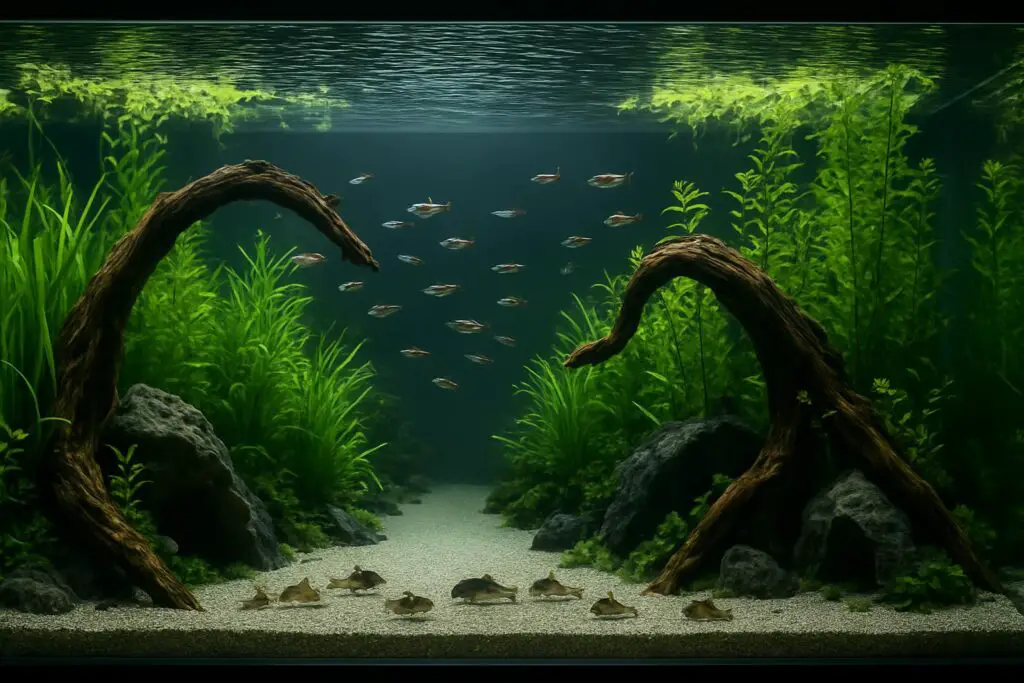
Use wood, rocks, and tall plants to block straight views across the tank. This prevents a bully from watching the entire aquarium and patrolling every inch. Caves, arches, and dense stems create multiple micro territories.
Map Territories
Think in zones. Top, mid, bottom, and hidden areas. Place hides on both ends and the center. Provide at least one cave or plant thicket for each likely territorial fish. Spread feeding and resting points to avoid crowding.
Balance Open Water And Cover
Active schoolers need open lanes. Timid fish need cover. Keep open areas in the front or center and build shelter along the back and sides. This layout looks natural and reduces conflict.
Stocking Strategy That Prevents Fights
Match Temperaments
Group peaceful with peaceful. Avoid pairing slow, long-finned fish with known nippers. If you like semi aggressive species, center the tank around them and choose tankmates that can coexist.
Keep Proper Group Sizes
Schooling fish calm down in larger groups. For many tetras, rasboras, and barbs, aim for a group big enough to diffuse attention. Too small a group keeps the weakest fish under constant pressure.
Balance Sex Ratios
For livebearers and some labyrinth fish, support females with a higher number than males to reduce chasing. If you cannot manage ratios, avoid keeping breeding groups in a community tank.
Avoid Niche Overlap
Too many fish competing for the same cave or the same bottom space leads to fights. Mix top, mid, and bottom dwellers to spread pressure. Combine different feeding styles so everyone gets food.
Add Dither Fish Carefully
Active but peaceful midwater fish can distract shy or territorial species and signal safety. Do this only when the tank is big enough and water quality is stable.
Feeding To Reduce Competition
Feed small amounts two to three times daily on a steady schedule. Consistency lowers anxiety. Use a mix of floating, slow sinking, and sinking foods so every level eats at once.
Target feed bottom dwellers after lights dim. Drop food on both sides of the tank to split aggressive feeders. For fast eaters, pre soak pellets so they sink quickly and reach timid fish.
Do not overfeed. Uneaten food worsens water quality, which causes more fighting. Observe who eats and adjust portions.
Water Quality And Environmental Stability
Stable water prevents irritability. Keep ammonia and nitrite at zero. Keep nitrate as low as practical with regular water changes. Match temperature, pH, and hardness to the needs of your species and keep them steady.
Provide strong surface agitation or an airstone for oxygen. Gentle flow across the tank is better than a blast in one corner. Break bright light with floating plants or taller stems to give shaded areas.
Quarantine And Acclimation
New fish may bring disease or arrive weak. Quarantine new arrivals for a few weeks when possible. Healthy fish handle social pressure better.
Acclimate slowly to temperature and water chemistry. Dim the lights when releasing fish to reduce stress. Feed lightly the first day and watch interactions closely for the first week.
Rearranging To Reset Boundaries
When a fish claims the whole tank, rearrange the scape. Move key rocks and wood. Add extra caves and tall plants. This forces all fish to re explore and prevents one fish from reclaiming the exact same territory.
Do this with lights off. Complete the changes in one session to avoid repeated stress. Afterward, feed a small meal to redirect focus.
When And How To Separate A Bully
Separate a bully when you see repeated attacks, injuries, or blocked access to food. Use a divider or breeder box for three to seven days. This cool down resets social order and lets the victim recover.
If aggression resumes, consider rehoming the bully or moving it to a species focused tank. Sometimes the best solution is to keep assertive fish with their own kind in a properly sized setup.
Help Injured Fish Recover
Move the injured fish to a hospital container or breeder box with gentle flow and clean, warm water. Keep water pristine with partial changes. Offer high quality, easy to eat foods once or twice daily.
Watch closely for secondary infections like fin rot. Good water and reduced stress usually allow fast recovery.
Species Notes That Matter
Fin Nippers
Some barbs and similar fish may nip slow, long fins. Keep them in solid groups to reduce misdirected nips and avoid pairing with long fin species.
Labyrinth Fish And Gouramis
Males can be territorial, especially in small tanks or during bubble nest building. Provide plants at the surface and do not crowd males together in tight spaces.
Livebearers
Males chase females often. Keep more females than males if you plan to keep breeding groups. Add plants to break lines of sight and give resting spots.
Dwarf Cichlids And Similar Species
Pairs guard territories and caves. Provide multiple caves and separate feeding spots. During breeding, consider moving the pair to a dedicated tank.
Lighting, Flow, And Noise Control
Use a gentle day night rhythm. Turn lights on and off with a timer. Provide shaded zones with floating plants or taller stems to give fish safe areas.
Direct filter outflow along the surface for oxygen but diffuse the current with spray bars or baffles. Avoid sudden loud vibrations near the tank that can startle fish and trigger aggression.
Maintenance That Keeps Peace
Keep a simple routine. Weekly partial water changes, light gravel cleaning, and filter checks maintain stable water. Rinse filter media in removed tank water to protect beneficial bacteria.
Trim plants to maintain cover without blocking all swim space. Replace or reposition decor if territories grow too dominant.
Step By Step Troubleshooting Checklist
Step 1. Identify the aggressor and the victim. Observe for ten to fifteen minutes after feeding and during normal lighting.
Step 2. Test water. Correct ammonia, nitrite, and high nitrate immediately.
Step 3. Feed small, spread portions with varied sinking and floating foods.
Step 4. Add or adjust line of sight breaks. Create at least one hide per territorial fish.
Step 5. Increase group size for schooling fish if the tank is large enough and filtration supports it.
Step 6. Balance sex ratios for species that chase during breeding.
Step 7. Reduce lighting intensity or add shade. Diffuse flow so fish do not crowd one corner.
Step 8. Rearrange decor to reset territories if fighting continues.
Step 9. Separate the bully temporarily. Rehome if aggression returns.
Prevent Problems Before They Start
Plan your stocking around the most assertive species you want to keep. Build the scape to suit that species. Choose tankmates that occupy different zones and have similar temperature and water needs.
Quarantine new fish and add them in groups when possible. Feed a consistent schedule and test water weekly. Keep notes on behavior so you spot patterns early.
Simple Community Templates That Work
Peaceful small schoolers with bottom dwellers. Example approach. A group of small tetras or rasboras, a peaceful bottom crew like small Corydoras, and a small centerpiece fish if space allows. Provide plants and multiple hides.
Semi aggressive showcase with space. Example approach. A centerpiece gourami with a robust school of midwater fish and a small group of bottom dwellers, in a longer tank with strong planting and clear line of sight breaks.
Moderate flow planted setup. Example approach. Active schooling fish supported by a structured hardscape and gentle current that keeps oxygen high without forcing fish into one corner.
What Not To Do
Do not add random fish to fix aggression. Poor matches make it worse.
Do not rely on constant distractions. Address root causes like space, layout, and stocking.
Do not ignore torn fins or missing scales. Injuries invite disease.
Do not make big changes daily. Make a clear plan and give fish time to adjust.
Conclusion
A calm community tank is the result of space, structure, and smart stocking. Diagnose triggers, create clear territories with line of sight breaks, feed consistently, and keep water stable. When trouble appears, act fast with lights off, decor adjustments, and temporary separation. Over time, you will learn the patterns of your fish and fine tune the layout to their needs. The result is a balanced tank where every fish has room to live, eat, and rest without conflict.
FAQ
Q: What are the first signs of aggression in a community tank?
A: Chasing that targets the same fish, fin nipping, guarding a spot, flared gills, and victims hiding or showing torn fins are early warning signs.
Q: How big should a community tank be to reduce aggression?
A: Use a long tank rather than a tall one. Aim for at least 60 centimeters in length for small community setups, and increase length and volume as fish size and numbers grow.
Q: How do I rearrange decor to break territories?
A: Turn off lights, move key rocks and wood, add extra caves and tall plants, complete changes in one session, then feed a small meal to redirect focus.
Q: What stocking strategies prevent fights?
A: Match temperaments, keep schooling species in proper group sizes, balance sex ratios, avoid niche overlap, and only add dither fish when the tank is large enough and stable.
Q: When should I separate a bully?
A: Separate a bully when attacks repeat, injuries appear, or access to food is blocked. Use a divider or breeder box for three to seven days and rehome if aggression returns.