
We are reader supported. When you purchase through links on our site, we may earn an affiliate commission. Also, as an Amazon affiliate, we earn from qualifying purchases.
Indian Almond Leaves are one of the simplest tools for healthier, calmer aquariums. They release beneficial tannins, support natural conditions for many popular species, and are easy to use even if you are new to fishkeeping. If you want gentler water, fewer stress issues, and a more natural look, these leaves deserve a place in your setup. Keep reading to learn what they do, which tanks benefit the most, and how to use them the right way.
What Are Indian Almond Leaves
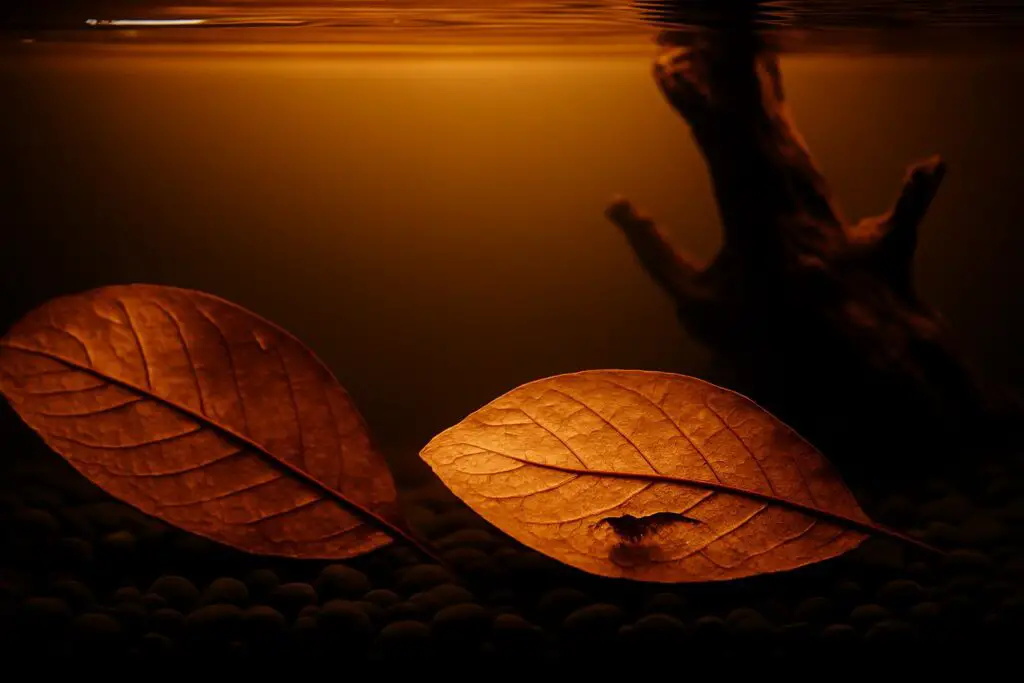
Indian Almond Leaves come from Terminalia catappa, also called catappa or sea almond. After they dry and fall, they are collected, cleaned, and sold for aquarium use. The value of these leaves lies in the compounds locked inside them. As they soak, they release tannins, humic substances, and trace organics that shape water chemistry and biology in gentle ways. This is why many aquarists use them for blackwater setups, soft water species, shrimp tanks, and breeding projects.
In nature, many fish live in leaf litter and tea-colored streams. Recreating some of that chemistry in your aquarium can help those species behave and thrive. Indian Almond Leaves let you achieve this naturally without complex equipment.
How Indian Almond Leaves Help Your Aquarium
Gentle Water Conditioning and pH Support
As the leaves break down, they release tannins and mild organic acids that can soften the look of the water and nudge pH downward. The result is an amber tint that filters harsh light and a small, gradual change in acidity. This suits blackwater and soft water fish such as bettas, gouramis, many tetras, rasboras, pencilfish, and dwarf cichlids like Apistogramma. It also helps fish that come from flooded forest environments and slow streams.
The real impact on pH depends on your carbonate hardness, also called KH. High KH resists change, while low KH allows a faster pH shift. That is why you add leaves slowly at first and test weekly until you understand how your tank responds.
Natural Antimicrobial Support
Tannins and related compounds can help inhibit some bacteria and fungus in a mild way. They will not replace medicine, but they do make the environment less favorable for certain pathogens. With clean water and stable parameters, this extra support often shows up as better fin condition and fewer minor issues. Indian Almond Leaves are supportive, not a cure; for serious disease you still need correct diagnosis, good water quality, and proven treatments.
Stress Reduction and Better Behavior
Dimmer, tea-colored water is less stressful for shy fish. The leaves also provide cover and territories, which lowers aggression in species that spar over space. Bettas often build more stable bubble nests under a leaf. Gouramis, rasboras, and tetras school with more confidence when glare is reduced. Less stress means stronger immune function and better color.
Spawning and Fry Survival
Leaves foster tiny life. As they soften, they grow a layer of biofilm and microfauna that fry can eat. The leaves also create calm pockets of flow and visual shelter. These two effects together can improve fry survival during the vulnerable first days, when small foods like infusoria make a difference. Many breeders toss in a few leaves before and after spawning to support these natural advantages.
Shrimp and Snail Nutrition
Indian Almond Leaves double as natural food. Shrimp and snails graze on the biofilm and then move on to the softening leaf tissue. This steady, low waste feeding method promotes healthy gut activity and natural foraging behavior. Yes. Shrimp and snails graze biofilm and softened leaf tissue, turning each leaf into a long lasting natural food source.
Aesthetic and Biotope Realism
Leaf litter changes the look and mood of a tank. The amber tone and scattered leaves build a natural scene with depth and contrast. If you like South Asian, Amazonian, or peat swamp themes, leaves help you hit the mark without chemical dyes. The look also hides detritus better between cleanings and can make fish feel more secure.
When Indian Almond Leaves Make Sense
They are a strong fit for species adapted to soft, acidic, or tannin-rich waters. Bettas, gouramis, many tetras, rasboras, pencilfish, otocinclus, kuhli loaches, and dwarf cichlids often respond well. Caridina and Neocaridina shrimp also benefit. Wild-caught blackwater fish and delicate fry appreciate the extra support.
Leaves are also useful in quarantine tanks for hardy species. The tint reduces stress while fish settle. They are valuable after spawning, when parents or fry need calm water and microfoods. They help during acclimation for soft water fish that find bright, unconditioned tap water harsh.
What They Do Not Do
Leaves do not replace filtration, biosecurity, or water changes. They do not fix overstocks, ammonia spikes, or poor maintenance. They are not a precise pH buffer, because KH controls how much the pH can move. They are not a medicine. Indian Almond Leaves are supportive, not a cure; for serious disease you still need correct diagnosis, good water quality, and proven treatments.
Heavy leaf litter can lower oxygen at night if you have weak surface agitation. Keep sensible stocking, aim your filter return for gentle ripple, and clean out excess decay during routine care.
How to Use Indian Almond Leaves
Sizing and Dosing
Start simple and slow. Start with 1 medium leaf per 10–15 gallons of water, or a small piece for nanos about 3–5 gallons. Observe the amber tint and fish behavior, then adjust gradually. If your KH is high, you may need more leaves for visible tint. If your KH is very low, go slower to avoid a fast pH drop.
Preparation
Rinse the leaf under tap water to remove dust. Many aquarists pre-soak in dechlorinated water for 12 to 24 hours so the leaf sinks faster and releases the first burst of tannins outside the display. A quick pour-over with boiling water also works to sink and sterilize the surface. Let it cool before use. Do not use bleach or soap. If you collect leaves yourself, avoid areas with pesticides or traffic pollution. When in doubt, choose leaves sold for aquarium use from reputable vendors.
Placement
You can float the leaf and let it sink on its own, tuck it under decor, or weigh it down with a small stone. Try to spread leaves across the tank instead of stacking them. This improves surface area for biofilm and spreads shelter for shy fish.
Replacement Schedule
Leaves start to soften within a week and often skeletonize within 3 to 6 weeks, depending on temperature, pH, and cleanup crew. Replace each leaf every 2–4 weeks, or when it is mostly broken down or the water tint fades to pale. You can leave skeletal veins in for shrimp to graze or remove them during your next water change.
Monitoring
Test pH and KH weekly for the first month after you start using leaves. Watch fish behavior. If fish are gasping, increase surface agitation and perform a partial water change. If the water is darker than you like, increase water changes or run a small bag of activated carbon. Note that carbon will remove tannins quickly, so the tint and some benefits will fade too.
Combining With Other Botanicals
You can combine Indian Almond Leaves with alder cones, oak leaves, seed pods, and driftwood for a richer biotope look. Add items one at a time and track pH and KH as you go. Patience prevents parameter swings, especially in small tanks.
Water Parameters and Chemistry Basics
Understand how KH shapes results. KH buffers acids, so high KH resists pH change even when tannins are present. In such water, leaves will tint more than they change pH. In very low KH water or RO based systems, acids from botanicals can move pH faster. This is why steady testing and gradual dosing are essential.
Leaves do not add much hardness or minerals. Do not expect them to raise GH or supply calcium for snails or shrimp. Use proper remineralizers if you run RO water. Leaves contribute a small amount to total dissolved solids, but far less than salts or buffers.
Filtration also interacts with leaves. Strong biological filtration will quickly process any extra organics. Activated carbon and some resins pull tannins from the water, reducing tint and some effects. None of this is good or bad by itself. Match it to your goals.
Tank Types and Aquascapes That Benefit
Blackwater betta aquariums are a classic match. A few leaves, some wood, and gentle flow create calm conditions where a betta can nest and explore. Low intensity lighting will show a deep bronze tone without washing out color.
Planted tanks tolerate leaves well. The tint filters harsh light and can reduce algae pressure on slow growers. Most plants do fine under amber water. If growth slows, slightly increase photoperiod or intensity. Clear a small area of leaf litter around delicate carpeting plants to prevent smothering.
Shrimp-only tanks are a perfect use case. Leaves offer shelter, biofilm grazing, and slow-release food without spiking nutrients. Add crushed cuttlebone or a shrimp mineral block if your water is very soft, since the leaves do not provide calcium.
Community tanks can also use a few leaves to cut glare and reduce stress. Choose compatible fish that appreciate softer conditions. Avoid packing too many botanicals into hard water tanks with fish that prefer high pH, since it adds clutter without real benefit.
Troubleshooting and Common Mistakes
Do not add a pile of leaves on day one. That is the fastest path to a sudden pH swing in low KH water. Build up slowly over two or three weeks, test often, and watch the fish.
Expect a thin white biofilm on new leaves. This is normal and is eaten by shrimp and snails. It is not a harmful fungus. If a leaf smells rotten or fuzzy green, remove it and review your flow and maintenance schedule.
Staining is not dirty water. Tannins tint the water but do not mean poor quality. If you prefer lighter color, run carbon, increase water changes, or use fewer leaves.
Do not rely on leaves to cure disease. They support a healthy environment. They are not a medicine. Combine them with clean water, adequate filtration, and appropriate treatments when needed.
If the tank turns cloudy after adding many botanicals, slow down. Remove some material, increase surface agitation, clean the filter, and perform partial water changes. Once the system stabilizes, reintroduce leaves in smaller steps.
Buying, Storing, and Cost
Look for whole, unbroken, pesticide-free leaves sold for aquarium use. Sizes vary. Medium leaves suit most tanks and are easy to dose. Premium grade leaves are usually thicker and last longer, but standard grades work fine.
Store dry leaves in a cool, dark place in a breathable bag or box. Keep them away from moisture to prevent mold. Most leaves store well for a year without losing much potency.
Cost is modest. A small pack often lasts several months in a nano tank. Even larger tanks only need a few leaves at a time once you dial in your dose.
Step by Step Quick Start
First, test your tap or base water for pH and KH so you know your starting point. Second, rinse one medium leaf and pre-soak it for a day so it sinks quickly. Third, add the leaf, wait 48 hours, and observe tint and fish behavior. Fourth, test pH and KH at the end of the week. Fifth, if you want more tint, add a second leaf and repeat the checks. Sixth, replace the leaf every 2 to 4 weeks, or when it is mostly broken down or the water tint fades to pale.
Practical Benchmarks for Beginners
A light tint that looks like weak tea is a good starting target. Bettas and rasboras typically show brighter colors and calmer swimming at this level. If your tank is under 10 gallons, use half leaves or small pieces so changes are not abrupt. In very hard water with high KH, focus on the look and behavior rather than chasing a pH number that may not move much.
Keep records. A small notebook with dates, number of leaves, and basic test results teaches you how your tank responds. This habit prevents guesswork and helps you repeat success.
Advanced Tips Once You Get Comfortable
Pre-brew a leaf tea by steeping leaves in hot dechlorinated water, then dose the extract during water changes. This gives you finer control over tint and avoids leaf fragments in displays that prioritize a clean look. Rotate leaves monthly to maintain a steady supply of biofilm for shrimp without big swings in tint. Combine leaves with wood that also leaches tannins for a stable tea tone with fewer replacements.
If you breed sensitive fish, season a separate tub with leaves, wood, and a sponge filter for two weeks before use. This creates a mature microbe base. Then move pairs and eggs into this prepared water. The microfoods and shelter can boost first week survival.
Conclusion
Indian Almond Leaves are simple, natural, and effective. They add gentle tannins, support a stable soft water environment, reduce stress, and feed the micro-life that keeps tanks dynamic. Used with patience and basic testing, they make many fish and shrimp more comfortable and more colorful. Start small, watch your tank, and let the leaves guide you toward the level of tint and biological activity that fits your goals.
FAQ
Q: How many Indian Almond Leaves should I use
A: Start with 1 medium leaf per 10–15 gallons of water, or a small piece for nanos about 3–5 gallons. Observe the amber tint and fish behavior, then adjust gradually.
Q: Will Indian Almond Leaves lower pH
A: They can nudge pH downward by releasing tannins and acids, but the effect depends on your KH; high KH resists change, very low KH can allow a fast drop if you add too many leaves at once.
Q: Are they safe for shrimp and snails
A: Yes. Shrimp and snails graze biofilm and softened leaf tissue, turning each leaf into a long lasting natural food source.
Q: How often should I replace the leaves
A: Replace each leaf every 2–4 weeks, or when it is mostly broken down or the water tint fades to pale.
Q: Can I use Indian Almond Leaves instead of medication
A: No. Indian Almond Leaves are supportive, not a cure; for serious disease you still need correct diagnosis, good water quality, and proven treatments.