
We are reader supported. When you purchase through links on our site, we may earn an affiliate commission. Also, as an Amazon affiliate, we earn from qualifying purchases.
Indian almond leaves are one of the simplest natural tools you can use to improve fish health and create a more stable aquarium. They add tannins, soften water slightly, support immune function, and encourage natural behavior. Used correctly, they help bettas, shrimp, dwarf cichlids, rasboras, and tetras thrive. This guide explains what they do, how to use them, how much to add, and how to avoid common mistakes. Read through once, then follow the quick start steps at the end.
What Are Indian Almond Leaves
Indian almond leaves come from the tree Terminalia catappa. You will also see the name catappa leaves. In nature, these leaves fall into tropical streams and create soft, acidic, tea-colored water. Many popular aquarium fish evolved in this type of environment.
What They Contain
Dry leaves release tannins, humic acids, and small amounts of flavonoids. These compounds have mild antimicrobial and antifungal effects. They also chelate metals, buffer pH slightly in low-alkalinity water, and tint water a warm brown. The tint is not dirt. It is a dissolved organic color that many fish prefer.
Why That Matters
Modern tap water is often hard, bright, and very stable. Many softwater species can live in it, but they may not show peak coloration, breeding behavior, or stress resilience. Indian almond leaves adjust conditions toward what these fish experience in the wild. You get calmer fish, more natural behavior, and sometimes better survival of fry.
Core Benefits For Aquariums
Water Conditioning
Leaves slowly release tannins that lower pH slightly when carbonate hardness is low. They also add humic substances that bind some heavy metals and reduce oxidative stress. The result is gentler water for blackwater and softwater species.
Health Support
Catappa compounds can limit fungus on eggs, reduce bacterial pressure on damaged fins and gills, and support slime coat production. They are not a replacement for antibiotics or good husbandry, but they can tilt the balance in favor of your fish and shrimp.
Behavior And Comfort
Dimmer, tinted water reduces stress. Many fish display stronger colors and bolder foraging under tannin stain. Leaves also provide cover and a surface for biofilm. Shrimp and fry feed on this biofilm constantly, improving growth and survival.
Breeding Aid
Bettas, gouramis, and other anabantoids use leaf surfaces to anchor bubble nests. Dwarf cichlids like apistos use leaf litter for spawning sites. Tannins can suppress fungus on eggs and keep microbe levels in check around nests.
Who Benefits Most
Great Matches
Bettas, gouramis, rasboras, danionins from soft water, most tetras, dwarf corydoras, dwarf cichlids, plecos from softwater habitats, caridina shrimp, neocaridina shrimp, and many snails. These animals often show better color, feeding response, and breeding condition with leaf tannins.
Use With Care
Livebearers like guppies, mollies, and swordtails prefer harder, alkaline water. African rift cichlids from Lakes Malawi and Tanganyika also prefer high pH and high hardness. You can still use a small amount of leaf for mild antimicrobial support, but avoid strong tint or big pH shifts. Monitor KH and pH closely.
Choosing Good Leaves
Commercial Vs Wild Collected
Buy aquarium grade dried leaves from a trusted source. They are usually pesticide free and properly dried. If you collect leaves yourself, only harvest from trees far from roads and sprayed areas. Choose brown, dry leaves that fell naturally. Green leaves are not suitable.
Size, Color, And Cleanliness
Pick large, intact leaves with a uniform brown color. Avoid leaves with mold, white powder, strong odor, or oily sheen. A standard medium leaf is about 15 to 20 cm long. Store in a dry, sealed container away from moisture and sunlight.
How Indian Almond Leaves Affect Water
Tint And Clarity
Leaves release a tea-like color that absorbs blue light. This lowers glare and calms fish. It does not harm filtration or oxygen when used in normal amounts. Activated carbon or frequent water changes will reduce the tint if you prefer a lighter color.
pH And KH
Tannins can lower pH slightly in water with low carbonate hardness. Expect a minor change, often 0.2 to 0.5 pH units, when KH is under 3 dKH. In hard, highly buffered water, pH may not move much, but you still get the health benefits from tannins and humic substances.
Conductivity And GH
Leaves add very little to general hardness. They can decrease conductivity slightly by binding some ions. For true soft blackwater, you still need reverse osmosis water and mineral control. Leaves are a supplement, not a replacement for proper water prep.
Preparation Methods
Quick Rinse
Rinse leaves under running water to remove dust. This is enough for most tanks with mature filtration.
Pre Soak Or Boil
Soak in hot water for 20 to 30 minutes or boil for 10 to 15 minutes to sink leaves faster and release initial tannins. Pre soaking prevents floating and reduces the chance of fungal fuzz. The soak water can be poured into the tank to add tannins or discarded for a slower effect.
Leaf Tea
Make a concentrated brew. Add several leaves to a pot of dechlorinated water. Heat without a rolling boil for 20 to 30 minutes until very dark. Cool, strain out fragments, and store in the fridge for up to a week. Dose the tea slowly to reach your preferred tint.
Filter Bag Use
Place crushed leaves in a fine mesh bag and keep it in your filter or high flow area. This gives steady release and avoids leaf bits around the tank. Replace the bag monthly or when the tint fades.
Dosing Guidelines
Starting Dose
Begin with 1 medium leaf per 10 to 20 liters of water. For a 40 liter tank, that is 2 to 4 leaves. For a 100 liter tank, that is 5 to 10 leaves. Start low if your KH is under 2 dKH or if the tank is new.
Adjusting Dose
Watch fish behavior, pH, and water tint for a week. If fish are calm and the tint is light, you can add more. If pH drops faster than 0.3 in a day, pause and increase water changes or add baking soda carefully to raise KH. Stability matters more than a dark color.
For Shrimp And Fry
Use a gentle but steady supply. 1 leaf per 20 to 25 liters is a good baseline. Provide one extra leaf in the tank for biofilm grazing. Stable parameters are more important than heavy tint.
Placement And Aesthetics
Whole Leaves On Substrate
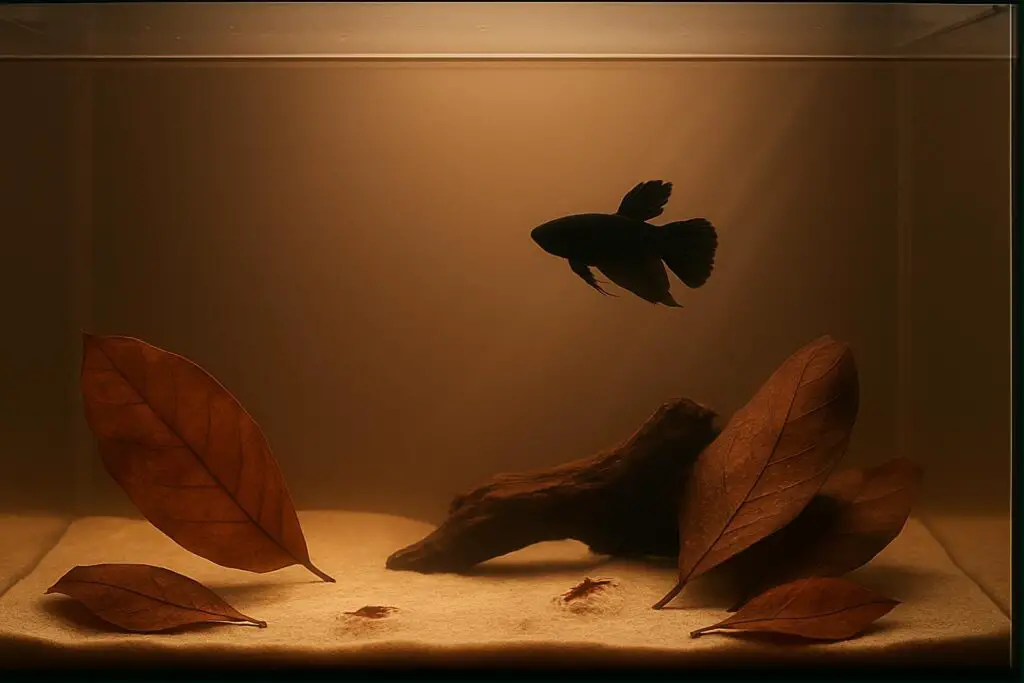
Lay leaves flat or tuck them under wood. They create microhabitats and shield timid fish. Replace them as they skeletonize.
Leaf Litter Beds
For blackwater biotopes, use many leaves to form a shallow litter bed. Combine with twigs and seed pods that are aquarium safe. Increase aeration and filter capacity to handle the extra organics.
Maintenance Timeline
How Long Leaves Last
In most tanks, leaves soften in a few days, grow biofilm in 1 to 2 weeks, and break down over 3 to 8 weeks. Shrimp and snails speed the process. Replace a few leaves at a time to keep conditions steady.
Filter And Substrate Care
Leaf fragments can collect in prefilters and intakes. Rinse sponges weekly. Vacuum debris lightly during water changes, but leave some mulm for biofilm and microorganisms.
Troubleshooting Common Issues
Water Too Dark
Do a partial water change and run activated carbon for a few days. Reduce the number of leaves or switch to filter bag dosing for finer control. Light darkness is usually enough for health benefits.
pH Drop Or Crash Risk
If KH is near zero, any acid source can cause a crash. Raise KH to at least 2 dKH using a small amount of sodium bicarbonate or a commercial buffer. Increase aeration, reduce leaf count, and test pH daily until stable.
White Fuzz On Leaves
This is saprophytic fungus and biofilm. It is normal and safe. Shrimp and snails eat it. If it spreads fast or smells foul, you added too many leaves at once in a young tank. Remove a few leaves, increase flow, and perform a water change.
Oily Film On Surface
Increase surface agitation with a filter outlet or air stone. Skim the surface with a paper towel during maintenance. Biofilm at the surface builds up when organics rise and gas exchange is low.
Bad Odor
Mild earthy smell is normal. Strong sulfur smell signals anaerobic decay. Vacuum debris, reduce leaf mass, and boost flow. Check that your filter is not clogged.
Fish Gasping
This is not caused by tannins. It is oxygen stress. Add an air stone, lower water temperature a bit if safe for the species, and reduce leaf load if the tank is new and bacterial demand is rising. Ensure the filter is moving water well.
Combining With Other Natural Materials
Alder Cones And Catappa Bark
Alder cones release strong tannins, similar to leaves but more concentrated. Catappa bark breaks down slower and gives a long, steady release. Use fewer cones than leaves to avoid overdosing.
Cinnamon Sticks And Peat
True Ceylon cinnamon can add mild antimicrobial effects and pleasant tannins. Use sparingly and verify it is safe. Peat lowers pH more strongly but can be messy. Place peat in a filter bag and monitor KH closely.
What To Avoid
Avoid scented leaves, treated woods, or decorative potpourri. Do not use random backyard botanicals without research. Many plants contain oils and compounds that harm fish.
Safe Sourcing And Sterilization
Buying Tips
Choose suppliers that specify pesticide free and aquarium safe. Leaves should be clean, dry, and consistent in size. Mixed batches can vary in potency, so test and adjust.
At Home Sterilization
Rinse, then boil for 10 to 15 minutes if you want extra safety. You can also bake at low heat until fully dry. Freezing helps with pests but does not remove chemical residues. When in doubt, do not use questionable leaves.
Using Leaves With Medications And Equipment
Medications
Leaves can color water and may bind some substances. During medication, keep leaf dosing light to avoid interactions. After treatment, use fresh carbon to clear medication, remove the carbon, then reintroduce leaves gradually.
Activated Carbon And UV
Carbon will remove tannins and reduce leaf effect. UV clarifiers also lighten color and reduce microbes. You can still use leaves for habitat benefits, but expect less tint.
Breeding And Fry Care
Egg Protection
Leaf tannins help suppress fungus on eggs of tetras, cichlids, and gouramis. A leaf near the spawning site is a simple insurance step. Maintain clean water and gentle flow.
Bubble Nesting Species
Bettas and gouramis like large, flat leaves at the surface or near it. These stabilize bubble nests, encourage spawning, and make the fish feel secure. Keep surface agitation low during nesting.
First Foods And Biofilm
As leaves soften, they grow biofilm and microfauna that serve as constant grazing for shrimp and fry. This natural food complements infusoria and powdered fry foods.
Myths And Realities
Myth: Leaves Cure Disease
Reality: Leaves support immunity and reduce pathogen pressure but do not replace proper diagnosis and treatment. Use them alongside clean water, correct temperature, and proven medications when needed.
Myth: Dark Water Equals Healthy Water
Reality: Health comes from stable parameters and low nitrogen waste. Dark color is optional. You can run a lightly tinted tank and still gain the benefits.
Myth: Leaves Always Lower pH
Reality: In high KH water, pH will barely move. Tannins still help fish, but do not expect big pH changes without lowering KH.
Step By Step Quick Start
Step 1: Test And Prepare
Test pH, GH, KH, and nitrate. If KH is under 2 dKH, raise it slightly for stability. Plan your target tint and dose lightly at first.
Step 2: Rinse And Pre Soak
Rinse 2 to 4 leaves for a 40 liter tank. Pre soak in hot water so they sink and release initial tannins more evenly.
Step 3: Add And Observe
Add leaves to the tank. Watch fish for 24 to 48 hours. Check pH daily in the first week. Increase aeration if you see surface film.
Step 4: Adjust Dose
If tint is too light after a week, add 1 or 2 more leaves. If pH swings, remove some leaves and perform a partial water change.
Step 5: Maintain
Replace leaves as they skeletonize over 3 to 8 weeks. Rinse prefilters weekly. Keep up with regular water changes.
Costs And Sustainability
Budget Planning
A pack of leaves is affordable and lasts months. Your cost per week is low compared to many additives. Leaf tea can stretch supply and give finer control.
Sustainable Use
Buy from suppliers that harvest leaves without cutting trees. Avoid waste by adjusting dose slowly and reusing partially spent leaves in leaf tea or filter bags until fully exhausted.
Frequently Asked Questions
How many leaves per liter
Start with 1 medium leaf per 10 to 20 liters. Adjust based on tint, species, KH, and fish behavior.
How long before I see results
Light tint appears within hours. Behavior changes can show in a day or two. Health and breeding benefits build over weeks.
Can I use leaves in a planted tank
Yes. Most plants are fine with tannins. Very low pH can slow some species. Keep dosing moderate and ensure good lighting.
Do leaves increase ammonia
Not directly. They add organics that bacteria process. In mature tanks, this is safe. In new tanks, dose lightly and avoid heavy leaf beds until the filter is seasoned.
What if I need clear water for display
Use a filter bag with a small amount of crushed leaf and run carbon for clarity. You still get some humic benefits without heavy tint.
Advanced Tips For Consistency
Standardize Your Brew
Make leaf tea with a fixed ratio, such as 10 leaves per liter of water simmered for 30 minutes. Dose by volume during water changes to maintain a consistent tint and effect.
Track With A Log
Record date, number of leaves added, pH, KH, and observations. Adjust when you see drift. This keeps conditions stable across seasons and different batches of leaves.
Blend With RO Water
For sensitive softwater species, mix your tap water with RO to reach GH 2 to 6 and KH 0 to 2. Then use leaves to add humics without relying on them for large pH shifts.
Safety Checklist
Before Adding Leaves
Confirm tank is cycled. Test KH and pH. Rinse or pre soak leaves. Plan aeration. Have carbon on hand in case you want to reduce tint quickly.
After Adding Leaves
Watch fish breathing and behavior. Check for biofilm and fuzz. Test pH for a few days. Adjust gradually. Stability is the goal.
Conclusion
Indian almond leaves are easy to use and deliver real benefits. They condition water gently, support immunity, and promote natural behavior and breeding. Start with a low dose, monitor pH and KH, and add more only when you see the tank handle it well. Combine leaves with strong biofiltration, regular water changes, and proper diet for the best outcomes. With a simple plan and steady habits, you can turn a basic tank into a calm, healthy environment that your fish and shrimp will reward with color, activity, and long life.