
We are reader supported. When you purchase through links on our site, we may earn an affiliate commission. Also, as an Amazon affiliate, we earn from qualifying purchases.
Small bowls and glass vases can be beautiful, but they are unforgiving. Without a filter, waste and algae creep up fast, oxygen runs low, and any mistake shows up within hours. You can still keep a clean, healthy no filter setup if you follow a tight plan. This guide gives you a clear, step by step system that works for vases and bowl tanks, with simple rules, exact schedules, and beginner friendly choices.
Understand the limits before you start
Very small water volumes change quickly. Temperature, oxygen, and water chemistry swing faster than in a larger tank. That is the core challenge with bowls and vases.
Fish need space, stable oxygen, and steady parameters. Most bowls under 5 gallons do not meet that standard for fish. If your container is under 3 gallons, choose plants, shrimp, and snails instead of fish. You will get a cleaner, easier, and more ethical setup.
For fish, aim for 5 gallons or more, even if you skip the filter. For shrimp and snails, 2 to 3 gallons is workable. A 1 gallon vase can be done for plants and snails with strict maintenance.
Pick the right container
Size and shape matter
Choose the largest container you can place and maintain. A wide opening improves gas exchange and makes cleaning easier. Narrow neck vases trap heat, limit oxygen, and make siphoning difficult. A simple, wide bowl, cylinder, or cube is best.
Targets that work well
Plant only or snail vase 1 to 2 gallons
Shrimp bowl 2 to 3 gallons
Single betta 5 gallons
Material and safety
Glass is clear and scratch resistant. Acrylic is lighter but scratches easily. Use a stable stand and a mat under the container to spread the weight. Avoid containers with painted interiors, perfumes, or residues. Food safe glass is ideal.
Cover and airflow
Use a loose lid or mesh to reduce evaporation and prevent jumps. Do not seal the top. A sealed vase can drop oxygen at night and stress animals.
Equip a simple no filter setup
Light control
Give plants enough light to outcompete algae, but not so much that the bowl turns green. Start with 6 to 8 hours per day on a timer. Avoid direct window sun. Place the light slightly above the bowl and raise it if algae increases. If plants pale, increase duration by one hour per week.
Heat and temperature
Stable temperature matters more than chasing a number. For tropical shrimp and bettas, aim for 22 to 26 C. In a cool room, use a small adjustable heater with a reliable thermostat and a separate thermometer you can read at a glance. Keep bowls away from drafts, radiators, and windows.
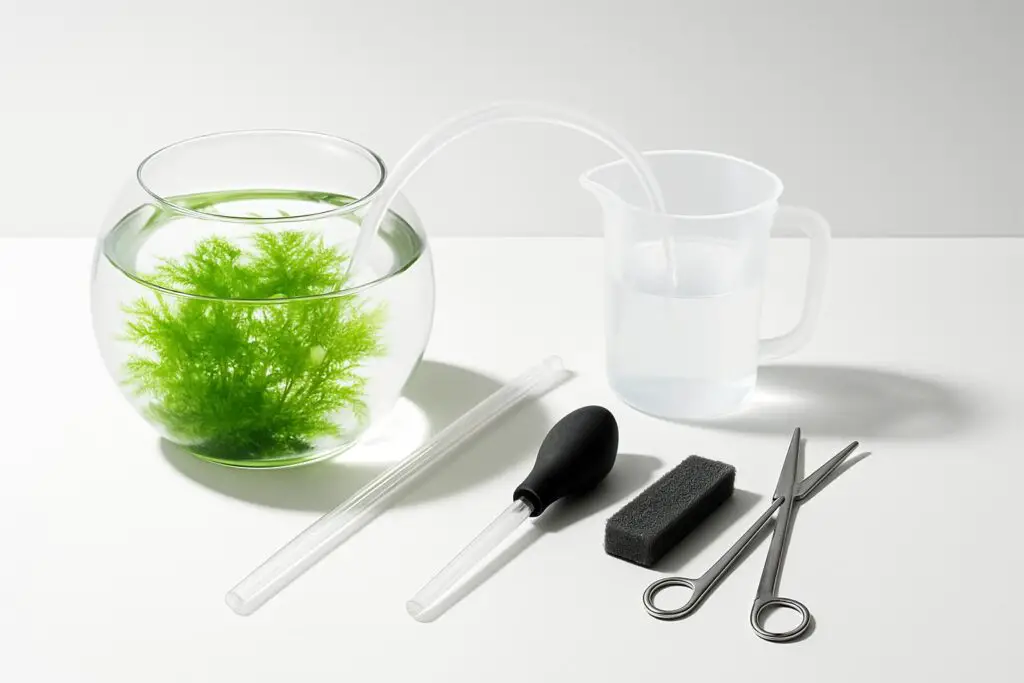
Basic tools you will use often
Dechlorinator for tap water
Thin airline tubing to siphon gently
Turkey baster or pipette to spot clean
Soft sponge or algae pad safe for aquarium glass
Bucket used only for aquarium water
Liquid test kit for ammonia, nitrite, and nitrate
Aquarium scissors and tweezers for plant care
Choose low waste residents
Best options for success
Plants only with a few pest snails that arrive on plants
Neocaridina shrimp such as cherry shrimp in 2 to 3 gallons
Snails like ramshorn, bladder, or nerite
These choices produce modest waste, graze on algae and biofilm, and do not need strong water movement.
If you want fish
Use at least 5 gallons. A single betta can work without a filter if the bowl is heavily planted, you keep the surface open for breathing, and you change water on schedule. Tiny livebearers like endlers add waste quickly and are risky without filtration. Avoid goldfish in bowls. Avoid schooling fish that need swimming space.
Practical stocking guidelines
1 to 2 nerite snails per 2 to 3 gallons
10 to 15 neocaridina shrimp in 3 gallons once cycled and stable
1 betta in 5 gallons with dense plants
Start light and let the system mature before adding more life.
Plants do the heavy lifting
Fast growers for nutrient control
Floating plants remove nitrate and shade the bowl. Use salvinia, frogbit, or water lettuce. Duckweed works but spreads fast and can become messy. Stems like hornwort, elodea, and water sprite also grow quickly and help keep water clear.
Easy slow growers for stability
Java moss, java fern, and anubias are hardy. Tie them to a rock or wood. They create surface area for beneficial bacteria and shrimp grazing. Combine fast and slow growers for balance.
Pothos and emersed roots
You can root pothos with leaves above the water and roots in the bowl. It absorbs nutrients well and stabilizes a no filter setup. Keep any leaves out of the water to avoid decay.
Substrate and hardscape
Bare bottom, gravel, or soil
Bare bottom is easy to clean but offers less surface for bacteria and fewer plant options. Fine gravel or coarse sand looks natural and traps mulm for plant roots. Enriched soil capped with sand grows plants best but can release ammonia if disturbed early.
Simple soil cap method for vases
Optional but effective. Use a thin layer of inert potting soil with no fertilizers or pesticides. Rinse lightly. Cap with 1 to 2 cm of sand. Plant heavily. Keep animals out until the bowl has stabilized for 4 to 6 weeks. Do not stir the substrate. Siphon water from above the sand only.
Water and chemistry basics
Dechlorinate every time
Tap water often contains chlorine or chloramine that harms fish, shrimp, and beneficial bacteria. Treat all new water with dechlorinator. Match temperature to within 1 to 2 C of the bowl.
GH, KH, and pH for beginners
GH is general hardness, minerals like calcium and magnesium. KH is carbonate hardness, a buffer that stabilizes pH. Soft water can crash pH and stress shrimp and snails. Hard water can leave scale but is stable.
Targets that work for most shrimp and snails
GH 6 to 10
KH 3 to 6
pH 6.8 to 7.8
If your water is very soft, add a small amount of crushed coral or a commercial remineralizer to raise KH and GH gradually.
Oxygen and surface area
Bowls and vases can run low on oxygen, especially at night when plants respire. A wide opening improves gas exchange. Keep the surface free of oily film. Gently stir the surface during water changes. An airstone is optional if you want extra oxygen, but you can succeed without it by managing stocking, plants, and water changes.
Cycle a no filter bowl the easy way
What cycling means
Beneficial bacteria convert toxic ammonia from waste into nitrite, then into less harmful nitrate. In a no filter tank, these bacteria live on glass, plants, substrate, and decorations. You need to establish them before adding animals.
Quick start methods
Heavily plant the bowl on day one. Add a small piece of seasoned media from a mature aquarium if you can. Bottled bacteria can help, but live plants are your best ally. For two weeks, add a tiny pinch of fish food every few days to feed bacteria. Test for ammonia and nitrite. Keep both close to zero. Do 30 to 50 percent water changes if either rises above 0.25 ppm.
Silent cycle with plants and snails
Another approach is to add plants and a few snails first. Feed very lightly. Wait 3 to 4 weeks with weekly water changes. Once ammonia and nitrite stay at zero and plants are growing, add shrimp or a single fish in a larger bowl.
Routine maintenance that keeps it clear
Daily 30 second check
Look at the water clarity, the surface, and the animals. Check temperature. Remove any uneaten food with a baster. This habit catches problems early.
Feeding rules
Feed less than you think. For shrimp and snails, offer a tiny pinch of food or a small vegetable slice once or twice per week and remove leftovers within 4 hours. For a betta, 2 to 4 small pellets per day works in a 5 gallon bowl. Give one fasting day per week. Overfeeding is the fastest way to foul a no filter bowl.
Water change schedule
For 1 gallon vases with plants and snails, change 40 to 60 percent twice per week.
For 2 to 3 gallon shrimp bowls, change 30 to 40 percent once per week. In the first month, do twice weekly changes until stable.
For 5 gallon betta bowls, change 30 to 50 percent weekly. If nitrate rises above 20 ppm or the surface shows film, add a midweek 20 percent change.
Monthly light reset
Trim plants, thin floaters, wipe the glass, and gently vacuum debris from the surface of the substrate with a thin siphon. Never deep wash everything at once. Leave at least half the surfaces untouched to preserve bacteria.
Step by step cleaning method for bowls and vases
Prepare replacement water
Fill a bucket with tap water. Add dechlorinator. Match temperature. If your bowl is heated, aim within 1 C. Let the bucket sit for a few minutes to mix.
Dislodge debris first
Use your fingers or a soft brush to gently swish plants and decor. This lifts trapped waste into the water column so you can remove it during the change.
Siphon slowly with airline tubing
Start a siphon using thin tubing to avoid disturbing substrate. Pinch the tube to control flow. Move the tip just above the substrate to pick up mulm without sucking up sand. Use a turkey baster to reach tight spots and to spot clean between water changes.
Clean the glass
Wipe the inside with a soft sponge safe for aquariums. For diatoms, rub gently with a rougher pad that will not scratch. Avoid soap or household cleaners. If hard water leaves white crust above the waterline, wipe with a cloth dampened with vinegar, then rinse with dechlorinated water before refilling.
Refill and finish
Refill slowly to avoid stirring the substrate. Pour the water onto your hand or a small saucer to diffuse the flow. Reposition plants if needed. Turn the light back on. Feed only after the bowl clears.
Control algae and cloudiness
Balance light and nutrients
If algae increases, reduce light duration by one hour, raise the light a few centimeters, and increase water changes for two weeks. Add more fast growing plants or floaters. Feed less.
Common issues and fixes
Green water looks like pea soup. Cut light to 4 hours for a week, change 30 to 50 percent water every few days, and add more floaters.
Brown dust algae or diatoms show up in new bowls. Wipe off during changes. They often fade after a month as the system stabilizes. Nerite snails help.
Hair algae thrives in high light and low nutrients for plants. Increase plant mass, improve water changes, and manually remove strands during each service.
Use cleanup crew wisely
Nerite snails excel at cleaning glass and hard surfaces without multiplying in freshwater. Ramshorns and bladder snails clean well but may multiply if food is abundant. Shrimp graze on biofilm and soft algae. Cleanup crews help, but the root fix is still light, feeding, and water changes.
Troubleshooting quick guides
Ammonia or nitrite detected
Do a 50 percent water change immediately. Add extra floating plants. Stop feeding for 24 to 48 hours. Test daily. Repeat changes until both read zero. Review stocking and feeding. In very small bowls, plan more frequent changes long term.
Surface film or oily sheen
Lay a paper towel flat on the surface for two seconds, then lift. It will pull off the film. Reduce feeding and increase surface plants. During water changes, agitate the surface gently.
Bad smell or thick cloudiness
Rotting food or overstocking is likely. Remove any food and dead leaves. Change 50 percent of the water now, then 30 percent two days later. Cut feeding by half. Check that no substrate was stirred too deeply.
Shrimp losses
Sudden deaths point to unstable parameters, copper exposure, or low minerals. Test ammonia and nitrite. Use remineralized water if your tap is very soft. Avoid plant fertilizers with copper. Acclimate shrimp slowly by dripping new water over at least one hour.
Seasonal and placement tips
Evaporation and top off
When water evaporates, minerals are left behind. Top off with dechlorinated water to restore the level, but still do your regular water changes to export minerals and waste. Do not rely on top offs alone.
Sun and temperature swings
Keep the bowl out of direct sun to prevent algae blooms and overheating. In summer, run shorter light periods. In winter, avoid cold windowsills. Monitor temperature daily.
Vacation plan
Before leaving, perform a larger water change, thin plants, and skip feeding for short trips under one week. For longer trips, use a trusted caretaker with exact instructions to feed very lightly every other day. Pre measure food to prevent overfeeding.
Example setups and schedules
1 gallon plant and snail vase
Residents small ramshorn or bladder snails that arrive on plants
Plants salvinia or frogbit, water sprite, java moss
Substrate bare or a thin sand layer
Light 6 hours daily
Feeding none at first. Add a tiny pinch of food once a week if plants are sparse
Maintenance change 50 percent water twice per week. Wipe glass weekly. Trim floaters to cover half the surface
Goal no detectable ammonia or nitrite. Visible algae is light and controlled
3 gallon shrimp bowl
Residents 10 neocaridina shrimp after cycling
Plants dense mix of floaters, moss, anubias or java fern, and a bunch of fast stems
Substrate fine gravel or sand
Light 7 to 8 hours daily
Feeding small shrimp food dust twice per week. Remove leftovers after a few hours
Maintenance change 30 to 40 percent weekly. Extra 20 percent midweek if nitrate exceeds 20 ppm. Trim and thin plants monthly
Temperature 22 to 24 C
5 gallon betta bowl no filter
Resident 1 betta
Plants heavy planting with floaters for shade, java fern, anubias, and stems
Substrate sand or gravel for stability and ease of cleaning
Light 7 hours with a consistent schedule
Feeding 2 to 4 small pellets per day, one fasting day weekly
Maintenance change 40 percent weekly, plus a 20 percent touch up if the surface films or water smells earthy. Keep surface clear for breathing
Temperature 24 to 26 C with a reliable heater and thermometer
Pro tips that make a difference
Plant first, stock later
Let plants root and start growing before adding animals. A month of plant growth stabilizes the bowl.
Use your nose and eyes
Clear water, clean smell, and active animals mean you are on track. Cloudy water, strong smell, or gasping near the surface mean immediate water change and a review of feeding and light.
Trim floaters regularly
Keep about half the surface covered. Too many floaters block oxygen and light below. Too few allow algae to take over.
Keep a simple log
Write dates of water changes, test results, and any issues. Patterns appear fast in small systems and help you adjust before problems grow.
Introduction recap
No filter bowls and vases can be clean and stable if you respect their limits. Stay light on stocking, heavy on plants, and strict on maintenance. The rest of this guide gave you the exact tools and schedules to make it work.
Conclusion
Clean, healthy vase and bowl aquariums depend on three habits. Choose the right container and residents. Plant heavily and balance light. Maintain on schedule with small, frequent water changes and careful feeding. Start simple, watch closely, and adjust in small steps. If you are unsure, do a water change. With this approach, your no filter setup will stay clear, your plants will thrive, and your animals will live well.