
We are reader supported. When you purchase through links on our site, we may earn an affiliate commission. Also, as an Amazon affiliate, we earn from qualifying purchases.
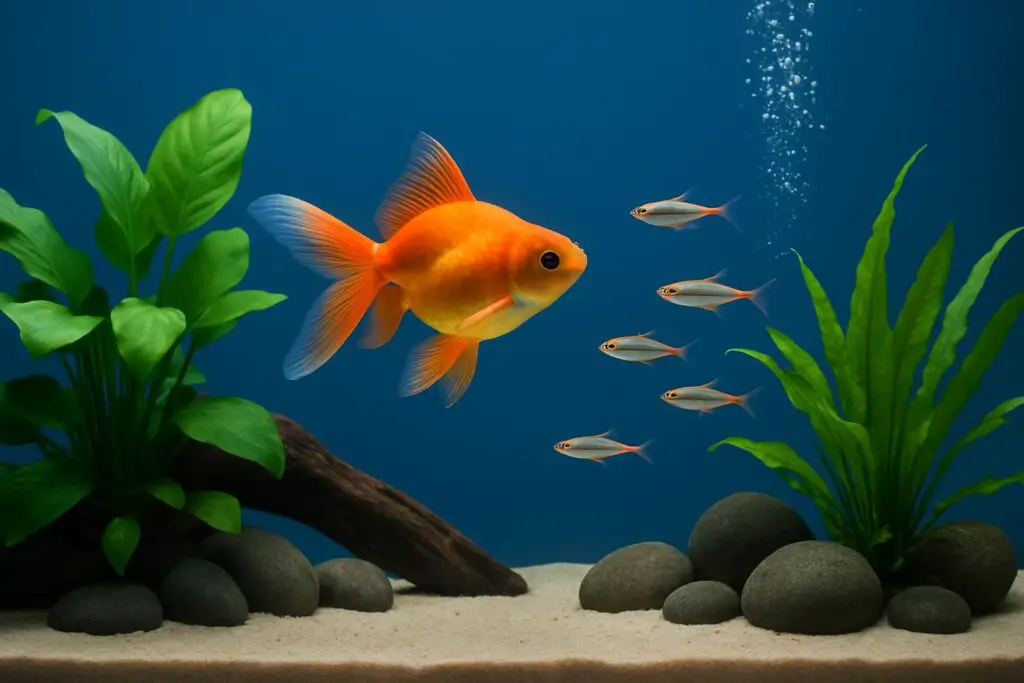
Mixing goldfish with tropical fish looks tempting. You get color, movement, and variety in one tank. But can it actually work without stress and losses? You need a clear plan before you try. This guide explains the real risks, the narrow set of conditions where mixing can succeed, and the exact steps to set up and maintain a stable tank.
Can goldfish live with tropical fish
The short answer
Most combinations are not recommended. Goldfish are cool water fish. Most tropical fish need warmer water. Their needs clash in temperature, diet, behavior, and water quality. There is a small overlap where some temperate fish can live with goldfish at 20 to 23 C 68 to 73 F. If you aim for that overlap and manage risk, a mixed tank can work. If you cannot meet the requirements, keep them separate.
Why most mixes fail
The biggest issues are temperature mismatch, fin nipping, goldfish eating smaller tank mates, heavy waste and poor water quality, feeding conflicts, and disease or treatment incompatibilities. Even if it looks fine at first, problems often appear over weeks as fish grow, compete for food, or the filter falls behind.
Temperature is the deal-breaker
Goldfish thrive at 18 to 22 C 64 to 72 F. Fancy goldfish often do well at the higher end, around 20 to 23 C 68 to 73 F, which helps digestion but is still not tropical. Many tropical fish prefer 24 to 27 C 75 to 81 F. Long term, each group does best in its own temperature range.
The safe overlap is narrow. A stable 20 to 23 C 68 to 73 F suits goldfish and a few temperate species. Most tropical fish will not be comfortable long term in this range. Do not average needs and hope for the best. Instead, pick species that match the same temperature window.
Stability matters as much as the number. Use a reliable heater if your room drops below the target range. Avoid daily swings over 1 C 2 F. Stable temperature helps digestion, immunity, and oxygen levels.
Behavior and body shape mismatches
Goldfish come in two broad types. Single tail types like common and comet are fast, powerful swimmers that grow large. Fancy types like oranda, ranchu, and ryukin have rounder bodies, slower swimming, and often long fins. These differences affect tank mate choices.
Fast species can stress slow fancy goldfish. Fin nippers see flowing fins as targets. Avoid fish known for nipping, such as tiger barbs and some danios, around long-finned goldfish. Stress leads to fin damage, infections, and immune decline.
Goldfish test everything with their mouth. If a fish fits in a goldfish mouth, it can be eaten. That includes small tetras and young livebearers. Even if a fish is too big to swallow, goldfish may harass it during feeding.
Water parameters and bioload
Goldfish produce heavy waste. They eat a lot, graze all day, and stir the substrate. Ammonia and nitrite must stay at zero. Nitrate should be kept low with water changes. This load is hard on small fish that need clean water.
Use strong filtration with a total flow rate of 6 to 10 times the tank volume per hour. Combine mechanical and biological media. Rinse mechanical media in tank water weekly to keep flow strong. Never let filter sponges clog.
Plan for weekly water changes of 30 to 50 percent. Vacuum the substrate. Goldfish stir debris, so expect more frequent maintenance than with a light tropical community.
Goldfish prefer neutral to slightly alkaline pH 7.0 to 8.0 and moderate to hard water. Many tropical fish prefer soft, acidic water. That mismatch is another reason to avoid random mixes. Choose temperate species that tolerate neutral to hard water if you plan a community with goldfish.
Oxygen is critical. Cooler water holds more oxygen, but a tank at 22 C 72 F still needs strong surface agitation. Use an air stone and direct filter output to ripple the surface.
Feeding conflicts
Goldfish are omnivores that need a plant-rich diet and moderate protein. Many tropical fish need higher protein and smaller pellets. Goldfish will outcompete timid fish and will also swallow pellets intended for tank mates. Overfeeding leads to rapid spikes in ammonia and cloudy water.
Use sinking goldfish pellets for the goldfish. Offer small floating or mid-water foods for other fish at the same time, preferably using a feeding ring to keep foods in separate zones. Target feed bottom dwellers with tongs. Stop feeding after 2 to 3 minutes and remove leftovers.
Disease and treatment conflicts
Mixing species increases disease risk. Parasites from new fish can spread quickly in the crowded feeding environment goldfish create. Quarantine new fish for 2 to 4 weeks before adding them to the main tank. Watch for spots, clamped fins, rapid breathing, flashing, or weight loss.
Treatments can conflict. Some tropical fish treatments require high temperatures that can stress goldfish. Some medications or salt levels that goldfish tolerate may harm sensitive tank mates. A separate hospital tank makes treatment simpler and safer.
Species that can work in a temperate community
White Cloud Mountain Minnow
Temperature 18 to 22 C 64 to 72 F. Peaceful, active, and hardy. Keep a group of at least six to reduce stress. Use adults large enough not to fit in a goldfish mouth. Good water flow and clean water are important.
Zebra Danio with caution
Temperature 18 to 24 C 64 to 75 F. Fast swimmers that prefer a group. They can be fin nippy around slow, long-finned goldfish. Choose only with robust fancies and provide space and flow. Monitor for nipping and be ready to separate.
Hillstream Loach with caveats
Temperature 18 to 23 C 64 to 73 F. Needs high oxygen and strong flow with smooth rocks and algae films. This setup can stress fancy goldfish. Works better with stronger swimmers and in larger tanks with a flow zone and a calm zone.
Variatus Platy with caution
Temperature 20 to 23 C 68 to 73 F. Tolerates harder water. Choose adults large enough to avoid predation. They breed readily, and fry will be eaten by goldfish. Watch for fin nipping and be prepared to separate.
Dojo Weather Loach where legal and space allows
Temperature 18 to 22 C 64 to 72 F. Peaceful bottom dweller. Needs fine sand, hiding spots, and a large tank because it grows long and is very active. Check local regulations and do not mix with tiny fish.
Snails and plants
Large snails can sometimes work, but goldfish may pick at their antennae. Smaller snails often become food. Use robust plants like Anubias, Java fern, or hornwort. Goldfish will nibble soft plants and uproot stems. Attach plants to wood or rock instead of planting in the substrate.
Species to avoid with goldfish
Avoid bettas, angelfish, cichlids, tiger barbs, common plecos, and most small tetras. Avoid any fish that nips fins, demands warmer temperatures, or is small enough to be eaten. Many plecos rasp the slime coat of goldfish, causing wounds and infections. Shrimp are often eaten.
Tank size and layout
Give goldfish space. As a simple starting point, plan at least 110 liters 30 gallons for the first fancy goldfish and 60 liters 15 gallons for each additional fancy. Single tail goldfish do best in very large tanks or ponds and are poor choices for mixed communities because of size and speed.
For a mixed temperate tank, add extra volume to dilute waste and reduce crowding. More water volume stabilizes temperature and water quality. Choose a tank with a long footprint to provide swimming room and clear territories.
Layout should create zones. Provide open swimming space for goldfish, planted or hardscape areas for smaller fish to break line of sight, and caves for bottom dwellers. Use rounded gravel or sand to protect goldfish mouths. Secure decorations so goldfish cannot knock them over.
Set up flow to match all occupants. Create a higher flow area near the filter return and a calmer area elsewhere so fancy goldfish can rest. Aeration is essential.
Setup checklist if you want to try
Pick the right goldfish. Choose fancy goldfish with moderate fins. Avoid single tail goldfish for community setups unless you have a very large tank or a pond.
Pick compatible tank mates. Select temperate species that fit the 20 to 23 C 68 to 73 F window and tolerate neutral to hard water. Avoid nippy or tiny fish.
Size matters. Make sure no fish can fit in the goldfish mouth. Buy tank mates at a larger size and keep a school if the species requires it.
Filtration and flow. Use a filter or two with 6 to 10 times tank turnover per hour. Add an air stone. Create a flow zone and a calm zone.
Temperature and stability. Set a reliable heater to hold a stable 20 to 23 C 68 to 73 F if your room drops cooler. Avoid quick swings.
Plants and hardscape. Use hardy plants tied to wood or rock. Add hiding spots and open space.
Quarantine. Hold all new fish for 2 to 4 weeks to observe and treat if needed. Only add healthy fish.
Feeding plan. Use sinking goldfish pellets for goldfish and a feeding ring for other fish. Target feed bottom dwellers. Remove leftovers after 2 to 3 minutes.
Monitoring. Test water weekly. Ammonia 0, nitrite 0, nitrate kept low through water changes. Watch behavior daily.
Have a backup plan. Keep a spare tank or a divider ready in case of aggression, nipping, or illness. Be willing to separate quickly.
Monitoring and troubleshooting
Watch for early signs of trouble. Look for nipped fins, missing scales, labored breathing, clamped fins, hiding, chasing, or a fish that stops eating. Check temperature and test water as soon as you notice a change in behavior.
If ammonia or nitrite is not zero, increase water changes to 30 to 50 percent, clean the filter sponge in tank water, and reduce feeding. If nitrate climbs, change more water and add more live plants or a bigger water change routine.
If a fish is bullied, rearrange decor to break territories and increase hiding spaces. If nipping continues, remove the aggressor or move the goldfish back to a species-only tank.
For disease signs, move the affected fish to a hospital tank when possible. Choose treatments that match the species needs at your tank temperature. Avoid raising temperature beyond the safe range for goldfish.
Realistic stocking examples
Example 1 balanced fancy goldfish community. One or two fancy goldfish in 180 liters 48 gallons, eight White Cloud Mountain Minnows, robust plants on wood, dual filters for 6 to 10 times turnover, heater at 22 C 72 F, weekly 40 percent water change. This setup stays in the safe temperature overlap and uses hardy companions.
Example 2 flow-split temperate tank. One fancy goldfish and one hillstream loach in 200 liters 53 gallons, with a spray bar and rocks on one side to create a high-flow zone, and a calm open area on the other. Heater set at 21 to 22 C 70 to 72 F, strong aeration, weekly cleaning of prefilters. This setup suits both species only if the goldfish is robust and the loach gets enough algae and biofilm.
Example 3 caution with zebra danios. One fancy goldfish with a group of six zebra danios in 180 liters 48 gallons at 22 C 72 F. Provide open space and floating plants to break lines of sight. Monitor for fin nipping and be ready to separate if nipping appears.
Common mistakes to avoid
Do not mix goldfish with warm water tropical fish that need 24 to 27 C 75 to 81 F. Do not add tiny fish that fit in the goldfish mouth. Do not rely on a small filter or skip weekly water changes. Do not ignore quarantine. Do not assume plants will survive without protection from grazing.
Alternatives if mixing is not practical
Goldfish species-only tank. Focus on aquascape, plants that can handle goldfish, and strong filtration. Choose tank mates within goldfish varieties such as multiple fancies of similar size.
Temperate community without goldfish. Build a beautiful tank around White Cloud Mountain Minnows, hillstream loaches, and variatus platies at 20 to 23 C 68 to 73 F, with flow and rocks.
Pond for single tail goldfish. If you love common and comet goldfish, a pond suits their size and energy. Add only compatible temperate species and maintain strong aeration.
Conclusion
Goldfish and most tropical fish should not share a tank. Their core needs differ. A narrow set of temperate species can work with goldfish at 20 to 23 C 68 to 73 F if you provide space, strong filtration, careful feeding, quarantine, and constant monitoring. Start with hardy, non-nippy species, pick adult sizes, and keep a rescue plan ready. If any requirement feels hard to sustain, run a goldfish-only tank and enjoy healthier fish and easier care.
FAQ
Q Can goldfish live with tropical fish
A Most mixes are not recommended. A few temperate species can live with goldfish at 20 to 23 C 68 to 73 F if you provide space, strong filtration, careful feeding, quarantine, and close monitoring.
Q What temperature works for a mixed goldfish community
A Aim for a stable 20 to 23 C 68 to 73 F. This narrow range suits goldfish and a few temperate species. Most tropical fish that need 24 to 27 C 75 to 81 F are not suitable.
Q Which fish are most compatible with goldfish
A Good options include White Cloud Mountain Minnows, Zebra Danios with caution, Hillstream Loaches with a high-flow zone, Variatus Platies with caution, and Dojo Weather Loaches where legal and space allows. Avoid nippy fish and any fish small enough to be eaten.
Q What are the biggest risks when mixing goldfish and other fish
A The main risks are temperature mismatch, fin nipping and aggression, goldfish eating smaller fish, heavy waste and water quality issues, feeding conflicts, and disease or treatment conflicts.
Q How big should the tank be for a mixed setup
A As a simple starting point, plan at least 110 liters 30 gallons for the first fancy goldfish and 60 liters 15 gallons for each additional fancy, then add extra volume for tank mates. Use filtration with 6 to 10 times turnover and change 30 to 50 percent of the water weekly.