
We are reader supported. When you purchase through links on our site, we may earn an affiliate commission. Also, as an Amazon affiliate, we earn from qualifying purchases.
Loaches racing across the bottom, catfish pinned in a corner, barbels frayed, and food gone in seconds. If this sounds familiar, you are likely seeing loach dominance spill over into bullying. The good news: you can fix it. This guide explains why it happens and gives clear steps to restore peace, even if you are new to fishkeeping.
Introduction
Loaches are energetic, social fish with pecking-order behavior. Catfish are often slower, more passive, and food-focused. When these traits collide in tight spaces or poorly arranged tanks, loaches can harass catfish. Chasing, nipping, blocking access to food, and occupying caves are common. The solution is not guesswork. It is a set of targeted changes to space, stocking, layout, feeding, and daily routine.
Recognize the Behavior You Are Seeing
Typical Loach Dominance Signals
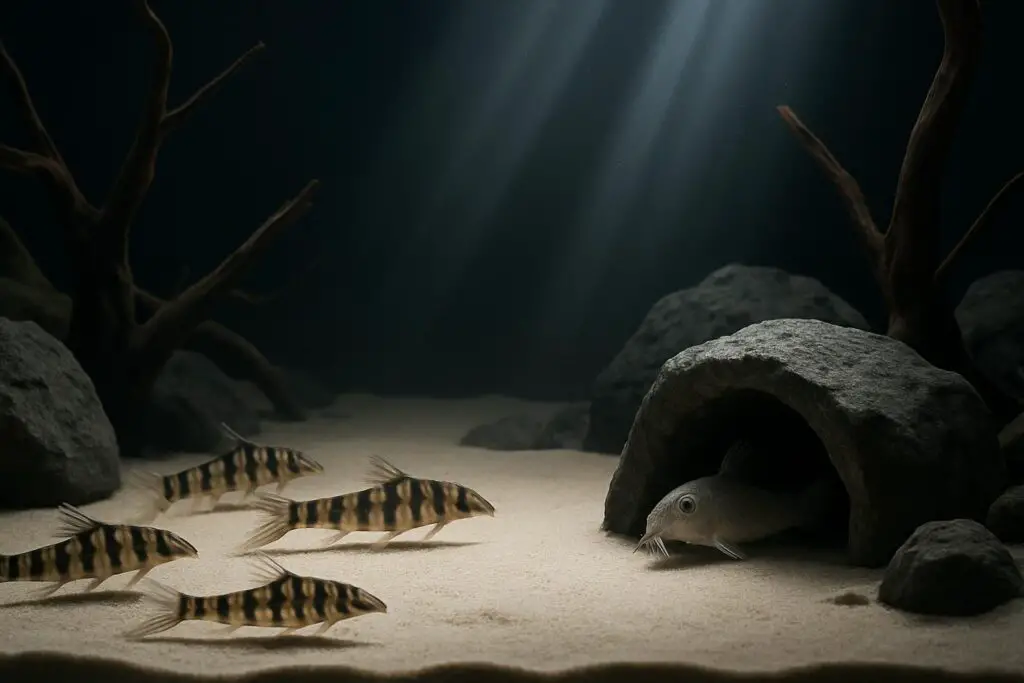
Loaches, especially species in the Botia group, establish hierarchies. Signs include:
– Fast chasing along the bottom, often in bursts
– Nips or lunges at barbels and fins
– Body bumps or flank slaps to push other fish aside
– Clicking sounds, especially during feeding or disputes
Stress Signs in Catfish
Catfish often do not fight back. Watch for:
– Clamped fins, hiding for long periods, or staying pinned in one corner
– Frayed or shortened barbels in Corydoras
– Scratches on pleco heads if caves are contested
– Rapid breathing and loss of appetite
Know Your Species: Some Pairings Are Riskier
Loaches That Commonly Cause Trouble
– Skunk loach (Yasuhikotakia morleti): notorious for harassment in small groups or small tanks
– Yoyo loach (Botia almorhae): boisterous and very competitive at mealtimes
– Clown loach (Chromobotia macracanthus): large, active, needs big tanks; can overwhelm timid catfish if cramped
Catfish That Often Get Targeted
– Corydoras spp.: peaceful schooling catfish with delicate barbels
– Small bristlenose plecos: can be pushed out of caves or off food
– Juvenile synodontis: robust later, but young fish can be hassled in tight quarters
Core Reasons Loaches Bully Catfish
Reason 1: Tank Footprint Too Small
Most bottom disputes come from a shortage of floor space. Loaches need room to roam and chase within their group. Catfish need quiet patches and secure hides. A cramped footprint forces overlap.
– For small to medium Botia and Corydoras, aim for at least a 90 to 120 cm long tank
– For clown loaches, a long-term group needs a tank 150 cm or longer
Reason 2: Understocked Loach Groups
Loaches spread their energy within their own group. Keep too few, and they direct that energy at tankmates.
– Botia-type loaches: minimum 5 to 6
– Clown loaches: 6 or more, and only in large tanks
Kuhli loaches are an exception in temperament but also do best in groups of 8 to 10.
Reason 3: Territorial Overlap and Poor Layout
One cave or a single log becomes prime real estate. Loaches will guard it and block catfish. Flat, open bottoms with no line-of-sight breaks make chasing easy.
Reason 4: Feeding Competition
Loaches are quick, social feeders. Catfish are slower and methodical. If food drops in one spot, loaches win and catfish go hungry. Hunger then keeps catfish out in the open, which triggers more chasing.
Reason 5: Activity and Timing Mismatch
Some catfish feed at night. Many loaches stay active day and night in community tanks. When lights go out, loaches keep working the bottom while timid catfish try to forage, causing collisions in tight spaces.
Reason 6: Parameters and Flow Not Balanced
Loaches often prefer higher oxygen and some current. Stagnant water and low oxygen make them irritable and hyperactive at the surface. Catfish may then bunch up near the only comfortable zone, increasing crowding.
Reason 7: Incompatible Temperaments
Skunk loaches and some yoyo loaches are pushy. Small Corydoras are very gentle. Mismatch them in a small footprint and bullying is likely, even if water is perfect.
Step-by-Step Fix: From Fast Relief to Long-Term Stability
Step 1: Confirm Species and Group Sizes
Identify your loaches and catfish. If you keep a known pushy species with timid catfish, plan added space and hides at minimum. Increase loach group to at least 5 to 6 so they focus on each other.
Step 2: Add Space or Reduce Stock
If possible, upgrade the tank with emphasis on length and width. Height matters far less for bottom fish.
– Target 90 to 120 cm long tanks for small to medium loaches and Corydoras
– Reserve clown loaches for 150 cm or longer tanks
If you cannot upgrade, rehome the bully species or move the most vulnerable catfish to a safer setup.
Step 3: Rebuild the Bottom Layout
Use line-of-sight blocks and distribute shelters across the entire footprint. The goal is to make chasing difficult and provide multiple safe zones.
– Provide at least one hide per bottom fish, plus extras
– Mix materials: driftwood piles, rock stacks, and inert tubes
– Spread hides in different corners and along the midline
– Create a high-flow lane on one side for loaches and a calmer zone with softer flow for catfish
Step 4: Fix the Substrate
Use sand or very fine smooth gravel. Corydoras and many loaches sift sand. Sharp gravel damages barbels and invites infections. A soft substrate lowers stress and encourages natural foraging away from conflict points.
Step 5: Upgrade Oxygen and Flow
Increase surface agitation with an airstone or adjust filter output. Consider a small powerhead to create a directed current on one side. Loaches will often adopt the moving lane, leaving calmer shelter areas for catfish.
Step 6: Redesign Feeding
Feed so catfish can eat in peace. This one change often stops harassment fast.
– Use multiple feeding points across the tank, not just one
– Drop sinking wafers after lights out for nocturnal catfish
– Distract loaches at the opposite end with fast-sinking pellets first
– Deliver food directly to catfish zones using a feeding tube or turkey baster
– For plecos, anchor blanched vegetables on clips or skewers near their caves
Step 7: Align Temperature and pH
Many mixed loach-catfish setups do well at 24 to 26 C with a pH around 6.5 to 7.5. Target the overlap that suits both species you keep. Keep nitrate low with regular water changes, as elevated nitrate stresses bottom fish.
Step 8: Adjust Light Timing
Use a short dim period at night to let catfish feed without loach interference. A brief red light window lets you monitor without stressing fish. Do not leave bright lights on late if you rely on nocturnal feeding.
Step 9: Treat Injuries with Clean Water First
For frayed barbels or superficial scrapes, prioritize pristine water, stable heat, and reduced stress. Many loaches and catfish are sensitive to salt and some medications due to reduced scales. Avoid broad salt dosing. If a fish is badly injured, move it to a quiet, cycled, bare-bottom hospital tank for observation and clean water recovery.
Step 10: Remove Chronic Bullies
If a specific loach repeatedly targets catfish despite the above changes, isolate it temporarily or rehome it. Some individuals, especially skunk loaches, can remain aggressive in crowded or undersized community tanks.
Compatibility Notes and Safer Pairings
Generally Safer
– Kuhli loaches with Corydoras in a sandy, planted tank with many hides
– Yoyo loaches with robust synodontis in a large, well-structured tank
– Bristlenose plecos with medium Botia in a 120 cm or longer tank with multiple pleco caves
Use Caution
– Skunk loaches with small Corydoras in tanks under 120 cm
– Clown loaches with small catfish unless the tank is very large and heavily structured
– Single or pairs of loaches; small groups can redirect aggression to other species
Aquascaping That Prevents Bullying
Divide the Bottom Into Zones
Group wood and rocks into 3 to 4 clusters with clear boundaries. Each cluster should have at least two entrances so no fish gets trapped by a chaser. Place clusters in different flow strengths.
Add Purpose-Built Hides
– Caves sized for plecos that only they can enter
– Narrow tubes for kuhli loaches
– Low tunnels under wood bridges for Corydoras
Mismatched hole sizes reduce direct competition for the same shelter.
Feeding Plans That Actually Work
Daytime Plan
– Pellets for loaches at the high-flow end first
– Wafers for catfish at the calm end 30 to 60 seconds later
– If loaches swarm the catfish zone, hand-deliver food with a baster right into hides
Nighttime Plan
– Lights off
– Wait 15 minutes
– Drop sinking wafers and small portions of frozen or gel foods in multiple spots
– Observe under red light only if needed
Water Quality and Routine Maintenance
Targets to Keep the Peace
– Ammonia and nitrite at zero
– Nitrate at or below 20 mg L through weekly water changes
– Temperature 24 to 26 C for most mixed setups unless your species require different
– pH 6.5 to 7.5 with stable hardness and no sudden swings
Flow and Oxygen
Ensure visible surface agitation at all times. Place the filter output or a small powerhead to create directional flow across part of the tank, leaving the opposite side calmer.
Troubleshooting Checklist for the Next 48 Hours
Immediate Actions
– Add two to three new hides and move existing decor to create clear zones
– Increase aeration with an airstone
– Split feeding into at least three bottom locations
– Dim the tank earlier and feed catfish after lights out
– Remove any sharp gravel that can injure barbels and replace with sand in key areas
If Harassment Continues
– Temporarily isolate the most aggressive loach
– Rehome if the tank is undersized and you cannot upgrade
– Move injured catfish to a quiet, cycled hospital tank with clean water
Common Mistakes to Avoid
– Keeping 1 to 2 loaches instead of a proper group
– Relying on a tall but narrow tank with little floor space
– One feeding spot for all bottom fish
– One shared cave for multiple territorial species
– Dosing aquarium salt in a tank with scaleless loaches and sensitive catfish
Mini Case Studies
Case 1: Yoyo Loaches Chasing Corydoras
Problem: 2 yoyo loaches in a 75 cm tank chased a school of Corydoras. Corys lost barbels.
Fix: Upgraded to a 120 cm tank, increased yoyos to 6, added sand and four hide clusters, set three feeding stations, and fed wafers 15 minutes after lights out. Result: Chasing contained within the yoyo group, Corydoras fed well, barbels regrew over several weeks with clean water.
Case 2: Clown Loaches Overrunning a Bristlenose Pleco
Problem: Juvenile clown loaches in a 90 cm tank stole pleco food and blocked its cave.
Fix: Rehomed clowns to a larger tank. In the original tank, added more pleco-sized caves and clipped vegetables at night. Result: Pleco ate consistently, no further conflicts.
When to Separate for Good
If the tank cannot meet the space and layout needs of both groups, or if a known aggressive loach species continues to harass catfish despite all adjustments, separation is the responsible choice. Rehome the bully or move the most vulnerable fish to a species-appropriate setup.
Conclusion
Loach bullying of catfish is not random. It comes from tight footprints, thin groups of loaches, poor shelter distribution, and feeding plans that favor fast fish. Solve those points with more space, smarter layout, stronger aeration, thoughtful feeding, and correct group sizes. Treat injuries with clean water and avoid salt for scaleless species. If one fish keeps causing chaos, remove it. With the right structure, loaches and catfish can share a tank without constant conflict.
FAQ
Q: Why are my loaches chasing and nipping my Corydoras?
A: Chasing and nipping usually come from a shortage of floor space, thin loach group sizes that push aggression onto other fish, and single feeding spots that create competition. Rebuild the layout with more hides, increase loach group size, and split feeding across multiple zones including after lights out.
Q: How big should my tank be to keep loaches with catfish?
A: Aim for at least a 90 to 120 cm long tank for small to medium loaches with Corydoras. Clown loaches need much larger tanks, ideally 150 cm or longer, to avoid overwhelming catfish.
Q: Will adding more loaches stop the bullying?
A: Often yes, because a proper group of 5 to 6 Botia-type loaches redirects energy within the group. This only works if the tank has enough footprint, hides, and a smart feeding plan.
Q: What is the best way to feed catfish so loaches do not steal their food?
A: Use multiple feeding points, drop sinking wafers after lights out, distract loaches on the opposite side first, and deliver food directly into catfish hides with a baster. For plecos, clip vegetables near their caves.
Q: Should I use aquarium salt or medication for injured catfish when kept with loaches?
A: Avoid broad salt dosing because many loaches and catfish are sensitive. Prioritize pristine water, stable heat, and low stress. Use a cycled hospital tank for badly injured fish and rely on clean water as the first line of care.