
We are reader supported. When you purchase through links on our site, we may earn an affiliate commission. Also, as an Amazon affiliate, we earn from qualifying purchases.
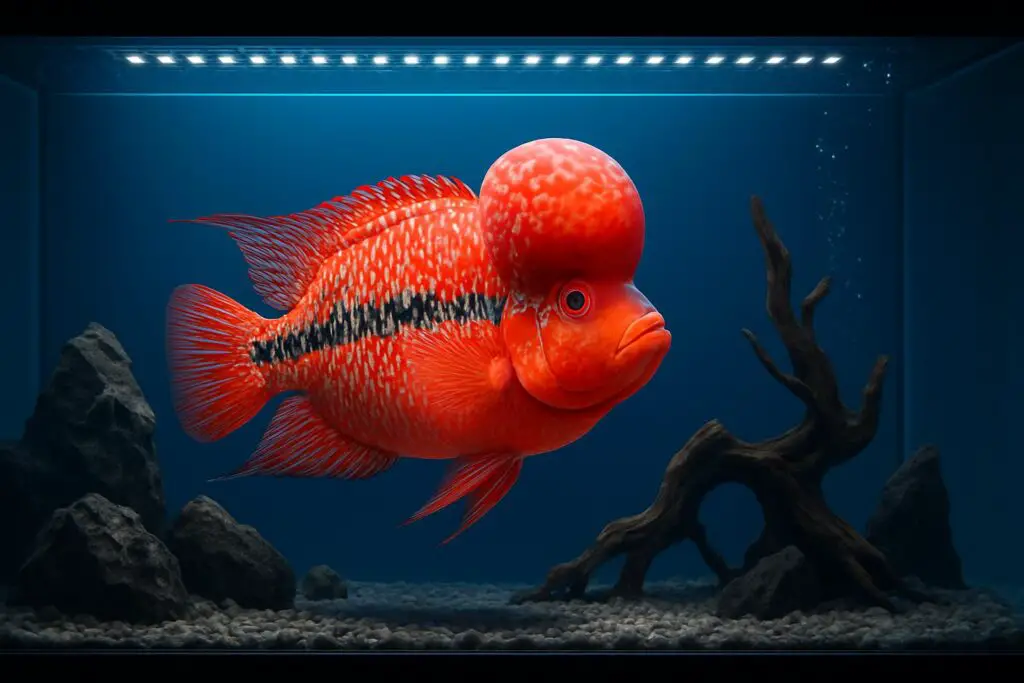
Flowerhorn cichlids are intelligent, striking, and intensely territorial. Their bold personality is part of the appeal, but unmanaged aggression can lead to stress, injuries, cracked lids, and failed tank setups. This guide explains why flowerhorns act the way they do and how to channel that energy into a safe, healthy routine. You will learn how to read behavior, set up the tank correctly, decide on tank mates, and respond to problem scenarios before they escalate.
Why Flowerhorns Show Strong Aggression
Genetics and Selective Breeding
Flowerhorns are hybrid Central American cichlids selectively bred for color, head growth, and presence. Many lines also carry traits linked to territorial dominance and assertive behavior. This does not mean every flowerhorn is equally aggressive, but it raises the baseline compared to many community fish. Expect dominance displays, boundary defense, and rapid escalation when a perceived intruder appears.
Because aggression has a genetic component, you manage it through husbandry. You cannot train genetics away, but you can give the fish a clear territory, stable parameters, and consistent handling so the environment does not provoke unnecessary fights. Start with realistic expectations: a flowerhorn is usually best housed alone.
Territorial Instincts and Space
In nature, Central American cichlids claim space around hard structures, defend it, breed there, and patrol constantly. The aquarium compresses this instinct into glass boundaries. When space is tight or line of sight is open end to end, the fish feels exposed and reacts by guarding every inch with intensity. Crowding or sparse décor often amplifies aggression because the fish sees threats everywhere.
Give clear boundaries within the tank. Physical breaks create mini territories and reduce constant visual pressure. This principle is central to every setup choice that follows.
Hormones and Maturation
As flowerhorns mature, testosterone and reproductive hormones rise. Males usually become more territorial around 5 to 10 inches, but females can also be assertive. Changes in dominance and breeding readiness can cause sudden spikes in aggression even when nothing in the room changed. These shifts are natural and expected.
Support the fish through these stages with ample space, consistent feeding, and a routine it can predict. Avoid major layout changes during peak aggression unless you also increase line-of-sight blocks.
Environmental Triggers
Common triggers include mirror reflections, glass tapping, movement outside the tank, new objects in the territory, and fast changes in light or flow. Poor water quality adds irritability and lowers the threshold for an outburst. Temperature swings and ammonia traces are frequent culprits. Identify triggers by keeping a simple log. Note what changed before the fish started flaring or ramming.
Remove triggers where possible and condition the fish to predictable patterns. Many problems vanish when the routine becomes stable and the setup is optimized.
Reading Behavior and Early Warning Signs
Body Language You Should Know
Key displays include flaring fins, gill covers spread, head shaking, rapid color intensification, and tight, twitchy turns. Tail slapping at the glass and lateral displays against dividers are clear warnings. A flowerhorn that patrols with confidence and occasional displays is normal. A fish that fixates on a single target for long periods is on the path to aggression.
Look at the eyes and mouth. Dilated pupils, snapping, and repeated biting attempts at glass or equipment indicate high arousal. Learning these cues lets you intervene early with visual breaks or brief tank cover time.
Escalation Ladder
Most flowerhorns follow a pattern: first attention and orientation toward the stimulus, then flaring and lateral display, then a charge or head butt, and finally attempt to bite. Prevent injury by interrupting the chain before biting starts. Cover one side with a background, rearrange a few objects to break the sight line, or turn room lights on before tank lights to prevent sudden shocks.
If a pair is involved, watch for repetitive chasing, frayed fins, hiding in corners, and refusal to feed. These are signs the conflict is beyond normal courtship or dominance sorting.
Feeding Response vs Aggression
Flowerhorns rush to the front glass during feeding. This looks aggressive but is a learned feeding response. The difference is posture. A feeding rush is brief, with relaxed fin positions, then the fish returns to normal. Aggression has extended flaring and persistent fixation on a target. Avoid reinforcing glass biting by varying the feeding spot and using a feeding ring or target stick.
Stress Signals That Mimic Aggression
Clamped fins, darkened color, hiding, and erratic movement can look like aggression from a distance. In reality, these are stress signals. Test water, check temperature, and assess flow. A fish under stress may lash out, but the root cause is environmental, not dominance. Fix the environment first, then evaluate behavior again.
Tank Setup That Reduces Aggression
Minimum Tank Size and Dimensions
For a single adult flowerhorn, aim for at least 75 gallons with a 4-foot length. Larger is better. A 6-foot tank provides more patrol room and helps break constant confrontations with the room. A 55-gallon tank is often cited as the minimum, but it leaves little margin for heavy filtration and robust hardscape. Invest in space early to save stress later.
Wider footprints are more valuable than tall tanks. Depth gives your fish room to turn and establish a core territory away from the glass.
Filtration, Flow, and Water Quality
Use oversized filtration. A canister or large hang-on-back set to turn the tank 6 to 10 times per hour maintains clarity and oxygenation. Aggressive fish are messy eaters. Keep ammonia and nitrite at zero and nitrate under 20 to 40 ppm. Stable warmth and oxygen reduce irritability and protect gill health, which influences behavior.
Ensure the intake is guarded so the fish cannot injure itself during charges. Aim flow to avoid constant buffeting. Excessive current can frustrate a territorial fish that wants control of a zone.
Aquascape and Line-of-Sight Breaks
Use hard structures the fish cannot easily move. Large rocks, heavy driftwood, and robust artificial decorations work well. Arrange them to create at least two distinct zones with partial walls and visual dead zones. Avoid sharp points. Keep open sand or gravel areas for movement, but do not leave long, clear runways from end to end.
Substrate choice is flexible. Many keepers prefer bare-bottom for easy cleaning, which is acceptable. If you use substrate, choose medium gravel that is too heavy to be thrown across the tank.
Lids and Safety
Flowerhorns jump and strike. A tight-fitting lid is mandatory. Acrylic or glass with solid hinges is best. Secure all gaps around equipment. Use heater guards to prevent burns during charges. Choose sturdy mounts for intakes and returns so they cannot be ripped off during displays.
Stocking and Tank Mate Decisions
The Safest Plan: Solo Housing
The most reliable way to manage aggression is to keep a single flowerhorn per tank. This approach simplifies feeding, reduces risk of injury, and supports consistent growth and color. Solo housing does not deprive the fish. Flowerhorns interact with their environment and their keeper, and many thrive without tank mates.
If You Try Tank Mates
There is always risk. If you proceed, use a large tank, ideally 125 gallons or more, with strong line-of-sight breaks. Choose fast, robust, non-spiny fish that do not resemble rival cichlids. Some keepers try large silver dollars or tinfoil barbs, but even these can be injured. Avoid plecos that may rasp the flowerhorns slime coat at night. Avoid small fish that trigger hunting behavior.
Add the flowerhorn last after the others have settled. Keep a divider ready. Monitor twice daily at first. At the first sign of injury or relentless chasing, separate immediately. Accept that even a well-chosen group may fail.
Introducing a Pair for Breeding
Most flowerhorn pairs are not stable long term. Use a divider so fish can see and smell each other without contact. Allow several days to weeks for conditioning. Feed high-quality protein and keep water pristine. Watch for synchronized interest, parallel swimming along the divider, and reduced flaring.
Only remove the divider when you can supervise closely. Provide flat surfaces for spawning and multiple hides. Keep a plan to reinsert the divider at the first sign of injury. Many breeders leave a permanent mesh divider with controlled openings that only the smaller fish can pass.
Using Dividers and Fallback Plans
Egg-crate light diffuser, acrylic sheets with holes, or purpose-made tank dividers work well. Secure fully so the fish cannot push under or jump over. Dividers are not a defeat. They are humane tools for complex cichlids. Have hospital supplies and a spare cycled filter ready in case separation becomes permanent.
Daily Management Habits
Feeding Strategy and Diet
Feed small portions two to three times daily. Rotate high-quality cichlid pellets as the staple. Supplement with frozen krill, shrimp, or mussel a few times per week. Avoid feeder fish. They bring disease and encourage predatory excitement that spills into general aggression. Keep portions tight to prevent water fouling and bloat.
Use a feeding ring or target stick to focus attention. Vary the spot to discourage glass charging at one location. Fast one day per week to aid digestion.
Lighting and Photoperiod
Provide 8 to 10 hours of light on a timer. Sudden on or off spikes adrenaline. Turn on room lights before tank lights in the morning and reverse at night. Stable light cycles calm territorial fish by setting a predictable daily rhythm. Avoid bright lights that reflect the fish in the front glass for long periods.
Handling and Interaction Rules
Do not tap glass or tease with hands. Move slowly near the tank. When you must net or move the fish, plan the path, clear the area, and do it once. Use a large soft net or a fish-safe container. Keep a towel handy for splashes. Frequent captures increase stress and post-handling aggression.
Enrichment and Training
Use decor changes sparingly. Minor rearrangements can reset territorial fixation when aggression grows, but avoid constant churn. Offer floating safe objects that do not reflect. Some keepers use gentle target training to focus the fish on a cue for feeding. Short, consistent sessions reduce frustration and improve responsiveness.
Water Parameters and Maintenance
Target Parameters
Keep temperature between 78 and 86 Fahrenheit, typically 80 to 82 for stable metabolism. Aim for pH 7.2 to 8.0 with moderate hardness. Flowerhorns tolerate a range, but stability matters more than a specific number. Zero ammonia and nitrite are non-negotiable. Keep nitrate as low as practical, ideally under 20 to 40 ppm.
Use a heater with a guard and a reliable thermometer. Consider a second thermometer on the opposite end for verification. Sudden temperature drops can spike aggression and suppress immunity.
Water Change Routine
Change 30 to 50 percent weekly, or more if nitrate rises quickly. Vacuum detritus under structures where food collects. Refill with temperature-matched, dechlorinated water. Do not allow large pH swings between old and new water. This routine improves color, appetite, and behavior consistency.
Clean filters on a rotation so you do not strip all beneficial bacteria at once. Rinse media in old tank water, not tap water, to preserve biofilms.
Testing and Logs
Use liquid test kits weekly for ammonia, nitrite, nitrate, and pH. Record results along with any behavior notes. Patterns emerge quickly. Correlate spikes in aggression with water quality or specific events like a rescape or a diet change. Adjust before issues escalate.
Troubleshooting Common Aggression Scenarios
After a Rescape or New Object
Expect a short-term spike in patrol and displays. The fish is mapping the environment. If aggression persists for more than a few days, add a new visual break or remove the object causing fixation. Reduce light intensity for a week and raise the feeding frequency slightly to stabilize mood.
Toward Filter Intake or Heater
Many flowerhorns target vibrating equipment. Add guards, reposition to a less exposed area, and install a cover panel on that section of glass. If possible, place hardware behind a divider panel or decorate around it to break the silhouette. Equipment that rattles or buzzes should be repaired or replaced.
Breeding Spikes
During pre-spawn, both sexes can become hyper-vigilant. If you are not breeding, remove obvious spawning sites like flat stones. Keep temperatures at the lower end of the range and reduce high-protein treats temporarily. If a pair is together, return the divider at the first torn fin or persistent cornering.
Post-Illness Aggression
After a disease or treatment, a flowerhorn may guard more tightly. Rebuild routine with frequent small meals, pristine water, and limited outside activity near the tank. Avoid introducing tank mates during recovery. Stress immunity is fragile for several weeks.
Myths and Facts
Mirrors Are Harmless
Extended mirror use keeps the fish in constant fight mode. Short, supervised sessions for enrichment can be acceptable, but do not leave a mirror in place. Chronic sparring elevates stress hormones and increases injury risk. Use mirrors rarely, if at all.
Plecos Are Safe Cleaners
Large plecos often rasp mucus at night and trigger violent retaliation. Spines cause deep wounds. Algae management is better handled by manual cleaning and strong filtration. If you insist on a cleanup fish, choose with extreme caution and accept the risk.
Aggression Fades With Age
Some fish mellow slightly, but many remain assertive for life. Rely on setup and routine, not hope. A calmer period can end quickly after a trigger.
Overcrowding Solves Aggression
Overstocking to spread aggression is common in some cichlid groups but fails with flowerhorns in most home tanks. It increases waste, disease risk, and explosive fights. Choose space and structure instead.
When to Separate, Rehome, or Seek Help
Injury Thresholds
Separate if you see deep bites, missing chunks of fin, persistent hiding, refusal to feed, or a fish pinned in a corner. Do not wait for infection. Move the victim to a cycled hospital tank and treat with clean water, oxygen, and a broad-spectrum antibacterial if needed. Keep the temperature stable and stress low.
How to Separate Safely
Use two nets or a container and a divider ready to install. Dim lights and reduce outside movement. Guide, do not chase blindly. Once separated, assess damage and plan a long-term solution. If the aggressor is a flowerhorn in a community, shift to solo housing.
Working With Breeders or Stores
Reputable breeders can help with sexing, temperament, and pairing strategies. If a setup fails, ask about rehoming options. Be honest about behavior history to protect the next owner and the fish.
Practical Checklist for New Owners
Before You Buy
Decide on solo housing. Secure a 75-gallon or larger tank with lid and oversized filtration. Acquire a reliable heater with guard and a test kit. Prepare heavy, safe hardscape to create zones. Set up, cycle fully, and confirm zero ammonia and nitrite. Plan a weekly water change routine.
First Month
Feed small amounts two to three times daily. Establish a light schedule with a timer. Observe body language and log triggers. Avoid tank mates. Confirm that the fish recognizes feeding cues and is not glass-biting constantly. Adjust aquascape for more breaks if fixation persists.
Ongoing
Keep maintenance predictable. Test weekly. Change 30 to 50 percent of water weekly. Rinse filter media in tank water. Watch for hormonal phases and adjust expectations. Use dividers or rehome if injury occurs. Do not rely on quick fixes. Rely on space, structure, stability, and routine.
Conclusion
Flowerhorn aggression is manageable when you respect the fishs instincts and design the setup around them. Space, strong filtration, visual breaks, stable water, and a consistent routine reduce conflict. Solo housing is the safest path, with dividers ready if you attempt pairs or tank mates. Learn the body language, act early when tension rises, and keep a clear fallback plan. With these habits, your flowerhorn will display bold behavior without constant risk, and you can enjoy a vivid, healthy fish for years.