
We are reader supported. When you purchase through links on our site, we may earn an affiliate commission. Also, as an Amazon affiliate, we earn from qualifying purchases.
Flowerhorn cichlids are bold, intelligent, and famously territorial. Their attitude is part of the appeal, but unmanaged aggression can lead to injuries, stress, and chaos in your tank. This guide shows you how to reduce conflict and build a safe, stable routine for a single Flowerhorn or a carefully planned setup with tankmates. You will learn what triggers aggression, the exact steps to fix it, and how to prevent flare ups before they start.
Introduction
Flowerhorns are hybrid cichlids bred for color, head shape, and strong presence. These same traits often come with high territorial drive. New keepers are surprised when a juvenile becomes an adult and suddenly attacks decor, equipment, or tankmates. The solution is not force or punishment. The solution is space, stability, and structure. With the right tank size, layout, water quality, feeding, and handling, most aggression can be managed to a safe level. This article breaks it down into clear steps you can apply today.
Understand Flowerhorn Aggression
Why Flowerhorns are aggressive
Flowerhorns descend from Central American cichlids that defend territory and mates. Selective breeding enhanced color and head growth, not calmness. Territorial behavior is normal for this species, especially in small spaces and during sexual maturity. Males are usually more intense, but females can be assertive too.
Normal vs excessive aggression
Normal aggression includes posturing, flaring fins, and short chases in a large tank. Excessive aggression includes repeated body slams into glass, non stop attacking of equipment, persistent chasing of tankmates, torn fins, and refusal to eat because the fish is on constant patrol. Excessive aggression is a sign that the environment, routine, or health is off.
Risk to tankmates and to you
Large Flowerhorns can injure or kill other fish quickly. Bites can also break skin if you work in the tank without care. Use tools, lids, and safe practices. Plan your setup so you do not have to put your hands in the water often.
Tank Setup That Reduces Aggression
Tank size and footprint
A single adult Flowerhorn needs at least 75 gallons with a 48 by 18 inch footprint. Bigger is better. The footprint is more important than height because cichlids use horizontal space to build and defend territory. For any setup with tankmates or a divided pair, move to 120 gallons or more. Crowding increases fights.
Line of sight breaks
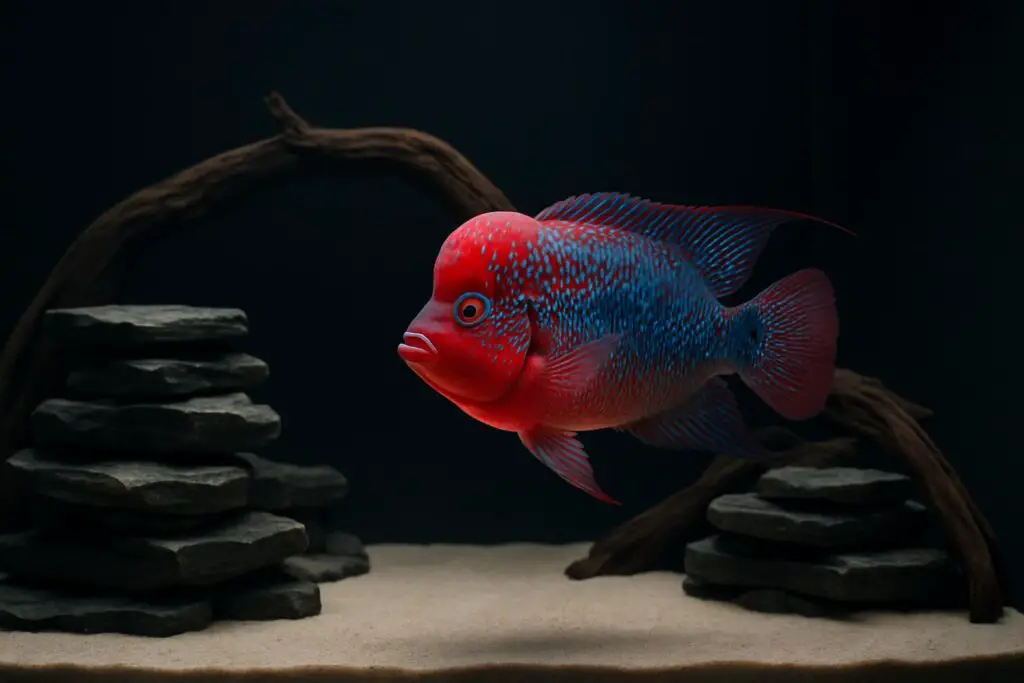
Use hardscape to block straight views across the tank. Build two or three clear zones using rock stacks, driftwood, and tall plastic plants. When the fish cannot see everything at once, it patrols less and calms down. Secure every item to prevent collapse. Avoid sharp edges that can cut fins during lunges.
Substrate and decor choices
Fine sand or smooth gravel works well. Larger stones can anchor zones and hold plants in place. Avoid reflective ornaments that act like mirrors. Reflections can trigger nonstop fighting with its own image. Use a dark or matte background to reduce glass glare and reflections.
Filtration and flow
Flowerhorns are heavy eaters. Use strong, redundant filtration. Aim for 6 to 10 times tank volume per hour across canister and sponge or hang on back filters. Keep flow moderate so the fish is not pushed around. Place outlets to circulate water evenly and keep debris suspended for removal.
Lighting and lids
Use moderate light to avoid glare and reflections. Always use a tight fitting lid. Flowerhorns can jump when startled or when charging the glass.
Water Parameters and Maintenance
Stable parameters
Keep temperature between 26 and 29 degrees Celsius or 78 to 84 degrees Fahrenheit. Aim for pH 7.2 to 8.0. Maintain general hardness around 8 to 20 dGH and carbonate hardness around 6 to 12 dKH. Stability matters more than chasing a perfect number. Sudden shifts irritate cichlids and increase aggression.
Nitrogen waste control
Ammonia and nitrite must be zero at all times. Keep nitrate as low as possible, ideally under 20 ppm. Do weekly water changes of 30 to 50 percent, vacuum the substrate, and rinse mechanical media in old tank water. High nitrate stresses fish and aggravates territorial drive.
Testing routine
Test weekly for ammonia, nitrite, nitrate, pH, and temperature. Log the results. If aggression spikes, test first. Poor water quality is the most common hidden trigger.
Feeding Strategies to Curb Aggression
Balanced diet
Use a high quality cichlid pellet as the staple. Look for a protein level around the low to mid 40 percent range with fish or krill meal as primary protein sources. Add frozen or freeze dried foods such as krill, shrimp, or bloodworms once to three times per week. Add a plant based component such as spirulina pellets for fiber and color support. Avoid feeder fish because they carry disease and promote frantic hunting behavior.
Feeding schedule and portions
Feed juveniles two to three small meals per day. Feed adults one to two meals per day. Offer only what the fish can finish in about two minutes. Remove leftovers. Overfeeding fouls water and fuels hyperactivity.
Feeding tactics to reduce conflict
If you keep tankmates, target feed them with tongs or a feeding cone on the opposite side to the Flowerhorn. Feed the Flowerhorn first to reduce chasing. Use a routine so the fish knows when food arrives and where it will appear. Predictable routines reduce anxious patrolling.
Treats and variety
Use treats to build trust, not to overstuff. Rotate two or three items such as krill, shrimp, or a vegetable based pellet. Keep treats to small amounts and skip a day each week to rest digestion if the fish is an adult and in good weight.
Behavioral Enrichment and Exercise
Short, controlled challenges
Smart fish need mental work. Train simple target following using a feeding stick so the Flowerhorn chases a controlled object rather than glass or tankmates. A few minutes per day is enough. End sessions before the fish becomes frantic.
Safe objects
Rotate a few safe items such as a floating ring, a smooth stone pile, or a piece of driftwood arranged in a new pattern. Do not add sharp or reflective objects. Any new item should be large enough not to be swallowed and heavy enough not to be thrown around.
Mirror sessions with limits
Do not leave a mirror in the tank. If you choose to use a mirror, limit sessions to 30 to 60 seconds once or twice per week and only if the fish recovers quickly. Stop if the fish shows frantic, nonstop attacks or if its fins become damaged. Short, rare sessions can redirect energy, but constant reflection causes chronic stress.
Choosing Tankmates or Going Solo
Safest choice
The safest choice is a single Flowerhorn in its own tank. This maximizes welfare and reduces injury risk. It is also easier to maintain top water quality and predictable behavior.
If you attempt tankmates
Accept the risk of injury or loss. Use a large tank of 120 gallons or more with strong scaping and many sight breaks. Add potential tankmates before the Flowerhorn fully matures. Choose fast, robust schooling fish that occupy different levels, and avoid slow bottom dwellers. Have a divider and a spare tank ready. Remove any fish that becomes the focus of bullying. Plan for failure and be ready to rehome.
Pairing and breeding caution
Pair setups are advanced. Use a sturdy divider with holes for water flow and small openings for limited contact. Keep the female safe with shelters the male cannot enter. Remove the divider only for short, supervised periods if both fish show calm interest. Reinstate the divider at the first sign of sustained attacks. Remove the female after spawning if needed.
Dividers and Territory Zones
Divider types
Use egg crate light diffuser, acrylic panels with drilled holes, or commercial fish safe dividers. Seal edges with suction cups or clips so the Flowerhorn cannot push around the barrier. Ensure water circulation through or around the divider to avoid dead spots.
Permanent vs removable
Permanent dividers create two stable territories. Removable dividers allow flexible use during introductions, feeding, or maintenance. Match the divider type to your plan and secure it firmly.
Health, Pain, and Other Triggers
Illness and discomfort
Pain and disease can increase irritability. Watch for clamped fins, flashing, stringy feces, rapid breathing, loss of appetite, or sores. Test water first. If water is fine, consider parasites, bacterial issues, or constipation. Address the cause quickly. A healthy Flowerhorn is calmer.
Hormonal phases
Hormone spikes during growth or breeding cycles can raise territorial drive. Give extra space, keep water very clean, and avoid big layout changes during these times.
Handling and Maintenance Without Fights
Safe hands and tools
Use tools to move decor and clean glass. If you must remove the fish, use a large fish safe container rather than a net to protect fins and reduce struggle. Always close lids before and after maintenance.
Rearranging to reset territory
When aggression escalates after a move or after adding fish, rearrange decor to break old territories. Do this right before lights out after a large water change so the fish settles overnight.
Transport and moves
For moves, use a lidded container with tank water, a battery air pump if needed, and keep temperature stable. Set up the destination tank in advance with matched parameters. Minimize time in transit.
When Aggression Spikes: A Troubleshooting Flow
Step by step response
Step 1. Test water for ammonia, nitrite, nitrate, pH, and temperature. Fix any issues with partial water changes and filter checks.
Step 2. Check space. If the tank is under 75 gallons for a single adult, upgrade as soon as possible.
Step 3. Add or adjust line of sight breaks. Create multiple zones and remove reflective items.
Step 4. Review feeding. Cut back to proper portions and remove leftovers. Add a consistent feeding routine.
Step 5. Install a secure divider if other fish are present or if the Flowerhorn attacks equipment.
Step 6. Rehome tankmates if attacks continue. A solo tank is better than chronic stress.
Myths and Misconceptions
More tankmates reduce aggression
Adding more fish often creates more targets, not peace. Density control works for some species, not for Flowerhorns. Use a solo tank or a very cautious plan with backups.
Starving a Flowerhorn makes it calm
Undernutrition increases stress and unpredictability. Feed proper portions and maintain clean water instead of withholding food.
Constant mirror exposure toughens the fish
Constant reflection leads to chronic stress, fin damage, and exhaustion. If used, keep mirror sessions short and rare, or avoid them entirely.
Monitoring and Records
Keep a simple log
Record dates of water changes, test results, diet, new decor, and any aggressive events. Patterns will become clear. You will see what calms your fish and what triggers problems. Use this to adjust your routine.
Ethics and Long Term Planning
Commitment to welfare
Flowerhorns live for many years and reach large sizes. Plan for the adult, not the juvenile. Budget for a spacious tank, strong filtration, and eventual upgrades. Always have a backup tank or divider available. Avoid setups that depend on luck to keep fish alive.
Conclusion
A confident Flowerhorn in a well planned tank is a pleasure to keep. Aggression will never be zero, but it can be predictable and safe. Give your fish space, clean water, secure scaping, a steady feeding plan, and careful handling. Use dividers and backup tanks when needed. Watch your fish and make small adjustments instead of big, stressful changes. Over time, you will learn your Flowerhorns patterns and build a stable, low conflict routine.
FAQ
Q: What tank size reduces aggression in a single Flowerhorn?
A: Use at least 75 gallons with a 48 by 18 inch footprint for one adult. Larger tanks reduce patrolling and chasing.
Q: Can a Flowerhorn live with tankmates?
A: The safest choice is a solo tank. If you attempt tankmates, use 120 gallons or more, add fish before the Flowerhorn matures, provide strong sight breaks, keep a divider and spare tank ready, and be prepared to rehome fish if bullying starts.
Q: What water parameters help keep a Flowerhorn calm?
A: Keep temperature at 26 to 29 degrees Celsius or 78 to 84 degrees Fahrenheit, pH 7.2 to 8.0, ammonia and nitrite at zero, and nitrate under 20 ppm with weekly 30 to 50 percent water changes.
Q: How should I feed to curb aggression?
A: Feed juveniles two to three small meals daily and adults one to two. Use a high quality pellet as the staple, add small amounts of frozen or freeze dried foods, remove leftovers within two minutes, and keep a consistent routine.
Q: How do I use a divider with a Flowerhorn?
A: Use sturdy egg crate or acrylic with holes, seal edges so the fish cannot move it, allow water flow through or around the divider, and choose permanent or removable setups based on your plan.