
We are reader supported. When you purchase through links on our site, we may earn an affiliate commission. Also, as an Amazon affiliate, we earn from qualifying purchases.
Marine fish evolved in a world very different from freshwater. Their bodies handle salt, strong currents, and a food web filled with algae, sponges, plankton, and crustaceans. This environment shaped narrow feeding roles and precise nutrition needs. When we keep these fish in aquariums, we must match those needs with care. If we do, fish live longer, show natural behavior, and display rich color. If we do not, they fade, lose weight, or develop health problems that are hard to reverse.
This guide explains why marine fish have specialized diets and shows how to feed them well. You will learn what nutrients matter, how to choose foods, and how to set a feeding plan that keeps the whole tank stable. Each section builds on the last so you can turn knowledge into action today.
Why marine fish need specialized diets
Seawater physiology drives different needs
Marine fish constantly drink seawater to maintain balance. Their gills and kidneys work to expel excess salts. This process uses energy and depends on minerals and vitamins. A diet that supports this workload improves resilience and recovery from stress. Marine fish also rely on fatty acids that are more abundant in ocean prey than in freshwater prey. These are key for membranes, vision, growth, and immunity.
Natural feeding roles and gut design
On reefs, fish split the menu. Some graze algae all day. Some pick plankton in fast water. Some nip sponges or coral mucus. Predators strike in bursts and then rest. These behaviors tie to gut length and teeth shape. Herbivores have longer guts and need constant fiber-rich grazing. Planktivores eat small particles many times a day. Carnivores handle rich meals less often. In an aquarium, ignoring these roles leads to poor weight, digestion trouble, and stress.
Marine fats and amino acids are critical
Marine fish need high levels of long chain omega-3 fatty acids such as EPA and DHA. These are abundant in marine oils and scarce in terrestrial fats. Diets rich in marine proteins and oils support growth, color, and nerve function. Amino acids from quality proteins also matter. Poor proteins and plant-heavy diets for carnivores cause muscle loss and dull color. Balanced protein keeps tissue repair and immune responses strong.
Vitamins and trace elements
Vitamin C supports connective tissue and wound healing. B vitamins support appetite and metabolism. Vitamin A and carotenoids influence color and vision. Iodine and other trace minerals support normal function for many species and help with molting in crustaceans that live in the same system. A varied diet supplies these. Occasional enrichment helps when fish are recovering or picky.
Diet categories you will see in the hobby
Herbivores and detritivores
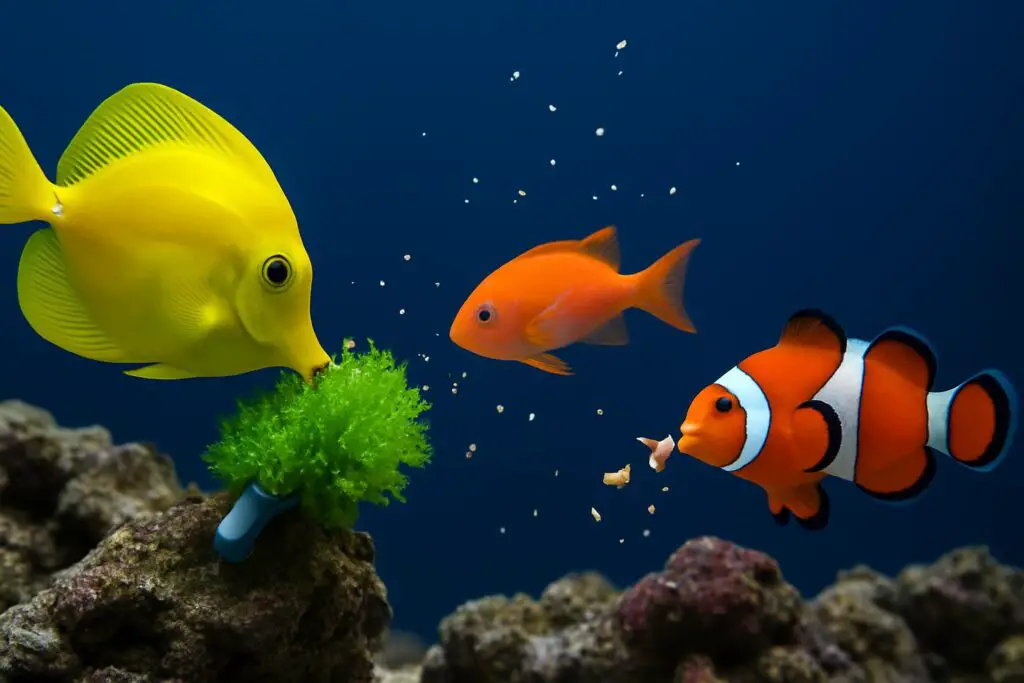
Tangs and some blennies are built for grazing. They need frequent access to marine algae and fiber. High meat diets make them prone to digestive issues and head and lateral line erosion. Provide daily nori sheets, spirulina-based foods, and mixed macroalgae. Use meaty items as small supplements, not the base of the diet.
Omnivores
Clownfish, many wrasses, dwarf angels, and damsels handle mixed menus. They need both marine proteins and plant matter. A rotation of quality pellets, mysis shrimp, and algae-based options keeps them balanced. Omnivores thrive when they pick all day, but still do well on two to three small feedings.
Planktivores and constant feeders
Anthias, chromis, and some fairy wrasses prefer small prey drifting in the water column. They have fast metabolisms and small stomachs. They do best with many small meals. Use fine frozen foods, micro pellets, and live or cultured copepods. Strong flow helps suspend food while still allowing fish to strike.
Obligate or near-obligate feeders
Some angels consume sponges and tunicates in nature, gaining special sterols and compounds. Butterflyfish often pick coral polyps, mucus, or small invertebrates. Dragonets rely on copepods and other tiny crustaceans. Some filefish feed on pests like aiptasia. These diets are narrow. Research species before you buy. Choose captive-bred when possible because they accept prepared foods more readily.
Food types and how to choose
Frozen foods
Frozen mysis, brine shrimp, krill, fish eggs, chopped clam, and specialized blends are staples. They are palatable and close to natural texture. Thaw in a cup of tank water, strain the liquid, and feed. Straining reduces excess phosphate and fine juices that foul water. You can enrich thawed food with a vitamin and HUFA supplement to boost nutrition.
Dry pellets and flakes
Modern pellets hold stable nutrition and are convenient. Choose marine formulas with high marine protein content and added algae or spirulina when suited to the species. Pellets are dense, so feed sparingly and watch that all food is eaten. Flakes are useful for top feeders but can break apart and drift into filtration. Store dry foods airtight and cool to protect vitamins.
Freeze-dried foods
Freeze-dried mysis, krill, and plankton are light and shelf stable. Soak them before feeding so they sink and do not expand in the gut. These are best as part of a rotation rather than the only food.
Live foods
Live brine shrimp, blackworms, copepods, and enriched baby brine tempt shy fish and help with weaning. Live foods can introduce pests if not sourced carefully. Use them as a bridge to frozen and pellets. Do not rely on feeder fish from freshwater sources. They carry disease risk, poor fatty acid profiles, and can contain thiaminase that depletes vitamin B1 over time.
Vegetable foods and algae
Nori sheets, spirulina pellets, and blanched macroalgae support herbivores. Use a veggie clip and replace daily. Offer different colors of nori for variety. Some omnivores also benefit from small amounts of algae in the diet.
Reading a fish food label
Check the first five ingredients. For marine fish, look for whole marine proteins like whole fish, krill, squid, or mysis. Avoid foods that start with generic meals, starches, and fillers as the bulk. For most marine fish, crude protein around 45 to 55 percent supports growth and maintenance. Herbivores do well with 35 to 45 percent protein and higher fiber, while carnivores often prefer 45 to 60 percent protein with moderate fat. Look for added vitamins including C and a mix of B vitamins. Carotenoids like astaxanthin support color. Ingredients should match species needs. An angel formula that includes marine sponges can help with larger angels.
Feeding tactics that work
Portions and schedules
Feed small portions that fish finish within a couple of minutes. For most community tanks, two to three small meals per day keep fish active and reduce waste. Grazers need access to nori or algae daily. Planktivores such as anthias do best with three to five micro meals. Large predators can be fed every two to three days with lean marine items in modest amounts. Aim for variety across the week rather than excess at any single feeding.
Training picky eaters
Start with live foods to trigger a feeding response. Mix frozen with live until the fish accepts the texture. Once frozen is accepted, add small pellets to the mix, letting them soak in thawed juices. Use a feeding station so food concentrates in one area and the fish learns where to find it. Reduce live foods as progress holds. Be patient and consistent.
Target feeding and stations
Use a pipette or turkey baster to deliver food near shy fish or corals. Turn off strong pumps for a few minutes during target feeding, then restart to clear leftovers. A ring or feeding clip keeps pellets and flakes from scattering and helps fish feed with less competition.
Enrichment and soaking
Soak frozen or freeze-dried foods in a supplement that adds vitamins and marine HUFAs. This supports tissue repair, color, and appetite. Garlic can help as a short-term appetite stimulant, but do not rely on it daily. Rotate enriched and plain feedings to keep the diet balanced.
Water quality during feeding
Overfeeding fuels algae and harms fish long term. Only feed what is eaten quickly. Remove uneaten nori at the end of the day. Thaw and strain frozen foods. Rinse feeding tools. Run skimming and filtration normally after feeding to maintain stability.
Species notes for common groups
Tangs and surgeonfish
Offer daily nori and spirulina. Add small portions of mysis, krill, or quality pellets for variety. Constant grazing reduces stress and keeps digestion smooth. Avoid high fat diets and large amounts of only meaty foods.
Angelfish
Dwarf angels accept mixed diets of marine proteins and algae. Larger angels benefit from foods that include sponge material. Provide frequent small meals and stable water quality. Variety helps prevent nibbling on corals in reef tanks.
Anthias
Feed fine particles many times a day. Use small mysis, fish eggs, and micro pellets. Keep portions tiny and frequent. Stable feeding keeps weight on and prevents bullying.
Wrasses and mandarins
Many wrasses eat small crustaceans and accept frozen foods quickly. Mandarins often depend on copepods and amphipods. A refugium and regular pod additions help. Captive-bred mandarins are more likely to take prepared foods. Feed them calmly with target tools.
Butterflyfish and filefish
Choose hardy species known to accept prepared diets. Offer a mix of frozen foods and consider specialized blends. Keep tank mates peaceful so these fish can feed without pressure. Some filefish eat pest anemones but still need a balanced diet.
Seahorses and pipefish
These fish need enriched mysis and frequent small meals. Use gentle flow and feeding stations. Keep them in species-focused systems or with very peaceful tank mates. Consistency is key for their slow feeding style.
Storage and food safety
Keep frozen foods solidly frozen and never thaw and refreeze. Portion in small containers so you only thaw what you need. Store dry food in an airtight container in a cool, dark place. Use dry food within three months of opening to preserve vitamins. Rinse feeding tools and cups after each use. Clean nori clips daily.
Troubleshooting and warning signs
Watch for sunken bellies, weight loss, stringy or pale feces, and fading color. These point to poor nutrition or parasites. Check that the food matches the species and that the fish is getting its share. Increase feeding frequency for fast metabolisms. Reduce fat-heavy items if you see lethargy or bloating. Review water quality and remove uneaten food. If a fish refuses all prepared foods, try live options to restart appetite, then resume training.
A simple weekly feeding plan template
Plan meals by role. For grazers, provide daily nori plus one small protein feeding. For omnivores, feed two to three times daily with a rotation of pellets, frozen mysis, and algae-based items. For planktivores, schedule three to five micro meals using fine frozen and micro pellets. For predators, feed modest lean portions every two to three days. Rotate ingredients for variety. Enrich one or two meals per week. Keep a notebook to track appetite, body condition, and any changes. Adjust incrementally and give changes a few days to show results.
Myths to avoid
Marine fish eat anything
They will often taste many foods, but survival and long-term health depend on matching the natural role. A carnivore that eats algae once is not getting what it needs. A grazer that grabs a shrimp is not set for the day.
More food fixes everything
Feeding more does not fix a poor match between food type and species needs. Increase frequency for the right fish, not portion size for the wrong food.
Pellets are all the same
Ingredient quality varies a lot. Read labels and select marine-based proteins and appropriate plant matter. Rotate brands and types to cover gaps.
Conclusion
Marine fish thrive when we respect their biology. Specialized diets are not a burden. They are a clear map to success. Know your fish, choose foods that match their role, feed in patterns that fit their metabolism, and keep the system clean. With these steps, color improves, behavior looks natural, and health stabilizes. Start with the needs of the fish and let that guide every feeding choice.
FAQ
Q: How often should I feed marine fish
A: For most community tanks, two to three small meals per day work well. Grazers need daily nori. Planktivores such as anthias do best with three to five micro meals, while large predators can be fed every two to three days with modest portions.
Q: What do tangs need to stay healthy
A: Tangs need daily nori or other marine algae plus small portions of marine protein. Constant grazing reduces stress and keeps digestion smooth. Avoid high fat diets and large amounts of only meaty foods.
Q: Why do anthias need many small meals
A: Anthias have fast metabolisms and small stomachs and they prefer small prey drifting in the water column. They do best with tiny portions fed several times a day using fine frozen foods and micro pellets.
Q: How can I wean a picky marine fish onto prepared foods
A: Start with live foods to trigger a feeding response, then mix in frozen until accepted, and finally add small pellets soaked in thawed juices. Use a feeding station, be patient, and reduce live foods as progress holds.
Q: Is nori good for saltwater fish
A: Yes, nori is an excellent source of marine algae for herbivores and many omnivores. Offer it on a clip, replace daily, and rotate varieties for balance.